The Cecconi Gun-Camera Cylinder
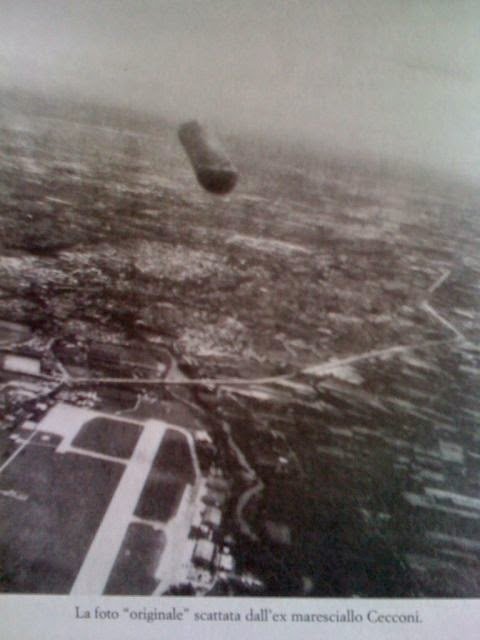
A black cylindrical object photographed by Italian Air Force pilot Giancarlo Cecconi, who was returning his G-91R jet to Treviso-Sant'Angelo when ground radar at Istrana vectored him onto an unknown target. This case file covers what witnesses reported, the official narrative, and a two-pass assessment with its evidence tier.
What did witnesses see at Treviso-Sant'Angelo air base?
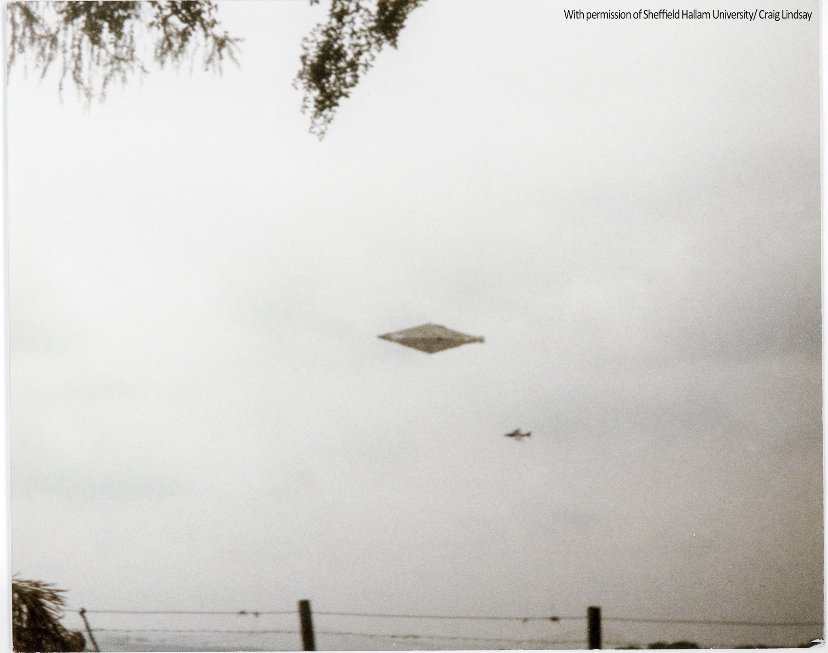
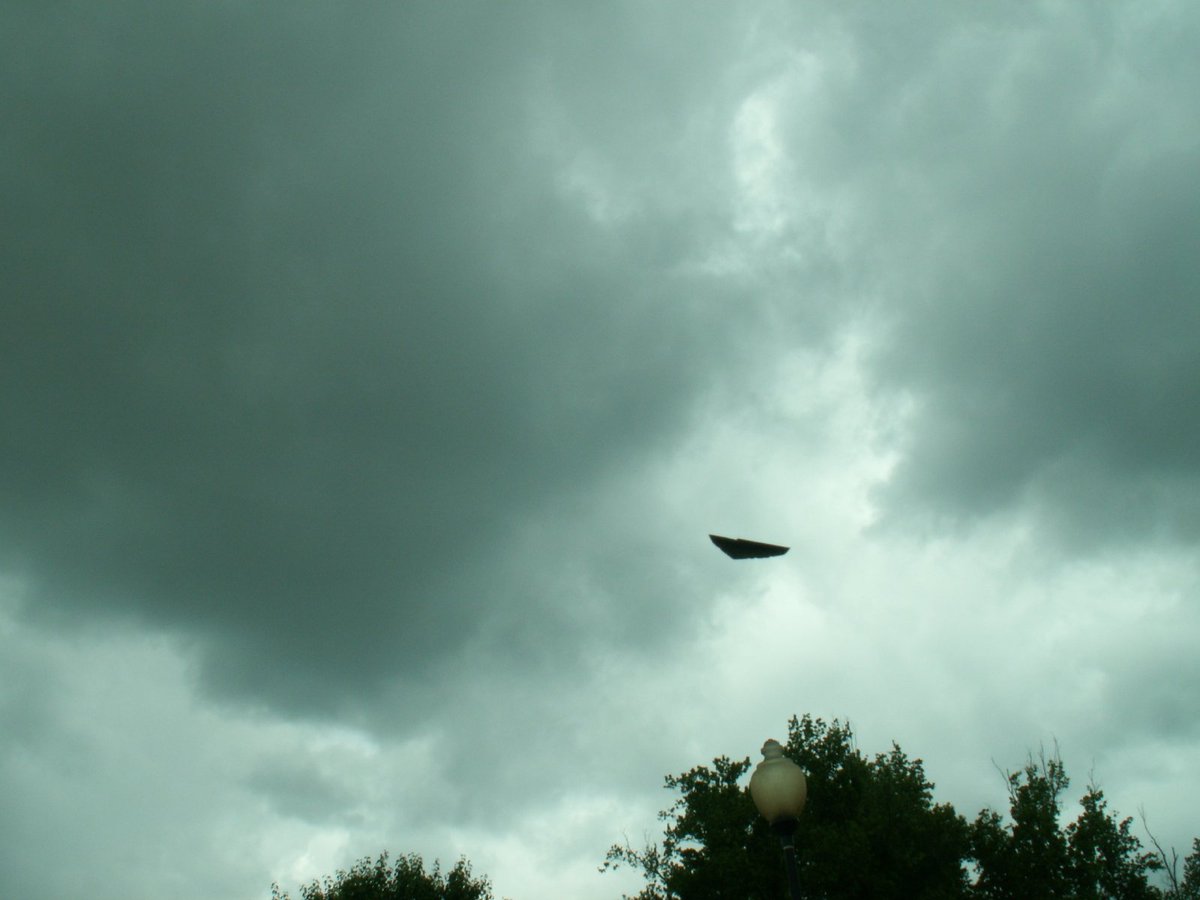
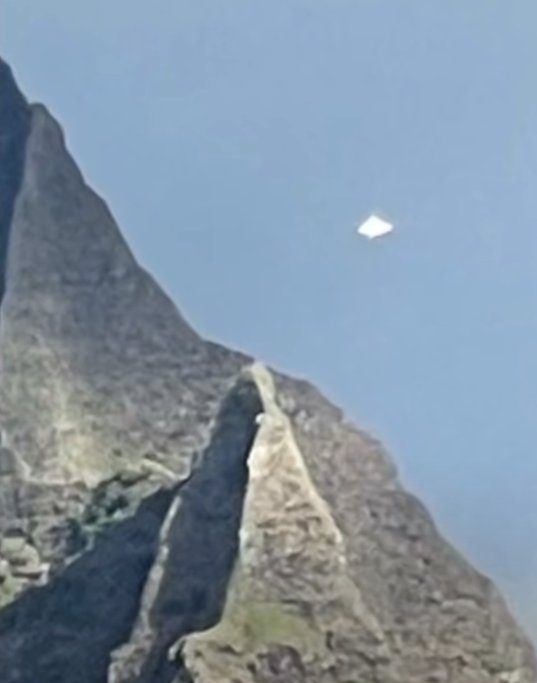
A black cylindrical object photographed by Italian Air Force pilot Giancarlo Cecconi, who was returning his G-91R jet to Treviso-Sant'Angelo when ground radar at Istrana vectored him onto an unknown target. Cecconi made repeated passes and his gun camera captured roughly 82 frames of the cylinder over the airfield area. The frame in this archive, long circulated as "la foto originale," shows the object with the Treviso airfield and city below; it resurfaced from Cecconi's own archive in August 1995 and ran in the Italian press.
What is the official explanation?
The Italian Ministry of Defense, replying in November 1984 to a formal request from researcher Antonio Chiumiento, stated the object was a cylindrical balloon made of black plastic bags. Cecconi and investigators disputed that reading, noting the radar track and the object's behavior across his passes. Three frames were printed by Epoca magazine in April 1985. This archive records the ministry's ruling for the historical record and does not weigh it against the case: it was never demonstrated against the full frame set, and under this archive's method an official closure of a radar-vectored military intercept counts as evidence the case mattered.
What did the witnesses think it was?
Giancarlo Cecconi, a serving military pilot flying a radar-vectored intercept, an unusually strong witness profile. He maintained the object was solid and maneuvering, not a drifting balloon.
The dispute
The single counter-explanation on record is that the black cylindrical object Giancarlo Cecconi gun-camera photographed over the Treviso-Sant'Angelo area on 18 June 1979 was a balloon. This was advanced by the Italian Ministry of Defense, which in November 1984 replied to a formal request from researcher Antonio Chiumiento by stating that the object was a cylindrical balloon made of black plastic bags. That is the entire weight behind the ordinary-object reading: a one-line ministerial assertion, issued more than five years after the event in response to an outside inquiry.
What the ruling does not include is any demonstrated method. It was never tested against the full set of roughly 82 frames the gun camera captured, no identified balloon model or specific balloon train was produced, and the radar context was left unaddressed. The intercept began when ground radar at Istrana vectored Cecconi onto an unknown target, after which he made repeated passes. The ministry's balloon finding offers no account of how a drifting plastic-bag train would produce the object's apparent station-keeping across multiple high-speed passes, behavior that the page notes fits a balloon poorly. No civilian analyst is documented as having worked through the complete frame sequence to confirm or rebut the balloon reading.
Against this stands a serving Italian Air Force pilot performing a radar-guided intercept, who held that the object was solid and maneuvering rather than a drifting balloon. The page treats this as an unusually strong witness profile because of his military credentials and operational role. The frames themselves do permit a balloon interpretation, since a slow dark cylinder is at least compatible with a balloon train, so the dispute is genuine rather than imaginary.
Per this archive's method, an apparatus debunk with no shown technique is a claim, not a verdict. The Ministry of Defense conclusion is recorded but is counted for the case rather than against it, because a delayed, undemonstrated official line that ignores the radar track and the multi-pass behavior does not close anything. The balloon compatibility visible in the frames keeps the case honestly disputed, but it does not settle it as ordinary.
Is the Cecconi Gun-Camera Cylinder real? The two-pass assessment
Pass one: setting the official ruling aside, the photographs themselves allow a balloon reading. A slow dark cylinder is at least compatible with a balloon train, and that observation stands on the frames, not on the ministry's authority. Pass two: a radar-vectored military intercept with dozens of gun-camera frames is among the better-documented European cases; balloon critics argue the object's apparent station-keeping across multiple high-speed passes fits a balloon poorly; and the Italian Ministry of Defense felt obliged, twelve years on, to close the file with a flat plastic-bag ruling it never demonstrated, which this archive logs as apparatus attention in the case's favor. Verdict: Disputed. The balloon compatibility is real and visible in the frames; the official ruling is recorded but counted for the case, not against it. The case file upgrade here also corrects this archive's earlier thin-provenance reading: the photo was traceable all along, to one of Italy's most documented military encounters.
Sources
- www.silverland.info/documenti/il-caso-cecconi/
- www.theblackvault.com/casefiles/the-ufo-case-of-maresciallo-cecconi-june-18-1979/
More cases from this region: UFO sightings in Italy