The Kingman, Arizona Crash Claim (1953)
The Kingman case rests almost entirely on one man's testimony. This case file covers what witnesses reported, the official narrative, and a two-pass assessment with its evidence tier.
What did witnesses see at Near Kingman?
The Kingman case rests almost entirely on one man's testimony. He surfaces first as "Fritz Werner," a pseudonym the UFO investigator Raymond E. Fowler gave him to protect a man who said he was breaking a secrecy oath. His real name was Arthur G. Stancil (also rendered Stansel). By his account he was a mechanical engineer at the Air Material Command, Wright-Patterson Air Force Base, who in spring 1953 was loaned to the Atomic Energy Commission and assigned as a project engineer on Operation Upshot-Knothole, the Nevada atomic test series that ran that spring. His documented job was instrumentation, working out the forward and vertical velocities of a test object on impact.
Stancil said that on the afternoon of 20 May 1953 he got a call from the test director, Dr. Ed Doll, telling him he was wanted the next day for a special job he could not discuss. He said he was picked up at Indian Springs Air Force Base around 4:30 in the afternoon and put on a bus with blacked-out windows along with about fifteen other specialists, none of whom were allowed to talk to each other. The bus drove for hours into the Arizona desert near Kingman. At the site, under floodlights and ringed by military police, he says he saw a craft that had hit the ground at an angle and embedded itself about twenty inches into the sand without any structural damage.
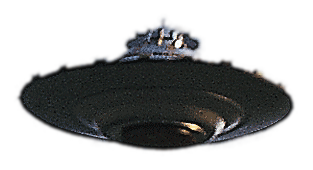
In the affidavit he described the object as oval, roughly thirty feet in diameter, made of a dull metal that resembled brushed aluminum. There was a hatch, low and narrow, about three and a half feet high and a foot and a half wide. He said his own task was to measure the impact and compute the speed at which it struck. Another member of the team, he said, got a look inside and reported an oval cabin with two swivel seats and banks of instruments and displays. And he said a tent had been set up nearby holding a single body, about four feet tall, with a dark brown complexion, dressed in a seamless silvery metallic suit. The whole group was sworn to secrecy, told never to discuss what they had seen, and bused back out before dawn.
What is the official explanation?
There is no official narrative. No United States government agency has ever acknowledged a UFO recovery near Kingman in 1953, and no contemporary document, Project Blue Book card, Air Force memo, or news report has ever been produced placing the event in 1953. That absence cuts both ways and is central to the dispute, because a story this large should have left some paper trail and has not.
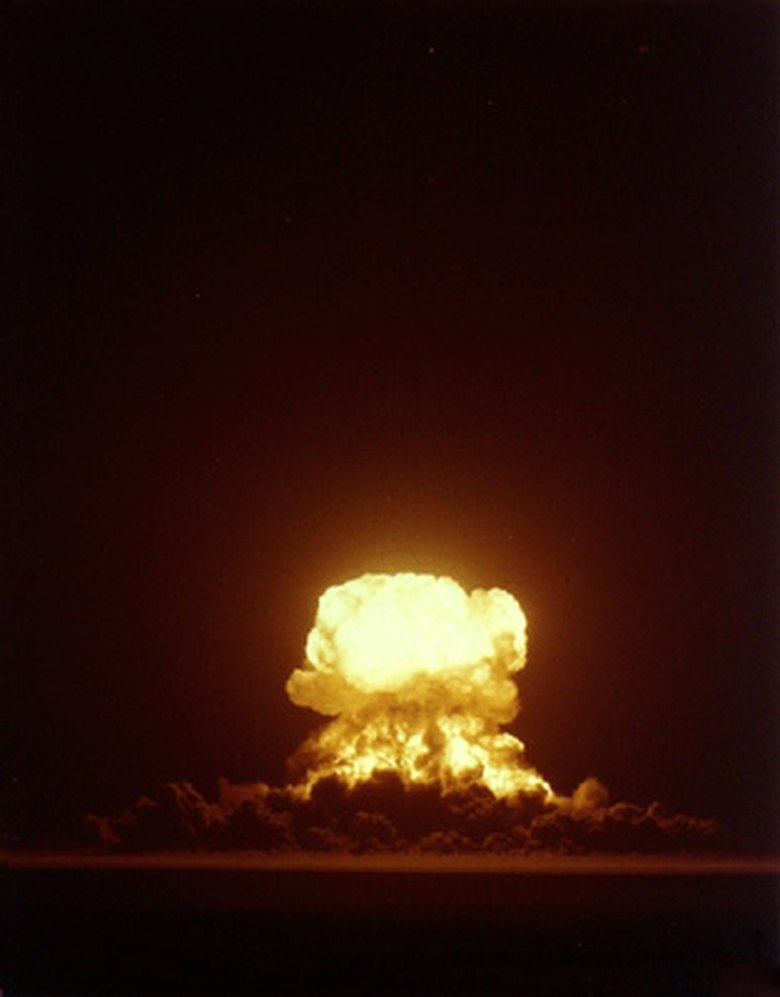
What is officially documented is the backdrop Stancil's story leans on. Operation Upshot-Knothole was a real Nevada Test Site series in the spring of 1953, and one of its shots, codenamed Harry and detonated on 19 May 1953 atop a 300-foot tower at Yucca Flat, was real and notorious. Harry produced the heaviest civilian fallout of any continental US test and was later nicknamed "Dirty Harry" when its downwind contamination of St. George, Utah became public. Stancil's claimed role as an Upshot-Knothole project engineer fits the documented record of that series, which is part of why the case drew serious attention rather than being dismissed at once.
When Fowler tried to verify the story through official and semi-official channels, he reached the Atomic Energy Commission, Stanford Research Institute, Wright-Patterson personnel, and former Project Blue Book staff, and he reported that the peripheral details, the names, the test, the dates, the places, all checked out. But the central claim never did. The Project Blue Book officers who would have logged a 1953 recovery did not know it. Investigator Kevin Randle later reported that Max Futch, who ran Blue Book, did not remember Stancil, and that Dewey Fournet, the Pentagon's Blue Book monitor, did not recognize him as a witness. The researcher William Moore located the real Dr. Ed Doll, the test director Stancil named as the man who phoned him, and Doll said he did not know anyone matching Stancil's description in the role described. A former Kingman City Attorney said he made many inquiries about a supposed crash there and came up, in his word, "zilch."
What did the witnesses think it was?
Stancil maintained the core of the story for the rest of his life: that he was bused to a desert site, that a metallic craft sat embedded in the sand, that a small body lay in a tent, and that he was sworn to silence. He gave it first in a tape-recorded interview on 3 February 1971 to two young UFO enthusiasts, Jeff Young and Paul Chetham, a friend of the Young family vouching for him as a man with firsthand knowledge. He gave it again, in firmer and more detailed form, to Raymond Fowler, and he was willing to put his name to a sworn affidavit dated 7 June 1953's twenty-year mark, signed 7 June 1973 and witnessed by Fowler, which Fowler published in the April 1976 issue of UFO Magazine and revisited in his 1981 book "Casebook of a UFO Investigator." He pointed to a contemporaneous pocket-diary page as corroboration of the dates.
A scatter of secondhand accounts later attached themselves to the case, most collected by the crash-retrieval researcher Leonard Stringfield. In Stringfield's material the body count grows. One account, attributed to a naval intelligence source at Wright-Patterson, described crates flown in from "an Arizona crash site," several of them holding small humanoid bodies roughly four feet tall with large heads and brownish skin, packed in dry ice. Stringfield also carried a "Major Daly" account and others that put the number of recovered bodies at more than one, in some tellings four. These are all secondhand or thirdhand, none firsthand, and they conflict with Stancil's own single-body story.
A separate strand, the Judie Wolcott letter, was offered for years as independent support. Wolcott said her husband had watched the crash from a control tower and written to her about it before shipping to Vietnam, where she said he was killed. The corroboration collapsed when Wolcott's own daughter said her mother tended to invent things, that there was no such letter, and that neither man had died in Vietnam. The most recent witness-driven revival came from the Kingman local historian Harry Drew, who spent about a decade on the case, presented at the 2012 MUFON Symposium, and wrote "7 Days in May," arguing for multiple crashes in the area and naming local figures, though his sites and dates do not line up cleanly with the documentary record and remain contested.
The dispute
The dispute is a sustained, method-shown credibility takedown of the single source the case depends on, advanced most thoroughly by the investigator and retired Army intelligence officer Kevin Randle, building on the original 1971 interview by Jeff Young and Paul Chetham and on William Moore's and Raymond Fowler's own follow-up inquiries. It is not an official assertion. It is independent civilian work that shows its method, and it is strong. The core problem is that Arthur Stancil told the story differently at different times. In the tape-recorded 3 February 1971 interview he first described merely seeing an object during an atomic test, and when pressed gave a small, differently shaped craft, in some renderings a teardrop or cigar around twelve feet long. In the 7 June 1973 affidavit the object had become a thirty-foot disc embedded in the sand. Confronted with the discrepancy, Stancil admitted he had lied to the two young interviewers, explaining that he had been drinking that afternoon and that he tended to make up stories when he drank.
The corroboration that a real 1953 recovery should have left does not exist. Project Blue Book's chief Max Futch did not remember Stancil, the Pentagon's Blue Book monitor Dewey Fournet did not recognize him as a witness, and the real Dr. Ed Doll, the test director Stancil named as the man who phoned him, was tracked down by William Moore and denied knowing anyone matching the description in that role. A former Kingman City Attorney reported making many inquiries and finding nothing. Unlike documented events such as Roswell or Kecksburg, the alleged Kingman crash produced no contemporary newspaper coverage anywhere within about a hundred miles. The affidavit, often cited as if it were probative, was signed in the false name "Fritz Werner" rather than Stancil's own, which voids its standing as a sworn legal document.
The supporting witnesses do not hold up either. Leonard Stringfield's secondhand accounts inflate the body count to several or four, conflicting with Stancil's own single body. The most-cited independent corroboration, a letter Judie Wolcott said her husband wrote describing the crash from a control tower before dying in Vietnam, was contradicted by Wolcott's own daughter, who said her mother fabricated things, that no such letter existed, and that the man had not died in Vietnam.
What keeps this at Barely Disputed rather than a stronger tier is what the dispute does not contain. There is no confession by Stancil that the crash itself never happened, only an admission that he lied to two teenagers while drinking. No hoax props were recovered. No specific mundane object, no identified balloon, drone, aircraft, or test article, has been positively shown to be what the witnesses actually saw and misread. The case against Kingman is a thorough demolition of one self-impeaching source plus a documented failure to corroborate, which is enough to make the claim very probably false but not enough to name a proven alternative cause. Under the tiering rules that is a barely-disputed case, not a strongly-disputed one.
Is the Kingman, Arizona Crash Claim (1953) real? The two-pass assessment
Pass one, the ordinary reading. The strongest counter-explanation is not a balloon or a meteor but a story that grew in the telling from a single uncorroborated source. The investigator Kevin Randle, who is sympathetic to genuine crash cases, took Kingman apart. The 1971 tape with Young and Chetham does not match the 1973 affidavit: to the boys, Stancil first described seeing an object during an atomic test, and when pushed gave a smaller, differently shaped craft, in some renderings a teardrop or cigar roughly twelve feet long, while the affidavit fixed it as a thirty-foot disc. Confronted with the gap, Stancil backed down and admitted he had lied to the boys, and his explanation made it worse: he said he had been drinking, that he tended to make up stories when he drank, and gave a martini count for that afternoon. The affidavit itself was signed in the false name "Fritz Werner," not his own, which guts its value as a sworn legal instrument. The official corroboration that should exist does not: Blue Book's Futch and the Pentagon's Fournet did not know him, the real Dr. Ed Doll denied the role Stancil assigned him, no Kingman old-timer remembered a crash, the city attorney found nothing, and unlike Roswell or Kecksburg or Shag Harbour the event produced zero contemporary newspaper coverage within a hundred miles, Las Vegas included. The one piece of "independent" support, the Wolcott letter, was disowned by the witness's own daughter as an invention. Randle's verdict is blunt: everything adds up to zero, there was no UFO crash there.
Pass two, if real. For the case to be real, Stancil would have to have been telling the truth in the affidavit and lying or downplaying to the boys, and a genuine recovery would have to have been buried so completely that not one corroborating document or named co-witness ever surfaced in seventy years. The points in its favor are narrow but not nothing: Stancil really did work on Upshot-Knothole, the test backdrop he invoked is documented and the Harry shot really did go off on 19 May 1953, he was willing to attach his real identity and a sworn statement to the account, and Fowler found the peripheral details accurate. A determined believer can argue that absence of evidence is what a successful 1953 cover-up would look like.
Weighing the two, this lands at Barely Disputed and not lower. The dispute is real and serious, a named, credentialed investigator showing shifting versions, a witness who admitted fabricating when drinking, a sworn document signed under a false name, and a wall of failed corroboration. That is method-shown work and it badly damages the case. But it stops short of the bar for a stronger downgrade. There is no confession that the crash itself never happened, no recovered hoax props, and no positive identification of a specific mundane object that the witnesses actually saw and mistook. The debunk is a credibility demolition of the single source, which is powerful, but the affirmative claim of "what really happened that night" remains an absence rather than a proven alternative. On those rules the case stands as Barely Disputed: a famous crash-retrieval claim that almost certainly did not happen as described, resting on one shifting and self-impeaching witness, but never closed by a confession or a named mundane cause.
Sources
- www.nicap.org/reports2/530520kingman_arizona.pdf
- www.nicap.org/reports/kingman530521_atest.htm
- www.nicap.org/reports/kingman530521_randle.htm
- kevinrandle.blogspot.com/2011/05/kingman-ufo-crash-really.html
- ufologie.patrickgross.org/htm/kingman53.htm
- digitalseance.wordpress.com/2011/07/27/ufo-history-kingman-arizona-ufo-crash/
- openminds.tv/kingman-ufo-crash/
More cases from this region: UFO sightings in United States