The Gulf of Mexico B-29 Encounter
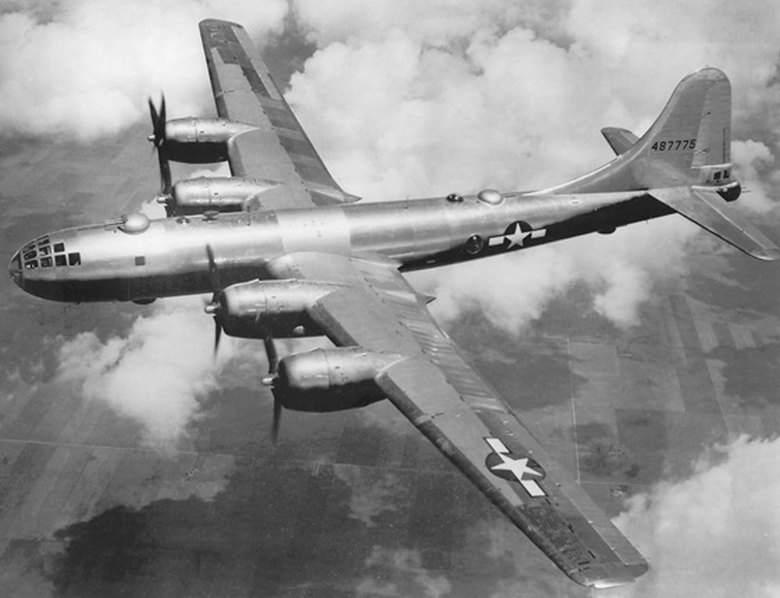
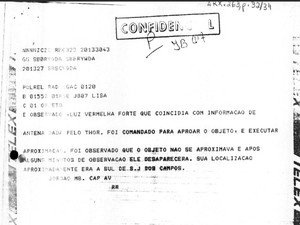
In the pre-dawn dark of 6 December 1952, a United States Air Force B-29 Superfortress of the 3510th Flight Training Wing (Medium Bomber), based at Randolph Air Force Base in Texas, was cruising home over the Gulf of Mexico after a night training flight. This case file covers what witnesses reported, the official narrative, and a two-pass assessment with its evidence tier.
What did witnesses see at Gulf of Mexico?
In the pre-dawn dark of 6 December 1952, a United States Air Force B-29 Superfortress of the 3510th Flight Training Wing (Medium Bomber), based at Randolph Air Force Base in Texas, was cruising home over the Gulf of Mexico after a night training flight. The bomber was at altitude, roughly 100 miles south of the Louisiana coast and about 190 miles from its turning point near Galveston. Most accounts place it at 18,000 feet under a bright waning gibbous moon, with some documents giving 20,000 feet. There were ten men aboard. The two radar men whose names appear in the documented record are 1st Lt Norman Karas, the radar observer, and 1st Lt William W. Naumann Jr., the radar observer and instructor navigator. The visual observers named in the file include Staff Sgt B. R. Purcell, Staff Sgt William J. De Rause, 2nd Lt Robert J. Eckert and Staff Sgt Harry D. Shogren.
At about 0525, after the flight engineer finished transferring fuel, the radar set was switched on and an unidentified return appeared dead ahead, closing on the aircraft. Karas timed the blip with a stopwatch across a known distance and the speed worked out to 5,240 mph, a figure flatly impossible for any 1952 aircraft. That was only the start. Over the next several minutes the scopes filled with returns. The crew counted up to about twenty separate targets, usually one to three on a scope at a time, and the radar men watched them maneuver around the bomber, holding steady speeds well above 5,000 mph. Three radar scopes were in use, so the same returns could be cross-checked between sets rather than written off as one bad tube.
Then came the moment that made the case. A group of the blips drew together into a single large return, described in the statements as a half-inch curved arc on the scope, sitting about 30 miles off. The smaller objects appeared to merge into this larger mass, which then accelerated and swept across all three scopes at a computed speed of more than 9,000 mph before contact was broken off at 0535. While the radar tracking was underway, observers at the waist blisters reported two blue-white flashes lasting roughly three seconds, one of which seemed to pass under a wing of the aircraft. The flashes were brief, silent and held their course. The whole encounter lasted about ten minutes.
What is the official explanation?
This was not a fringe report. It went up the official channel as a formal USAF Air Intelligence Information Report filed through the 3510th Flight Training Wing at Randolph AFB, and it was carried as a genuine unknown. The Air Force then did something rare: it released the case publicly. Albert M. Chop, the Pentagon press desk officer for UFO matters, cleared it for Major Donald E. Keyhoe as item 8 on an official clearance list of formerly restricted Air Technical Intelligence sightings. Keyhoe printed the account in his 1953 book "Flying Saucers From Outer Space" at page 161, drawing on the released documents. In Keyhoe's published telling the pilot is "Captain John Harter," the radar man is "Lieutenant Sid Coleman," and the assistants are "Master Sergeant Bailey" and "Staff Sergeant Ferris," with a navigator "Cassidy." Those are the names that propagated through the popular literature for decades. The documented military record, later worked through by researchers including Brad Sparks, Fran Ridge and the historian Loren Gross in "UFOs: A History, 1952 November to December," gives the real crew as Karas, Naumann and the others, which is why the same case circulates under two different sets of names.
The atmospheric physicist Dr James E. McDonald later cited the encounter in his own survey of strong radar-visual cases, describing it as the 6 December 1952 airborne sighting by the crew of an Air Force B-29 flying over the Gulf of Mexico at 18,000 feet in bright moonlight, and noting that it stood in the Air Force files as an unidentified.
The hardest official scrutiny came from the Air Force funded University of Colorado study, the Condon Report, published in 1968. The case is written up as Case 103-B in Section III, Chapter 5, "Visual Observations Made by U.S. Astronauts and Optical and Radar Analyses of Field Cases," by Gordon David Thayer of the Environmental Science Services Administration. Thayer pulled the meteorological soundings for the area and time and found, in his words, "a very strong super-refractive layer" extending "from the surface to 456 m. (1,500 ft.)," with "a sharp temperature inversion existed at the top of this layer." He argued that "the strange moving targets seen on the radar were probably caused by imperfections in the atmospheric layer forming the radio duct, allowing the radio energy to enter the ducting layer at various points." On the visual flashes he wrote that they "were probably Geminid meteors," and he quoted the wing operations officer's own line that the "visual sightings are indecisive and of little confirmatory value." His summary verdict: "it seems most likely that the cause of this sighting can be assigned to radar AP, for which there is meteorological evidence, and meteors."
What did the witnesses think it was?
The radar men were emphatic that they had tracked something real. Karas, who personally timed the first return at 5,240 mph, held that the object was not a set malfunction or an optical illusion but a real target moving at extreme speed. Naumann, the instructor navigator, was the one who recorded the climax of the event, that contact was broken off at 0535 after a group of the blips merged into the half-inch curved arc roughly 30 miles out and accelerated past 9,000 mph. These were trained radar operators on a teaching flight, with an instructor navigator aboard precisely to catch and correct rookie mistakes, which makes a simple misread harder to credit. Three scopes were running, so the same returns were confirmed across sets rather than resting on one screen.
In Keyhoe's published reconstruction the crew drew the obvious inference from what they had watched: that the smaller, fast objects had been recovered aboard a much larger craft, a mother ship, which then doubled its speed and left. That is an interpretation, not a measurement, and Keyhoe is plainly the one shaping it, but it grew directly out of what the radarmen described, small returns converging into one large return that then accelerated away. The visual men at the blisters corroborated the radar in the only way available to the naked eye at night, two blue-white flashes that lined up in time with the tracking and held a straight course, one appearing to pass beneath a wing.
The corroboration that matters most here is structural. This was a multi-witness, multi-instrument event aboard a single aircraft: independent radar scopes, independent visual observers at separate stations, and an instructor present, all reporting the same ten-minute window. It happened before JANAP 146 and the later Air Force regulations clamped down on military witnesses talking publicly, which is part of why the names and statements reached print at all. McDonald, no friend of loose reporting, kept it on his list of the strong radar-visual unknowns rather than discarding it.
The dispute
The counter-explanation is anomalous propagation, advanced by Gordon David Thayer of ESSA in the 1968 Condon Report, where the encounter is written up as Case 103-B in Section III, Chapter 5. Thayer is the strongest skeptical voice on the case and he did real work rather than assertion. He retrieved the meteorological soundings for the Gulf at the time and found, quoting the report, "a very strong super-refractive layer" reaching "from the surface to 456 m. (1,500 ft.)" with "a sharp temperature inversion existed at the top of this layer." From that he argued that "the strange moving targets seen on the radar were probably caused by imperfections in the atmospheric layer forming the radio duct, allowing the radio energy to enter the ducting layer at various points," and he noted that under such conditions spurious radar images "often moving at apparent speeds of from tens to thousands of miles per hour" are well known. That mechanism would dissolve the impossible 5,240 and 9,000 mph readings, since a ducted artifact is not a physical object crossing real ground at that rate.
Thayer handled the visual flashes separately. He judged that the two blue-white streaks "were probably Geminid meteors," which is chronologically plausible because 6 December sits inside the Geminid active window of roughly 4 to 17 December, and he leaned on the wing operations officer's own assessment that the "visual sightings are indecisive and of little confirmatory value." His bottom line was that "the cause of this sighting can be assigned to radar AP, for which there is meteorological evidence, and meteors." This is a genuine, named, evidence-cited explanation, which is why the case cannot sit in the unexplained tier.
It does not, however, rise to a strong dispute, for several reasons that keep the case standing. First, Thayer's own language is hedged throughout, "probably caused," "most likely," not a positive identification of a specific propagation event reproduced from the data. Second, the radar behavior the crew described, up to twenty discrete returns maneuvering in relation to the aircraft and then merging into a single mass that accelerated coherently, is a poor match for the drifting, splitting clutter that ducting most naturally produces, and the visual flashes coincided in time with the radar tracking, a cross-confirmation AP does not supply on its own. Third, the people best placed to judge, the trained radar operators Karas and Naumann working three scopes with an instructor navigator aboard, insisted the targets were real and not equipment error, and the atmospheric physicist James E. McDonald continued to list the case among the strong radar-visual unknowns. Fourth, the United States Air Force itself never reclassified the case as AP; it released it through Albert Chop as a cleared sighting and carried it in the files as unidentified. A hedged reconstruction that the on-scene experts and the official record both decline to accept is the definition of a weak, contested counter-explanation, which is why the case is Barely Disputed rather than strongly disputed or discredited.
Is the Gulf of Mexico B-29 Encounter real? The two-pass assessment
Pass one, the ordinary explanations. The strongest is the one the Condon Report actually built, anomalous propagation. Gordon Thayer did not wave the case away; he pulled the real soundings, found a documented strong super-refractive layer to 1,500 feet capped by a sharp inversion, and showed that such a duct can throw spurious radar returns that appear to streak at anything from tens to thousands of miles per hour. Ground returns and sea clutter injected into a duct can drift, merge and split on a scope in ways that fool a stopwatch, and the absurd 5,240 and 9,000 mph figures are exactly the kind of artifact ducting produces, because the apparent target is not a single physical object moving but energy re-entering the duct at shifting points. For the visual side, 6 December 1952 falls inside the active window of the Geminid meteor shower, which runs from about 4 to 17 December, so two brief blue-white streaks that held a straight line and did not maneuver are a reasonable fit for meteors rather than craft. A hoax is implausible given ten military witnesses, three scopes and an instructor, so the real ordinary contender is plainly AP plus meteors, not fabrication.
Pass two, if the tracking was of something real. The radarmen, and McDonald after them, did not accept the tidy split. The returns were not a single smear; the crew counted up to twenty discrete targets that appeared to maneuver in relation to the aircraft and then converge into one mass that accelerated coherently, behavior that is harder to get from random ducting artifacts than from the simple drifting blips Thayer's mechanism most naturally produces. The visual flashes lined up in time with the radar tracking, which is the kind of cross-confirmation AP alone does not deliver. Thayer himself hedged, "probably caused," "most likely," not a closed identification, and the Air Force carried the case as an unidentified rather than restamping it as AP. If something physical was there, it was a set of fast objects executing coordinated movement, which is the same signature that runs through the better radar-visual files of the era.
The dispute here is real and method-backed, a named analyst with the actual meteorological data, so this is not a clean Verified Unexplained. But the explanation is hedged, partial, and contested by the trained on-scene witnesses and by McDonald, and the official file never abandoned the unidentified label. That is the textbook profile of a counter-explanation that weakens a case without closing it. Tier: Barely Disputed.
Sources
- www.nicap.org/521206gulf_dir.htm
- www.nicap.org/reports/521206gulf_weinstein.htm
- www.nicap.org/reports/521206gulf_keyhoe.htm
- files.ncas.org/condon/text/s3chap05.htm
- ufologie.patrickgross.org/htm/coleman52.htm
- sohp.us/collections/ufos-a-history/pdf/GROSS-1952-Nov-Dec.pdf
- www.nationalmuseum.af.mil/Visit/Museum-Exhibits/Fact-Sheets/Display/Article/196252/boeing-b-29-superfortress/
More cases from this region: UFO sightings in United States