The RAF Boulmer Radar-Visual Sighting
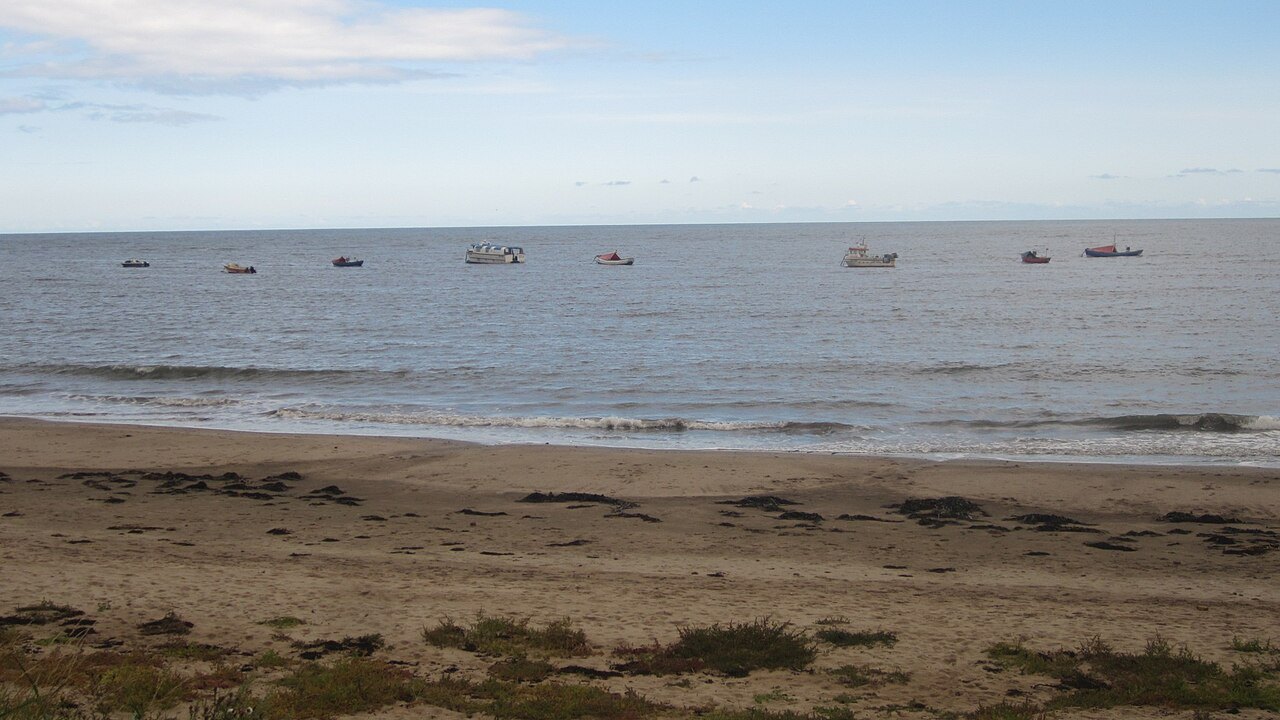
In the early hours of 30 July 1977, the night shift at RAF Boulmer, a Cold War air-defence radar station near Alnwick on the Northumberland coast, was alerted by a telephone call from a civilian who could see two bright objects hovering out over the North Sea. This case file covers what witnesses reported, the official narrative, and a two-pass assessment with its evidence tier.
What did witnesses see at RAF Boulmer?
In the early hours of 30 July 1977, the night shift at RAF Boulmer, a Cold War air-defence radar station near Alnwick on the Northumberland coast, was alerted by a telephone call from a civilian who could see two bright objects hovering out over the North Sea. The duty controller, Flight Lieutenant A.M. Wood, came up out of the operations bunker with a group of airmen and saw the objects for himself. He was joined in the observation by Corporal Torrington and Sergeant Graham. The three men watched the objects, by the official account, for roughly one hour and forty minutes.
In his report to the Ministry of Defence, preserved in National Archives file DEFE 24/2085/1, Wood recorded that the objects were close to the shore and stationary, hanging over the sea about three miles off the coast at an estimated height of between four thousand and five thousand feet. The nearest object he described as luminous, round, and four to five times the size of a Whirlwind helicopter. The Westland Whirlwind was a standard RAF helicopter of the day, so it was a size yardstick every man on that base knew by eye. A second object, lying to the west, was described as conical with the apex at the top, and it seemed to rotate.
As the men watched, the display changed. The objects separated, one moving west of the other, and as it manoeuvred the moving object altered its outline. The report records that it changed shape to become, in the words quoted from the file, body-shaped with projections like arms and legs. This was not a brief glimpse of a light in the sky. It was a prolonged, structured observation by three trained military men at an air-defence installation, with the objects changing position and form over the better part of two hours before fading from view and tracking away to the northeast.
What is the official explanation?
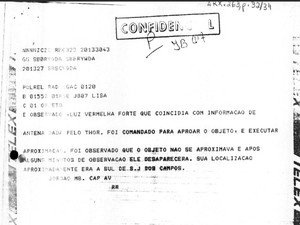
The case is an official Ministry of Defence record. Flight Lieutenant A.M. Wood, the duty controller, filed a detailed report that was lodged with the MoD's UFO desk, internally coded SF4 (rendered S4F in some press accounts), and the paperwork survives in the National Archives under reference DEFE 24/2085/1. The defining feature is the radar. Two contacts were logged at RAF Boulmer on both the Type 84 (T84) and Type 85 (T85) sets, the same returns appeared on the RAF Staxton Wold radar picture relayed to RAF West Drayton, and West Drayton confirmed them, putting the anomalous returns on systems independent of Boulmer's own equipment. The contacts tracked on a heading of thirty to thirty-five degrees out over the North Sea before leaving the screen, and The Independent reported the radar detection occurred at the same time as the visual sighting and in the same position. The MoD's loose minute described Wood as reliable and sober, and no prosaic identification was entered against the case. Contemporary press reported an extra three years was added to the standard release period before the file came out under Freedom of Information, and the Northumberland Gazette ran it in January 2005 under the line that the sightings had been hushed up.
What did the witnesses think it was?
Flight Lieutenant A.M. Wood was the duty controller and senior witness, a trained air-defence officer who filed a detailed written report to the Ministry of Defence describing the objects, their size, their behaviour, and their changes of shape, and who stood behind the radar correlation logged at three stations. The MoD's own minute calling him reliable and sober reflects how his account was regarded. He was corroborated by Corporal Torrington and Sergeant Graham, who were with him at the picket post and saw the same objects, and whose observation the file records when it notes the objects separating, one going west of the other and changing shape as it moved. The sighting itself began with a civilian phone call that brought the night shift up out of the bunker, meaning the objects were conspicuous enough to be reported independently from the ground before any serviceman looked. A separate and later witness, a man identified only as Phil who in 2014 said he had watched two luminous discs above the base as a twelve-year-old in Alnwick about five miles away, adds supporting colour, but his account differs in detail and duration and cannot be tied to the exact night, so the weight of the case rests on Wood, Torrington, Graham, and the radar.
Is the RAF Boulmer Radar-Visual Sighting real? The two-pass assessment
Pass one, the ordinary explanations. A night sighting over the sea is a setting prone to misperception. Bright stars or planets low over water can look luminous and seem to move or change shape through atmospheric shimmer, and aircraft, helicopters, or balloons could account for lights three miles offshore. The radar is the harder problem: anomalous propagation, where temperature and humidity layers over the sea bend radar beams into false returns, is a real effect and was a standing MoD fallback for radar-visual cases. But the simultaneous visual sighting by three trained men plus an independent civilian, returns on multiple radars of different types at separate sites, and the MoD's own refusal to enter a prosaic cause all cut against a tidy debunk. No named investigator has since produced a specific identified object, no star, no traced aircraft, no balloon launch, no demonstrated instrument fault tied to this night.
Pass two, if it is real. The documentation supports a structured, self-luminous aerial phenomenon: multiple objects that hovered, separated, changed apparent shape, and tracked northeast while generating coherent radar returns on three linked stations. That is the profile, a sustained radar-visual event over a sensitive air-defence area, that the MoD flagged as worth keeping rather than closing. The official handling, logging the report, vouching for the witness, recording the radar, and reportedly holding the file back, is evidence the case was real enough to need handling, not a mark against it. There is no independent, civilian, method-shown analysis identifying the objects as any specific ordinary thing. The case is officially documented, the witness officially vouched for, the radar correlation on the record, and the object unidentified in the MoD's own file. That is Verified Unexplained.
Sources
- documents.theblackvault.com/documents/ufos/UK/defe-24-2085-1-1.pdf
- files.bluebookfiles.org/pdfs/unknown.00%20-%20NARA%20-%20BritishUFOFiles%20-%20defe-24-2085-1-1.pdf
- discovery.nationalarchives.gov.uk/details/r/C10518747
- www.nationalarchives.gov.uk/help-with-your-research/research-guides/ufos/
- www.independent.co.uk/news/the-truth-is-out-there-classified-reports-of-ufo-sightings-are-finally-made-public-1528453.html
- web.archive.org/web/20200211005640/https://www.ufocasebook.com/2014/eyewitness-raf-boulmer-1977-ufos-comes-forward.html
More cases from this region: UFO sightings in United Kingdom