The Brazilian Night of the UFOs
On the night of 19 May 1986 air traffic controllers, civil and military pilots, and ground observers across the Vale do Paraiba region of Sao Paulo state began reporting luminous objects that did not behave like aircraft. This case file covers what witnesses reported, the official narrative, and a two-pass assessment with its evidence tier.
What did witnesses see at Vale do Paraiba and Sao Jose dos Campos?
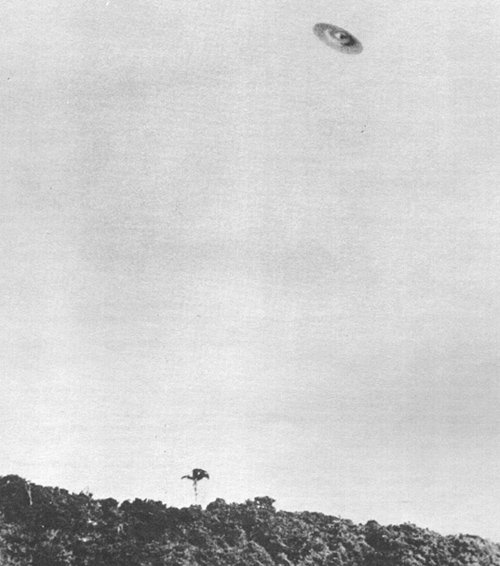
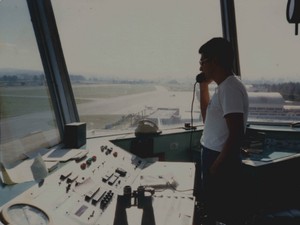
On the night of 19 May 1986 air traffic controllers, civil and military pilots, and ground observers across the Vale do Paraiba region of Sao Paulo state began reporting luminous objects that did not behave like aircraft. The first focal point was the control tower at Sao Jose dos Campos, where controller Sergio Mota da Silva watched targets appear on his scope and greeted an incoming flight with the line that became the case's signature, "Brasilia, good evening and welcome to the flying saucer festival." Over more than three hours the contacts spread north and east, with radar returns logged across Sao Paulo, Rio de Janeiro, Minas Gerais and Goias.
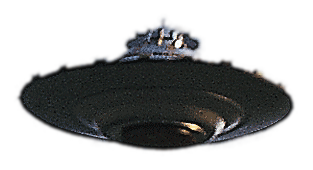
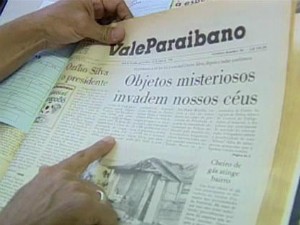
The objects were described as bright points of light, sometimes white, sometimes coloured, that could hover, move in zigzags, make sharp turns, change altitude rapidly and accelerate away. Civil aviation was caught up in it before the military was. A twin-turboprop Embraer Xingu carrying Ozires Silva, the former head of Embraer who had just been named president of the state oil company Petrobras, was returning to Sao Jose dos Campos from Brasilia when its crew reported being shadowed by lights. The aircraft commander, Alcir Pereira da Silva, later said of one object that it "was far too agile, impossible that there was a human inside it."
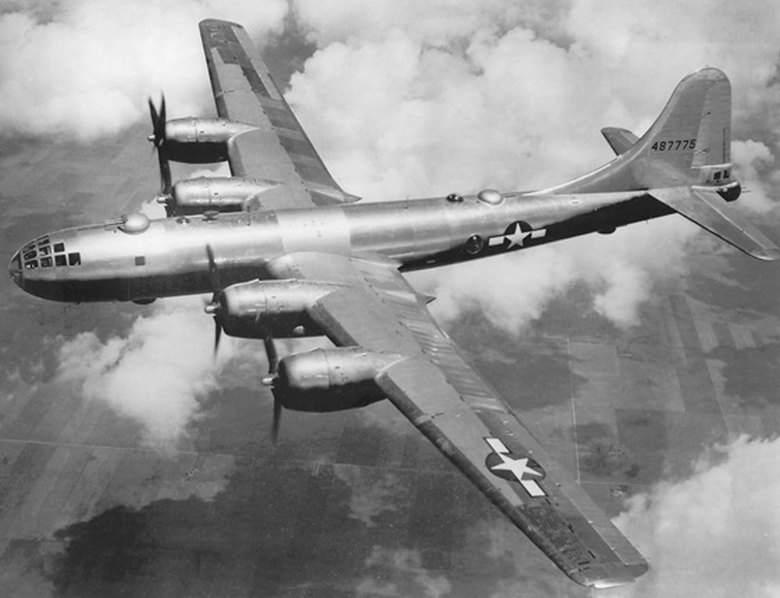
When the contacts persisted, the Air Defence Operations Centre scrambled fighters. Two F-5E interceptors lifted from Santa Cruz Air Base in Rio de Janeiro state and three Mirage F-103 (Mirage IIIE) jets from Anapolis Air Base in Goias, five aircraft in total. Captain Kleber Caldas Marinho, flying one of the F-5Es, picked up a contact below his altitude that climbed to match him, holding position off his wing. "I kept following the contact until about 30,000 feet, when I lost radar contact and was left with just visual contact," he recounted. The most extreme account came from the Mirage pilot Captain Armindo Sousa Viriato de Freitas, who said that as he closed on an object flying at roughly 1,000 mph it accelerated to an estimated 11,500 mph, around fifteen times the speed of sound, and vanished. By figures later released, ground and airborne radar logged as many as 21 separate objects through the night, with up to 13 tracked at once. None of the fighters managed to hold a firing solution or close to a positive identification before the contacts dispersed in the early morning.
More footage and images of this sighting
What is the official explanation?
This is one of the very few UFO events in which the official narrative is not a denial but an admission. Four days after the night, on 23 May 1986 at 4:30 in the afternoon, the Minister of Aeronautics, Air Lieutenant-Brigadier Octavio Julio Moreira Lima, called a press conference at the Ministry of Aeronautics in Brasilia and sat alongside the air traffic controllers and fighter pilots involved. He confirmed that five Air Force fighters had been scrambled against the unidentified objects and that the contacts were real. On the question of what they were, he refused to speculate while refusing to dismiss. As recorded by the Brazilian government's own account of the night, he said, "It's not about whether or not you believe. We can only give technical information. There are several assumptions. Technically, I would tell you that we have no explanation."
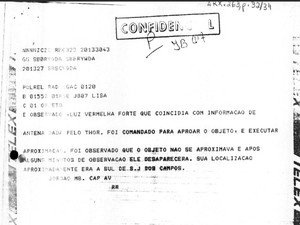
The military's internal assessment was set down in an air-defence report signed on 2 June 1986 by Air Brigadier Jose Pessoa Cavalcanti de Albuquerque, the acting commander of COMDABRA, the Brazilian Air Defence Command. That document, kept classified for more than two decades and released through Brazil's National Archives in 2009, did not write the event off as instrument error. It recorded altitude and speed variations and, in its most quoted passage, concluded that "the phenomena are solid and reflect, in a certain way, intelligence, due to the ability to follow and maintain a distance from observers, as well as to fly in formation, not necessarily manned." The Brazilian government has since treated the episode as part of the public record, with the federal communications service publishing its own retrospective titled "Official UFO Night in Brazil" that restates the 21 objects, the four affected states, the five scrambled jets and the report's "solid and intelligent" wording.
It is worth being precise about who said what, because secondary accounts routinely garble it. Ozires Silva was a witness aboard the Xingu, not the commander of the air operation and not the official who fronted the press conference. The man who briefed the press as Minister of Aeronautics was Moreira Lima, and the man who signed the air-defence report was Cavalcanti de Albuquerque. The radar facilities involved were the airport and tower at Sao Jose dos Campos and the wider air traffic control and air defence network, with the scramble run out of Santa Cruz and Anapolis air bases.
What did the witnesses think it was?
The witnesses here are not anonymous members of the public but named, trained, professionally accountable observers, which is the spine of the case. Sergio Mota da Silva, the Sao Jose dos Campos controller, tracked the objects on his scope in real time and described seeing points of light that, in his words, should not have been visible to the human eye yet were. Captain Kleber Caldas Marinho, the F-5E pilot, held both radar and visual contact on an object that paced his fighter up to 30,000 feet. Captain Armindo Sousa Viriato de Freitas, the Mirage pilot, gave the dramatic account of an object accelerating to an estimated fifteen times the speed of sound as he tried to close on it. Alcir Pereira da Silva, commanding the civil Xingu, judged the manoeuvres of the lights too violent for any crewed machine. Ozires Silva, a senior figure in Brazilian aviation and industry, was aboard that same aircraft and corroborated the sighting.
The men did not claim to know what they had chased. Their consistent position was that the targets were real, were on radar as well as in sight, and outflew their aircraft. The Air Force institutionally agreed with them on the first two points, scrambling jets and then signing a report that called the phenomena solid and intelligent in behaviour. Decades later several of the principals went on the record again. The pilots and the radar audio feature in James Fox's 2022 documentary "Moment of Contact," where the cockpit and radio exchanges include a pilot asking "It's not an airplane, what is it?" and reporting multiple objects passing on different radials. The witnesses have never recanted, never been shown to have colluded, and never produced a confession or a prop. What they reported is what the radar logged and what the Minister, however carefully, confirmed.
The dispute
The case is disputed, but only at the level of competing explanations, none of which has been shown to actually account for the radar and visual record. The skeptical and independent analyses fall into a few buckets. Brazilian astronomer Luiz Augusto L. da Silva, a founding member of the Association for the Investigation of Uncommon Phenomena (AIFI), has argued that the night's reports were never seriously worked through for mundane causes, and floated possibilities such as atmospheric re-entry and ablation of orbital debris (citing the Soviet Salyut 7 era), meteors or bolides, and radar misinterpretation. His own framing concedes the limits of this: he says non-extraterrestrial explanations are "reasonably available" and "far from exhausted," which is a call to investigate, not a demonstration that any one of them fits the timeline, the multi-station radar correlation or the pilots' visual pacing.
A second strand, advanced by the Brazilian geophysicist and science communicator Sergio Sacani and echoed by contributors on the analysis forum Metabunk, points at the well-documented unreliability of Brazilian air traffic control radar (the system's faults became a public scandal during the 2006 to 2007 aviation crisis) and at upper-atmosphere electrical phenomena such as sprites. Sacani has said a pilot he spoke to in later years came to view the lights as an atmospheric phenomenon. The radar-fault argument is plausible in principle for spurious plots, but it has not been reconciled with the fact that pilots in two different aircraft types reported holding visual as well as radar contact, that multiple ground stations logged returns, and that the objects were tracked moving coherently for hours. Sprites last milliseconds and sit far above aircraft altitudes, so they do not obviously match objects that paced an F-5E to 30,000 feet.
The single most cited number in the popular retelling, the "fifteen times the speed of sound," should be handled with care, and that caution cuts against the sensational version of the case rather than for it. That figure is one pilot's in-cockpit estimate of an object's acceleration, Captain Viriato's, not a calibrated radar measurement reproduced in the declassified report. A pilot's eyeball estimate of a light's speed at night is exactly the kind of figure that can be wildly off, and treating it as a hard measurement is unwarranted. Stripping that claim out, however, does not dissolve the case; the multi-witness, multi-radar core remains.
What keeps this in the lower disputed tier rather than anywhere near a settled debunk is that no analyst has produced a named, method-shown identification of the objects. Nobody has matched a specific re-entry, a specific weather cell, a specific propagation event or a specific known aircraft to the night's tracks. The official apparatus did not debunk it either; it documented it and signed off on "solid" and "intelligent" behaviour. Under this archive's rules an official assertion without a shown method does not close a case, and neither does a menu of unproven alternatives. The dispute is real and on the record, but it is weak and partial, so the case largely stands.
Is the Brazilian Night of the UFOs real? The two-pass assessment
Pass one, how this could be entirely ordinary. The most serious mundane candidate is radar misbehaviour. Brazilian air traffic radar of the period had a documented reputation for spurious plots, double-painting single aircraft and ghost returns, and an electrical storm or anomalous propagation can throw false targets onto a scope and send fighters chasing nothing. Layer onto that the known psychology of a scramble at night: once controllers and crews are primed to expect intruders, ambiguous lights (planets, stars near the horizon, distant aircraft landing lights, ground lights refracted through temperature inversions) get read as solid objects, and speed and distance are notoriously unreliable when judged by eye against a point of light in the dark. The headline "fifteen times the speed of sound" is a pilot's estimate, not an instrument reading, and almost certainly cannot be taken at face value. Add the possibility of an atmospheric or re-entry event seeding the initial sightings, and you can build a story in which a flap of jittery reports, amplified by faulty radar and a dramatic press conference, becomes a legend with nothing exotic behind it. That story is coherent. What it lacks is any analyst actually pinning the night's specific tracks to a specific cause.
Pass two, if it is real, what is it. The thing that separates this from a routine night-light flap is the convergence of independent channels. Trained controllers had the objects on ground radar, fighter pilots in two different airframes reported holding their own radar and visual contact, a civil crew with senior aviation professionals aboard corroborated from the air, and the contacts were logged across four states for hours with up to 13 tracked simultaneously. The Air Force did not explain it away; its own COMDABRA report, signed by Cavalcanti de Albuquerque and later declassified, called the phenomena solid and concluded their behaviour reflected intelligence in the way they shadowed observers, kept their distance and flew in formation. An institution scrambling five interceptors and then putting "solid and intelligent" in writing is itself evidence that the event was real enough to demand a response. If the radar-fault and atmospheric explanations cannot be shown to fit, then what remains is a genuinely anomalous, apparently controlled aerial phenomenon that outperformed the best interceptors Brazil could put up.
Weighing the two passes: the mundane account is available but unproven, a set of plausible mechanisms that nobody has demonstrated actually generated this night's data, while the anomalous reading is anchored in multi-station radar, multi-aircraft visual pacing, named professional witnesses and an official document that affirms rather than denies. A counter-explanation exists and is on the record, which is why the case is disputed, but it is weak, partial and method-light, so the case largely stands. That places it at Barely Disputed.
Sources
- www.gov.br/en/government-of-brazil/latest-news/2022/official-ufo-night-in-brazil
- tokdehistoria.com.br/2016/05/19/noite-dos-ovnis-caso-completa-30-anos-sem-ter-misterio-desvendado/
- en.clickpetroleoegas.com.br/the-night-the-brazilian-air-force-hunted-ufos-in-the-sky-of-brazil-21-objects-appeared-on-the-radar-f-5-and-mirage-jets-took-off-for-interce-asaf04/
- www.metabunk.org/threads/brazilian-ufo-flap-of-1986-night-of-lights-official-ufo-night.13705/
- www.redeomegacentauri.org/2021/06/23/a-noite-dos-ovnis-confusoes-e-misterios/
- www.eurasiantimes.com/hypersonic-ufo-stuns-fighter-pilots-new-documentary-audio/
- fantasmasurbanos.substack.com/p/a-noite-oficial-dos-ovnis
More cases from this region: UFO sightings in Brazil