The Kalygir Lake Object (1980)
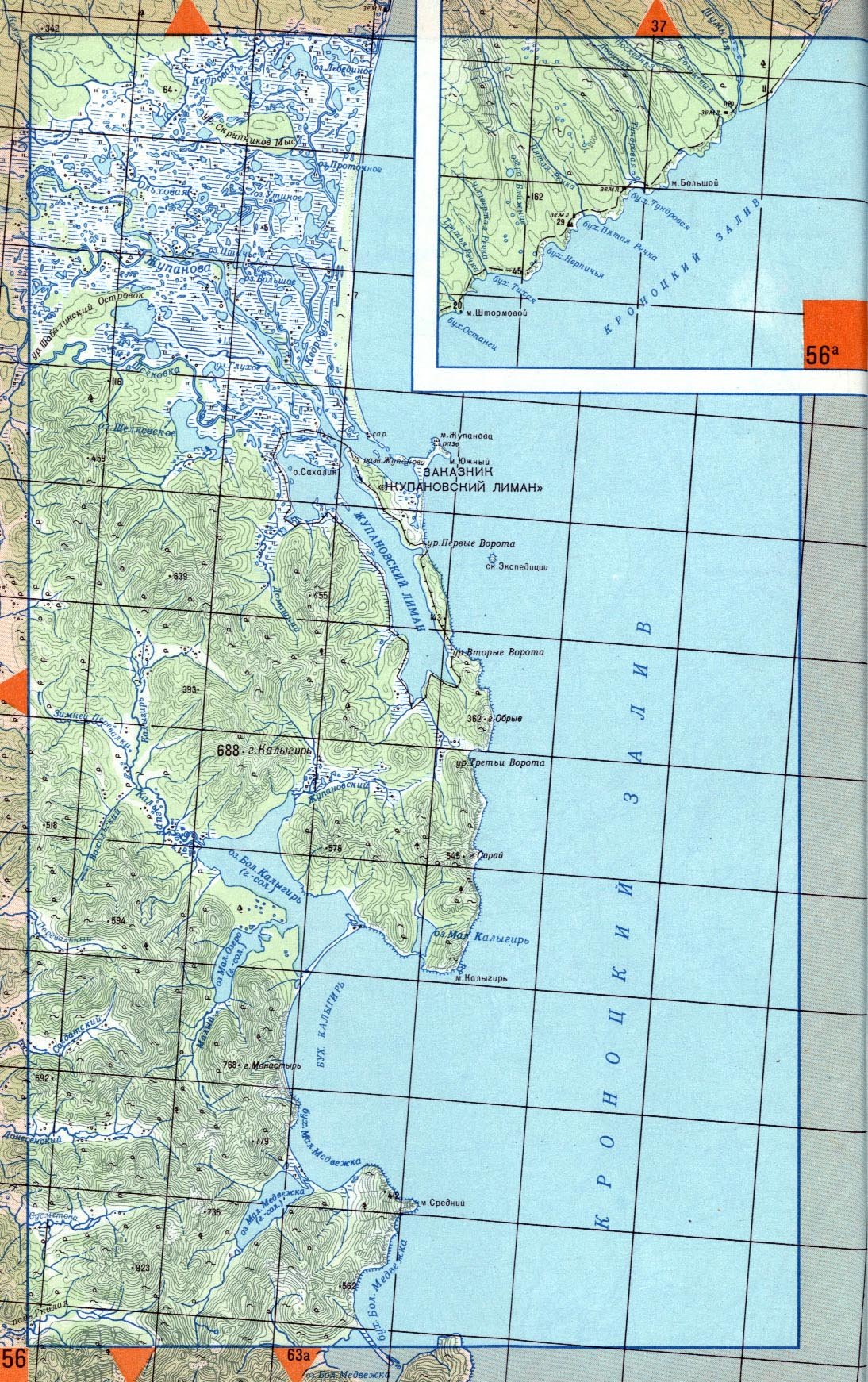
The witness most often named in connection with this event is Valery Viktorovich Dvuzhilny, a biologist from Dalnegorsk who by 1986 was the head of the Far Eastern Branch of the research commission on anomalous aerial phenomena and one of the best known UFO investigators in the Soviet Far East. This case file covers what witnesses reported, the official narrative, and a two-pass assessment with its evidence tier.
What did witnesses see at Lake Bolshoy Kalygir?
The witness most often named in connection with this event is Valery Viktorovich Dvuzhilny, a biologist from Dalnegorsk who by 1986 was the head of the Far Eastern Branch of the research commission on anomalous aerial phenomena and one of the best known UFO investigators in the Soviet Far East. In a 29 December 2004 interview with the Vladivostok News reporter Tamara Kaliberova, headlined "Watching the heavens from Dalnegorsk," he said in his own words: "I got scared of a UFO only once. It was during a 1980 expedition to Kamchatka when we saw a strange disc landing near a 90-meter-deep lake bottom." That single sentence is what later traveled across English-language UFO sites as "a Russian ufologist sees a saucer land in 1980."
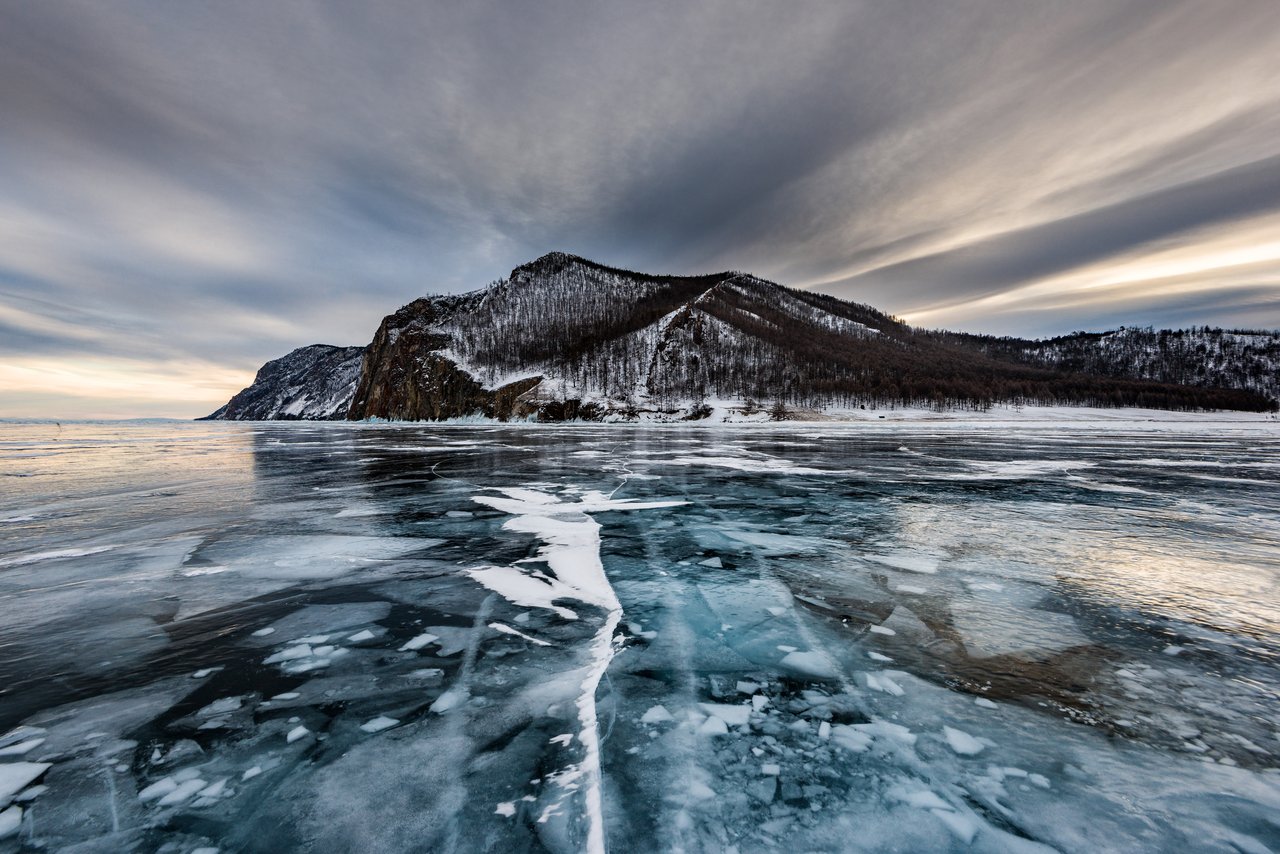
The fuller account, recorded in Russian by the St. Petersburg researcher Mikhail Gershtein and reproduced across the Russian press, tells a different and more specific story than the English paraphrase. The lake is Bolshoy Kalygir, a deep body of water in Kalygir Bay on the east coast of Kamchatka behind a long sand spit, reached only by sea or helicopter. A five-person team from the Far Eastern Branch of the Russian Geographical Society, the "Kalygir-80" expedition led by Dvuzhilny, sailed on the steamer Sovetsky Soyuz and reached Petropavlovsk-Kamchatsky on 3 August 1980, then was put ashore from a passing vessel near Kalygir Bay. On 7 August they set out along the right shore, wading knee deep through flooded alder because there was no path. Along the whole shore they found dead fish with cataract-white eyes and swollen spines, while live fish barely twitched and stared blindly, and gulls would not touch the easy food. Dvuzhilny's dosimeter read only a normal 25 to 30 microroentgens per hour, so radiation was not the cause.
According to Dvuzhilny's account, the team pitched a tent that evening after covering only about a kilometre and a half. He recalled: "At ten in the evening on the opposite shore there came a powerful rumble and roar. It came from the bottom, not the surface. A blue glow flared up and there was a strong splash, like a huge body surfacing from under the water. After a while eight enormous waves rolled onto our shore. The boat bounced several times on the waves." He described being seized by an overwhelming, inexplicable, animal fear, a near-panic urge to run up the mountain, that vanished the moment the object left. Then over the far shore a yellow point appeared, and two or three seconds later a large blue hemisphere about 30 to 50 metres in radius rose above the treetops. The sequence repeated several times at roughly five-minute intervals: first the dim yellow point, then the bright, dense blue dome through which the far bank could not be seen. The team had cameras at hand but no one thought to shoot, and later admitted that Soviet black-and-white film would not have captured it anyway. Where the hemisphere appeared was the same stretch of shore where the most dead fish lay by day.
What is the official explanation?
There is no Western-style state investigation file for this event. The expeditions themselves were the official apparatus, run not by a fringe club but by the Far Eastern Branch of the Russian (then Soviet) Geographical Society, an Academy-affiliated learned body. The "Kalygir-80" and follow-up "Kalygir-81" expeditions are the documentary record. The 1981 expedition was better equipped, with an inflatable motor raft, scuba gear, a portable compressor and a barrel of fuel, and the team circled the entire perimeter of the lake and the neighbouring lakes Maly Kalygir, Bolshaya and Malaya Medvezhka. They never relocated the cave at the centre of the older legend and concluded it had gone under water, possibly after an earthquake.
The whole investigation traces back to a primary document from 1976. The geologist Igor Solovyev, who said that in May 1938 he had been struck temporarily blind for some ten hours by a bright blue-white glow inside a flooded cave on the lake shore, wrote a letter about the incident to the Soviet popular-science magazine Tekhnika-Molodezhi. That published letter drew a flood of responses from former Kamchatka residents and is what prompted the Geographical Society to mount the 1980 expedition in the first place. Solovyev was located by Dvuzhilny and invited along, but declined because of his age and because the geographers could not arrange a helicopter. So the chain of record here is unusually clean for a Soviet case: a 1976 published witness letter, a 1980 society expedition, the expedition leader's own narrative, and the leader's 2004 on-record interview.
The nearest thing to an official debunk comes from the parent organisation itself. When the lake's "underwater UFO base" claim resurfaced in the Kamchatka press in 2017, a representative of the Russian Geographical Society stated flatly that "there are no facts confirming the authenticity of all these events," and noted that many scientists have worked at and studied the lake over the years without anyone going blind or seeing an object rise from the water. That is a real, attributable counter from the body that ran the expeditions. It is also an assertion rather than a demonstration: the representative did not identify what Dvuzhilny's team actually saw, did not analyse the dead fish, and offered no specific natural mechanism, only an absence of confirmation.
What did the witnesses think it was?
Dvuzhilny believed he had witnessed something he could not explain and was frightened by it in a way nothing else in his long field career matched. He did not, in the primary Russian account, describe a saucer touching down on the lake. He described an object erupting upward out of deep water at night, followed by repeated luminous hemispheres, in a setting where the fish had been killed by what he took to be a brief, powerful energy discharge. His standing interpretation, consistent with the older Solovyev legend, was that the lake might conceal an underwater base, and he speculated that the deep, 90-metre water of a flooded volcanic caldera "could hide anything." By the time of his 2004 interview he had spent decades on this work, kept a home laboratory of about a thousand material samples in his Dalnegorsk apartment, coordinated for the Kosmopoisk research network, and dreamed of founding Russia's first UFO museum.
The corroboration here is layered rather than from a second independent witness to the 1980 night. The whole affair rests on a 1938 first-hand account by the geologist Igor Solovyev, backed by his field partner Nikolai Melnikov, who also saw the glow but only for a couple of seconds and so escaped the blindness. That 1938 story was committed to print by Solovyev himself in 1976 and survived public scrutiny in Tekhnika-Molodezhi. The 1980 event was then witnessed by a five-person scientific party led by Dvuzhilny, and the documented physical anomaly, shorelines of fish with clouded eyes and swollen spines while the dosimeter stayed normal, is the kind of detail that does not follow from a simple misremembered light. Dvuzhilny's wider credibility is not in serious doubt: he is the same investigator the Soviet Academy-linked commission sent to lead the famous Height 611 Dalnegorsk crash investigation of January 1986, and he was the man who collected and had analysed the mesh, lead-tin droplets and quartz-and-gold threads from that site.
The dispute
The dispute has two prongs. The first is institutional and direct. When the "underwater UFO base" story about Lake Bolshoy Kalygir resurfaced in the Kamchatka media in October 2017, a representative of the Russian Geographical Society, the very body that organised the 1980 and 1981 expeditions, told the outlet Kam24 that "there are no facts confirming the authenticity of all these events," and pointed out that numerous scientists have studied and worked at the lake over the years without going blind or witnessing anything emerge from the water. This is a clean, attributable, on-record counter from the parent organisation. It does not, however, rise to a method-shown debunk. The representative did not identify what Dvuzhilny's team actually observed, did not examine or explain the shoreline of dead fish with clouded eyes and swollen spines, and offered no specific mechanism. It is an assertion that the events are unconfirmed, not a demonstration that they did not happen or that an ordinary cause produced them.
The second prong is geophysical and is the stronger of the two on the merits, though no named analyst has formally applied it to this sighting. Bolshoy Kalygir is a flooded caldera of an ancient paleovolcano on a peninsula defined by active volcanism, frequent earthquakes and lethal natural gas vents. A sublacustrine gas eruption, a gas-driven lake turnover, or an underwater slump on the steep caldera walls could in principle account for the bottom-origin rumble, the blue flash, the violent surge and waves, and the mass fish kill with a normal radiation reading, and earthquake-light or gas-discharge luminescence could in principle account for the glow. This is a serious natural candidate. What keeps it from settling the case is that it remains a hypothesis no one has shown: the repeating five-minute interval of the luminous hemispheres, the sharply bounded 30-to-50-metre blue dome that blocked the far shore, and the witness's specific account of a large body surfacing and then leaving are not obvious products of a one-off gas burst, and the fish were never analysed to confirm a gas or energy cause.
Weighing the two, the counter-explanations are real and come from credible directions, which is why this is not filed as Verified Unexplained or Unknown. But they are partial and method-light against a first-hand account from a documented scientific field investigator, recorded by a learned-society expedition rather than a lone enthusiast, with a corroborating older first-hand account from 1938 published in print in 1976. It is also worth flagging that the most-repeated English version of this case, a "saucer landing near the lake bottom," is a mistranslation of Dvuzhilny's 2004 remark; the underlying testimony describes an object rising out of the water, so the most lurid framing is a paraphrase artefact and not part of the witness record. The dispute lowers confidence without closing the case, which places it in Barely Disputed.
Is the Kalygir Lake Object (1980) real? The two-pass assessment
Pass one, how this could be entirely ordinary. Lake Bolshoy Kalygir is a flooded caldera of an ancient paleovolcano on the most seismically and volcanically violent peninsula on Earth. A rumble that "came from the bottom, not the surface," a blue flash, a body-like surge that threw eight large waves onto the opposite shore, and a brief energy discharge strong enough to kill fish are all consistent with a sublacustrine event: a gas eruption, a sudden release of volcanic gas, or a small underwater landslide or seiche on a steep-sided caldera lake. Kamchatka's "Valley of Death" near Kikhpinych kills animals outright with volcanic gas, which fits the dead fish, the blinded fish and the animals that avoided the lake, and a sudden gas-driven turnover can drive a violent splash and waves without anything solid surfacing. The luminous yellow point and blue hemisphere could be earthquake lights or gas-discharge luminescence, which are real if poorly understood phenomena in tectonically stressed ground. The 1938 "blinding light" rests on a single retrospective memory, and the parent Geographical Society itself says no facts confirm any of it. Crucially, the famous English headline, a "saucer landing near the lake bottom," is a mistranslation of Dvuzhilny's offhand 2004 sentence; the underlying record describes an object coming up out of the water, so part of the legend is a paraphrase artefact rather than testimony.
Pass two, if real, what is it. If the witnesses are reporting accurately, then a structured, controlled object rose out of 90 metres of water under its own power, displaced enough water to throw eight large waves across a wide lake, and then produced a repeating, timed display of luminous hemispheres at five-minute intervals before leaving. A natural gas eruption does not normally repeat on a clean schedule, does not produce a sharply bounded 30-to-50-metre dome of light that occludes the far shore, and does not induce the specific, sudden, then suddenly-lifted "animal terror" the witness describes. Tied to the 1938 cave account, the same site producing a vision-destroying light decades apart, the pattern reads to believers as an occupied or automated underwater base using the deep caldera as cover, which is exactly how Dvuzhilny framed it.
The case is logged here as Barely Disputed. The dispute is genuine and comes from the right place, the Russian Geographical Society on record saying nothing confirms these events and that scientists have worked the lake without harm, plus a strong fully natural candidate in sublacustrine volcanic and seismic activity on a caldera lake. But the counter is an assertion without a shown method: no one analysed the dead fish, identified the gas, or demonstrated that a gas burst can produce timed luminous domes and the witnessed surge, and no analyst has walked the 1980 sighting back to a named ordinary cause. The witness is a serious, named field investigator with a documented career, the event was recorded by a scientific expedition rather than a lone enthusiast, and the load-bearing English claim turned out to be a translation error rather than a hoax. Weak, partial, method-light counter against a substantial first-hand account: it does not close, so the case largely stands as Barely Disputed.
Sources
- web.archive.org/web/20050101014452/http://vn.vladnews.ru:80/News/upd29_1.HTM
- paranormal-news.ru/news/tajna_kamchatskogo_ozera_bolshoj_kalygir/2015-11-24-11578
- web.archive.org/web/20180127013655/http://slavikap.livejournal.com:80/11588525.html
- www.kam24.ru/news/main/20171019/52946.html
- web.archive.org/web/20210514155709/https://filibuster60.livejournal.com/859019.html
- www.kamchatsky-krai.ru/map/maps/56_kalygir_bay.htm
More cases from this region: UFO sightings in Russia