The Voronezh Landing
On the evening of 27 September 1989, a group of children playing in a park in the Yuzhny (Southern) district of Voronezh, a city of roughly a million people about 320 miles south of Moscow, reported a large glowing object descending over them at around 6:30 pm. The first thing several of them noticed was a pink or red light in the sky that resolved into a dark red sphere they estimated at about thirty feet across. This case file covers what witnesses reported, the official narrative, and a two-pass assessment with its evidence tier.
What did witnesses see at Voronezh?
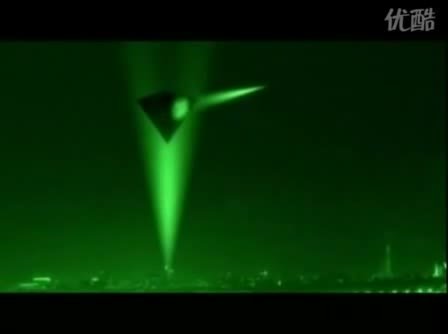
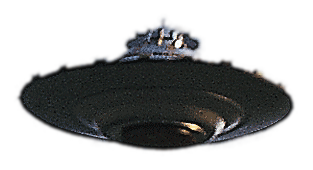
On the evening of 27 September 1989, a group of children playing in a park in the Yuzhny (Southern) district of Voronezh, a city of roughly a million people about 320 miles south of Moscow, reported a large glowing object descending over them at around 6:30 pm. The first thing several of them noticed was a pink or red light in the sky that resolved into a dark red sphere they estimated at about thirty feet across. The object circled low, vanished, then reappeared minutes later and hovered roughly forty feet above the ground. According to the accounts gathered by Voronezh investigators and reproduced by Jacques Vallee, a hatch then opened in the sphere and a small metal ladder extended to the ground.
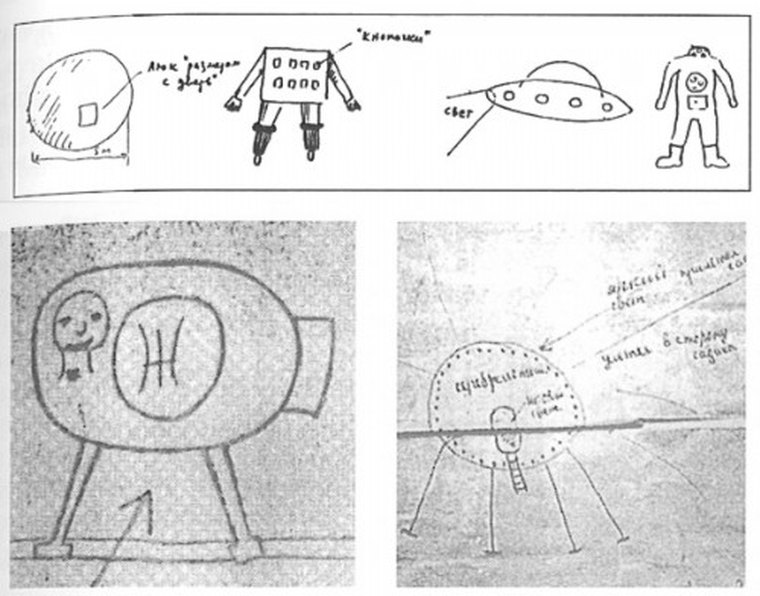
What the children described coming out is the part that made the case notorious. They reported one or more tall humanoid figures, given as nearly three meters and in some tellings closer to four (roughly nine to thirteen feet), with strikingly small heads. The most repeated figure had three eyes, a disk-shaped object on its chest, silver-colored overalls and bronze-colored boots, and eyes that seemed to give off light. Alongside the tall being the children described a robot, essentially a box with something like a head on top, which one of the tall figures activated by touching knobs on its chest, after which it walked in a stiff, mechanical way. One boy, named in several accounts as Vasya Surin, an eleven-year-old fifth grader, was said to have been briefly paralyzed when one of the beings pointed a tube at him, and witnesses claimed another boy momentarily vanished and reappeared.
The children who became the public faces of the case were Vasya Surin, sixth graders Genya Blinov and Roma Torshin, and a girl named Julia Sholokhova. Several of them were asked to draw what they had seen. Two of those sketches survive as the canonical images of the event: Roma Torshin's drawing of the craft and the robot and Genya Blinov's drawing of the beings. Crucially for the record, Vallee and other investigators reported that some forty adults also observed the strange occurrence over the period, a fact that the Western press largely dropped in favor of the easier line that this was a UFO seen by a bunch of kids. The next day a landing oval roughly twenty meters long was found in the park, along with four deep indentations set out in a diamond pattern and holes that looked, as one investigator put it, as if someone had taken a soil sample.
What is the official explanation?
The case is famous for one reason above all others: it is the only time the official news agency of a superpower reported a UFO landing as established fact. On 9 October 1989 TASS, the Soviet state wire service, transmitted a dispatch that opened, in the form that reached the West through the Associated Press bureau in Moscow, "Scientists have confirmed that an unidentified flying object recently landed in the Russian city of Voronezh." The bulletin described the sphere, the tall small-headed beings, the robot and the landing marks, and it credited local scientists with confirming the site. The story ran around the world within hours and was carried by UPI and the major American papers the same week.
The scientific frame came from Genrikh Silanov, head of the Voronezh Geophysical Laboratory, who said his team had traced the outline of the landing site using "biolocation," a Soviet dowsing technique for mapping what investigators called biological energy fields. Silanov reported that inside the traced circle the bioenergy reading was nil, that the path he reconstructed for the humanoids matched the one the boys independently pointed out, and that a magnetometer reading at the site went off the top of its scale. A member of the local investigating group, Dr. Yuri Lozovtsev, calculated from the shape and depth of the four depressions that whatever made them had pressed on the ground with a force of about eleven tons. Silanov also described two reddish rocks recovered at the site, saying that at first glance they looked like deep-red sandstone but that mineralogical analysis indicated the substance could not be found on Earth. Contemporary accounts also reported elevated radiation and unusually high levels of certain elements, phosphorus in particular, in the soil.
The investigating body was not a government agency but the Voronezh group of an autonomous UFO commission formed under the Radio-Engineering, Electronics and Communications Society, whose members included aviation engineer Alexander Mosolov, chief engineer Vyacheslav Martynov and the materials specialist Lozovtsev. They presented their findings in Moscow, where the French-American astrophysicist Jacques Vallee, invited to the USSR by the press agency Novosti in the early glasnost period, met them and recorded the case in his 1992 book "UFO Chronicles of the Soviet Union: A Cosmic Samizdat." Vallee did not travel to Voronezh and did not interview the child witnesses himself; the Voronezh investigators were brought to Moscow to brief him. Soviet officialdom did not embrace the story either. A vice-rector of Voronezh University quickly dismissed the incident as fiction, Silanov himself later softened the rock claim toward ordinary hematite and, by some accounts, denied having made his more dramatic statements at all.
What did the witnesses think it was?
The children stuck to their accounts under intense national and international attention, and the investigators who interviewed them stressed that the drawings produced by different children, reportedly sketched in isolation from one another, were strikingly consistent in showing the same tall three-eyed figure, the disk on the chest and the boxy robot. That internal consistency, even skeptics conceded, was hard to wave away as random invention. The local researchers, Mosolov, Martynov and Lozovtsev, treated the event as a real physical occurrence and built their case on the ground traces, the magnetometer anomaly and the calculated eleven-ton load rather than on the humanoid descriptions alone. They pointed repeatedly to the roughly forty adult witnesses as evidence that this was not simply a children's fantasy.
Vladimir Azhazha, one of the best-known Soviet ufologists of the period, was careful rather than triumphant. He is quoted in Vallee's account saying that it would be a mistake to read the Voronezh facts as proof of extraterrestrial visitors, because human knowledge was still too limited for any convincing scientific interpretation. Jacques Vallee himself, who weighed the case from Moscow, neither endorsed the alien reading nor dismissed the event. He noted the corroborating adult witnesses, took the physical traces seriously, and leaned toward his long-running view that whatever the phenomenon is, it may project a scene into the minds of witnesses rather than simply being a nuts-and-bolts craft. The pivotal walk-back came from the journalist who put the story on the wire. Vladimir Lebedev, the TASS correspondent who filed the Voronezh report, told reporters amid mounting ridicule that his source had been a dozen youngsters aged twelve to thirteen, and conceded "I think there is a certain portion of truth, but it is not excluded that there is also fantasizing," adding that "mature people may have added certain things." That is the closest thing the case has to an insider hedge, and it came not from a witness but from the man who packaged their accounts for a global audience.
The dispute
The dispute is essentially that Voronezh is a children's story that a sensational TASS wire turned into an international "official UFO landing," and that the supposed scientific backing evaporates under scrutiny. The clearest evidence for this view comes from the TASS correspondent himself. Vladimir Lebedev, the journalist who filed the report, acknowledged under questioning that his source was about a dozen youngsters aged twelve to thirteen, and he hedged on air and in print, saying "I think there is a certain portion of truth, but it is not excluded that there is also fantasizing," and that "mature people may have added certain things." The American skeptic Paul Kurtz, writing in the Skeptical Inquirer in 1990, treated the episode as a symptom of a Soviet press newly unmoored by glasnost rather than as a real landing, and mocked the recovered rocks in blunt terms. A vice-rector of Voronezh University publicly called the incident fiction.
The scientific claims that gave the story its authority are the weakest link. Genrikh Silanov of the Voronezh Geophysical Laboratory located the site by "biolocation," which is dowsing rather than measurement, and his most striking assertion, that two reddish rocks from the site were a substance not found on Earth, was later softened to ordinary hematite, a common iron oxide, with some accounts reporting that Silanov denied having made the dramatic statements at all. The landing oval, the four depressions and the eleven-ton pressure figure all originate with the same local enthusiast group, the autonomous Voronezh UFO commission, and cannot be independently authenticated. Taken together, a hedging correspondent, a retracted rock claim, an unverifiable trace site and a hostile academic make a coherent ordinary story.
That story is genuinely contested, however, and it falls short of closing the case, which is why this is Barely Disputed rather than anything stronger. No skeptic ever produced the specific prosaic object behind the sighting. James Oberg, an experienced debunker, checked NASA records for rocket launches and re-entering debris over the Soviet Union and found nothing in the area to account for it, ruling out the most common natural explanation rather than confirming one. Investigators consistently reported around forty adult witnesses in addition to the children, and the independently produced sketches by Roma Torshin and Genya Blinov matched each other and the verbal reports closely enough that even critics conceded the consistency. There is no confession, no recovered hoax apparatus and no positive identification of a real-world object, which is exactly the bar a Strongly Disputed verdict would require. The counter-explanation is plausible and partly documented, but it remains an argument about credibility, not a demonstrated debunk, so the case largely stands.
Is the Voronezh Landing real? The two-pass assessment
Pass one, the ordinary readings. The most economical explanation is that this is a children's tale that grew in the telling and was then over-sold by a sensational TASS dispatch in the giddy first months of glasnost, when the Soviet press suddenly discovered an appetite for the paranormal. The core humanoid encounter rests on a handful of twelve and thirteen year olds, and the correspondent who filed it, Vladimir Lebedev, openly allowed that there was probably fantasizing in the mix and that adults may have embellished the account. The headline "scientist confirmation" dissolves on contact: Silanov's biolocation is dowsing, not instrumentation, and Silanov himself later walked the dramatic rock claim back toward ordinary hematite, a common iron oxide found across the Soviet Union, and by some accounts denied his stronger statements entirely. A vice-rector of Voronezh University called the whole thing fiction. The landing oval and depressions in a public park are exactly the sort of marks that are impossible to authenticate after the fact, and the "off the scale" magnetometer reading and eleven-ton pressure figure come from the same enthusiast group that wanted the event to be real. None of this requires a craft.
Pass two, if something genuinely happened. Set against the easy debunk are a few stubborn facts. The skeptics never produced a positive identification of a prosaic cause. The American space analyst and career UFO debunker James Oberg checked NASA tracking data for rocket launches and re-entering space debris over the USSR around the dates and found nothing nearby that would explain the sightings, so the usual rocket-or-re-entry solution does not fit. Investigators reported roughly forty adult witnesses, not just children, a detail the ridiculing coverage dropped. The independently drawn sketches matched each other and the verbal reports closely enough that critics admitted as much. And whatever else it was, the event drew a serious researcher, Jacques Vallee, who recorded measured testimony rather than a hoax confession, and a Soviet apparatus that moved to soften and dismiss the story rather than to explain it.
Weighing both passes, the dispute here is real and substantial but it does not close the case. There is no confession, no recovered hoax prop, and no identified specific object, balloon, aircraft or rocket pinned to this sighting; what exists is a sensational official framing, a correspondent's hedge and a softened rock claim, all of which undercut the strongest version of the story without demolishing it. That is the textbook profile of a contested encounter that largely still stands on its witnesses. The tier is Barely Disputed.
Sources
- archive.org/stream/B-001-002-573/B-001-002-573_djvu.txt
- www.upi.com/Archives/1989/10/10/Correspondent-waffles-on-UFO-report/5264623995200/
- www.upi.com/Archives/1989/10/09/Soviets-report-UFO-landing/3780623908800/
- cdn.centerforinquiry.org/wp-content/uploads/sites/29/1990/04/22165231/p40.pdf
- www.theblackvault.com/casefiles/voronezh-russia-ufo-landing-and-aliens/
- decur.org/cases/voronezh-ufo-incident
- anomalien.com/voronezh-ufo-incident-aliens-landed-in-the-soviet-union/
More cases from this region: UFO sightings in Russia