The Barra da Tijuca Photographs
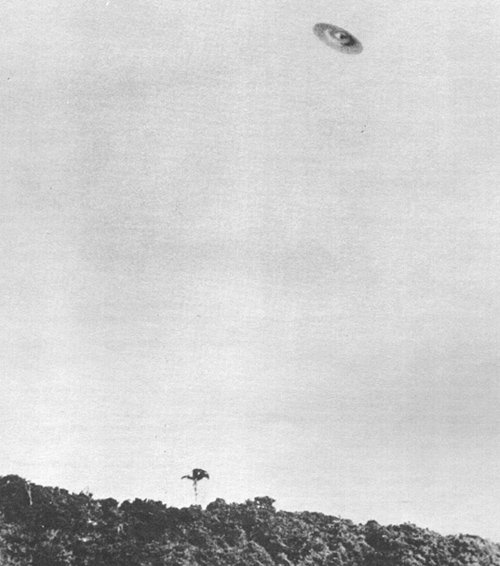
On the afternoon of 7 May 1952, press photographer Ed Keffel and reporter Joao Martins of O Cruzeiro magazine produced five photographs of a domed disc maneuvering over the hills of Barra da Tijuca near Rio de Janeiro. The Brazilian Air Force investigated, tried and failed to reproduce the images, and declared them genuine, while a shadow-direction argument first pressed by Donald Menzel has kept the case in dispute ever since.
What did witnesses see at Barra da Tijuca?
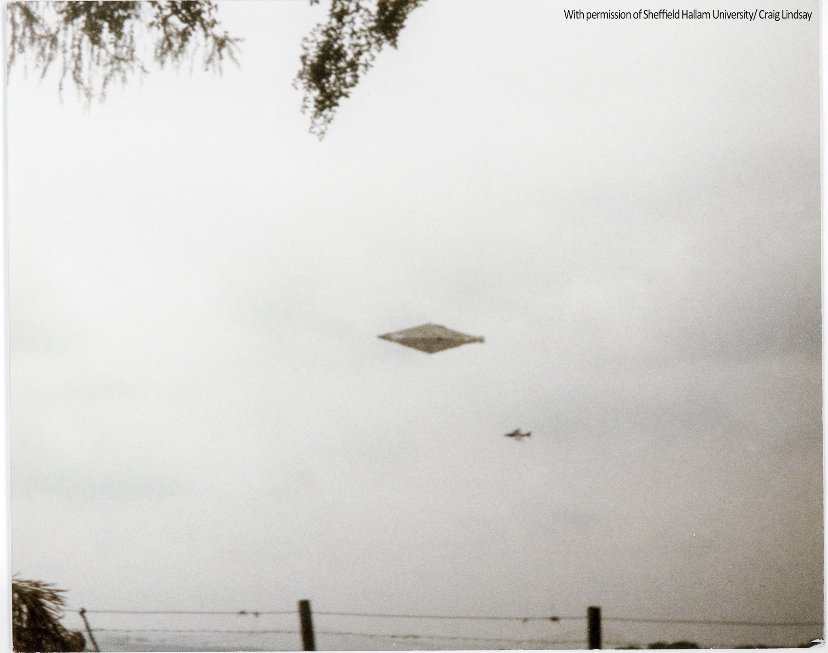
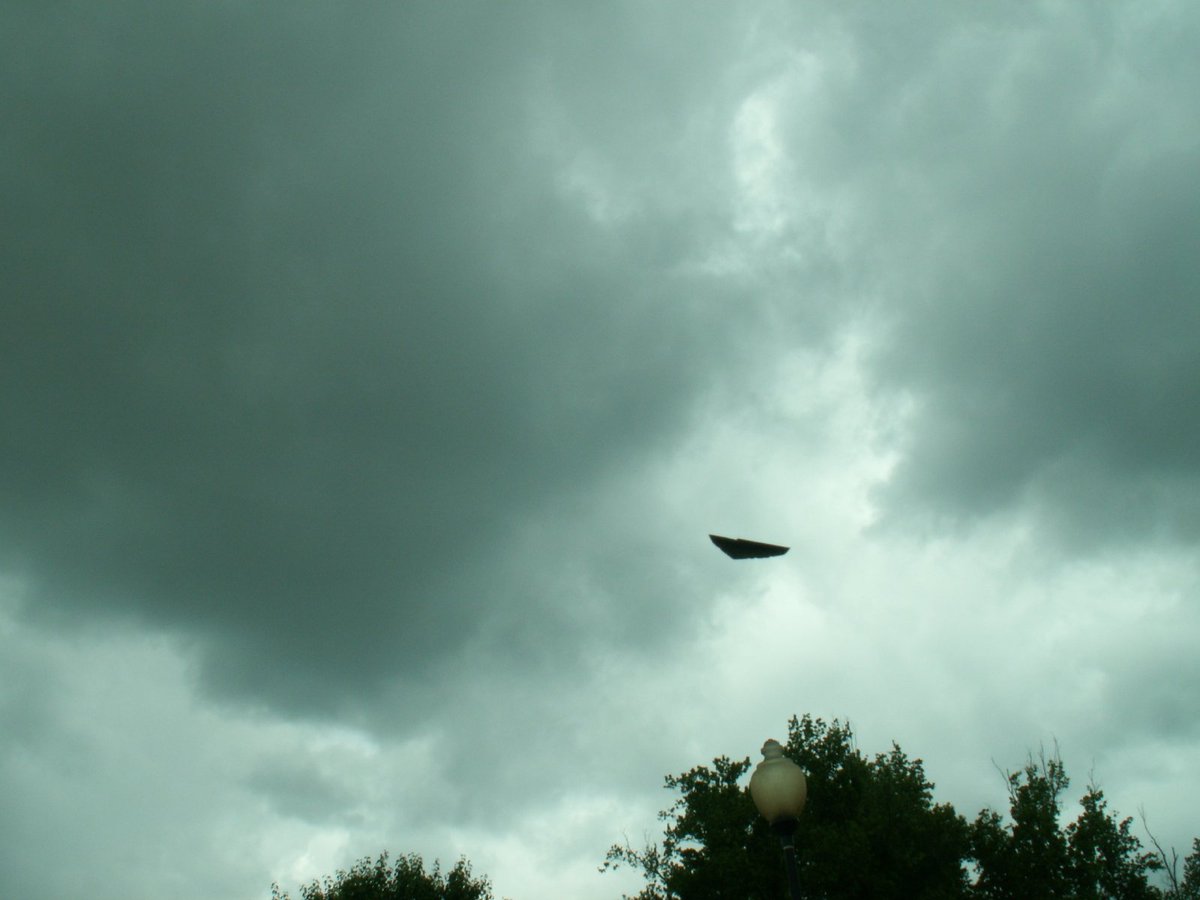
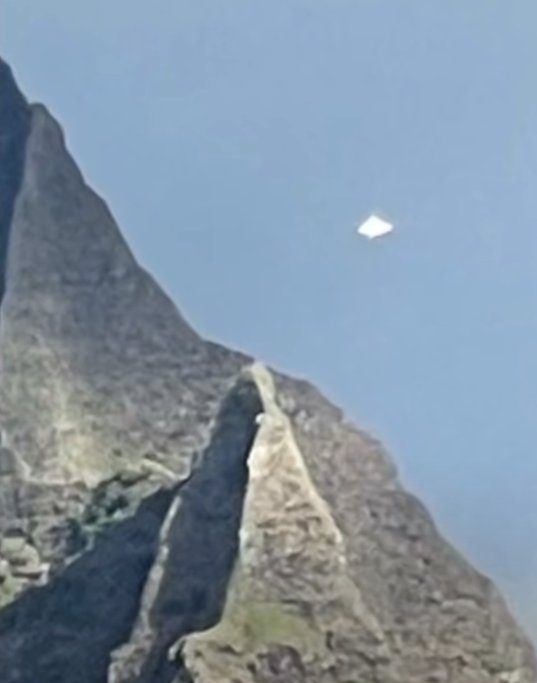
At about 4:30 PM, Martins spotted an object approaching at high speed and shouted to Keffel, who fired off five black and white frames in roughly 60 seconds as the object passed overhead, circled near Pedra da Gavea, and headed out to sea. The developed prints show a sharply outlined solid-looking disc with a dome on top and a raised ring beneath, estimated by the newsmen at some 50 meters across. O Cruzeiro published the series in its issue of 24 May 1952. The frame archived here shows the disc tilted edge-on above a vegetated hillside with a single palm rising over the ridgeline, the photo at the center of the later shadow controversy.
What is the official explanation?
The Brazilian Air Force ran a serious investigation. Investigators interviewed the photographers, tracked down roughly 40 people who had been in the vicinity that day and whose accounts matched the newsmen's story, surveyed the site, and attempted to reproduce the photographs using models and trick photography. They failed, and the Air Force issued a positive statement that the photos were genuine, a finding kept quiet until Fernando Cleto disclosed it on television in 1959. The Air Force reproduction attempts had a second life: locals who saw officers photographing saucer models later told Project Blue Book interviewers they had seen men faking UFO pictures in the area, and Blue Book wrote the case off as a hoax on that basis. APRO documented that the model photographers were the Air Force's own duplication team. Whatever else it shows, the record establishes that the Brazilian military treated this case as worth a full field investigation and endorsed the result.
What did the witnesses think it was?
Ed Keffel was a professional press photographer and Joao Martins an established reporter, both working for O Cruzeiro, then one of the largest magazines in Latin America. Both stood by the photographs. Brazilian Air Force investigators rated the two newsmen as reliable and found no motive among the 40 or so independent witnesses whose stories corroborated theirs. No confession by either man is on record. Claims that the pair hoaxed the photos for an interesting story remain inference from the photo analysis, not testimony.
The dispute
The dispute centers on a single technical attack: an internal lighting inconsistency in the photographs, not a confession, an identified mundane object, or an official ruling of fraud. The Brazilian Air Force, the only body to examine the original negatives, ran a field investigation, interviewed roughly 40 corroborating witnesses, failed to reproduce the images, and declared them genuine, rating photographers Ed Keffel and Joao Martins of O Cruzeiro magazine as reliable. So the debunk did not come from the investigating authority. It came from skeptics working from the published frames.
The specific charge was advanced by Donald Menzel and Lyle Boyd in 1963, who pointed out that in the palm-tree frame the disc appears lit from the left while the hillside vegetation reads as lit from the right. William Hartmann adopted this critique in the Condon Report (Case 48), calling it a simple and obvious internal inconsistency. Later analysts pushed the same line toward an explicit fraud verdict: Claudeir Covo argued the lighting in the fifth frame would require the sun to sit out in the Atlantic, and William Spaulding and Carlos Reis reached fraud conclusions in the 1980s through comparative lighting analysis. This is a real, falsifiable, method-shown attack on the imagery, which is what keeps the case from being a clean unexplained sighting.
But the attack does not close the case, because it is itself competently rebutted on its own terms. Olavo Fontes identified two broken palm leaves he argued produce the misread shadow on the trunk, an alternative explanation for the very anomaly the skeptics rely on, and Hartmann acknowledged the leaf rebuttal while maintaining other foliage still looked inconsistently lit. Jim Lorenzen of APRO countered that the hillside growth is simply too complex to support any clean object-and-shadow reading at all. The shadow argument therefore remains contested rather than settled, with published responses on both sides.
What is missing is the thing that would make this a strong debunk. There is no confession, and none is on record from either newsman, who stood by the photographs. There is no demonstrated hoax method, no recovered model or rig, and no measurement that forces the fraud reading over the rebuttals. The fraud conclusions of Covo, Spaulding, and Reis are interpretive readings of ambiguous foliage lighting, not a reproduced forgery. With the witnesses never impeached, the originals vouched for by the only military body that held them, and the one concrete anomaly answered by competing analysts, the dispute is a genuine but unresolved technical quarrel, so the case largely stands as Disputed rather than explained.
Is the Barra da Tijuca Photographs real? The two-pass assessment
First pass, the case as it stood in the 1950s: this is about as strong as a photographic case gets on paper. Five frames showing the object from multiple aspects, two professional newsmen with reputations to lose, publication in a major national magazine, roughly 40 corroborating witnesses located by military investigators, failed official reproduction attempts, and a Brazilian Air Force endorsement of authenticity. APRO called it possibly the best photo series on record. Second pass, the counter-analysis: the shadow argument qualifies as a real named-method critique. Donald Menzel and Lyle Boyd pointed out in 1963 that in the palm tree frame the disc is lit from the left while the hillside vegetation reads as lit from the right, and William Hartmann adopted the point in Condon Report Case 48, calling it a simple and obvious internal inconsistency. Brazilian analyst Claudeir Covo later argued that the lighting in the fifth frame would require the sun to sit in the Atlantic, and William Spaulding and Carlos Reis reached fraud conclusions in the 1980s. The rebuttals are also named and methodical: Olavo Fontes identified two broken palm leaves he argued produce the misread shadow on the trunk, and APRO's Jim Lorenzen countered that the hillside growth is too complex to support any clean object-and-shadow reading. Hartmann acknowledged the broken-leaf rebuttal but held that other foliage clumps still showed the wrong lighting. Blue Book's hoax write-off rests on hearsay about the Air Force's own model team and carries no analytical weight. Verdict: a genuinely contested case. The shadow inconsistency is a legitimate, specific, still-unresolved attack on the imagery, but it has competent published rebuttals, the witnesses were never impeached, and the only military body that examined the originals vouched for them. Disputed.
Sources
- www.nicap.org/bdtrep-story.htm
- files.ncas.org/condon/text/case48.htm
- nicap.org/520507barra_da_tijuca_dir.htm
- www.ufoevidence.org/photographs/section/featuredphotos/photo310.htm
- www.nicap.org/reports/barra_randle.htm
- www.ceticismoaberto.com/galeria/imagens-de-ovnis/5408/caso-barra-da-tijuca
More cases from this region: UFO sightings in Brazil