Carlos Diaz and the Ships of Light
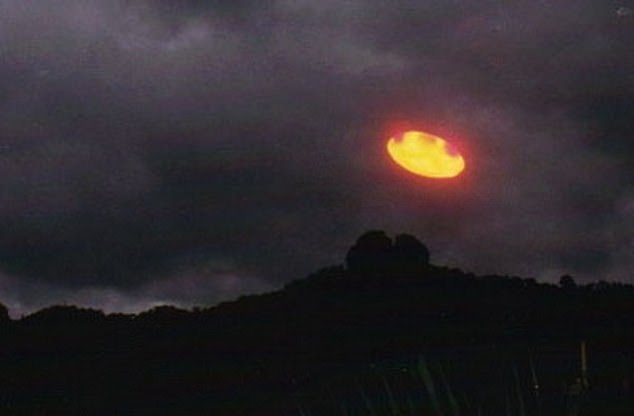
A glowing amber oval hanging over the twin-rock summit above Tepoztlan is the signature image of the longest-running photographic contact case in Mexico. Carlos Diaz produced striking orange ship of light photos for over a decade, drew in Harvard psychiatrist John Mack and German researcher Michael Hesemann, and split ufology down the middle doing it.
What did witnesses see at Tepoztlan?
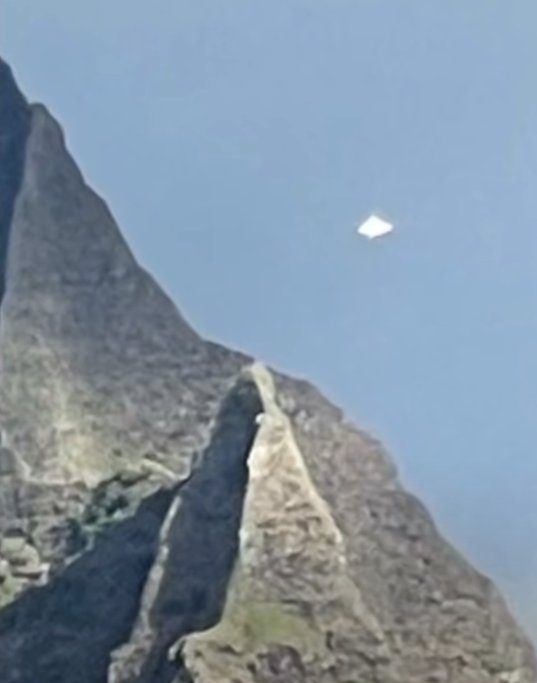
By Diaz's account the case began at a lookout in the Ajusco volcanic zone south of Mexico City, dated by investigator Michael Hesemann to the early hours of 23 March 1981, when an orange glowing dome rose from the slope in front of his parked car and he shot photos before it accelerated away. After further encounters, including a missing-time episode, Diaz moved to Tepoztlan, about 40 miles south of the capital, where he photographed the same type of luminous orange oval repeatedly through the 1980s and 1990s. The photo here, an intense yellow-orange lens-shaped object above the double rock outcrop on the ridge under storm clouds, is catalogued in the Hesemann archive and on UFOEvidence as taken at Tepoztlan on 7 June 1992.
What is the official explanation?
No government investigation exists. Proponents report that original slides were examined by Prof. Victor Quesada at the Polytechnical Institute of the University of Mexico, by image analyst Jim Dilettoso at Village Labs, and by Dr. Robert Nathan at JPL, with none finding evidence of superimposition, and that Mexico City air traffic controllers acknowledged sightings over the Tepoztlan area on camera. None of these analyses was ever published as a verifiable technical report, so they remain proponent claims rather than records.
What did the witnesses think it was?
Carlos Diaz, a professional photographer, is the sole photographer. Hesemann and Jaime Maussan claim large numbers of Tepoztlan residents, including the mayor, reported seeing similar objects, and John Mack spent three days with Diaz and found him sincere. All corroboration flows through proponent channels.
The dispute
The strongest counter-explanation on record is a suspended-model claim. Researcher Bill Hamilton, after a frame-by-frame viewing of Carlos Diaz's footage at Village Labs, wrote that the object descends in a jerky motion as if suspended by a cable. That single observation is the most concrete skeptical mark against the case: it points toward a small model hung on a line rather than a craft in free flight, and it comes from a named researcher who actually examined the material. A second, weaker line of doubt also circulates, that the glowing orange ovals resemble locally made Tepoztlan glass lamps, but the page records no attribution for it, so it sits as an unsourced rumor rather than a tested claim.
Critically, neither counter-explanation is backed by a demonstrated method. Hamilton offered an observation, not a reconstruction: no model was built to reproduce the jerky descent, no measurement of the motion was taken, no frame analysis was published, and Diaz never confessed. The glass-lamp resemblance is an assertion with no analyst behind it and no test showing a lamp could produce the filmed behavior. So the debunk side rests on one expert's visual impression plus an anonymous comparison, which is enough to raise serious doubt but not enough to settle the footage as a hoax.
There is also no official ruling to lean on. No government investigation of the Diaz case exists, so there is no agency finding either confirming or dismissing it; the apparatus is simply silent here. The opposing evidence, in turn, all flows through proponent channels: Prof. Victor Quesada, image analyst Jim Dilettoso at Village Labs, and Dr. Robert Nathan at JPL are all reported to have found no superimposition, and John Mack judged Diaz sincere, but none of these analyses were published as verifiable technical reports, so they remain claims rather than records.
The case does not close in either direction. What would settle authenticity, the original negatives, camera metadata, published frame analyses, and any independent photographer, is all missing, while the single strongest named technical observation, Hamilton's, leans toward a suspended model. That leaves the images as authenticated photographs of something, with the most credible doubt unproven and the supporting analyses unpublished. The dispute weakens the case but does not resolve it.
Is the Carlos Diaz and the Ships of Light real? The two-pass assessment
Pass one, provenance and image: this exact frame has a stable provenance to the Hesemann collection (his watermark appears on the UFOEvidence copy) and a stable date of 7 June 1992, and the case's origin is consistently dated 23 March 1981 in Hesemann's account, though other tellings say January 1981, which already signals how soft the documentation is. The original film stock and negatives were never independently archived. Pass two, claims versus counterclaims: the supporting expert analyses are all unpublished and unverifiable. On the skeptic side there is a named, methodical objection: researcher Bill Hamilton, after frame-by-frame viewing of Diaz footage at Village Labs, wrote that the object descends in jerky motion as if suspended by a cable, an observation Hesemann answered with a plasma-craft interpretation. A circulating claim that the object resembles locally made Tepoztlan glass lamps is unattributed and stays out of the verdict. Verdict: Disputed. The images are real photographs with documented custody, but everything that would settle authenticity, negatives, metadata, published analyses, independent photographers, is missing, and the strongest named technical observation points toward a suspended model.
Sources
- www.ufoevidence.org/photographs/section/topphotos/photo66.htm
- www.ufoevidence.org/Cases/CaseSubarticle.asp?ID=1092
- mexicounexplained.com/ufo-encounter-at-ajusco-the-case-of-carlos-diaz/
- reveil.blog/carlos-diaz-the-ufo-with-the-glowing-molten-skin
- www.dailymail.co.uk/sciencetech/article-12284045/The-6-compelling-UFO-photos-WORLD-Turkey-Costa-Rica-Wisconsin.html
More cases from this region: UFO sightings in Mexico