The Rudi Nagora Disc Photographs
On 23 May 1971, at roughly 12:30 in the afternoon, Rudi Nagora, a professional musician from Munich, was on a driving holiday in Styria with his wife Hildegard. This case file covers what witnesses reported, the official narrative, and a two-pass assessment with its evidence tier.
What did witnesses see at St. Lorenzen im Mürztal?
On 23 May 1971, at roughly 12:30 in the afternoon, Rudi Nagora, a professional musician from Munich, was on a driving holiday in Styria with his wife Hildegard. They had pulled off and parked at the edge of open country near St. Lorenzen im Mürztal, a small market town in the Mürz valley. Nagora got out to scout a clearing for a picnic while Hildegard stayed in the car. Before he had walked far he heard what he described as a whizzing or whistling sound from above. Looking up, he saw a shining silver disc hanging in the air between him and the cloud layer, close and low.
Nagora ran back to the car, told his wife what he was looking at, and grabbed his camera, a simple Agfa box camera (variously recorded as an Agfa Click box, exposure time about 1/50 second). He then shot a full roll, 12 exposures, of the object. Across the sequence the disc appeared to hang almost stationary at times and to rotate slowly, while at other moments it darted in sharp zig-zag or jumping movements from point to point across the sky. Witnesses and later analysts put the whole observation at close to ten minutes. Nagora also reported a soft humming sound coming from the object. When the film ran out, he watched the disc come closer, then shoot straight up and vanish through the clouds.
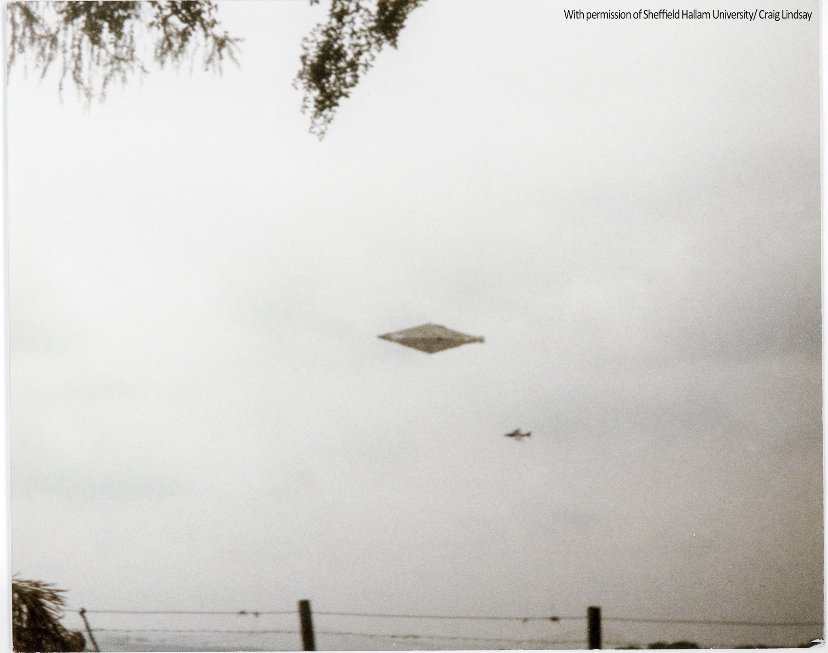
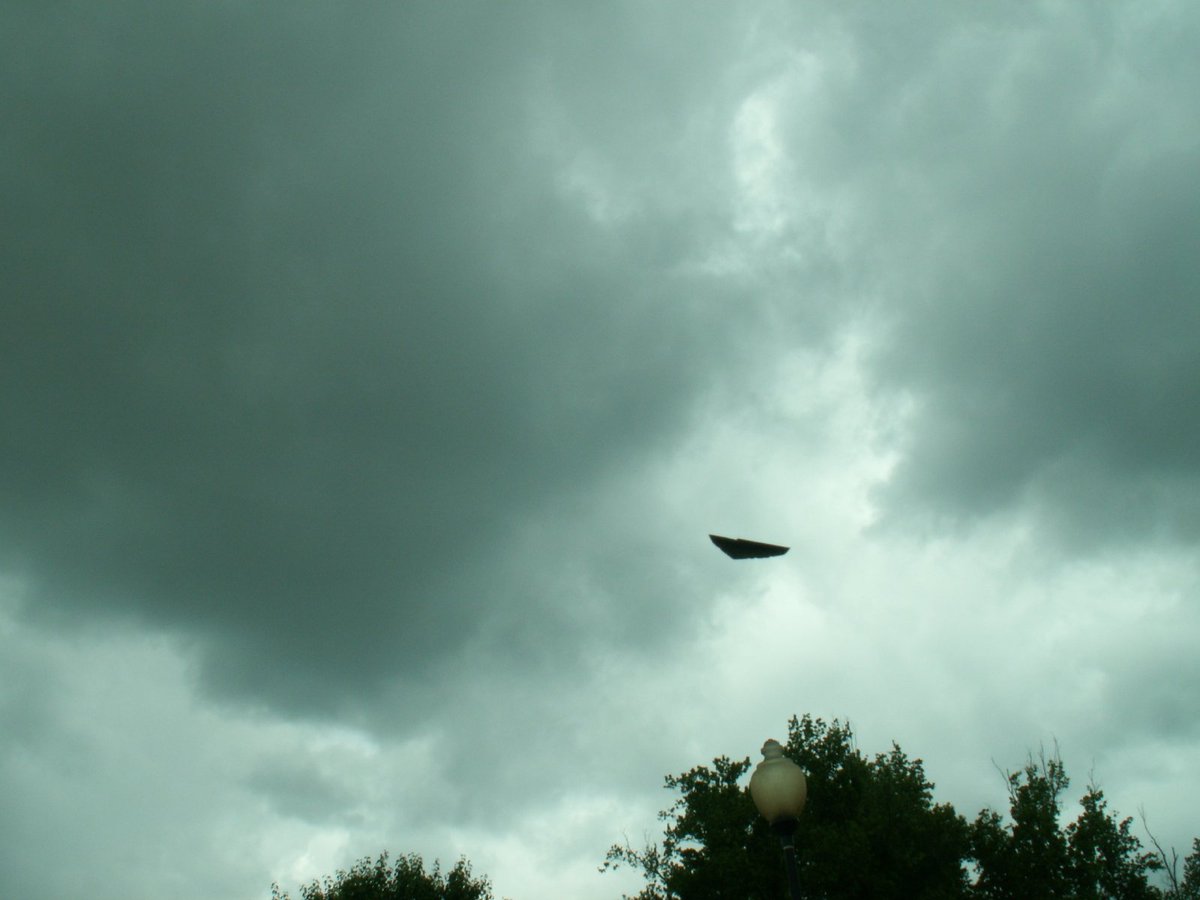
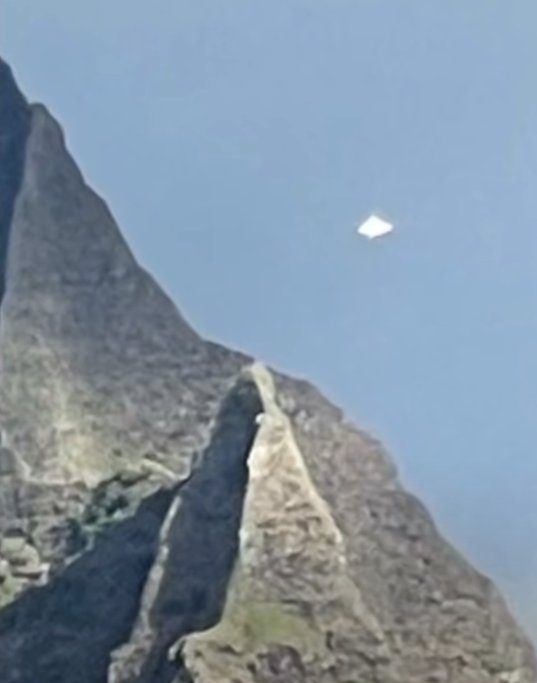
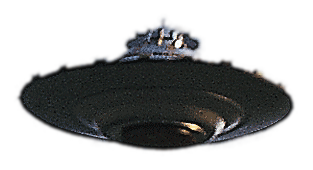
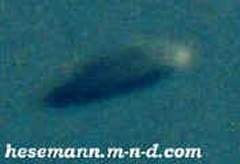
The frames that survive show a bright, sharply edged silver-white disc photographed against a real, structured cloudscape, with the object in different positions and apparent orientations from frame to frame. Of the twelve exposures, two were singled out by later commentators as the clearest. Hildegard Nagora corroborated the sighting from the car. Nagora took the undeveloped film back to Munich, where word of the pictures spread through his acquaintances and then more widely, which is how investigators first heard of the case.
What is the official explanation?
There is no government or military investigation of this case on record. Austria in 1971 had no equivalent of the United States Project Blue Book, and no air-force or police file surfaced in the contemporary record. What exists instead is a long chain of civilian investigation, which is where the documentation lives.
The first investigator to take up the case was the Munich engineer Adolf Geigenthaler, who heard about the photographs, located Nagora, examined the pictures and the witness, and treated the set as genuine; his involvement is dated in the record to around 1976. Over the following decades the negatives and prints passed through a series of named German and Austrian researchers, including Hubert Malthaner, a Professor Dr. Kaesbauer, and the physicist and author Adolf Schneider, all of whom recorded the case as not hoaxed after working from the original material rather than from reproductions.
The most technically serious treatment came from MUFON-CES, the Central European Section of the Mutual UFO Network, founded in 1974 near Munich by the astrophysicist Illobrand von Ludwiger and known for hard-nosed photographic and radar analysis. MUFON-CES analysts Rolf-Dieter Klein and von Ludwiger reexamined the Nagora frames in the 1990s (Klein's work dated to 1995, von Ludwiger's to 1997). Their method, shown on German television in the documentary UFOs - und es gibt sie doch, was to reconstruct the object's positions frame by frame against the fixed cloud features and to run a computer simulation of the motion. They reported that the object jumped along a line in the sky over an interval of close to ten minutes, estimated a diameter of roughly 12 to 15 meters if the object sat near the clouds, and concluded that the elapsed time between frames was far too long to be consistent with a small object such as a hubcap thrown into the air and photographed in flight. On that basis MUFON-CES recorded the Nagora photographs as genuine, that is, as not a thrown-object fake. The same group is on record exposing other famous photo series as fakes (the Wedel photograph by Walter Schilling, the Amaury Rivera Puerto Rico jet-and-saucer series, and a Yellowstone image they showed was a bird), so their endorsement of Nagora is the verdict of analysts who were willing to and did debunk material when the evidence pointed that way.
What did the witnesses think it was?
Nagora himself never wavered. He maintained for the rest of his life that he had photographed a large structured craft, not a small model or a piece of debris, and he made the point that opening his material up to scrutiny brought him years of ridicule rather than reward. In his own recorded account he said the object kept moving so that it would suddenly be behind him and he had to keep turning around, and that he managed twelve pictures; he noted that people accused him of having photographed a hubcap until the pictures were actually analyzed, after which, he said, examinations in Germany and America found no evidence of trick photography. The Nagoras also gave a signed statement affirming that they had seen a large disc and not a small nearby model.
Hildegard Nagora is the corroborating witness. She was present in the car, saw the object, and her account matched her husband's. There is no second independent party from outside the family on record, which is a real limit on the case: it rests on two witnesses and twelve photographs. What strengthens it is that the family stood behind a falsifiable claim, the negatives, for decades and handed them to investigators who could have destroyed the case with them. The pro-authenticity researchers, from Geigenthaler through von Ludwiger, repeatedly stressed that they worked from those original negatives and from direct interviews, not from magazine reproductions.
The dispute
The dispute is a thrown-object hoax claim, specifically that the silver disc in Nagora's frames is a wheel cover or hubcap tossed into the air and photographed against the clouds. It was put on the record by two named figures from the German skeptical community: Klaus Webner in 1982 and, more prominently, Rudolf Henke in 1996, at a time when Henke was the head of GWUP (the Gesellschaft zur wissenschaftlichen Untersuchung von Parawissenschaften), Germany's leading organized skeptics' society. The hubcap reading is not arbitrary. A spinning chrome wheel cover does photograph as a bright, sharp-edged silver disc, and a box camera with a slow shutter and no motor drive is exactly the kind of equipment with which a patient hoaxer could stage such a sequence.
What keeps this from closing the case is the method, or the absence of one. According to the case record assembled by the French researcher Patrick Gross, neither Webner nor Henke asked to examine Nagora's original negatives and neither interviewed the witnesses before declaring the photographs falsifications. Their claim is therefore an argument from appearance, that the object looks like a thrown hubcap, rather than a demonstration that this specific twelve-frame roll was produced that way. No hubcap or model was ever recovered, no one reproduced the sequence, and neither skeptic published a frame-by-frame analysis showing the geometry was faked.
On the other side stand analysts who did work from the original material. The MUFON-CES team of Rolf-Dieter Klein and Illobrand von Ludwiger reconstructed the object's positions against the fixed clouds and ran a computer simulation, concluding that the time spanned by the frames was far too long for a small thrown object and that the geometry fit a large object, estimated at 12 to 15 meters, near the cloud base. That this same group is on record exposing other celebrated photographs as fakes, including the Wedel and Amaury Rivera series, means their authentication carries the weight of analysts who were demonstrably willing to debunk.
So the dispute is real and is named to a specific skeptical authority, but it rests on an assertion of resemblance rather than a shown method, while the negatives that could have settled it were examined by the other side and not by the skeptics. There is no confession, no recovered prop, and no positive identification of a particular real-world object. The counter-explanation is weak and method-light, the case largely stands, and the correct placement is Barely Disputed.
Is the Rudi Nagora Disc Photographs real? The two-pass assessment
Pass one, the ordinary explanations. The single most cited mundane reading is that the disc is a small flat object thrown into the air and photographed against the clouds. A hubcap or wheel cover is the specific prop named, because a spinning hubcap photographs as a bright silver disc and can be tossed to give the impression of an object hanging in the sky. This is a genuinely plausible mechanism for a box-camera photo, and it is the explanation that two skeptics put on the record: Klaus Webner in 1982 and Rudolf Henke, then head of the German skeptics' organization GWUP, in 1996. Other ordinary readings would be a deliberate hoax with a model, or a double exposure. The honest difficulty for all of these is that the people who advanced the thrown-hubcap claim, by the account preserved in Patrick Gross's dossier, did not ask to examine the negatives and did not interview the witnesses, so the hubcap reading remains an assertion of how the pictures could have been made rather than a demonstration that they were. No prop has been recovered, no confession exists, and nobody has reproduced this specific twelve-frame sequence by throwing anything.
Pass two, if the photographs record what Nagora said they record. Then a structured silver disc on the order of ten meters across hung and darted over a Styrian field in daylight for close to ten minutes, rotating slowly, humming softly, and finally accelerating vertically out of sight, with twelve frames of a single moving roll to show for it. The analysts who worked the original material, culminating in the MUFON-CES reconstruction by Klein and von Ludwiger, argued exactly this: that the frame-to-frame geometry against the real clouds is inconsistent with a small thrown object and consistent with a large object at distance. That this verdict came from a group with a track record of catching and publicly burning fakes is the strongest single point in the case's favor.
Weighing the two passes: a concrete counter-explanation exists and was advanced by a named skeptical authority, which is why this cannot sit in the unexplained tier. But that counter-explanation was offered without examining the negatives or the witnesses, while the authenticity finding came from analysts who did examine the originals and who applied a shown method. There is no confession, no recovered prop, and no positive identification of a specific real-world object. Under the project's rules that is a weak, method-light dispute against a case that otherwise stands, which places it at Barely Disputed.
Sources
- ufologie.patrickgross.org/htm/picamaas.htm
- www.youtube.com/watch?v=Md6sRFqDv-0
- www.youtube.com/watch?v=WMuziotCA0c
- www.das-ufo-phaenomen.de/literatur/deutsch/von-ludwiger-illobrand/
- www.weltbild.at/artikel/ebook/ufo-fotos-aus-oesterreich-fallzusammenfassung-einer-ufo_25990009-1
- ufologie.patrickgross.org/pics/picamaas01.jpg
- www.amazon.de/Ergebnisse-aus-Jahren-UFO-Forschung-Untersuchungen/dp/3864451833
More cases from this region: UFO sightings in Austria