The Berwyn Mountains Incident
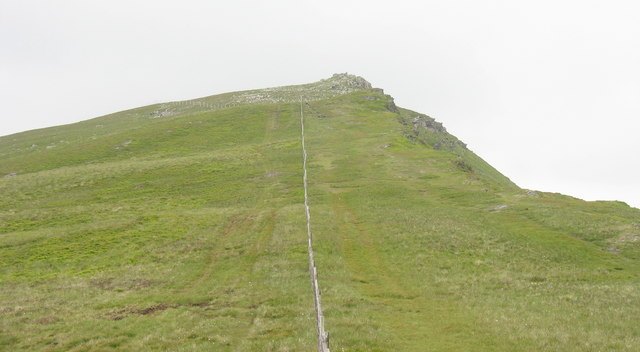
On the night of Wednesday 23 January 1974 the villages strung along the northern edge of the Berwyn range in Merionethshire were shaken by a violent jolt and a deep concussive bang. This case file covers what witnesses reported, the official narrative, and a two-pass assessment with its evidence tier.
What did witnesses see at Berwyn range?
On the night of Wednesday 23 January 1974 the villages strung along the northern edge of the Berwyn range in Merionethshire were shaken by a violent jolt and a deep concussive bang. The British Geological Survey later fixed this as a shallow earthquake of magnitude 3.5 on the local scale, centred near Llandrillo and Bala, felt over most of North Wales and as far north as Formby on the Lancashire coast above Liverpool. Crockery came off shelves, houses trembled, and people who had never felt a tremor before assumed an aircraft had come down or a bomb had gone off. Calls flooded the local police. A police log timed at around 10pm records a report of "a large explosion in the area and a large fire on the mountainside." Mountain rescue teams, police, and the RAF were turned out into the freezing dark to search for a crash that, in the end, no one ever found.
The reason the night did not stay a simple earthquake story is a nurse named Pat Evans, who lived at Llandderfel. Hearing the bang and assuming a plane had crashed, she rang the police, was told reports of an explosion were indeed coming in, and set out with her two teenage daughters to give first aid. She drove out of the village past the war memorial and up onto the high mountain road, the B4391 that crosses the range toward the Milltir Cerrig pass. From the open moorland she and the girls saw, sitting on the dark flank of the mountain, a large glowing object. She described it consistently for the rest of her life as a huge ball, a deep coal-fire or orange-red, that glowed and pulsed and seemed to change colour. Below it and to the side she saw smaller white lights flickering and moving, as if people were moving about lower down the slope. She judged the main object far too big and too steady to be a lamp or a vehicle. After watching for some minutes the family found the way ahead effectively closed off and turned back without reaching it; in later years Pat Evans said she regretted not pushing on, convinced she had been close to something extraordinary.
Other people in the scattered farms and cottages reported lights on the mountains that evening too, and over the following days locals spoke of military vehicles on the back roads and men searching the hill. Out of this grew the harder folklore that gave the case its nickname, the "Welsh Roswell": claims that a craft had been recovered and that bodies were taken away under guard, a strand pushed hardest by author Nick Redfern, who reported testimony that material was removed to the chemical-defence establishment at Porton Down. Researcher Russ Kellett separately turned up records of a military exercise codenamed Photoflash running that same period and argued it pointed to something more than a tremor. None of the body-recovery claims is anchored to a named, checkable first-hand witness, and they sit at a much weaker evidence tier than the core sighting.
What is the official explanation?
The official position assembled quickly and has stayed remarkably consistent: this was an earthquake that coincided with people looking up at a bright meteor. The instrumental backbone is solid. The body now called the British Geological Survey (then the Institute of Geological Sciences) recorded a genuine earthquake that night, magnitude 3.5 ML, epicentred in the Bala area, a size of British earthquake expected on average about once a year. Decades later the BGS seismologist Roger Musson set the whole affair down in a peer-reviewed paper, "The enigmatic Bala earthquake of 1974," in Astronomy and Geophysics (Volume 47, 2006). Musson wrote plainly that "prominent atmospheric lights observed at the time of the shock led to speculation that an aircraft had crashed, and search-and-rescue teams were deployed," and that "since nothing was discovered, it was concluded that a meteorite was responsible; more imaginative members of the public decided (and still believe) that a UFO had crashed."
The lights themselves have an independent paper trail. The British Astronomical Association's meteor records show a bright fireball, a bolide of roughly magnitude minus eight, seen widely across the United Kingdom that same night, with reports gathered from places as far apart as Somerset, Norfolk, Manchester and Edinburgh, plus a cluster of other "UFO" reports around 10pm from the Home Counties, Lincolnshire and Sussex. The government settled on this combination. In a letter dated to May 1974, the RAF minister Brynmor John wrote to the local Member of Parliament, Dafydd Elis-Thomas, that "the phenomena could well have been caused by a meteor descending through the atmosphere burning up and finally disintegrating before it reached the ground." Declassified Ministry of Defence UFO files later released through the National Archives confirmed that reports were logged from several parts of the country that night but contained nothing supporting a crash or a recovery.
The most thorough civilian reconstruction supporting the prosaic reading came from the UFO researcher Andy Roberts, who spent years on the case and published it in his work and in the book he co-wrote with Jenny Randles, "The UFOs That Never Were." Roberts argued the night was a stack of ordinary things landing on top of each other: a real earthquake providing the bang and tremor, the widely-seen fireball providing the dramatic light in the sky, and, crucially for Pat Evans's mountainside object, a party of poachers out lamping for hares with powerful lights on the hill. In his reading the rescue mobilisation, vehicle headlights and torches did the rest, and the legend grew in the retelling. This is a worked, named, method-shown explanation rather than a bare official assertion, which is what gives the dispute real teeth.
What did the witnesses think it was?
Pat Evans never wavered. In interviews given across the following decades she repeated the same core account: "We just saw this huge ball glowing and pulsating on the mountain," and "I've never seen anything like it before or since. I have no idea what it was." She was clear that whatever she saw was not a lantern or a car, and that it sat on the mountainside in a way she could not explain, saying that the object "couldn't have got there any other way apart from being flown there, so it had to be a UFO." Her two daughters, both first-aid trained, were with her and corroborated the sighting, including the changes of colour from red toward yellow and white and back. She was a working nurse driving out to help at what she believed was a plane crash, not a thrill-seeker, which is part of why her testimony has carried weight with investigators on both sides.
The Welsh ufologist Margaret Fry reopened the case in the early 1990s, interviewed Pat Evans directly, and gathered a wider body of local testimony, arguing that the tidy official account glossed over reports of lights and military activity before and after the single date. The researcher who did most to harden the witness side was Scott Felton, who joined the investigation later and worked the actual terrain. Felton's key move was to take a second independent witness, Mike Saville at Llandderfel, who with his wife saw a bright circular orange light on the hill after their house shook, and to triangulate the two separated sight-lines. By plotting where Pat Evans and Mike Saville were each looking, Felton argued the object's position pinned down to a small patch of ground on the high part of the range, and that the thing they were both describing was large and elevated, not a speck on the skyline.
Felton's central rebuttal goes straight at the poacher explanation on its own facts. He and others reported that the lamping party were not on Cadair Berwyn where Pat Evans was looking, but over on Cadair Bronwen, and, more damagingly, that the poachers themselves said their lamp battery had died and they had come off the hill well before about 9pm, before her sighting. A lamp, Felton argued from his own field tests, would read as a small bright point on the horizon, not the large pulsing mass Pat Evans drew and described. He framed the official meteor-and-earthquake story as a convenient lid rather than a full account of the object on the ground. Witnesses like Pat Evans and Mike Saville are weighed here on their own merits; Felton and Fry are researchers with a clear pro-mystery position, and that is weighed too.
The dispute
The dispute is whether the glowing object Pat Evans and her daughters saw on the Berwyn mountainside was an ordinary light source misread under stress, specifically a poacher's lamp, against the backdrop of a real earthquake and a real meteor. The skeptical case was assembled most fully by UFO researcher Andy Roberts, who spent years on the incident and published it in his own work and in "The UFOs That Never Were," co-written with Jenny Randles. Roberts argued that three genuine and independently documented things coincided: a magnitude 3.5 earthquake near Bala recorded by the British Geological Survey and later written up by BGS seismologist Roger Musson in Astronomy and Geophysics (2006); a bright bolide of about magnitude minus eight seen across the UK that night and logged by the British Astronomical Association; and a party of poachers out lamping for game on the hill, whose powerful lights he identified as the object Pat Evans saw. The RAF minister Brynmor John's May 1974 letter to MP Dafydd Elis-Thomas, attributing the phenomena to a meteor burning up before reaching the ground, sits alongside this as the official line.
What keeps the case from being closed is that the strongest, instrument-backed parts of the skeptical account, the earthquake and the meteor, are not the disputed object. Both are real, but neither is a glowing mass resting on the mountainside. The disputed element is the poacher's lamp, and that is exactly where the explanation is weakest. Researchers Scott Felton and Margaret Fry, who interviewed Pat Evans and worked the terrain, reported that the lamping party were on Cadair Bronwen rather than on the slope of Cadair Berwyn that Pat Evans was watching, and that the poachers themselves said their lamp battery had failed and they had left the hill before about 9pm, ahead of her sighting. Felton further argued from field tests that a single lamp at that range would appear as a small point of light, not the large pulsing object she and a second independent witness, Mike Saville, described.
Felton's triangulation of the two separated sight-lines, Pat Evans on the high road and Mike Saville at Llandderfel, places the object on a constrained patch of high ground and treats it as large and elevated rather than a speck on the horizon. That analysis is a researcher's reconstruction rather than a recovered, proven object, so it does not make the case Verified Unexplained either. The net position is that a serious, named, method-shown prosaic explanation exists but has never positively identified the specific light on the mountain, and its load-bearing claim about the poachers is contradicted on timing and location by the people who chased it down. That is why the case is rated Barely Disputed rather than resolved, and why it falls short of Strongly Disputed, which would require a confession, a recovered prop, or a positive identification of the exact object.
Is the Berwyn Mountains Incident real? The two-pass assessment
Pass one, the entirely ordinary reading, is unusually strong for a UFO case because so much of it is independently instrumented. There genuinely was an earthquake that night: the British Geological Survey holds the seismic record of a magnitude 3.5 event near Bala, and Roger Musson published it in a peer-reviewed journal. There genuinely was a bright fireball over the UK that night: the British Astronomical Association logged a bolide of roughly magnitude minus eight seen from Somerset to Edinburgh, plus a scatter of other 10pm "UFO" reports far from Wales. Stack a once-a-year tremor that sounds like an explosion on top of a brilliant disintegrating meteor on top of a full mountain-rescue and RAF turnout with headlights and torches, in winter dark, among people who had never felt an earthquake, and you have a powerful recipe for a crash scare with no crash. Andy Roberts built exactly that case and added a named cause for Pat Evans's mountainside object, a poaching party lamping with bright lights on the hill. That is a method-shown explanation, not a hand-wave, and it is why this case is disputed at all.
Pass two, if something real and unexplained remains, it lives almost entirely in Pat Evans's testimony and Scott Felton's triangulation. The weak joint in the prosaic chain is precisely the poacher's lamp. The lamping party are reported to have been on Cadair Bronwen rather than the slope she was watching, and to have left the hill with a dead battery before her sighting; a single hand lamp at distance also does not match the large, pulsing, colour-shifting mass she and her daughters described and that Mike Saville independently saw from another angle. The earthquake and the meteor are established beyond doubt, but neither one is the thing sitting on the mountainside, and no poacher, vehicle, or other specific light source has ever been positively matched to that object. The lurid extras, recovered bodies and Porton Down, rest on unnamed sources and should be set aside as folklore, not evidence.
Weighing both passes: a substantial, named, method-shown counter-explanation exists, but it does not positively identify the specific object Pat Evans reported, and its weakest link, the timing and location of the lamping party, is genuinely contested by researchers who worked the ground. That is the textbook shape of a case where an official and civilian skeptical account exists and is serious, yet the core sighting is not actually closed. It is not strongly disputed, because there is no confession, no recovered prop, and no positive identification of the exact light on the mountain. The tier is Barely Disputed.
Sources
- academic.oup.com/astrogeo/article-abstract/47/5/5.11/231627
- www.dailypost.co.uk/news/north-wales-news/berwyn-mountains-ufo-incident-truth-2747784
- www.dailypost.co.uk/news/north-wales-news/berwyn-mountains-ufo-crash-40-6554715
- scottfeltonconway.wordpress.com/2016/05/29/mrs-pat-evans/
- beamsinvestigations.org/The%20Berwyn%20Mountains%20UFO%20'Crash'%201974.htm
- www.trulyadventure.us/berwyn
- uforeport.com/the-berwyn-mountain-incident-wales-uk-1974/
- www.geograph.org.uk/photo/471615
More cases from this region: UFO sightings in United Kingdom