The Manises Airliner Diversion
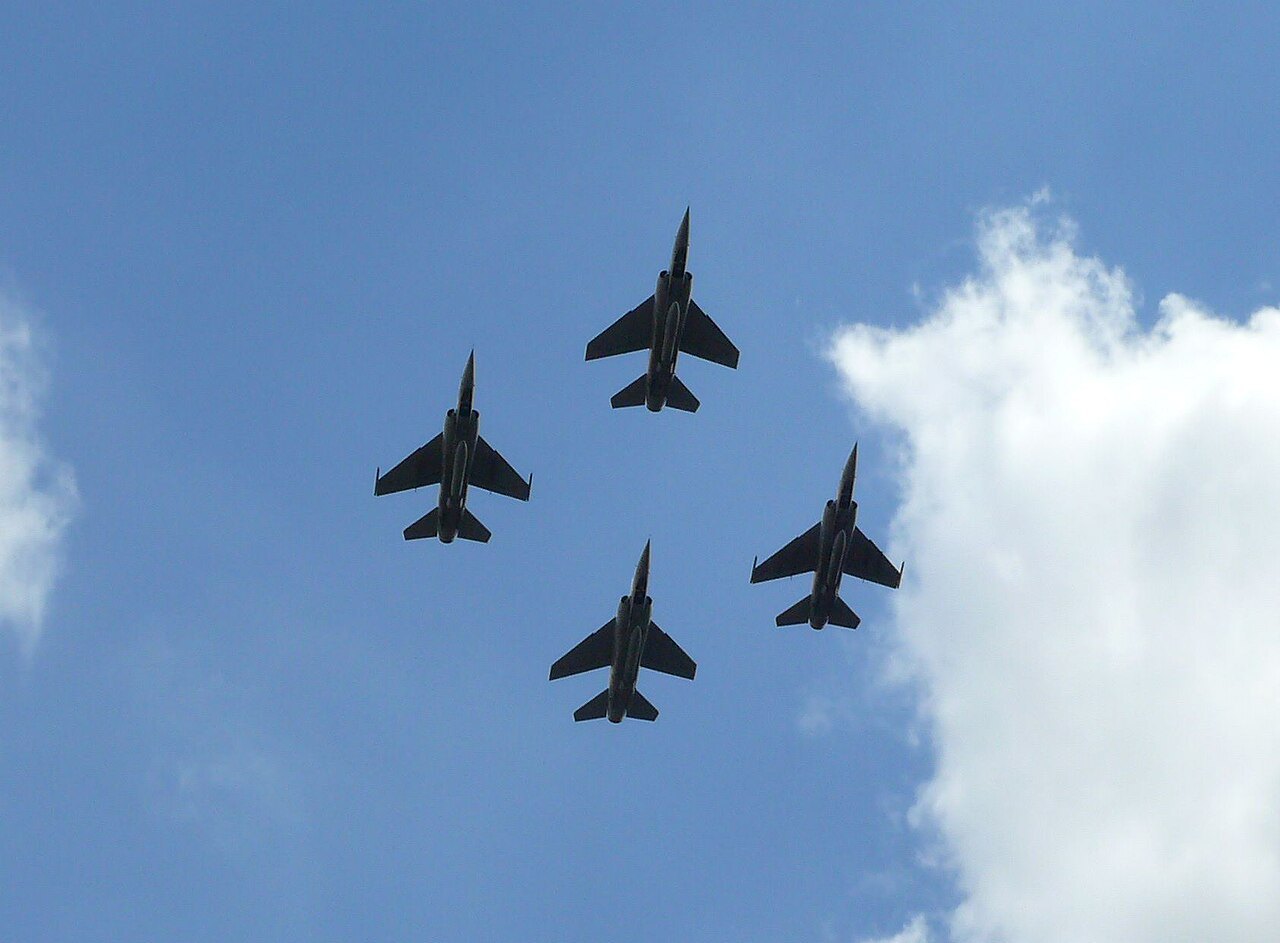
On the night of 11 November 1979 a Sud Aviation Supercaravelle of the Spanish charter airline TAE, flight number JK-297, was carrying 109 passengers, most of them Austrian tourists, from Palma de Mallorca toward the Canary Islands. This case file covers what witnesses reported, the official narrative, and a two-pass assessment with its evidence tier.
What did witnesses see at Manises Airport?
On the night of 11 November 1979 a Sud Aviation Supercaravelle of the Spanish charter airline TAE, flight number JK-297, was carrying 109 passengers, most of them Austrian tourists, from Palma de Mallorca toward the Canary Islands. The cockpit crew were commander Francisco Javier Lerdo de Tejada, co-pilot Jose Ramon Zuazu Nagore and flight mechanic Francisco Javier Rodriguez. The aircraft had crossed the Ibiza waypoint and was over the western Mediterranean at cruising altitude, around 23,000 feet, when the crew reported a set of powerful red lights ahead and to the left, apparently at a lower altitude and closing fast.
Lerdo de Tejada asked Barcelona air traffic control to identify the traffic. The controllers reported no scheduled flight that should be in that position. According to the crew the lights then behaved erratically, appearing to climb and descend, overtake and fall back, and at one point seemed to close to within a few kilometers of the airliner without ever showing the steady rotating beacon of an ordinary aircraft. Fearing a collision, the commander broke off his planned route, put the Supercaravelle into a steep descent of roughly five thousand feet a minute and made an unscheduled emergency landing at Manises airport, the joint civil and military field serving Valencia, in the small hours. A full passenger jet diverting because the crew believed unidentified lights posed a collision risk is what made the case famous and gave it a concrete, public consequence.
On the ground at Manises the drama continued. Air force and airport personnel reported seeing lights in the sky, and some accounts say staff briefly mistook one luminous form for an aircraft lining up to land. With the airliner safely down, the Spanish Air Force ordered a night scramble. A Mirage F1 interceptor flown by Captain Fernando Camara lifted off from the Los Llanos base at Albacete and was vectored toward the reported objects. In his later public testimony Camara described chasing a strange light that he could never reach, a source that changed colour in sequence through green, red and white, and which to his eye sometimes resembled a large transparent dome or bell shape. He said his radar warning receiver activated, which he interpreted as his aircraft being illuminated by a continuous wave radar of the kind used by anti-aircraft systems. Every time he accelerated toward the light it shrank back to a distant point. He made more than one pass and never closed the distance, and the object was never converted into a hard, trackable contact on his own intercept radar.
What is the official explanation?
The case generated a formal military file. A judge-instructor of the air region opened an inquiry within days of the event, gathering statements from the airline crew, from Captain Camara and from air traffic and radar units. That dossier stayed classified for fifteen years. It was released in 1994 as part of the wider declassification of the Spanish Air Force UFO archive, a process supervised on the civilian side by researcher Vicente-Juan Ballester Olmos in cooperation with the Intelligence Section of the Air Operative Command from 1992 onward.
What the declassified file actually concludes is more restrained than the legend around it. The investigating judge's analysis leaned toward conventional causes, recording that the lights were consistent with stars or a planet and their normal movement across the sky, and that the radar picture did not support a solid intruder. Critical review of the released papers found that the EVA-5 air defence radar at Aitana logged only a fixed echo or ground clutter in the Sagunto direction rather than five manoeuvring targets, and that Captain Camara, in the contemporaneous reporting, never actually pursued a flying object and never got his onboard radar to capture one, that he only ever saw lights. This is an important corrective, because the more dramatic versions in circulation, the bell-shaped craft, the transparent dome and the claim of five unidentified echoes at ten kilometres altitude on the Benidorm radar, trace mainly to Camara's later television interviews and to popular retellings, and these contradict the cooler language of the declassified reports.
It is also worth being precise about what the official apparatus did and did not say. The file does not endorse an extraterrestrial craft, and it does not formally certify the case as a hard unknown either. Where popular literature quotes phrases such as a need to consider a ship of unknown origin powered by unknown energy, that striking wording belongs to investigators wrestling with the testimony rather than to a settled state verdict, and the cooler declassified summary points investigators toward ordinary stimuli. The United States Navy was asked whether any Sixth Fleet ships or aircraft were operating in the area, since one early idea was that Camara's radar warning came from a US Navy vessel, and the answer reported was that no US Navy ship or aircraft was in the area at the time. Spain's defence minister of the day, Agustin Rodriguez Sahagun, never gave a substantive answer to parliamentary questions about the incident.
What did the witnesses think it was?
The flight crew of JK-297 were experienced professionals and held to their account. Commander Lerdo de Tejada, a captain with well over a decade in the cockpit, maintained that the red lights were real, that they closed on his aircraft and that he diverted to Manises because he judged a genuine collision risk, not because of a fleeting glimpse. His co-pilot and flight mechanic corroborated the sighting from the same cockpit. None of them accepted that they had simply mistaken a distant industrial flare or a star, and over the years the principals repeatedly rejected the natural explanations offered for the case.
Captain Fernando Camara, the Mirage F1 pilot, became the most public voice. In interviews on Spanish television he insisted he had chased something tangible that outran him, that changed colour and at moments looked like a domed or bell-shaped form, and that his radar warning gear told him he was being painted by a hostile-type continuous-wave radar. He framed the experience as a real air defence intercept against an unidentified and highly capable object. His belief, sincerely held and stated for decades, is the backbone of the case's reputation as Spain's most credible military UFO encounter, even though sceptical analysts note that his later televised account is more dramatic than what the contemporaneous paperwork records.
Beyond the aircrew there were ground witnesses at and around Manises, air force and airport staff who said they saw lights in the sky during the same window. That spread of observers, civil pilots, a fighter pilot, controllers and ground personnel, is what lifts Manises above a single-witness report. The witnesses divide, though, between the airliner crew who saw red lights low and ahead over the sea, and the ground and interceptor observers who were looking at lights higher in the sky later in the sequence, a distinction that matters for any explanation.
The dispute
The central dispute is whether the entire Manises night reduces to misidentified mundane lights. The leading sceptical explanation comes from Vicente-Juan Ballester Olmos, the Spanish researcher who supervised the declassification of the Air Force UFO archive and who worked from the actual case file. He argues the affair conflates three independent phenomena into one narrative. First, the red lights the TAE crew saw ahead of the airliner he attributes to the lit flare stacks of the Escombreras refinery near Cartagena, lifted and distorted by a marked temperature inversion that night into a superior mirage. Second, the lights seen from the ground at Manises and chased by the Mirage pilot he attributes to bright astronomical objects, naming the star Sirius as the most likely. Third, an unrelated emergency radio beacon signal that night, which he shows was a separate maritime distress event hundreds of kilometres away and hours apart, became wrongly braided into the UFO story.
The method behind the dispute is concrete, not just assertion. In 2023 Julio Plaza del Olmo published a geometric reconstruction demonstrating that particular Escombreras chimney stacks would have been visible from the airliner's reported position and altitude, answering the main objection that the refinery was simply too far away or below the horizon to be seen. Critical readers of the declassified papers also note that the air defence radar at Aitana logged only a fixed echo or clutter near Sagunto rather than five manoeuvring intruders, and that the investigating judge's own analysis pointed toward stars and a planet. They further show that the most cinematic details, the bell-shaped craft, the transparent dome and the five high-altitude echoes, come mainly from Captain Camara's later television interviews and from popular retellings, and that these are more dramatic than the contemporaneous reports, which have him only ever seeing lights and never getting a hard radar contact.
What keeps this from closing the case is real. The reconstruction itself concedes that a second luminous stimulus is still needed to fully reproduce the two lights the crew described, so even the best natural model leaves a gap. The principal witnesses, the airliner commander and the interceptor pilot, have consistently rejected the mirage-and-stars explanation and insisted they saw something solid that behaved intelligently. There is no confession, no recantation and no single positively identified object, ship, drone, balloon or rocket, matched to the event. Because the counter-explanation is strong and partly demonstrated yet contested by the firsthand witnesses and incomplete on its own terms, the case lands in Barely Disputed rather than Strongly Disputed.
Is the Manises Airliner Diversion real? The two-pass assessment
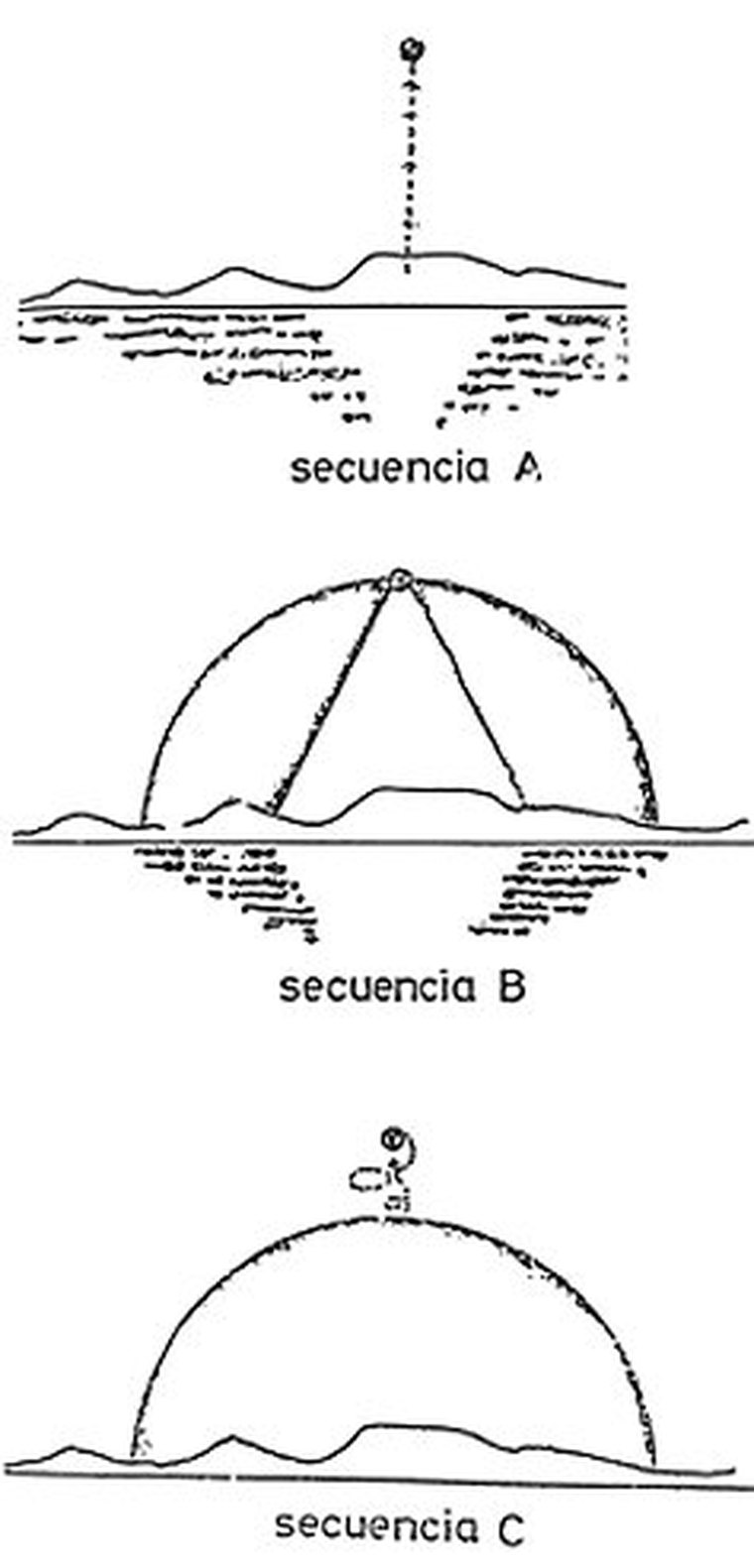
Pass one, the ordinary reading. The strongest sceptical reconstruction belongs to Vicente-Juan Ballester Olmos, the researcher who actually handled the declassified file. He argues the night folded at least three separate things into one story. The red lights ahead of the airliner he attributes to the powerful flares and lit towers of the Escombreras oil refinery near Cartagena, raised and distorted by a strong temperature inversion that night into a superior mirage, an atmospheric effect that lifts and stretches distant light sources that should be below the horizon. The lights seen later from the ground at Manises and chased by Camara he attributes to astronomical objects, with the bright star Sirius singled out as the prime culprit, scintillating and colour-flashing in exceptionally clear air. In 2023 Julio Plaza del Olmo published a geometric study showing that specific Escombreras chimney stacks would indeed have been visible from the airliner's position and flight level, which removes the main objection to the refinery idea, though he conceded a second light stimulus is still needed to fully reproduce the two lights the crew described. The cool language of the declassified file, the judge leaning toward stars and a planet, the radar showing only a fixed echo or clutter rather than five manoeuvring targets, and Camara in the original paperwork only ever seeing lights, all fit this ordinary reading.
Pass two, if it was real. If the airliner crew, the ground staff and a fighter pilot all genuinely tracked a structured craft, then Manises would be a rare multi-witness, military-grade encounter with an object that paced a jet, evaded a supersonic interceptor, changed colour and shape, and emitted a radar signal strong enough to trip a combat aircraft's threat warning receiver. That is the version Camara has defended for decades and the reason the case is held up as Spain's best.
Weighing them, this sits in the disputed band but the dispute does not close it. The Escombreras superior-mirage plus Sirius reconstruction is serious, partly demonstrated and advanced by the very researcher who read the file, which is far more than an official assertion with no method shown. But it is still a reconstruction the principal witnesses reject, it openly admits it needs a second unidentified stimulus to account for the crew's two lights, and it has not produced a confession, a recantation or a single positively identified object that explains the whole event. No drone model, ship, balloon or rocket has been named and matched. That places Manises in Barely Disputed rather than Strongly Disputed. A strong natural explanation exists and much of the radar drama dissolves under the declassified documents, yet a coherent residue, the airliner crew's diversion, the spread of independent observers and the interceptor pilot's first-hand testimony, keeps the case standing.
Sources
- www.academia.edu/27920724/THE_MANISES_UFO_FILE
- www.academia.edu/44150004/LAS_BALIZAS_DEL_11_DE_NOVIEMBRE_DE_1979
- www.academia.edu/103909911/Expediente_Manises_El_terreno_alrededor_de_Escombreras
- expmanises.blogspot.com/p/el-caso-manises-y-maniobras-militares.html
- old.hessdalen.org/sse/program/BriefCV_VJBallesterOlmos.pdf
More cases from this region: UFO sightings in Spain