The Canary Islands Sphere (1976)
On the night of 22 June 1976 the sky west of the Canary Islands lit up for somewhere between twenty and forty minutes, and the event was logged from several independent vantage points at once. This case file covers what witnesses reported, the official narrative, and a two-pass assessment with its evidence tier.
What did witnesses see at Gran Canaria?
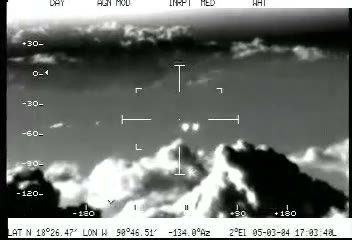
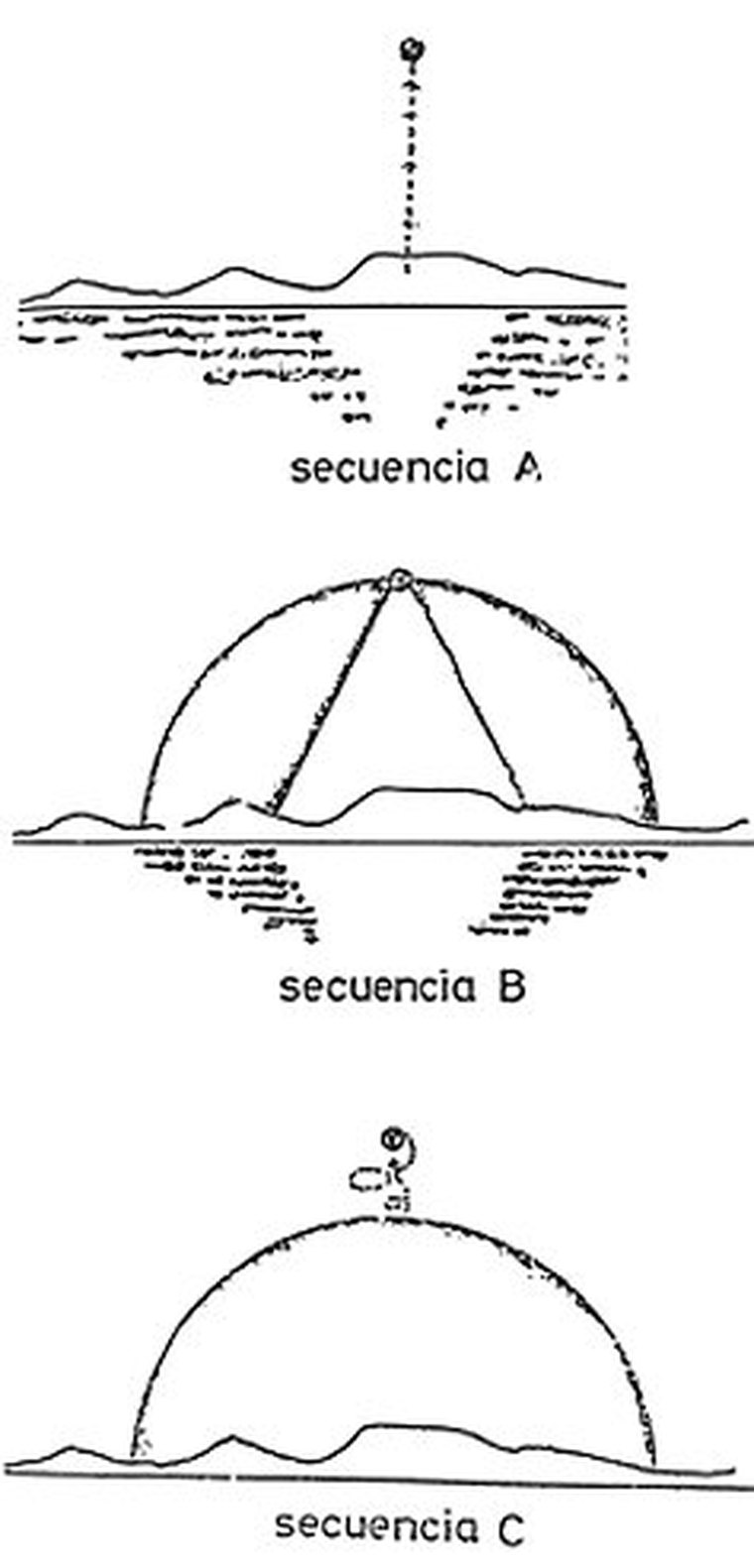
On the night of 22 June 1976 the sky west of the Canary Islands lit up for somewhere between twenty and forty minutes, and the event was logged from several independent vantage points at once. The first formal observation came from the sea. At 21:27 Z the corvette Atrevida of the Spanish Navy, on station roughly three nautical miles off Punta Lantailla on the coast of Fuerteventura, watched what its captain described in his deposition as "an intense yellowish-bluish light moving out from the shore towards our position." The captain recorded that the light climbed to an elevation of about 15 to 18 degrees, went stationary for roughly two minutes, then bloomed into "an intense great halo of yellowish and bluish light" that hung in the same spot for about forty minutes. The ship's surface radar registered no echo at all. He noted the glow was bright enough to light up parts of the land and the sea, which made the crew judge the phenomenon was relatively close rather than far off.
Three minutes later, at about 21:30, people across the north of Gran Canaria were looking at much the same thing. Witnesses interviewed afterward by the Air Force came from the villages of Galdar, Las Rosas and Agaete, and they were not a fringe sample: a medical doctor, a school teacher, a farmer, an Army sergeant, two taxi drivers, a police guard and several labourers. They described a luminous sphere, by some accounts around three times the apparent size of the full Moon, crossing the sky and fading off in the direction of Mount Teide on Tenerife. A woman in Galdar, an illiterate relative of a sick patient, told investigators she saw "a perfectly round globe" so transparent that "the stars could be seen through it," with two man-like figures inside it.
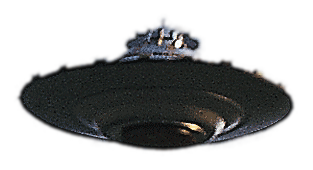
The most extraordinary testimony came from Dr. Francisco Padrón León, a physician from Guia. He was being driven by taxi to attend a patient at Las Rosas when, as he told it, the car headlights fell on a faintly luminous sphere beside the road. He described a globe of transparent, crystalline-looking material glowing a tenuous electric blue, with a radius he estimated at roughly thirty metres. In the lower third sat what looked like an aluminium platform carrying three consoles, and a semi-transparent central tube vented bluish smoke. Inside stood two enormous humanoid figures, he put them at 2.5 to 3 metres tall, dressed entirely in red and facing one another, their heads in proportion to their torsos and wearing some kind of headgear. As Padron and the taxi driver watched, the sphere swelled to the apparent size of a twenty-storey building, then drew itself into a bluish spindle shape with red beneath and rose away toward Tenerife. The taxi driver independently confirmed the sphere and the "two persons dressed in brilliant red."
What is the official explanation?
This is one of the best-documented official UFO files in Europe, because the Spanish Air Force investigated it formally and the paperwork survived to be released. The Commanding General of the Canaries Air Zone appointed an investigating officer on 25 June 1976, three days after the event. The resulting expediente runs to more than a hundred pages of questionnaires, evaluations, appendices and illustrations, with depositions from fourteen witnesses graded by reliability. The depositions were indexed: the corvette captain appears as B-07, Dr. Padron as A-01, the taxi driver as A-02, and the Galdar woman as B-05. The Air Force's investigating judge in the file is named as Comandante Antonio Munaiz Ferro-Sastre.
On the wide-field phenomenon the investigator was blunt that something real had happened. His conclusion, quoted from the file, was that "the fact that a very strange and peculiar aerial phenomenon occurred on the night of 22 June is a true and proven fact," while adding that "its nature is totally unknown." He recorded that the standard prosaic candidates available to him at the time, aircraft, missile test, aurora and meteor fall, had been considered and that none had been confirmed by any traffic or exercise he could trace. In other words the 1976 investigation closed with the wide phenomenon logged as an unidentified aerial phenomenon, not because the Air Force was endorsing anything exotic but because it could not, in 1976, match it to a known source.
On the close encounter the same official file was openly sceptical. The investigator wrote that one had to "forcefully consider the very probable circumstance that both witnesses, facing the presence of an unusual phenomenon in the sky, narrated what their minds made them see, mutually influencing each other." The file records that Padron's and the taxi driver's accounts of the sphere with occupants could not be given definitive credibility and were set aside for lack of corroborating evidence. The expediente was classified for years. It leaked early to the journalist Juan Jose Benitez, who received material from an Air Force general and published it in 1976, and it was officially declassified in June 1994 as part of the Spanish Air Force programme of releasing its OVNI files that ran through the 1990s. The original file is held in the Spanish Ministry of Defence's Biblioteca Virtual de Defensa under reference 395904, titled "Avistamiento de fenomenos extranos en Canarias: 22 de Junio de 1976."
What did the witnesses think it was?
Dr. Francisco Padron Leon held to his account. He was a working physician on a night call, not a UFO enthusiast looking for a sighting, and he gave a sworn deposition to military investigators describing the transparent sphere and the two red giants in concrete physical terms, dimensions, materials, the venting tube, the consoles. The taxi driver who was with him gave an independently consistent statement about the same sphere and the same two figures in brilliant red, which matters because it means the close encounter was not a solitary report. The Galdar woman, with no literacy and no stake in the story, separately described a transparent globe with the stars visible through it and human-like figures inside, a description that rhymes with Padron's without being identical to it.
The wide phenomenon had even harder corroboration. The corvette Atrevida was a Navy warship with a trained crew and a ship's log, and the captain's deposition recorded a timed, position-fixed observation that survives in the file under deposition number B-07. His translated statement was carried in Flying Saucer Review by Gordon Creighton, which is how much of the English-speaking research world first read the captain's own words. Across Gran Canaria the witness pool the Air Force interviewed included professionals whose testimony is not easy to wave away, a doctor, a teacher, a sergeant, a police guard. The believers' case rested on exactly this: the same luminous expanding sphere was logged at sea, in the air and on land, by witnesses who did not know one another, within minutes, and the country's own Air Force concluded the event was genuine and unexplained. For many in Spanish ufology that combination, military and civilian, sea and land, plus an official file calling it real, made 1976 the strongest mass case in the national archive.
The dispute
The dispute is a positive identification, not a hand-wave, and on the wide phenomenon it is decisive. Vicente-Juan Ballester Olmos and Ricardo Campo Perez, in "Identificados: Los OVNIS de Canarias fueron misiles Poseidon" (Revista de Aeronautica y Astronautica, March 2001, the Spanish Air Force's own journal), identified the 22 June 1976 phenomenon, along with four other Canary Islands sightings of the 1970s, as the high-altitude atmospheric effects of Poseidon C-3 submarine-launched ballistic missiles fired by the US Navy from submerged SSBN platforms in the Atlantic west of the islands. The physical mechanism fits the testimony point for point. A missile fired well over the horizon after local sunset vents propellant and stages into expanding clouds of gas that are still sunlit because the Sun, already set for the observer, is not yet set at 46 kilometres altitude. The result is a silent, soundless, radar-negative, slowly expanding luminous sphere and halo, which is precisely what the corvette Atrevida and the island witnesses reported, including the absence of any radar echo and the lack of engine noise. The specifics line up with external records: skeptical reconstructions tie the event to a Poseidon launch recorded in Jonathan McDowell's launch database for the window around 21:00 to 22:30 GMT on 22 June 1976, name the submarine USS Von Steuben (SSBN-632), a boat converted to fire the Poseidon C-3, and rely on Manuel Borraz's geometric work placing the glowing gas cloud roughly 762 kilometres west of the Canaries at an altitude of about 46 kilometres. At that distance and height a man-made cloud reads, from the ground, as a nearby luminous object, which accounts for the captain's impression that the light was close enough to illuminate the land and sea. The dating, the timing, the silence, the radar void and the expanding-sphere shape are all consistent with a missile rather than a craft.
Where the dispute does not close the case is the close encounter, which is the element that makes this a notable file in the first place. The Poseidon identification explains the wide phenomenon seen across Fuerteventura, Gran Canaria and out at sea, but a missile venting at 46 kilometres over the open ocean does not by itself produce Dr. Francisco Padron's roadside globe of transparent, crystalline material with an aluminium platform, three consoles, a smoking central tube, and two red giants two and a half to three metres tall inside it. On the close encounter the counter-explanation stops being physics and becomes psychology. Ricardo Campo treats Padron's occupants as pareidolia, a structured craft and crew imagined out of a strange glow, and the original 1976 Air Force investigator independently floated the same idea, writing that the witnesses may have "narrated what their minds made them see, mutually influencing each other." That is a contested psychological argument, not a confession, not a recanted statement, not a recovered hoax prop, and not a positive identification of the object on the road. It also has to overcome the corroboration in the file: the taxi driver gave an independently consistent account of the same sphere and the same "two persons dressed in brilliant red," and a separate Galdar witness, an illiterate woman with no stake in the story, described a transparent globe with the stars visible through it and human-like figures inside. A mutual-influence theory among people in different locations who reached the same picture was never demonstrated, only asserted. So the case is genuinely split: the mass sighting is very strongly identified as a Poseidon C-3, while the close-encounter element is argued down rather than demonstrably falsified. Because the strong identification closes the wide glow but leaves the core anomaly standing, with no mechanism shown for the occupied sphere, this sits at Barely Disputed rather than Strongly Disputed, and the case very largely stands.
Is the Canary Islands Sphere (1976) real? The two-pass assessment
Pass one, how this is entirely ordinary. There is now a specific, named, real-world identification for the wide phenomenon, and it is not a vague "could have been a balloon" guess. In a paper titled "Identificados: Los OVNIS de Canarias fueron misiles Poseidon," published in March 2001 in the Revista de Aeronautica y Astronautica, the official journal of the Spanish Air Force, the veteran researcher Vicente-Juan Ballester Olmos and the philosopher and skeptic Ricardo Campo Perez argued that a whole family of Canary Islands sightings, 22 November 1974, 22 June 1976, 19 November 1976, 24 March 1977 and 5 March 1979, were the atmospheric signatures of Poseidon C-3 submarine-launched ballistic missiles fired by the United States Navy from submerged SSBN platforms in the Atlantic test range west of the islands. The mechanism is well understood and matches the reports closely: a missile fired hundreds of kilometres out, climbing through the upper atmosphere after local sunset, vents and stages into expanding gas clouds that are still lit by a Sun already below the observer's horizon, producing exactly the silent, radar-quiet, slowly expanding luminous sphere and halo that the Atrevida and the island witnesses described, with no aircraft sound and no echo. The skeptical write-ups of this case tie the 22 June 1976 event to a Poseidon launch logged in Jonathan McDowell's ballistic-launch database, naming the submarine USS Von Steuben (SSBN-632), a boat converted to carry the Poseidon C-3, and Manuel Borraz's geometric reconstruction places the glowing cloud roughly 760 kilometres west of the islands at an altitude on the order of 46 kilometres, which is why something genuinely far away looked, to people on the ground, like a nearby object lighting up the sea and land. On this reading even the captain's impression that the light was "close" is the expected illusion of a huge high cloud at twilight. Taken on its own terms, that part of the night is solved, and the 1976 investigator's own list of candidates, aircraft, missile test, aurora and meteor fall, turns out to have contained the right answer all along.
Pass two, what survives. The missile identification is real and it is strong, but it closes only one half of a two-part case, and the half it closes is not the half that made this famous. This file is logged as a close encounter, not merely a missile-glow report, and the reason is Dr. Francisco Padron Leon's roadside sphere. A Poseidon C-3 venting at 46 kilometres over the open Atlantic does not produce a thirty-metre crystalline globe parked beside a country road at Las Rosas with an aluminium platform, three consoles, a smoking central tube, and two figures two and a half to three metres tall dressed entirely in red and facing one another. The only counter-explanation ever offered for that is psychological, not physical. Ricardo Campo treats Padron's occupants as pareidolia, the mind building a structured, peopled craft out of a strange glow on the horizon, and the official 1976 investigator reached for the same idea when he wrote that the witnesses may have "narrated what their minds made them see, mutually influencing each other." That is an argument, not a demonstration. It was never built into anything testable, and it has to swim against the corroboration in the file. The taxi driver who was with Padron gave an independently consistent statement about the same sphere and the same "two persons dressed in brilliant red," so the encounter was not solitary. The illiterate Galdar woman, with no stake in the story, separately described "a perfectly round globe" so transparent that "the stars could be seen through it" with two man-like figures inside, a description that rhymes with Padron's without being copied from it. A mutual-influence theory has to explain how three witnesses in different places converged on a transparent occupied sphere, and it has never done so. So the honest split is this: the trigger and the mass sighting over Fuerteventura, Gran Canaria and the sea are very strongly identified as a Poseidon C-3, while the close encounter that gives the case its name is argued down rather than shown to be false.
The tier is Barely Disputed, and it is not Strongly Disputed because the central claim has not been positively closed. The Poseidon identification is exactly the kind of debunk that earns the harshest tier for the element it covers: a named missile model, a named platform type and boat, a launch in a public database, a published trajectory reconstruction by named analysts in the Air Force's own journal, all matching the date, the time and the geometry of the wide glow. But "Strongly Disputed" requires the core anomaly itself to be positively closed, and here it is not. There is no confession, no recantation, no recovered prop tied to the roadside sphere, and no positive identification of the actual object Padron and the taxi driver and the Galdar woman described. The missile cleanly explains the light in the sky and explains nothing about the occupied globe on the ground, and the only thing standing in for that explanation is a contested pareidolia hypothesis that its own proponents and even the original investigator phrase as a probability rather than a finding. A strong debunk that decisively closes a real but peripheral element, the wide glow, while the notable element still stands is the definition of Barely Disputed. The mass sighting is solved; the close encounter survives; the case very largely stands.
Sources
- ufologie.patrickgross.org/htm/canaries.htm
- www.bibliotecapleyades.net/ciencia/ufo_briefingdocument/1976a.htm
- bibliotecavirtual.defensa.gob.es/BVMDefensa/exp_ovni/es/consulta/indice_campo.do?campo=idtitulo
- www.academia.edu/16027101/Identificados_Los_OVNIS_de_Canarias_fueron_misiles_Poseidon
- naukas.com/2016/06/22/dos-gigantes-rojos-cabalgando-un-misil/
- diariodeavisos.elespanol.com/2016/10/ejercito-desclasifica-expedientes-ovni-canarias/
- infonortedigital.com/archive/130815/agaete-mi-pasion-cuando-los-extraterrestres-vivian-entre-agaete-y-tenerife-ovni-1976
- www.openminds.tv/canary-islands-mass-ufo-sighting-1976/38122
More cases from this region: UFO sightings in Spain