The George O'Barski Encounter, North Hudson Park (1975)
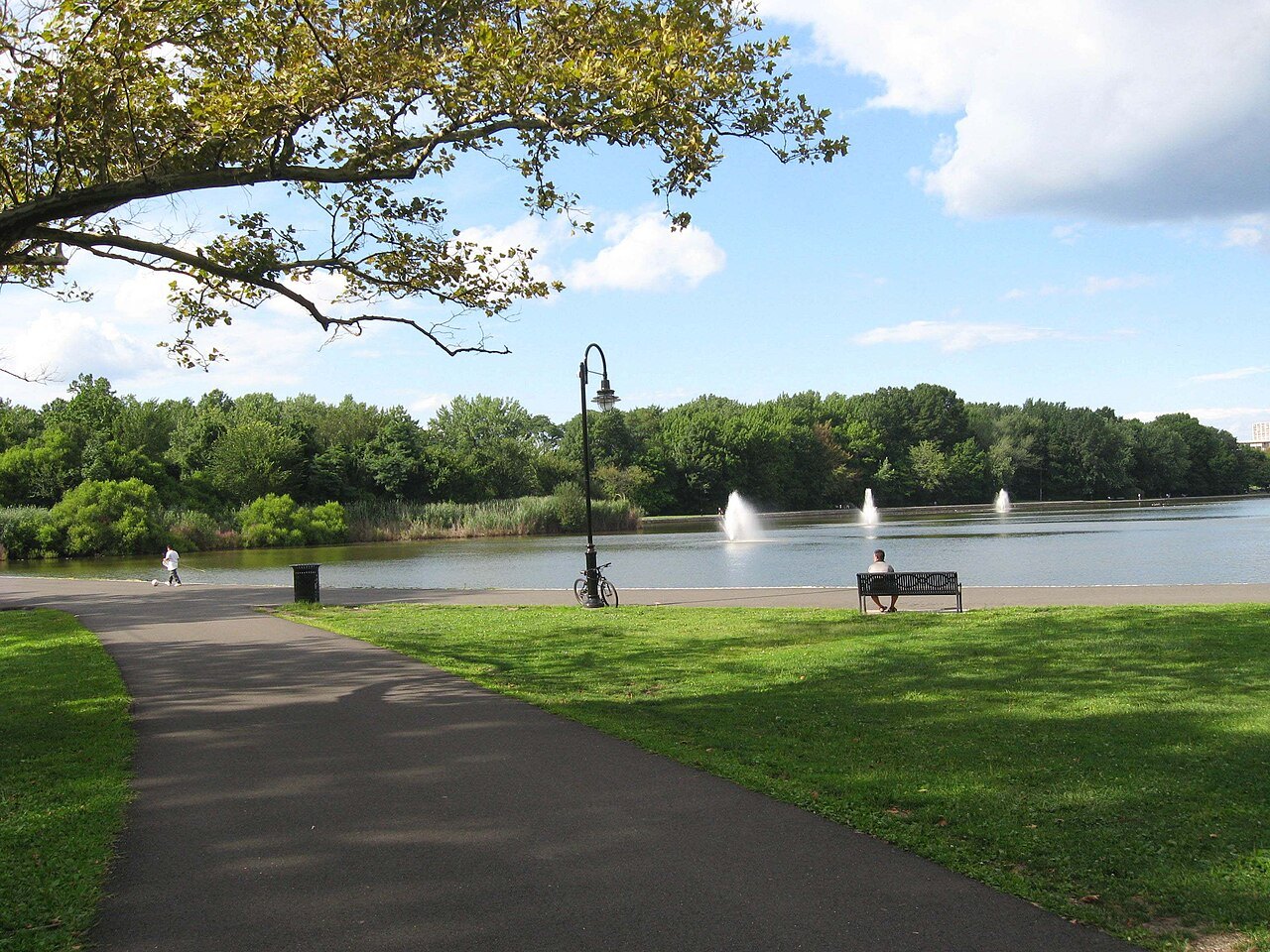
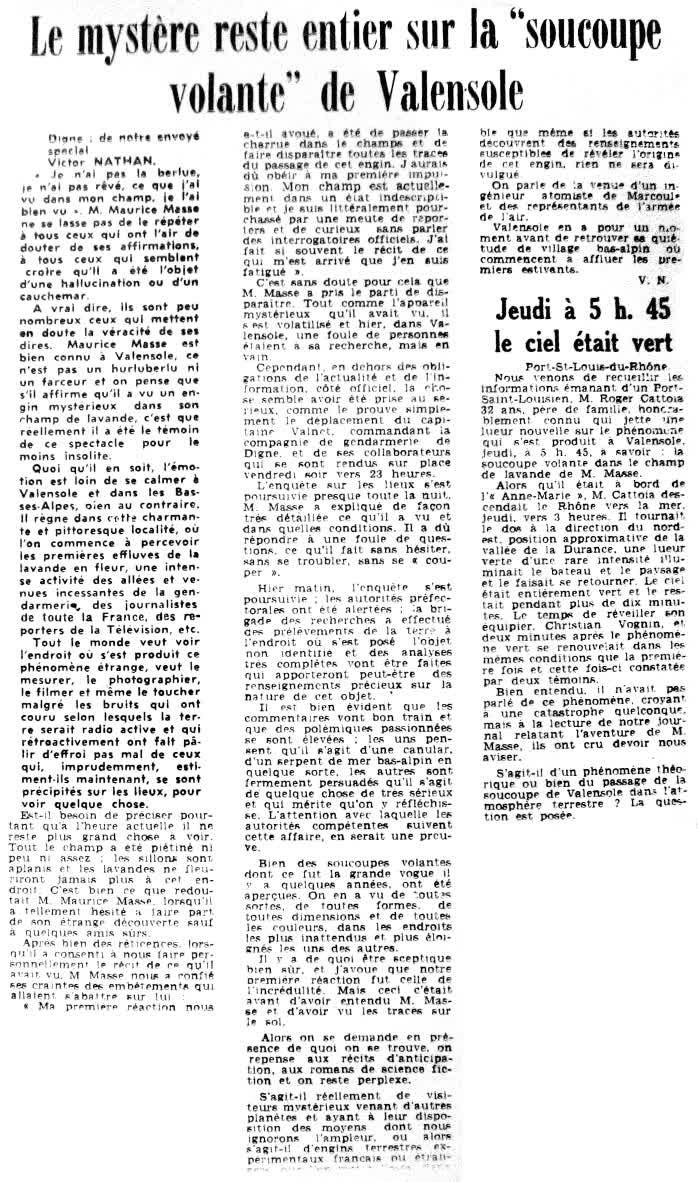
At around three in the morning on 12 January 1975, George O'Barski, a seventy-two year old co-owner of a liquor store in the Chelsea district of Manhattan, was driving home to North Bergen, New Jersey through the deserted North Hudson Park. This case file covers what witnesses reported, the official narrative, and a two-pass assessment with its evidence tier.
What did witnesses see at North Hudson Park?
At around three in the morning on 12 January 1975, George O'Barski, a seventy-two year old co-owner of a liquor store in the Chelsea district of Manhattan, was driving home to North Bergen, New Jersey through the deserted North Hudson Park. He had closed his store around midnight, walked his German shepherd, finished his bookkeeping, and set off in his black Chevrolet toward an all-night diner in Fort Lee. As he drove, his car radio began to pick up static and "sound tinny." While he fumbled with the dial, a low, brilliantly lit object passed his car about a hundred feet to the left, traveling in the same direction, then stopped in a playing field ahead of him. The night was warm and his driver's window was partway down, so he heard a quiet humming or droning coming from the craft.
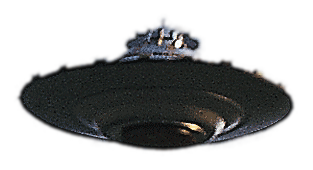
Drawing closer, O'Barski described a roundish, thirty-foot-long object, very dark and "almost black," now hovering about ten feet above the ground. It was ringed by regularly spaced vertical windows, each roughly a foot wide by four feet high, glowing with a warm incandescent, amber-yellow light. A narrow panel opened between two windows and a ladderlike apparatus came out. The ship settled to within about four feet of the field, and a group of small figures descended one after another. O'Barski estimated at least nine and possibly ten or eleven of them, only three and a half to four feet tall, in identical helmeted or hooded one-piece light-colored garments. "They looked like kids in snowsuits," he said, and he could not make out their faces. Each carried a large spoonlike tool and a little bag with a handle. "They came down this ladder thing like kids coming down a fire escape. Fast. No wasted motion." They dug, spooning dirt into their bags, then climbed back inside and the craft rose and moved north, vanishing "almost before you could blink an eye." At his closest he was about sixty feet away. The whole event lasted under four minutes.
O'Barski drove home badly shaken. "Hey, I was sweating. I immediately made some tea," he told Hopkins. He was too frightened to leave any lights on and pulled the covers over his head: "I went to bed, I was that scared. I got up and took two aspirin. I figured the whole damn world had come to an end." The next morning he returned to the park and found, at the exact landing spot, about fifteen little holes four or five inches deep. "I even felt those holes. I didn't believe it looking at them. I put my hand in one." He told no one for ten months, fearing ridicule, and only blurted it out to Hopkins, a longtime customer, while pacing behind his counter one November evening in 1975.
What is the official explanation?
There was no formal government investigation of the O'Barski landing. The serious inquiry was conducted by civilian researchers. The artist Budd Hopkins, who knew O'Barski as a neighborhood customer of seventeen years, recorded his account on a cassette tape and on 20 November 1975 brought in Ted Bloecher, then New York State director of the Mutual UFO Network and a UFO investigator with twenty-five years of experience, along with a younger MUFON investigator named Gerald Stoehrer. On Saturday 23 November the three drove O'Barski back to North Hudson Park and re-enacted the drive with a tape recorder running and Stoehrer timing each phase, confirming that under four minutes elapsed from the radio static to lift-off. At the landing site they found about fifteen bare circles roughly six inches across where the coarse grass was entirely missing. Bloecher took soil samples and noted that the dirt in each grassless circle contained no traces of roots, an unusual finding for an established city park lawn. The park custodian later recalled refilling small holes in that vicinity early in the summer, which he had assumed were dug by unleashed dogs.
The only official record attached to the case is a police response to a broken window. The Stonehenge Apartments, a tall circular building at the foot of the hill about three hundred yards from the landing site, had twenty-four-hour doormen. Hopkins traced the night doorman, Bill Pawlowski, and reached him by phone on 5 December 1975. Pawlowski independently described seeing, between two and three in the morning that January, a horizontal row of ten to fifteen extremely bright, evenly spaced lights about ten feet off the ground on the hill, surrounded by a continuous dark mass. As he turned to telephone a tenant he heard a high-pitched vibration and a crack, and a low point of the lobby plate-glass window broke near his feet. He called the police, who responded promptly because a North Bergen police lieutenant lived in the building. The two patrolmen and Pawlowski examined the break, which was peculiar: on the outside there was an indentation "as if a marble of glass had been gouged out," with cracks radiating from the little crater, and no projectile could be found. Pawlowski told the lieutenant, Al Del Gaudio, about the lights that morning. When Hopkins phoned Del Gaudio on 9 December 1975, the lieutenant confirmed it in his own words: "He had some wild story about this big thing with lights on it that came down in the park. He thought it was involved with the broken window, but you can't believe a story like that. He must've been drinking or something." Hopkins published his detailed account, "Sane Citizen Sees UFO," in The Village Voice on 1 March 1976, and Bloecher later wrote a thorough two-part study of the case for Flying Saucer Review. An FAA spokesman Hopkins contacted explained that the object's low altitude and behavior would likely have been filtered out as ground clutter and never reached a controller's screen.
What did the witnesses think it was?
George O'Barski did not present himself as a believer. Hopkins describes him as street-wise, astute, reflective, a strict teetotaler, and a man who had been held up at gunpoint in his store yet had never been so frightened: "I've been held up in the store lots of times by men with pistols and knives, and I've been plenty scared, but nothing like this, ever." He offered no cosmic interpretation and even argued himself out of the obvious one, reasoning that if a government or foundation had built a silent craft to fetch soil, "Why couldn't they just send up for soil samples? And how could they recruit all those little guys? A normal run would have guys all heights. It doesn't make sense." What struck him most was the silence. Having grown up through dirigibles, biplanes, twin-engine airliners and jets, he marveled that "this thing I saw that night in the park made only a little hum, just like a refrigerator starting up. And it went away almost before you could blink an eye." Hopkins judged him truthful in part because his role was strictly passive: he was never noticed, threatened, or handed a message, and he gave himself no heroic part, admitting he had gone to bed with the covers over his head.
The corroboration is the spine of the case, and Hopkins took pains to gather it from witnesses who had never met one another and to withhold key details so their accounts could be tested. Bill Pawlowski's separately elicited description matched O'Barski's on the number of lights (ten to fifteen), the height above ground (about ten feet), the duration (around three minutes), and the time (around three a.m.). Frank Gonzalez, the doorman who worked Pawlowski's nights off, had told a co-worker about his own sighting; interviewed on 1 February 1976, he described a round, bright, windowed object hovering over the same playing field at two to three a.m. on Monday 6 January 1975, six days before the landing, making a heavy droning sound and shooting straight up. He drew the craft as a bottom ringed with rectangular yellow windows and a dark unseen top, and placed it on a map exactly where O'Barski put the landing. The Wamsley family, who lived about fourteen blocks away, approached Stoehrer after a PTA talk in late March: twelve-year-old Robert, his mother Alice, and other family members described a round, domed, brilliantly lit craft with rectangular yellowish windows gliding low along Boulevard East toward the park on the same mild January night, which they chased on foot until it disappeared near "the big round house," the Stonehenge. Alice Wamsley recalled running outside barefoot in her bathrobe and not feeling cold, an unprompted confirmation of the freak warm weather Hopkins had kept secret. By Hopkins' count the episode was witnessed across six days by at least eight or nine people in three groups who had no contact with each other.
Is the George O'Barski Encounter, North Hudson Park (1975) real? The two-pass assessment
Pass one, the ordinary explanations. The skeptical reading starts with the fact that almost the entire witness chain reaches us through one investigator, Budd Hopkins, an artist and committed UFO researcher, and that the central account is a single elderly man driving alone at three in the morning who waited ten months to tell anyone. Memory of a startling event drifts, and the figures, the ladder, and the soil-digging match a well-worn template of humanoid landing reports Hopkins and Bloecher already knew well. The James Moseley circle and later commentators noted the case rests heavily on Hopkins' own legwork and floated the possibilities of a hoax, of a half-remembered military exercise, or of mundane lights misjudged in the dark. The little holes could have been dug by dogs, as the park custodian assumed, and the broken Stonehenge window could be vandalism or a stray stone with no connection to any craft. None of these, however, was ever developed into a demonstrated explanation. No one produced a confession, identified a specific aircraft or balloon, traced a launch, or showed how the image was fabricated. Even Moseley, no friend to easy belief, reached no debunking conclusion and left the case open.
Pass two, if it happened as described. The strength here is not the lone witness but the independent corroboration assembled under deliberate controls. Hopkins withheld the exact date, the dark "almost black" body color, and the anomalous warm weather, then watched separate witnesses supply each one unprompted: Pawlowski on the lights, Gonzalez on the precursor flight and the windowed shape, Alice Wamsley going barefoot in a New Jersey January. The doorman's broken window is logged in a real police response and confirmed in the words of a named police lieutenant, Al Del Gaudio. Bloecher's soil samples showed an oddity, an absence of roots in the bare circles, consistent with something having been removed. These threads were elicited from people who had never spoken to one another, which is hard to reconcile with a single old man's fantasy or a casual hoax.
What remains is a low, silent, windowed object that landed in a city park within a mile of Broadway, disgorged a uniform crew that gathered earth, and left physical traces and frightened witnesses, with no aircraft, balloon, drone, or staged prop ever identified as the cause and no recantation on record. The counter-arguments are real but generic, and they point at the chain of custody for the testimony rather than at any proven mundane source. Because the object stays unexplained, the corroboration is multiple and was gathered with genuine method, and there is an officially recorded physical aftermath, this case is rated Verified Unexplained. The single honest caveat, that much of the corroboration is mediated by Hopkins' documented investigation, lowers confidence but does not supply an explanation, and an unanswered weakness in the paper trail is not the same as a solution.
Sources
- archive.org/stream/1981BuddHopkinsMissingTimenotOCR/%281981%29%20Budd%20Hopkins%20-%20Missing%20Time%20%28not%20OCR%29_djvu.txt
- archive.org/details/missingtimedocum00hopk_0
- archive.org/details/1981BuddHopkinsMissingTimenotOCR
- science.howstuffworks.com/space/aliens-ufos/north-hudson-park-ufo.htm
- www.jimmoseley.com/2014/04/the-night-the-ufos-didnt-land-in-north-hudson-park/
- neitherfish.wordpress.com/2018/11/20/the-north-hudson-park-ufo-sightings/
- www.ufoinsight.com/ufos/close-encounters/the-north-hudson-park-ufo-landings
More cases from this region: UFO sightings in United States