The Nazca Disc Landing of 1972
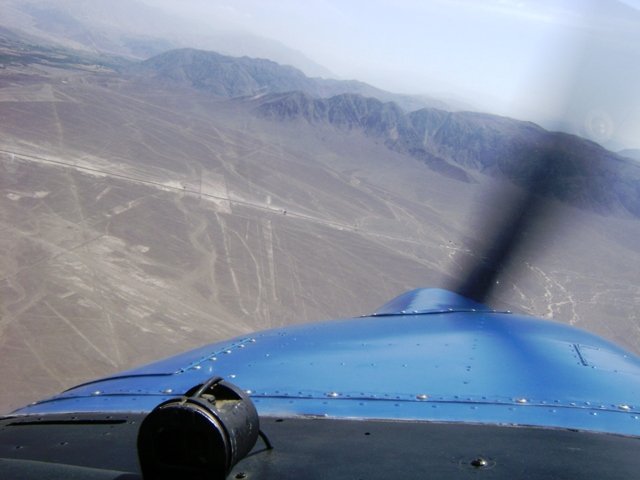
The account places two men on the road from Puquio toward Nazca on the morning of 3 February 1972. This case file covers what witnesses reported, the official narrative, and a two-pass assessment with its evidence tier.
What did witnesses see at Pampa Carbonera?
The account places two men on the road from Puquio toward Nazca on the morning of 3 February 1972. They are named in the published versions as Tito Rojas and Adolfo Penafiel, feed-store owners who were driving a flatbed pickup loaded with a delivery north across the Pampa Carbonera, the dry tableland that runs south of Nazca. The truck had been running normally with its radio tuned to a station out of Arequipa.
As they crossed the open pampa the electrical trouble started. The radio faded in and out and dissolved into static, the engine began to sputter and miss, and the truck lost power and rolled to a stop. When the men looked out across the plain they saw the reason. A craft was sitting on the desert a short distance from the road.
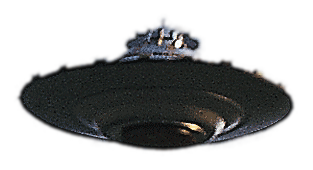
It is described as a silvery disc with a mirror-bright, highly polished surface, roughly 15 meters (about 50 feet) across and about 4 meters (13 feet) high, resting on three legs in a tricycle arrangement like aircraft landing gear. The witnesses reported no lights, no windows, and no visible seams or openings on the hull. Standing beside or near the craft was a single figure. Adolfo described the occupant as a man of average height wearing green clothing under what looked like a transparent suit, the kind of detail that reads as a coverall worn beneath a clear outer shell.
As the men approached or drew attention to themselves the figure went back to the craft and the disc lifted off. The witnesses said it rose with a shrill metallic whine and climbed away at a nearly vertical angle until it was gone. With the object gone, the truck's engine, radio, and electrical system came back to normal and the men were able to drive on. The whining departure sound is reported in the accounts as something local people claimed to recognize, which is how the pampa came to be talked about as a landing ground.
What is the official explanation?
There is no official Peruvian government file in the public record tied to this specific landing. No Peruvian Air Force (Fuerza Aerea del Peru) report, police blotter, or military debrief naming Rojas and Penafiel and the Pampa Carbonera site has been located or published by researchers. That matters because Peru does have a documented history of official UFO interest, the Air Force later ran investigative offices such as the unit associated with Anthony Choy and the later Project 33, but none of that apparatus is attached to the 1972 Nazca event in any traceable document.
The closest thing to a contemporary record is print, and it is secondhand rather than governmental. The earliest published telling appears in Robert Charroux's "The Mysteries of the Andes" (Avon Books, New York, 1977, p. 171), the English translation of his 1974 French book "L'enigme des Andes: Les pistes de Nazca, la bibliotheque des Atlantes." Charroux was a French popular-mysteries author in the ancient-astronaut vein, and the Nazca landing sits in his book as one modern echo among his arguments about the geoglyphs. The other early carrier is the Reparaz Guide to Peru (Ediciones de Arte Rep, Editoriales Unidas S.A., Lima, 1974, pp. 210-215), a mainstream travel guidebook that recounted the disc, the polished hull, the metallic whine, and the idea that the pampa served as a landing field for extraterrestrials. A tourist guide repeating the story straight is itself a small piece of evidence about how seriously the tale was taken locally in the early 1970s, though a guidebook is not an investigation.
A search of the El Comercio (Lima) digital archive on Peruvian UFO history turns up other early-1970s cases, including a February 1973 Callao sighting, but no February 1972 article describing this Nazca landing. So the official-and-contemporary layer is essentially empty. What exists is a pair of mid-1970s books that fixed the narrative, the date, the witness names, and the physical details, and a long chain of later UFO compilations that copied them.
What did the witnesses think it was?
The two named witnesses, Tito Rojas and Adolfo Penafiel, are described in every version as ordinary working men, feed-store owners making a delivery run, not contactees or UFO enthusiasts seeking attention. Adolfo is the one credited with the close description of the occupant, the man of average height in green clothing under a transparent suit. The accounts present them as believing they had seen a real machine on the ground, not lights in the sky, and the physical specifics they gave, the tricycle gear, the mirror finish, the absence of windows, the vertical climb, and the whining sound, are consistent across the retellings.
The corroboration here is environmental and circumstantial rather than a second set of named eyewitnesses to the same craft. The accounts tie the event to a wider local belief that the Pampa Carbonera and the Nazca pampas were a recurring landing ground, with residents said to know the metallic whining sound. This sighting is also framed as the opening event of Peru's early-1970s UFO wave, a period when the country logged a heavy run of reports, with one widely repeated figure of 214 reliable sightings counted in 1973 alone. That broader wave is real in the sense that Peru genuinely experienced elevated UFO reporting in this stretch, which gives the Rojas-Penafiel story a plausible cultural setting even though it does not independently confirm the landing.
What is missing on the witness side is any later follow-up. No investigator is on record having re-interviewed Rojas or Penafiel, traced their feed store, confirmed the truck's electrical failure, or examined the ground at the alleged landing site for impressions from the tricycle gear. The witnesses' belief is preserved only as it was first written down, which is the central limitation of the case.
The dispute
The dispute over the Nazca 1972 landing is about provenance, not about a demonstrated false. The story's earliest traceable appearance is in Robert Charroux's "The Mysteries of the Andes" (Avon Books, 1977, p. 171), translated from his 1974 French "L'enigme des Andes," and in the Reparaz Guide to Peru (Lima, 1974, pp. 210-215). Charroux was a popular ancient-astronaut writer whose books mixed travelogue, legend, and speculation, and who is not regarded as a rigorous documentarian. A guidebook and a sensationalist author are weak primary anchors for a close encounter of the third kind, and that is the heart of the skeptical objection: the case may have entered the literature as an attractive anecdote rather than as an investigated event.
The objection is strengthened by what cannot be found. No contemporary February or March 1972 Peruvian newspaper report of this specific landing has been located, including in the El Comercio archive, which preserves other early-1970s Peru cases such as a February 1973 Callao sighting but not this one. There is no Peruvian Air Force or police file attached to the names Rojas and Penafiel, no later re-interview of the witnesses, no examination of the alleged landing ground, and no photograph of any kind. The case is purely narrative, and the narrative has been copied from book to book and site to site for decades, which produces an illusion of corroboration that is really just repetition.
What the dispute does not have is a method-shown debunk. No named investigator has traced the story to a fabricator, identified the specific aircraft or installation that was misperceived, demonstrated that the truck's electrical failure was a routine fault, or produced any positive identification of a real-world cause. The witnesses have not recanted and no hoax props have surfaced. So the counter-position is an argument from thin and secondhand sourcing and from absence of corroboration, which is genuine but weak, rather than a demonstration that the event did not occur. Under a standard that treats an official or evidentiary silence as a question mark and not a verdict, this lands the case at Barely Disputed. The provenance doubt is real and should be stated, but it does not close the case, and it falls well short of the confession, recantation, recovered props, or specific identification that a strong dispute would require.
Is the Nazca Disc Landing of 1972 real? The two-pass assessment
Pass one, the ordinary readings. Because there is no photograph, no recovered trace, and no contemporary investigation, almost every prosaic explanation stays on the table and none can be confirmed. A stopped engine and a dead radio on a desert road can come from a failing battery, a loose connection, vapor lock, or simple coincidence, and a stationary metallic object on the pampa seen through heat shimmer at distance could in principle be a parked aircraft, a survey or mining installation, or a misread of a mundane shape, with the green-suited figure being a worker in coveralls. A staged prank or a campfire tale that hardened into a printed case is also possible, especially given that the first writer to fix the story, Robert Charroux, was a sensational ancient-astronaut author rather than a careful field investigator, and the other early carrier was a tourist guidebook. None of these mundane readings has been demonstrated. Nobody has named the aircraft, identified the installation, produced the hoaxer, or shown the electrical failure was routine. They are plausible routes, not findings.
Pass two, if the core report is true. Then two men watched a roughly 15-meter polished disc sit on three legs on the open pampa, watched a humanoid in a clear-shelled green suit re-enter it, and watched it climb out vertically with a metallic whine while their vehicle's electrical system died and then recovered. That is a textbook close encounter of the third kind with an electromagnetic-effect component, and it fits the structure of the genuine Peruvian UFO wave of the early 1970s that this sighting is said to have opened.
Weighing the two, this is a documentary case, not a material one. Its entire weight rests on two mid-1970s books, Charroux's "Mysteries of the Andes" and the Reparaz Guide to Peru, with no located 1972 press report, no official file, no image, and no physical trace. That is a real weakness and it is a counter-position worth stating plainly. But it is a sourcing critique, not a debunk. No analyst has shown by a demonstrated method that the event did not happen, and an official-apparatus silence is not the same as disproof. The weak, unmethodical doubt keeps the case from standing clean, while the absence of any shown hoax or identified real-world object keeps it well short of strongly disputed. The honest placement is Barely Disputed: a vivid, internally consistent landing account that largely stands on its witnesses but is dragged down by thin and secondhand sourcing, with the dispute resting on the provenance of the story rather than on any proof against it.
Sources
- archive.org/details/mysteriesofandes0000char
- archive.org/details/lenigmedesandesl0000char
- web.archive.org/web/20170630100343/http://www.thinkaboutitdocs.com/1972-disc-lands-near-nazca-peru/
More cases from this region: UFO sightings in Peru