The Apollo 16 UFO Film
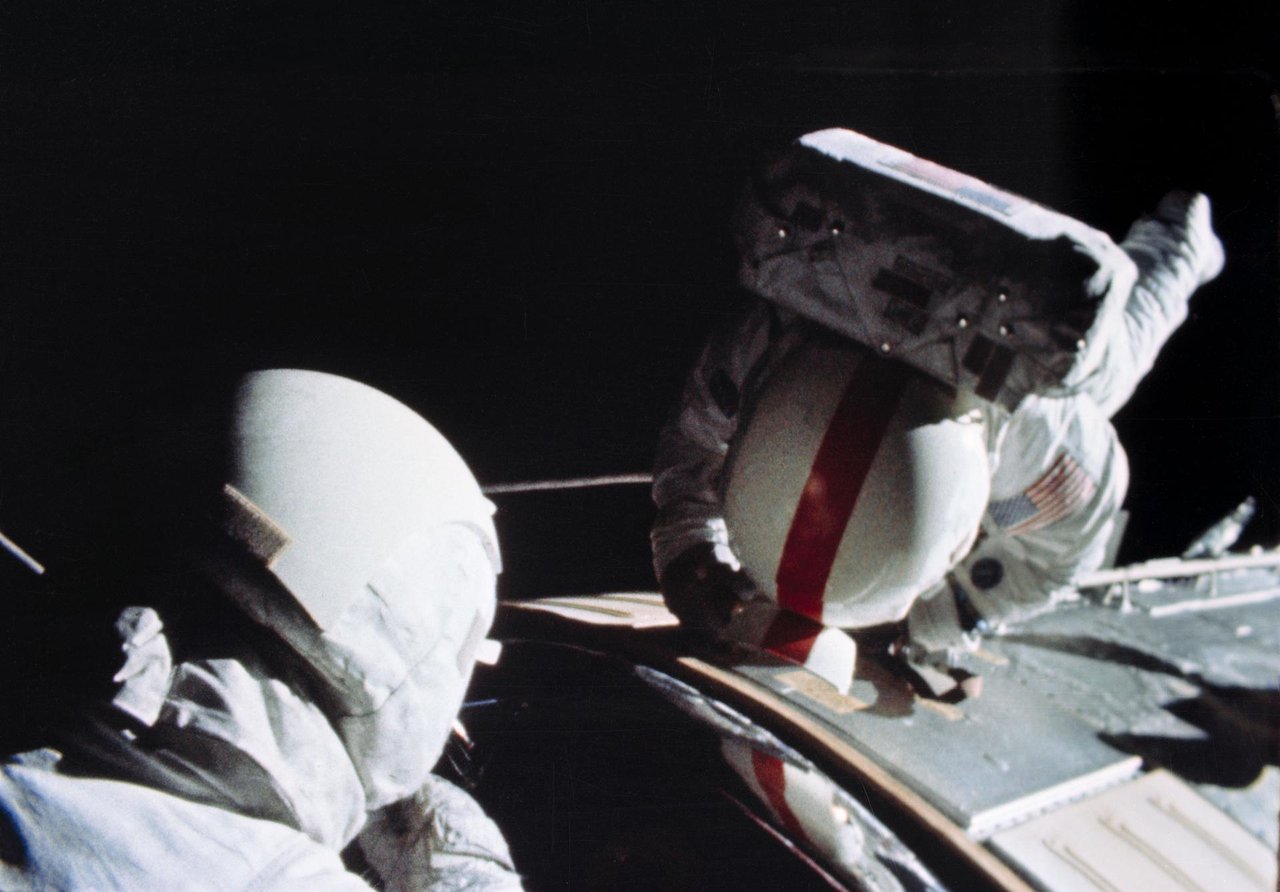
For about four seconds of 16mm motion picture film shot from inside the Apollo 16 Command Module Casper on the trans-Earth coast home from the Moon in late April 1972, a bright, roughly circular object with what looks like a dome on top drifts across the frame. This case file covers what witnesses reported, the official narrative, and a two-pass assessment with its evidence tier.
What did witnesses see at Trans-Earth coast?
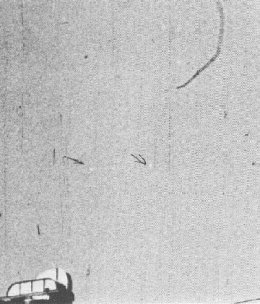
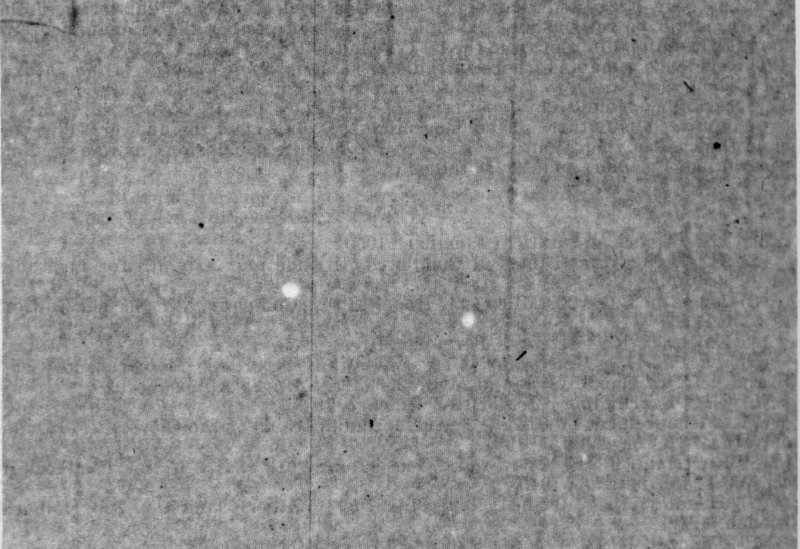
For about four seconds of 16mm motion picture film shot from inside the Apollo 16 Command Module Casper on the trans-Earth coast home from the Moon in late April 1972, a bright, roughly circular object with what looks like a dome on top drifts across the frame. In the grainy footage the shape reads, to a sympathetic eye, as a classic flying saucer: a disc with a raised cupola, glowing against the black of space and seemingly hanging near the lunar surface or the spacecraft. The clip runs at the camera's low frame rate (the onboard Maurer Data Acquisition Camera could be set to 1, 6, 12 or 24 frames per second, and the relevant run was at the slow end), so it amounts to roughly fifty individual frames in total.
The Apollo 16 crew were Commander John Young, Command Module Pilot Ken Mattingly, and Lunar Module Pilot Charlie Duke. The film was retrieved and developed back on Earth with the rest of the mission's onboard footage. Crucially, none of the three astronauts reported seeing any such object with their own eyes during the flight. When James Oberg later asked all three directly, every one of them said they saw nothing unusual outside the windows and did not even remember the image appearing on the film, noting that long-duration spaceflight produced many reflections, blurs and bright artifacts on the cabin glass as a matter of routine.
The object's apparent motion is part of what made it look strange. As the hand-held camera jerked back and forth, the bright shape appeared to swing across the field of view by roughly twice as much as the image of the Moon did in the same frames, a parallax behavior that pointed to something very close to the lens rather than far away in space. UFO proponents who circulated the clip described the object in dramatic terms, with some online claims inflating it to a craft about 100 kilometers wide moving at tens of kilometers per second, figures that have no basis in the footage and that even researchers sympathetic to the anomaly rejected.
What is the official explanation?
There was no contemporaneous 1972 investigation, because the "UFO" was never noticed at the time; it surfaced later as a curiosity pulled from the onboard film and amplified online. The formal review came decades afterward. In December 2003 a member of Congress forwarded a constituent's inquiry about the footage to NASA Headquarters, and the request was passed to the Image Science and Analysis Group at Johnson Space Center in Houston. That group is the same unit that analyzes Space Shuttle imagery for debris and damage; according to the Government Executive feature "Space Case" (August 2004), in its roughly eighteen-year history it had looked at only two prior UFO queries.
The analyst assigned was Gregory Byrne, described as a space physicist who led the group. As reported in "Space Case" and in the subsequent write-ups, Byrne's team obtained the original 16mm film, let it warm to room temperature over about two days, ran it through a digital scanner, and then dissected the clip into its roughly fifty constituent frames. They stabilized the sequence to remove the camera's hand-held jitter and aligned the frames so that the repeated information could be stacked into higher-resolution, higher-contrast composite images. As the resolution came up, a faint linear structure emerged out of the murk: the bright "saucer" was sitting at the end of a long straight pole. The report, completed on 28 February 2004, identified the object as the Command Module's spacewalk floodlight and boom assembly, a light on an extended arm that the crew used to illuminate the trans-Earth EVA. NASA's stated finding was that the object only appeared to move relative to the Moon because of parallax, "brought about by slight camera motions and the nearness of the object to the camera."
Byrne told Government Executive that he had at first considered the assignment "a nuisance" but that the team "enjoyed working it" while routine Shuttle work was dragging, and that, contrary to the conspiracy framing, "from where I sit, we do not cover up." Separately, the space writer and former NASA engineer James Oberg did his own provenance work: he checked the mission air-to-ground transcript and the still-camera contact sheets and found nothing logged at the relevant time, confirmed the frames were genuine Apollo 16 film taken soon after the spacecraft left lunar orbit, and (with input from analysts including Don Ratsch) ruled out an early NASA photo technician's guess, by Don Pickard, that the object was simply the crescent Earth, because the lunar features and geometry in frame were wrong for an Earth view.
What did the witnesses think it was?
The people closest to the event, the three astronauts, never claimed to have seen a UFO. Young, Mattingly and Duke each told Oberg they observed nothing anomalous outside the spacecraft and had no memory of the object on the film, treating it as one more of the countless reflections and blurs that accumulate on cabin windows during a long flight. In that sense there is no firsthand human witness asserting a craft; the "witness" is the film alone.
The case that the object might be real came not from the crew but from independent civilian researchers analyzing the footage years later. The most serious of these was the Japanese engineer Hiroshi Nakamura, who published a technical study in the peer-reviewed Journal of Scientific Exploration in 2003 (volume 17, pages 409 to 433). Nakamura argued that the object was not the Earth, not the Command/Service Module, not a prank, and not an optical aberration generated inside the camera optics, and he concluded bluntly that "the object is a large extraterrestrial artifact," adding, "This is the only hypothesis that is consistent with the data." The Belgian physicist Auguste Meessen cited the Apollo 16 footage approvingly as the kind of anomaly that ought to motivate more scientists to invest time in serious image analysis.
That pro-anomaly reading is the strongest version of the witness case, and it is worth taking seriously because it came from technically literate people working from the actual frames rather than from a repost caption. But it has a specific hole that its own supporters acknowledged: Meessen noted that Nakamura's elimination list did not rule out a reflection of the sunlit camera lens on the spacecraft window, which is exactly the kind of near-the-lens artifact the later NASA stacking analysis converged on, except that NASA found a physical object on a boom rather than a pure reflection.
The dispute
The counter-explanation is specific, named, and method-shown, which is why this sits in the strong dispute tier rather than the barely-disputed one. The object was positively identified as the Apollo 16 Command Module's spacewalk floodlight on its extension boom, a real piece of hardware on the spacecraft, not an unidentified craft. The identification was made by Gregory Byrne, a space physicist leading the Image Science and Analysis Group at NASA's Johnson Space Center, in a report completed on 28 February 2004 in response to a congressional inquiry forwarded to NASA in December 2003. The method is documented and repeatable: the team retrieved the original 16mm film, scanned it digitally, separated the clip into its roughly fifty individual frames, stabilized them to cancel the hand-held camera's jitter, and aligned and stacked the frames to produce higher-resolution composites. In those enhanced images the bright "saucer" resolved into a light fixed to the end of a long straight pole, with the pole connecting back toward the spacecraft. Popular accounts described it as a "strap" or "strut" appearing to tie the flying saucer to the Command Module.
The motion that originally made the object look like a free-flying craft is fully accounted for by this explanation. NASA's finding was that the object only seemed to move relative to the Moon "because of parallax brought about by slight camera motions and the nearness of the object to the camera." That matches an independent observation made before the NASA study, that as the camera jerked, the bright shape swung across the frame by about twice as much as the Moon did, exactly what you expect from an object close to the lens rather than far away in space. The presence of external booms and EVA illumination hardware on the spacecraft during this phase of the flight is not speculative; Mattingly conducted a deep-space EVA on 25 April 1972, and NASA mission imagery from that EVA, including the still S72-37001, was itself captured on the same 16mm Maurer camera and shows the crew working amid external structures.
The pro-anomaly case does exist and is treated honestly here. Hiroshi Nakamura's 2003 Journal of Scientific Exploration paper concluded the object was "a large extraterrestrial artifact" and the "only hypothesis that is consistent with the data," and the physicist Auguste Meessen endorsed the footage as worthy of study. But Meessen himself flagged that Nakamura's analysis never excluded a near-camera reflection or object on the spacecraft window, which is the very category the NASA stacking analysis later confirmed, finding not a pure reflection but a physical floodlight and boom. James Oberg added independent provenance work, checking the air-to-ground transcript and contact sheets, confirming the frames were genuine Apollo 16 film taken soon after lunar departure, and noting that all three astronauts said they saw nothing. The dispute closes the case because it is a positive identification of a specific real-world object by named analysts using a transparent method, not a vague official denial. What keeps it short of fully discredited is only that the original NASA report is an internal document rather than an open peer-reviewed paper, and that the anomaly reading was published in a journal; the physical identification itself is not seriously in doubt.
Is the Apollo 16 UFO Film real? The two-pass assessment
Pass one, how this could be entirely ordinary. The footage is a few seconds of grainy 16mm film with no corroborating eyewitness; all three astronauts said they saw nothing. The bright shape moves with roughly twice the parallax of the Moon, the signature of something very close to the camera. And there was, in fact, hardware in exactly the right place: the Command Module carried external booms and a spacewalk floodlight, deployed around the trans-Earth EVA of 25 April 1972, when Mattingly worked outside the spacecraft. A near-lens light on an arm, smeared by the low frame rate and the camera's jitter, is a complete and mundane explanation that requires nothing exotic.
Pass two, if real, what would it be. The serious anomaly case, made by Hiroshi Nakamura in the Journal of Scientific Exploration in 2003, is that the disc is a genuine structured object, "a large extraterrestrial artifact," because it allegedly is not the Earth, not the spacecraft, not a hoax and not an internal optical fault. If that held, this would be a structured craft caught on authenticated NASA cinema film in cislunar space, an extraordinary result. The weakness, conceded even by the sympathetic physicist Auguste Meessen, is that Nakamura never excluded a reflection or a near-camera object on the spacecraft itself.
That gap is precisely where the case closes. This is not an official assertion without a method. NASA's Image Science and Analysis Group under Gregory Byrne took the original film, scanned it, broke it into its roughly fifty frames, stabilized and stacked them to raise resolution, and on 28 February 2004 resolved the "saucer" into a floodlight on the end of a straight boom physically attached to the spacecraft, with the apparent motion explained by parallax from a close object. James Oberg independently verified the film's provenance and timing and dismantled the rival Earth-misidentification guess. Two named teams, a shown method (frame stacking that reveals the connecting strut), and a positive identification of the specific real-world object, the Command Module spacewalk floodlight and boom, together meet the bar for a strong dispute rather than a weak one. The tier is Strongly Disputed: the imagery is authentic 1972 NASA film, but the object in it has been positively identified as a piece of the Apollo 16 spacecraft, not an unknown craft.
Sources
- www.govexec.com/magazine/magazine-news-and-analysis/2004/08/space-case/17433/
- web.archive.org/web/20170520223704/http://www.ufocasebook.com:80/2011/a16explained.html
- exonews.org/how-nasa-exposed-truth-behind-spacecraft-from-another-world/
- ufologie.patrickgross.org/htm/apollo16.htm
- archive.org/details/Apollo1616mmOnboardFilm
- www.nasa.gov/image-detail/amf-s72-37001
- www.bonhams.com/auction/28175/lot/115/apollo-16-ken-mattingly-deep-space-eva-chromogenic-color-photograph-april-24-1972-8-x-10-inches-204-x-254-mm-nasa-id-in-red-s-72-37001/
- web.archive.org/web/20210614133512/https://www.aol.com/news/2014-03-11-nasas-unexplained-files-apollo-16-mystery-20847571.html
More cases from this region: UFO sightings in United States