The Skylab 3 Red Object (1973)
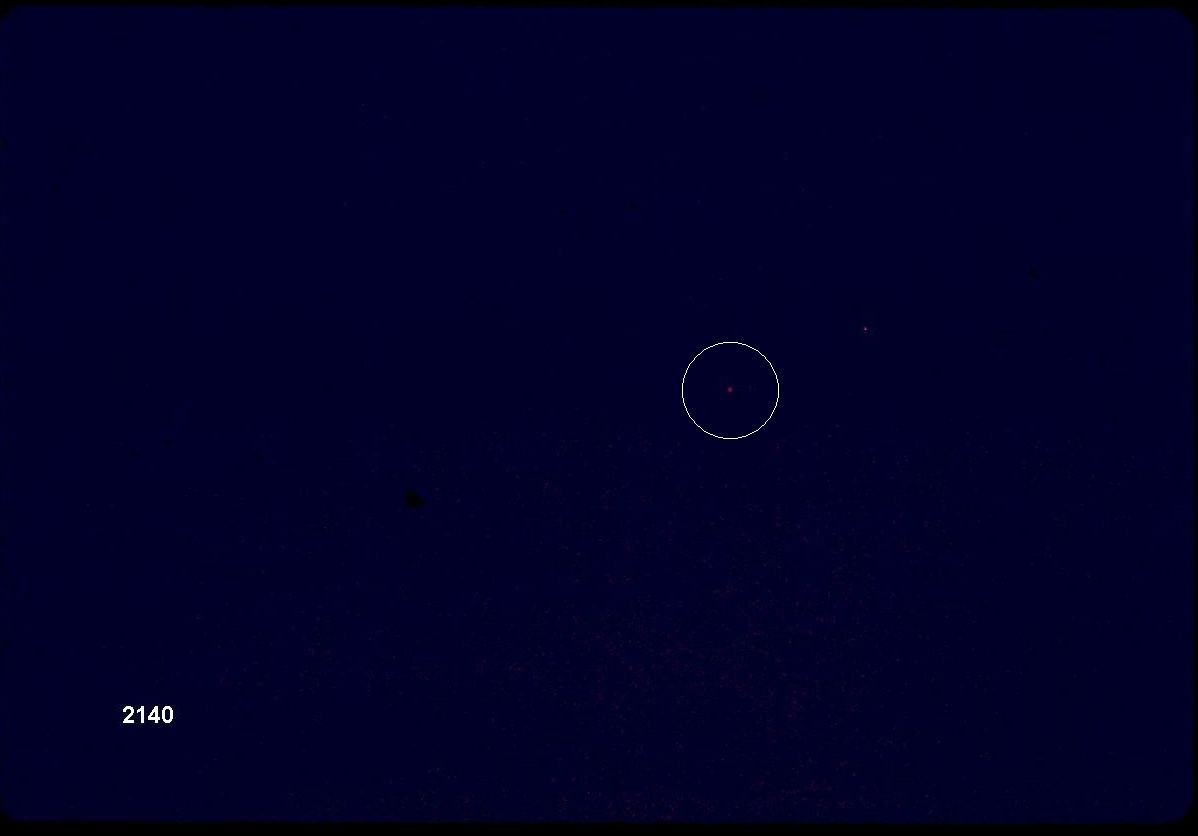
On the 59th day of the Skylab 3 mission, science pilot Owen Garriott was at the wardroom window when he noticed a bright object holding position outside the station. This case file covers what witnesses reported, the official narrative, and a two-pass assessment with its evidence tier.
What did witnesses see at Low Earth orbit aboard the Skylab space station?
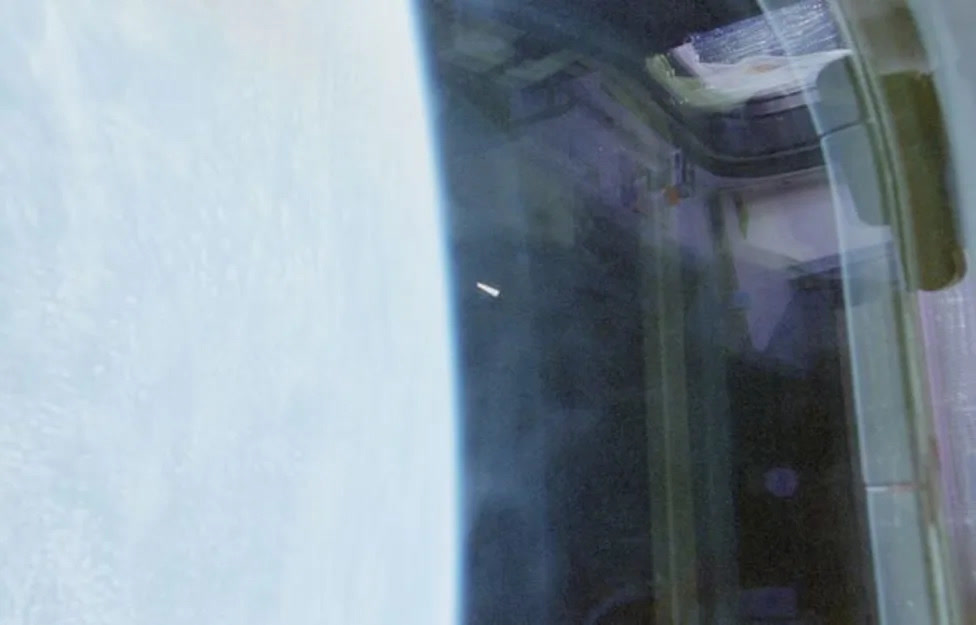
On the 59th day of the Skylab 3 mission, science pilot Owen Garriott was at the wardroom window when he noticed a bright object holding position outside the station. He called over commander Alan Bean and pilot Jack Lousma. In the technical crew debriefing of 4 October 1973 (NASA document JSC-08478), the three men describe what they watched for about ten minutes before orbital sunset.
The object was, in Garriott's words, much brighter than Jupiter or any of the other planets, a bright reddish object that kept its red color even when it was well above the horizon, where atmospheric reddening should not occur. It varied in brightness on a regular cycle with a period of about ten seconds, dimming and brightening as if it were rotating and presenting different faces or surfaces to the Sun. Garriott counted the timing carefully. When Skylab crossed into the Earth's shadow at sunset, the object did not vanish with the station. It stayed lit and then followed the crew into darkness about five seconds later, which told them the object was farther out toward the still-sunlit side and at a slightly different point on the orbit.
From that five-to-ten-second lag between Skylab entering shadow and the object going dark, the crew reasoned the thing could not be more than thirty to fifty nautical miles away. Over the full ten minutes of observation it drifted only ten to twenty degrees across their view and stayed in an orbit closely matched to Skylab's own. They photographed it. Four exposures on magazine CX-35 captured it, the frames logged as SL3-118-2137 through 2140 in the mission photographic index, shot on a Nikon body with a 300mm lens on SO-368 Ektachrome film. Three of the four frames show only a point of light. The fourth, the one the analysts later leaned on, shows an elongated, broken, reddish streak rather than a clean dot. The crew never saw the object again on any earlier or later orbit. It appeared once, paced them for ten minutes, and was gone.
What is the official explanation?
NASA's own paperwork resolved the object administratively rather than scientifically. The Skylab 3 Photographic Index and Scene Identification (NASA technical document held in the NASA Technical Reports Server as accession 19740007948) catalogs every frame the crew shot. On page 49, in the magazine CX-35 listing, frames SL3-118-2137 through 2140 carry the scene description "Satellite, unmanned." That is the entirety of the official identification: a two-word label in a photo-index column, with no named satellite, no orbital element set, no NORAD catalog number, and no analysis attached. The crew were never told which satellite it supposedly was. Garriott said so plainly in later years: what satellite it was, and how it happened to end up in such a similar orbit, no one ever explained to them.
The primary witness document is the Skylab 1/3 Technical Crew Debriefing, NASA reference JSC-08478, prepared at the Lyndon B. Johnson Space Center in Houston and dated 4 October 1973. It records the crew's verbatim account of the sighting as part of the routine post-mission debrief, alongside their notes on everything else they observed. The Skylab 3 mission itself ran from 28 July to 25 September 1973 with Bean, Garriott, and Lousma aboard.
The case re-entered public view decades later. On 8 May 2026 the United States Department of War launched its UAP records portal at war.gov/UFO under the Presidential Unsealing and Reporting System for UAP Encounters, and the first tranche included the scanned Skylab debriefing as file NASA-UAP-D7, "Skylab Technical Crew Debriefing, 1973," which carries the original JSC-08478 cover page. The document that NASA had filed away in 1973 as an unremarkable satellite frame was, half a century later, formally published by the Pentagon as a UAP record. No official body ever produced a positive identification of the object beyond the original "Satellite, unmanned" notation.
What did the witnesses think it was?
All three crew were professional observers and treated the sighting as a real, external, physical object, not an illusion. Garriott, a physicist and the science pilot, was the one who timed the shadow-entry lag and worked out the rough distance on the spot. In the debriefing the crew talk about it as the brightest and closest of the several satellites they had spotted during the mission. Lousma's framing in the debrief, that of all the objects they saw this was the one that looked least like an ordinary spacecraft, is part of why the case stuck.
What the crew did not claim is as important as what they did. They did not call it alien. They called it a satellite they could not identify, in an orbit suspiciously close to their own, behaving in a way no satellite they knew of behaved, and they were frustrated that the question was never answered for them. Garriott repeated for the rest of his life that the object's identity was simply never explained to the crew. He was not a man given to embellishment, a Stanford-trained electrical engineer and astronaut, and he let the anomaly stand as an open question rather than inflating it.
The civilian analysts who took up the case are corroborating witnesses of a second kind, working from the photographs and the debriefing rather than the window. Optical physicist Bruce Maccabee and researcher Brad Sparks produced a detailed photo analysis titled "Analysis of the Photos of an Unidentified Object Observed by the Astronauts of Skylab 3," reconstructing the geometry from the film. Their measurement of the spacing between the bright points in the fourth frame, combined with the 300mm focal length and the crew's distance estimate, put the object at roughly 110 meters, about 336 feet, across at a range near 38 kilometers. They argued no manmade satellite of 1973 matched that size, that color, or that brightness behavior, and that an object pacing Skylab so closely should have been tracked and explained, yet was not.
The dispute
The central counter-explanation is James Oberg's, set out in his analysis "The Skylab 3 Mission UFO Photographs of 1973." Oberg proposes that the object was a small piece of debris shed by Skylab itself, drifting in the immediate vicinity of the station. His reconstruction has the debris moving from sunlight into a shadow zone near orbital sunset, which would account for both the reddened appearance at the terminator and the way the object went dark a few seconds after Skylab did. His most telling argument is geometric and runs against the witnesses: an object as large as Maccabee and Sparks calculate, well over a hundred feet across, would have been a conspicuous naked-eye object of real angular size passing directly over Africa beneath that orbit, and no ground observers reported any such thing. He adds that the photographic size estimate depends on assumed altitude and orbital characteristics that are, in his words, convenient guesses that cannot be independently corroborated.
NASA's institutional position lines up with the mundane reading without adding evidence to it. The Skylab 3 Photographic Index labels the relevant frames simply "Satellite, unmanned," and the Pentagon's 2026 release reproduced the debriefing without revising that. The difficulty is that neither NASA nor Oberg ever produces the specific object. Oberg himself concedes the crucial gap: Skylab-shed debris of the kind he proposes was never observed from the ground and was not tracked, so there is no catalog entry, no recovered piece, and no orbital element set to point to. NASA names no satellite. Both the official label and the skeptical reconstruction are therefore counter-explanations offered without a shown method that ties them to this particular image.
That is why the case sits at Barely Disputed rather than anything stronger. A strong dispute would need a confession, a recovered hoax prop, a witness recantation, or a positive identification of the actual real-world object, a named satellite, a traced launch, a specific debris event. None of those exist here. What exists is a plausible but unproven natural-explanation reconstruction and an unexplained two-word administrative label, set against authenticated NASA film, three professional astronaut witnesses, a published government debriefing, and a detailed civilian photo analysis arguing that nothing in the 1973 catalog fits. The dispute is honest and worth stating in full, and it lowers the strangeness of the case, but it does not resolve what the crew photographed. The object remains officially unidentified beyond the label, so the case largely stands.
Is the Skylab 3 Red Object (1973) real? The two-pass assessment
Pass one, the ordinary explanations. The leading prosaic case comes from spaceflight historian James Oberg, who argues the red dot was most likely a small piece of debris shed by Skylab itself, drifting near the station and moving from sunlight into the station's own shadow geometry, which would explain why it lit up red near the terminator and then winked out moments after Skylab did. Oberg's strongest point is the size argument run in reverse: an object as large as Maccabee and Sparks calculate would have been a startling naked-eye object of obvious angular size sweeping across the skies of Africa directly beneath that orbit, and no such ground sightings exist. He also notes the photographic size estimate rests on assumed orbital parameters that are convenient guesses rather than corroborated facts. NASA's own filing points the same direction with its bare "Satellite, unmanned" label. A piece of orbital junk, a flake of insulation or frozen waste catching low-angle sunlight near sunset, is a genuinely plausible reading and would make this an entirely mundane event.
Pass two, if it is what it looks like. If the object is real, external, and the size the photo geometry suggests, then in 1973 nothing in the catalog fit. Maccabee and Sparks ruled out a conventional satellite on three grounds: the inferred dimension of well over a hundred feet between reflective points dwarfed any satellite then flying, which topped out around ten meters; no 1973 satellite carried bright red lights or red-painted surfaces; and an object in an orbit grazing Skylab's own should have been a tracked, named object, yet the crew were told nothing. The red color in a region where atmospheric reddening should not apply is the detail that resists the easy answers. Their conclusion was that the object was truly anomalous.
Weighing the two, this lands at Barely Disputed. The dispute is real and is advanced by a credible independent analyst, but it does not close the case. Oberg offers a plausible mechanism, Skylab-shed debris, while openly conceding that such debris was never observed from the ground and never tracked, so his explanation identifies no specific object and shows no method that pins this image to a known cause. NASA's "Satellite, unmanned" is an assertion in a photo log, not a demonstration, with no satellite ever named. Against that sits authenticated NASA imagery, three professional witnesses, a published government debriefing, and a detailed photo analysis arguing nothing fit. There is no confession, no recovered prop, and no positive identification of the specific real-world object, which is what a strong dispute would require. The material is genuine and the object remains officially unexplained beyond a label, so the counter-explanation weakens the case without sinking it.
Sources
- www.nicap.org/reports/730920skylabIII_report2.htm
- ntrs.nasa.gov/api/citations/19740007948/downloads/19740007948.pdf
- www.debunker.com/texts/SkylabUFO_1973.html
- www.war.gov/medialink/ufo/release_1/nasa-uap-d7-skylab-technical-crew-debriefing-1973.pdf
- www.war.gov/ufo/
- www.nasa.gov/mission/skylab-3/
- www.newsnationnow.com/space/skylab-ufo-sightings-space/
More cases from this region: UFO sightings in United States