The Object Photographed From Space Shuttle Columbia (STS-80, 1996)
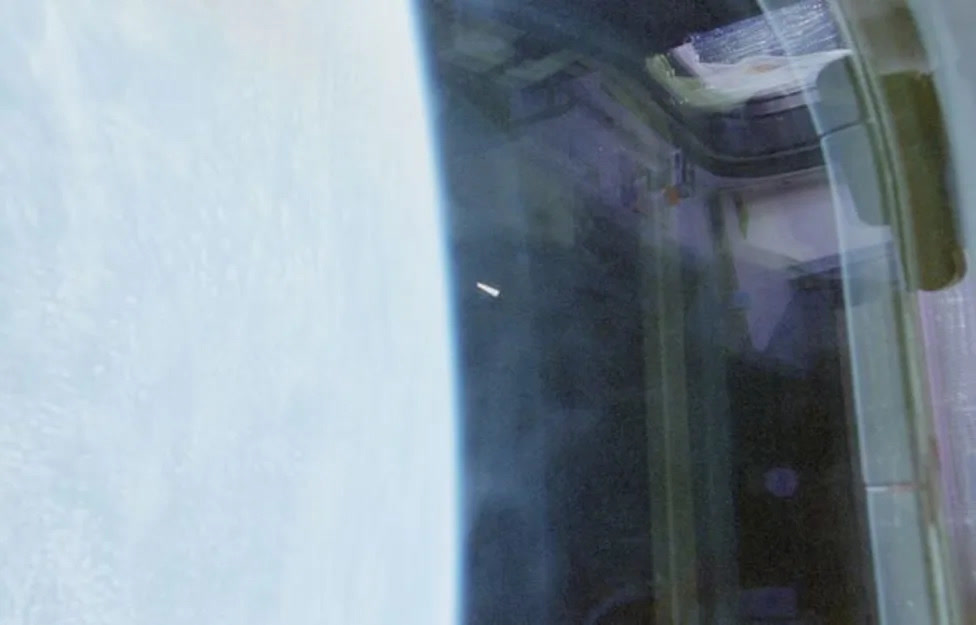
During the longest space shuttle mission ever flown, the crew of Columbia pointed a camera out the window and photographed something small, bright, and hard to place, drifting against the curve of the Earth. Three of those 1996 frames sat in NASA's holdings for thirty years. On 10 July 2026 the U.S. Department of War published them as NASA-UAP-D030, D031, and D032, part of the fourth PURSUE release, and a set of orbital film frames that most people had never seen became one of the more haunting entries in the government's UAP disclosure.
What did witnesses see at Low Earth orbit aboard Space Shuttle Columbia (STS-80)?
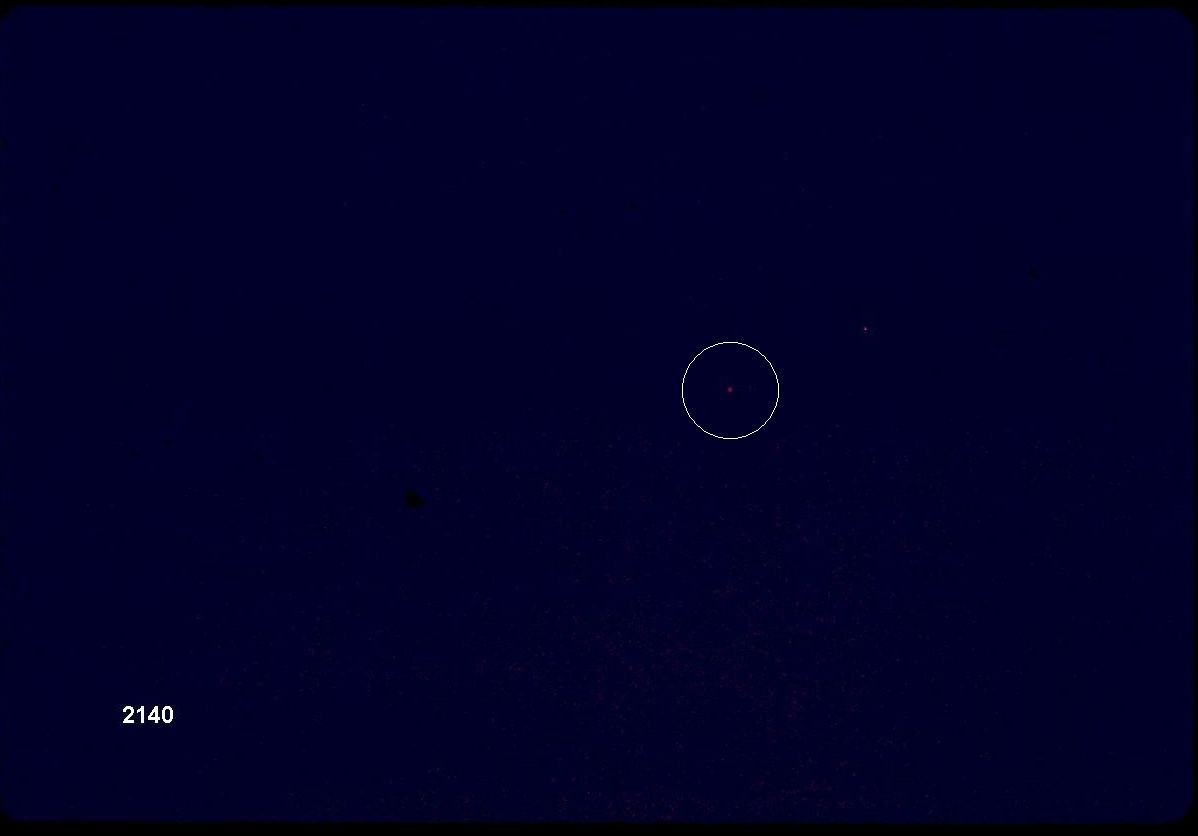
STS-80 flew from 19 November to 7 December 1996, a mission that still holds the record for the longest shuttle flight at more than seventeen days. Somewhere in that stretch, astronauts aboard Columbia captured a series of three photographs of an object in low Earth orbit. In the first frame it appears as a small, whitish, roughly triangular or cone shaped form set against the bright limb of the Earth, off to one side of the window, with the shuttle's own structure framing the shot.
The three images are not identical. Between frames the object's orientation shifts, giving the strong impression that it is rotating or tumbling as it moves in close proximity to the orbiter. It is compact and featureless at this resolution, a bright wedge of light with no clear scale, floating in the black above the cloud tops.
What is the official explanation?
The frames were released without an official identification. In the war.gov catalog they carry the designations NASA-UAP-D030, D031, and D032, filed as historical NASA imagery within the fourth PURSUE tranche, the disclosure program created by executive order to review and publish government UAP holdings. NASA did not attach a determination, and AARO did not classify the object.
The most concrete public assessment again came from Avi Loeb, who judged the object likely to be of human-made origin, most plausibly a piece of orbital debris. He put the reading in context: something on the order of forty thousand tracked fragments larger than ten centimeters currently orbit the Earth, alongside far more smaller pieces, so a small bright object tumbling near a spacecraft has an enormous population of ordinary candidates. Other coverage noted the alternative that the object is ice or a fleck of material outgassed or shed from Columbia itself, which is a routine occurrence around shuttles.
What did the witnesses think it was?
The witnesses are the STS-80 crew, professional astronauts documenting their mission with handheld cameras, and the primary record is the film itself rather than a dramatic verbal account. STS-80 has a small place in UFO lore already: like several shuttle flights, its downlinked video included grainy, distant lights and shapes that enthusiasts have combed over for years. What is new in 2026 is that NASA and the Department of War have now singled out three specific still frames and placed them, officially, in a UAP file.
That is the significant part. These are not screen grabs pulled from a video feed by outside researchers. They are archival NASA photographs the government itself has flagged as showing an unidentified object and chosen to release under the disclosure program.
Is the Object Photographed From Space Shuttle Columbia (STS-80, 1996) real? The two-pass assessment
Pass one, the mundane reading, which here is genuinely strong. Objects photographed near orbiting spacecraft are overwhelmingly local: ice crystals from vented water, flakes of insulation or paint, or small pieces of debris drifting alongside the vehicle, all lit brilliantly by the sun against the dark of space. A close, tumbling, featureless bright fleck that shifts orientation between frames fits an outgassed ice particle or a shed fragment almost perfectly, and low Earth orbit is crowded with tens of thousands of such objects. The apparent triangular or cone shape is exactly what an irregular, sunlit chip looks like when it is small, out of focus, and rotating. This is the reading Loeb and most analysts favor.
Pass two, the residual case. The frames are still, officially, unidentified. NASA has not matched the object to a specific known piece of debris or a documented outgassing event, and the government elected to release them as UAP rather than quietly explaining them away. Proponents can fairly point out that "probably debris" is a category, not an identification, and that the object's proximity and motion have not been reconstructed from the orbital record. Absent that work, the specific thing in these three frames remains unnamed.
The verdict is Unknown. The most likely explanation, orbital debris or shuttle-shed ice, is prosaic and well supported, and this file should not be oversold. But no official body has closed it with a named cause, so it sits, honestly, as an unidentified object that the U.S. government photographed from orbit in 1996 and chose to disclose thirty years later.
Sources
- www.war.gov/News/Releases/Release/Article/4539898/department-of-war-publishes-fourth-release-of-unidentified-anomalous-phenomena/
- thedebrief.org/pentagon-releases-new-batch-of-uap-videos-and-historical-files-but-clarity-remains-elusive/
- avi-loeb.medium.com/highlights-from-the-fourth-uap-data-release-by-the-u-s-government-105a9b2561c7
- www.nasa.gov/gallery/sts-80/
More cases from this region: UFO sightings in Low Earth orbit