Two Aircraft UFO Encounters over Alaska (January 1987)
Two separate aircraft encounters are reported on consecutive days over interior Alaska, in the same airspace and only weeks after the far better known Japan Air Lines Flight 1628 sighting of 17 November 1986. This case file covers what witnesses reported, the official narrative, and a two-pass assessment with its evidence tier.
What did witnesses see at Airspace between Elmendorf AFB and Eielson AFB?
Two separate aircraft encounters are reported on consecutive days over interior Alaska, in the same airspace and only weeks after the far better known Japan Air Lines Flight 1628 sighting of 17 November 1986.
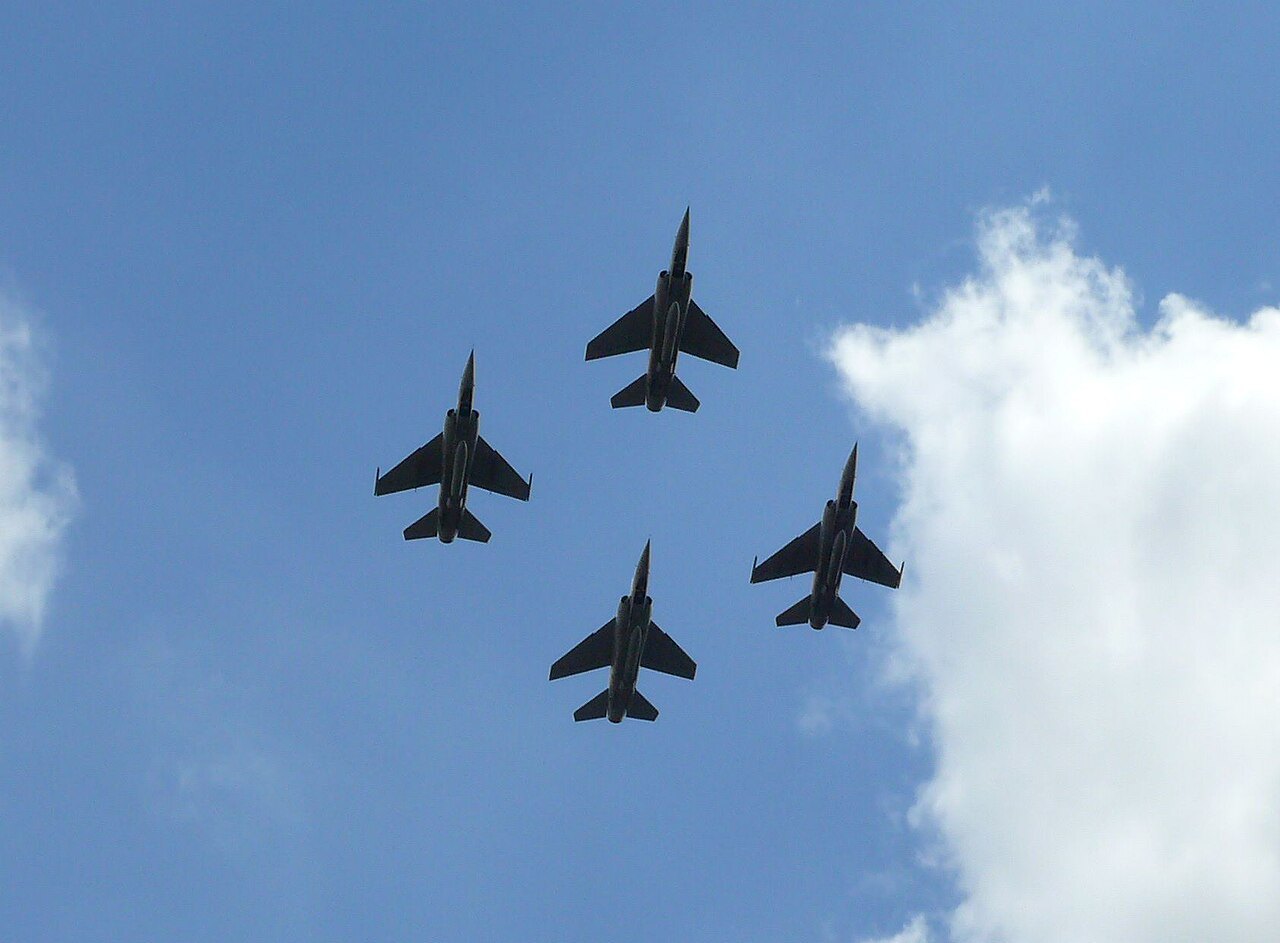
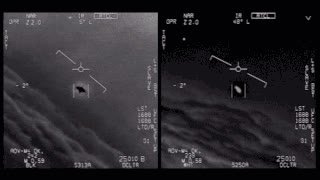
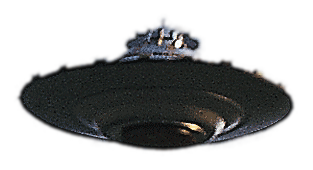
The first event is placed on 30 January 1987. A United States Air Force Boeing KC-135 Stratotanker, the four-engine jet tanker built on the same airframe as the Boeing 707, was flying between Elmendorf Air Force Base at Anchorage and Eielson Air Force Base near Fairbanks. At roughly 20,000 feet the crew reported a very large disc-shaped object, described as similar to the craft the JAL 1628 crew had reported two months earlier. According to the account, the object closed to within about 13 metres, roughly 40 feet, of the tanker. The crew was rattled enough that the encounter was relayed in real time over the air, and an FAA controller directed the captain to file a report once he was on the ground. One FAA voice on the source audio is quoted playing the event down, remarking that it was very rare to see "the lights" up there, which is itself an admission that such sightings were a known thing in that airspace.
The second event is placed on 31 January 1987, less than 24 hours later. Alaska Airlines Flight 53, a scheduled commercial passenger flight, reported several very large disc-shaped objects that trailed the airliner. The crew picked the objects up on the aircraft's onboard radar, but ground radar was not tracking them. The objects are said to have eventually broken away and accelerated off, the crew estimating a departure speed of about a mile a second, which works out to roughly 3,600 miles per hour. That speed claim is an eyewitness estimate of a fast-moving light, not an instrumented measurement, and should be read as such.
Both reports share the signature elements of the Alaska air corridor sightings of that winter: a large disc, very close proximity to a crewed aircraft, a split between onboard and ground radar, and immediate involvement of air traffic control. Neither account preserves the names of the KC-135 crew or the Flight 53 pilots in the surviving material.
What is the official explanation?
There is no standalone official investigation report for either of these two January 1987 events that has been released or located. This is the central weakness of the case and it is stated here plainly rather than papered over.
What official involvement is on record is procedural and comes through the audio used in the source documentary. The FAA was on the loop for the KC-135 encounter: a controller acknowledged the sighting, and the captain was instructed to submit a written report after landing, the standard FAA pilot-report procedure. For the Alaska Airlines event the official footprint is the radar split, an onboard radar return with no corroborating ground radar track, which is exactly the kind of detail air traffic control would have noted at the time.
It is important to separate these two cases from the JAL 1628 case they are constantly bundled with. The famous FAA material, including the three-month FAA review, the "surge primary return" radar discussion at Anchorage Air Route Traffic Control Center, the press handling that culminated in early March 1987, and the eventual FAA spokesman John Callahan testimony, all belong to JAL 1628 of November 1986, not to these two January encounters. Writers routinely transplant JAL 1628's radar and FAA paperwork onto the KC-135 and Flight 53 stories, which makes the January cases look better documented than they actually are. On their own, neither January event has a known FAA case number, a released radar tape, a Blue Book successor file, or a named investigating officer.
The only formal cataloguing of these two events is civilian. They appear in the NICAP and Project 1947 RADCAT radar-case directory, the revived radar catalogue compiled with Fran Ridge and original RADCAT compiler Martin Shough, where the entry is built around the documentary segment rather than around an underlying primary document. In other words the "official" layer here is thin to absent, and what exists is secondhand.
What did the witnesses think it was?
The witnesses in both events are aircrew, which is the strongest thing the case has going for it. The first set is a United States Air Force KC-135 tanker crew, professional military aviators trained to identify aircraft and judge closure and range, who reported a large disc holding station within about 40 feet of their aircraft at 20,000 feet. The second set is the flight deck crew of a scheduled Alaska Airlines passenger flight, again professional pilots, who reported multiple discs trailing the airliner and who tied their account to an onboard radar contact rather than to a naked-eye impression alone.
What the witnesses believed, as relayed through the surviving audio, is that they were dealing with solid, very large, controlled objects rather than stars, planets, or ordinary traffic. The KC-135 crew's alarm at a 40-foot standoff and the Flight 53 crew's tracking of the objects on their own radar both point to people who thought they were looking at something physically present and close, not a distant optical illusion. The FAA voice that called them "the lights" treated them as a recurring phenomenon in that corridor rather than as a one-off mistake.
The corroboration across the two events is circumstantial but real: two unrelated crews, military and civilian, in the same Alaskan airspace within a single 24-hour window, in the same winter that JAL 1628 had already put that exact corridor on the map, all describing large discs at close range. That clustering is what keeps the case alive. The serious limitation, weighed honestly, is that the individual witnesses are anonymous in the surviving record. There are no named pilots, no signed FAA 8020 reports in hand, and no on-the-record interviews with these specific crews that can be opened and read. The testimony is credible in type but unverifiable in particulars.
Is the Two Aircraft UFO Encounters over Alaska (January 1987) real? The two-pass assessment
Pass one, the ordinary explanations. Several mundane causes fit parts of these reports. A KC-135 crew flying a night or low-light leg over interior Alaska in late January could have misjudged the range and size of a bright light, since a planet, a bright star, or another aircraft's lights near the horizon are notoriously hard to range without instruments, and a "40 foot" estimate by eye against a black sky can be wildly wrong. The Flight 53 estimate of a mile a second is an eyeball figure for a receding light and carries no instrument backing. The onboard-radar-but-not-ground-radar split is consistent with airborne weather radar returns, anomalous propagation, or temperature-inversion ducting, all common in cold high-latitude air, rather than with a solid craft. And the entire pairing surfaces from a single 2005 television documentary, "UFO Files: Black Box UFO Secrets," so memory contamination and the strong pull of the already-famous JAL 1628 case, in the same airspace weeks earlier, could have shaped how these two later events were told and retold.
Pass two, if the reports are accurate as given. Then two independent professional crews, one military and one commercial, separately reported large disc-shaped objects at close range over the same Alaskan corridor on back-to-back days, with one object holding within 40 feet of an Air Force tanker and a cluster of others tracking a passenger jet on its own radar before accelerating away. That would be a structured, controlled, fast object exhibiting performance and proximity behavior with no conventional match, and it would extend the JAL 1628 phenomenon rather than merely echo it.
The honest verdict sits between those poles. Nobody has produced a confession, a recantation, recovered props, or a positive identification of a specific drone, balloon, ship, or rocket, so the case cannot be pushed toward disputed or discredited; no method-shown debunk exists. At the same time the material is not authenticated, there is no released radar tape, no FAA docket, and no named crew, so it does not qualify as Verified Unexplained either. There is no official narrative attached to these two specific events at all; they stand entirely on aircrew testimony preserved through one documentary and a civilian radar catalogue. That is the definition of the Unknown tier, and that is where this case belongs: credible witnesses, intriguing clustering, genuinely thin provenance, and no resolution in either direction.
Sources
- www.nicap.org/detection/radar/870131alaskadir.htm
- www.nicap.org/chronos/1987fullrep.htm
- topdocumentaryfilms.com/black-box-ufo-secrets/
- realtvufos.blogspot.com/2009/03/u_06.html
- www.discoveryuk.com/mysteries/mystery-at-the-edge-of-the-map-alaska-ufos/
More cases from this region: UFO sightings in United States