The Isidoro Ferri Encounter
In the night between 9 and 10 October 1984, at around three in the morning, Isidoro Ferri was asleep at Villa la Radicchia, the country house on Via Tassaia in Polcanto where he worked as the live-in caretaker. This case file covers what witnesses reported, the official narrative, and a two-pass assessment with its evidence tier.
What did witnesses see at Villa la Radicchia?
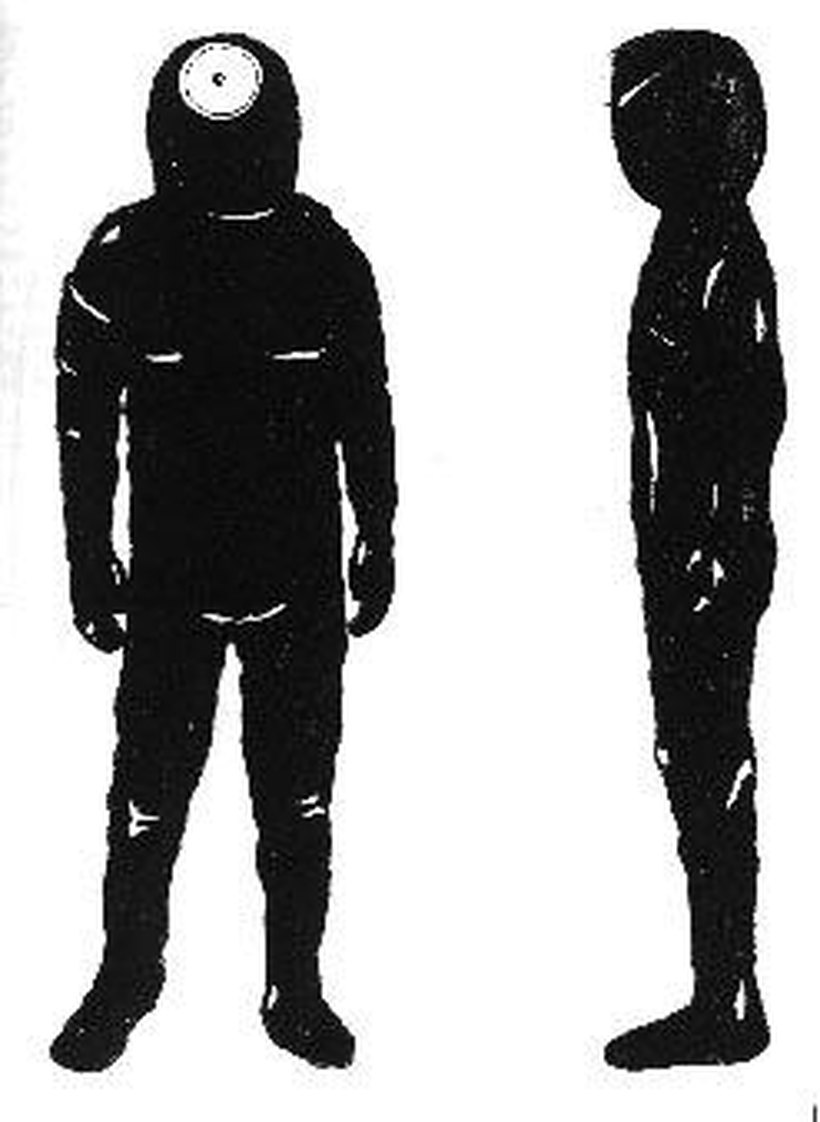
In the night between 9 and 10 October 1984, at around three in the morning, Isidoro Ferri was asleep at Villa la Radicchia, the country house on Via Tassaia in Polcanto where he worked as the live-in caretaker. The villa sits in the Mugello hills of the comune of Borgo San Lorenzo, in the province of Florence. Ferri shared the room with his son, and the rest of the family was in the house. A powerful beam of light struck the bedroom window and woke him. He looked out without getting out of bed and, on the crest of a small hill roughly forty meters away, he saw a dark, upright, human-shaped figure, tall and imposing, with what looked like a helmet on its head from which the strong light was pouring. His first thought was that it was a poacher with a torch, the kind of thing that would not be unusual in that countryside, but he changed his mind within seconds.
The figure did not walk away. According to the accounts gathered by the investigators, it seemed to dissolve into a blur or fog and was replaced by a strange pink-colored light source from which three luminous jets pointed down toward the ground, like supports or descending flames. Ferri then thought the small outbuilding nearby had caught fire. He got up. A diffuse, brilliant, blinding white light advanced across the grounds toward the villa, lighting the whole area as if it were daylight. As that light reached the front of the house, Ferri, standing about half a meter from the window, found that he could not move. He described being unable to move or call out, with a sensation of heat on his face and a feeling of the hair standing up, which several Italian accounts render as a brief paralysis lasting seconds.
Finally an incandescent red sphere, roughly two to three meters across, appeared at the same spot on the hill. Its glow stayed contained within itself rather than spilling outward, and it was so intense that Ferri could not hold his gaze on it. The whole episode lasted about five minutes, until roughly 3:35, and through all of it Ferri reported a strange, total silence. The red sphere lifted off, rose diagonally and moved off over the hills in the direction of Vaglia before vanishing upward. As it left, the witnesses said the trees bent as if in a strong wind, yet no sound of wind or engine was heard.
What is the official explanation?
There was no national government inquiry of the kind that produced a published file, but the case did draw a real official footprint on the ground. After Ferri reported what he had seen, the Carabinieri came out to Villa la Radicchia, and according to the Italian case material the search of the area was joined by military personnel, journalists and some university researchers who combed the site. In a meadow on the higher ground where Ferri had placed the lights they found three circular depressions, each about ten centimeters in diameter and three centimeters deep, set out at the corners of a triangle measured at roughly two to three meters on a side. The grass inside the marks looked pressed down. The ground was checked and no radioactivity was detected. That negative radiation result is itself a documented finding rather than a guess, and it is reported consistently across the Italian write-ups.
The investigators stressed that Ferri was taken to be telling the truth. The phrase that recurs in the Italian accounts is that he was considered to be in good faith by everyone, the Carabinieri and the other people who questioned him included. He was not treated as a prankster or a drunk. The most complete investigation report on the case was written by the Italian researcher Pier Luigi Sani, and the Centro Ricerche Prato carried out its own field inquiry as well, photographing the imprints at the site.
The case also reached a national audience and brushed against the Italian defence establishment. The Florence daily La Nazione, in a 24 October 2003 retrospective by Alfredo Scanzani, recalled that Ferri appeared in a television interview alongside the matter being put to the Ministry of Defence, with the defence minister of the day reportedly speaking about greater transparency over the ufological information collected by the Italian military. No official explanation was ever issued. The state apparatus logged the traces, accepted the witness as sincere, and left the object itself unexplained.
What did the witnesses think it was?
Isidoro Ferri did not present himself as a contactee or a believer chasing publicity. He was the custodian of a private villa, a working man woken in the dark, and his account stayed consistent through repeated questioning by the Carabinieri and by researchers. He believed he had watched something land and leave, not a poacher and not a fire, and the physical sensations he reported, the heat on the face, the prickling hair, the inability to move, and the days of red, irritated eyes after staring at the sphere, were offered as things that happened to his body, not as interpretations. The detail of the unnatural silence during a five-minute event, broken only at the end by the trees thrashing as the object rose, is the kind of specific, slightly awkward observation that field investigators tend to weigh as a mark of an honest witness rather than a rehearsed story.
The most striking corroborating witness was not a person but the dog. The animal slept outside and did not bark once during the whole episode, which everyone who knew the dog found abnormal. Afterward it was badly affected. The Italian sources that draw on the Centro Ricerche Prato and Centro Ufologico Taranto material say the dog became seriously ill, refused food and died not long after. Some of the later English-language compilations soften this to the dog refusing food for several days and then hiding inside its kennel for about two weeks without barking at passers-by. The accounts disagree on whether the animal died or eventually recovered, and that discrepancy is worth flagging plainly, but every version agrees the dog was traumatized and behaved completely out of character.
There was human corroboration too, if looser. In the days that followed, a number of residents of the Polcanto area said they had seen lights in the sky that same night, which is why several write-ups call this one of the more debated Italian cases of the period. Ferri himself never wavered and never tried to monetize the story. The picture that comes through the Italian files is of a sober witness, an independent animal reaction, and a scatter of townspeople who saw lights, none of which proves what the object was, but all of which makes a simple invention hard to argue.
Is the Isidoro Ferri Encounter real? The two-pass assessment
Pass one, the ordinary readings. The opening image, a tall figure on a hilltop forty meters off with a bright lamp on its head, is exactly what a poacher or a hunter with a head torch looks like at night, and Ferri's own first thought was poacher. A lamp swung and then switched off could read as a figure dissolving. Some of the later lights could in principle be a distant vehicle, a farm fire, or even a misjudged celestial object low over the hills, and the paralysis, heat and prickling scalp are consistent with the well-documented physiology of waking fright and sleep-transition states in a man jolted awake at 3 AM. The three ground holes are real but unspectacular on their own. Ten centimeters wide and three deep in a triangle is the sort of mark left by a tripod, a parked farm implement, animal activity or older post holes, and nothing about them is exotic. Crucially, though, no skeptic or investigator has ever tied this case to a specific identified cause. Nobody named the poacher, produced the vehicle, matched a fire, or demonstrated that the holes were made by a known object. The conventional readings stay at the level of possibility, never identification.
Pass two, if it happened as described. Then you have a structured close encounter with a sequence that does not match a single mundane object: a humanoid form, then a three-jet light source, then an advancing wall of white light, then a contained incandescent red sphere that lifted diagonally and left in silence while the trees bent. It comes with multi-channel corroboration that is hard to fake, a working-man witness judged sincere by the Carabinieri, an independent and severe animal reaction, residents who reported lights the same night, physical ground traces photographed by Centro Ricerche Prato, and a negative radioactivity test. The case was investigated in the field by Pier Luigi Sani and by CRP, and it climbed high enough to be raised with the Ministry of Defence on television.
Weighing the two passes, no official body ever issued a verdict and no independent analyst has shown a method that explains the specific object away. The conventional candidates are plausible but unproven, and they remain so. That is the definition of a case that stands on its witnesses and its traces without a settled narrative on either side, which is why the tier here is Unknown rather than Verified Unexplained or either disputed level. There is no authenticated instrument record to anchor it as verified, and equally there is no confession, no recovered prop and no positive identification of a real-world cause to dispute it. It sits, four decades on, exactly where the Carabinieri left it: a sincere witness, three holes in a Mugello meadow, a dead or terrified dog, and an object nobody has named.
Sources
- www.crprato.it/sito/index.php?option=com_content&view=article&id=46:anno-1984&catid=34:avvistamenti&Itemid=68
- www.recfiles.com/casi/13-il-caso-ferri
- centroufologicotaranto.wordpress.com/2009/02/26/ufo-il-drammatico-caso-ferri-del-1984/
- www.margheritacampaniolo.it/1954_2.htm
- ansu.altervista.org/quando-un-ufo-paralizzo-il-custode-isidoro-ferri/
- www.lanazione.it/firenze/pazzo_mondo/2009/11/10/258994-sono.shtml
More cases from this region: UFO sightings in Italy