The Christa Tilton Abduction
Christa Tilton, an Oklahoma woman who later published out of Tulsa under the imprint Crux Publications, said that on an afternoon in July 1987 she blacked out and came back to herself roughly three hours later with no idea where she had been. This case file covers what witnesses reported, the official narrative, and a two-pass assessment with its evidence tier.
What did witnesses see at Oklahoma (witness's home)?
Christa Tilton, an Oklahoma woman who later published out of Tulsa under the imprint Crux Publications, said that on an afternoon in July 1987 she blacked out and came back to herself roughly three hours later with no idea where she had been. She first put the gap down to fatigue. Then the nightmares started, vivid and frightening, and she came to believe the lost three hours and the dreams were the same thing. On the advice of a ufologist she went through regressive hypnosis, and the detail in this file comes almost entirely out of those sessions, not from continuous waking memory.
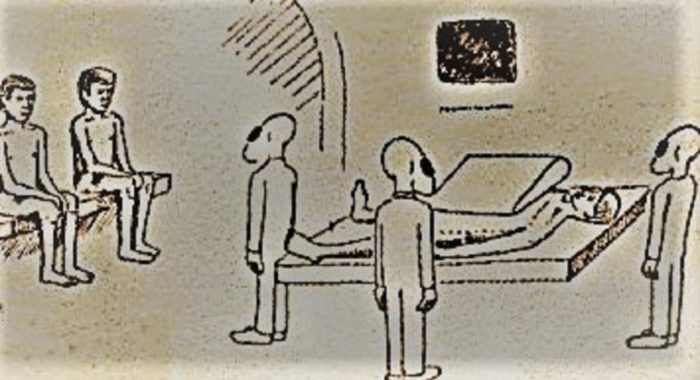
What she recovered ran like this. She was not simply unconscious. Two small beings, the standard grey type of the abduction literature, rendered her unconscious and, in her words, "dragged by my two arms on my back to the craft." She woke on a table inside a small craft, where a human-looking figure she called her "guide" greeted her and gave her "something to drink," which she decided afterward was a stimulant. The guide walked her out onto a hilltop where she saw a faint light near a cavern. A man in a red military-type jumpsuit, carrying an automatic weapon, was waiting at the entrance.
Inside the tunnel she described a checkpoint with cameras and a computer screen. She stood on "some type of scale-like device," and a card was issued to her with holes punched in it, an identity badge for moving through the place. She went down by elevator and rode a transit car through what she counted as several levels. On the way she said she saw offices with computers lining the walls, a giant factory-like area with small alien craft parked along the sides, and her "first grey-type A-lien" doing menial work.
The deepest part she reached she called Level Five, and the tone there turned hostile. She was made to change into a hospital-style gown and put through more scanning. She described huge tanks with computerized gauges and a large arm-like device, giving off a smell she compared to formaldehyde. When she tried to look closer the guide grabbed her arm and pulled her roughly back into the hall, telling her it was not necessary to see what was in the tanks. In a large laboratory a human doctor in a white lab coat and two greys carried out an internal examination. She felt "a stabbing pain," looked up into the black eyes of one of the greys, and noticed bleeding afterward, describing it as something that had happened to her before. Most disturbing to her were people "of all different types standing up against the wall inside a clear casing-like chamber," looking, she said, "as if they were wax figures," and live animals in cages. When it was over the guide took her back up through the levels and the transit car to the waiting craft, and she was returned home about three hours after it began.
What is the official explanation?
There is no official narrative for this case at all, and that absence is itself the central fact about it. No police report, no government file, no Air Force or Project Blue Book entry, no FOIA-released document, and no mainstream journalistic investigation touches Christa Tilton or her July 1987 experience. Blue Book had closed in 1969, eighteen years earlier, so there was no longer any official channel that would even log a claim like this. What exists instead is a body of self-published and small-press material she and other believers produced, plus the larger Dulce conspiracy literature she attached herself to.
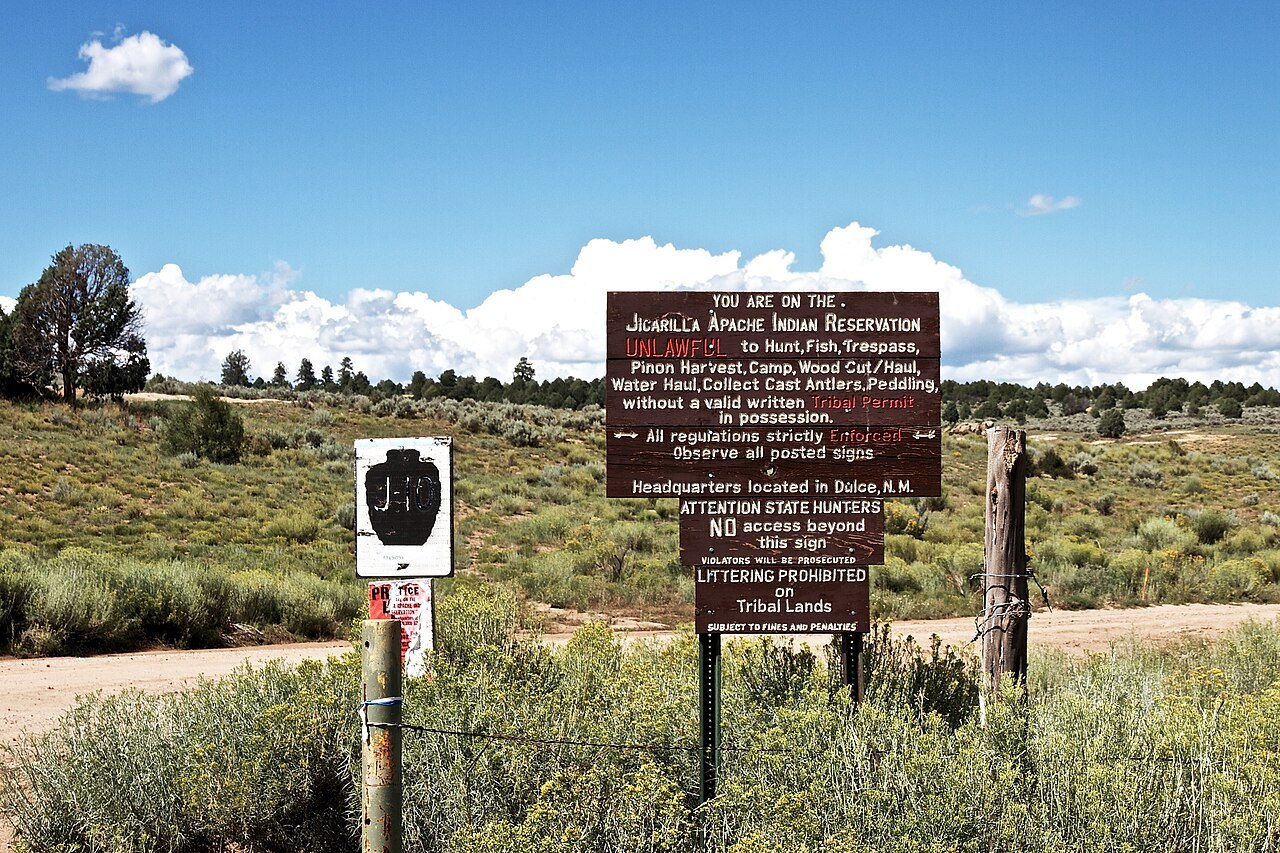
The institutional backdrop she leaned on was the Dulce base story, and that story does have a documented official dimension, though not the one she wanted. The Dulce legend grew out of the case of Albuquerque businessman Paul Bennewitz, who from about 1979 became convinced he was intercepting signals from alien craft and from an underground base near Dulce, New Mexico, on Archuleta Mesa. Bennewitz then became the target of a documented disinformation effort. As reconstructed in Greg Bishop's book Project Beta and in the wider record of the affair, Air Force Office of Special Investigations agent Richard Doty and ufologist William Moore fed Bennewitz fabricated material about underground alien bases and secret treaties, reportedly to steer him away from a sensitive but entirely terrestrial project he had stumbled near. At the 1989 MUFON convention Moore stood up and admitted his role in the operation. So the only "official" apparatus anywhere near this case is an intelligence-linked hoax campaign that helped manufacture the Dulce mythology in the first place, years before Tilton dated her own experience to it.
Tilton's own writings are the closest thing to a primary record. Her narrative "Going Underground" was reproduced as Chapter 25, "Danger Down Under: The Christa Tilton Story," in the compilation known as the Dulce Book, assembled by the pseudonymous author Branton. In 1991 she published The Bennewitz Papers through Crux Publications in Tulsa, an 85-page paperback described in dealer catalogues as drawn from "data, personal interviews, phone conversations, correspondence, and declassified documents" relating to Bennewitz, whom she called her "hero," and his mistreatment by the government. In that book she also claims to be a human-alien hybrid taken to the Dulce base "made famous by Bennewitz." Her material was later repackaged in 2011 as Underground Alien Bio Lab At Dulce: The Bennewitz UFO Papers, edited by Timothy Green Beckley with contributions from Tilton, Branton, and Leslie Gunter.
What did the witnesses think it was?
Tilton herself never wavered. She believed she had been abducted, that the underground facility was real, and over time that she was a human-alien hybrid who had been taken repeatedly. She turned the experience into a career, founding a research outlet she ran out of Tulsa and corresponding with British and other researchers about underground bases, not only Dulce but a claimed network of them across the United States. She was careful on one point that matters: she said she was never actually told where the underground base was. The identification of it as Dulce was her own later inference, drawn after the hypnosis and after she had immersed herself in the existing Dulce conspiracy material. That is an honest admission, and it is also the soft spot in her own case, because it means the most famous detail of her story was supplied by her reading rather than by the experience.
For corroboration she did not point to independent witnesses of her own abduction, of which there were none. She pointed instead to two earlier cases she said matched hers in structure: Judy Doraty, who reported a May 1973 experience in Texas, and Myrna Hansen, who reported a May 1980 experience in New Mexico. Both of those were investigated through APRO, the Aerial Phenomena Research Organization, and Hansen's case in particular was worked by Paul Bennewitz himself. Tilton treated the overlaps between the three accounts, underground facilities, cattle and human tissue, cold clinical examinations, as evidence that all three women had genuinely been taken to the same kind of place. A skeptic reads the same overlaps the other way, as evidence that all three drew on a shared and by then widely circulated template recovered through the same suggestible method, hypnotic regression.
Researcher Christian Lambright, who studied the Bennewitz affair closely, is on record as dismayed by Tilton's promotion of the Dulce claims and noted her involvement in media about flights over Archuleta Mesa and Soldier Canyon. None of this amounts to anyone catching Tilton in a lie. There is no estranged spouse, no collaborator turning on her, no recovered hoax props. The case against her is contextual rather than personal, and her sincerity is not seriously in dispute even among critics. What is in dispute is whether her sincerity has anything to do with whether the underground base exists.
The dispute
The dispute is not that anyone caught Christa Tilton hoaxing. No confession, no recantation, no recovered props, and no positive identification of a specific real-world object or cause exists for her July 1987 experience. The challenge is contextual and methodological, and it comes from two directions.
The first is the Bennewitz disinformation history, documented most fully in Greg Bishop's Project Beta and confirmed in part by William Moore's own admission at the 1989 MUFON convention. The Dulce underground-base narrative that Tilton's account slots into was substantially manufactured between 1979 and the late 1980s, when AFOSI agent Richard Doty and ufologist William Moore fed fabricated stories about alien bases to Paul Bennewitz. Tilton dated her experience to 1987, after that legend was already in wide circulation, openly called Bennewitz her hero, and admitted she was never told where the base was, naming it Dulce herself only after researching the existing conspiracy material. So the single most famous element of her story, the Dulce identification, demonstrably came from the surrounding culture rather than from the experience. A skeptical reviewer of her book The Bennewitz Papers made this case directly, calling it a credulous treatment that tried to find hidden meaning in what was, at its root, a hoax operation, and noting that Tilton's own assembled materials show Doty telling different stories to different people.
The second is the method. Every vivid detail in the file, the greys, the guide, the levels, the tanks, the bodies in clear cases, surfaced only under regressive hypnosis, undertaken after Tilton had begun reading about abductions and was suffering nightmares. Hypnotic regression is widely regarded as unreliable for memory recovery because it is highly suggestible and prone to confabulation, and the parallels she drew to the Doraty and Hansen cases, both also developed through hypnosis, are exactly what a shared cultural template recovered the same way would produce.
Why it does not close the case. Neither argument is a demonstrated debunk of this specific event. The disinformation history explains where the Dulce legend came from, not what happened to Tilton during her lost three hours, and the hypnosis critique is a general statement about a method, not proof that these particular memories are false. No named analyst has shown the mechanism by which Tilton's own account was fabricated. That is why this sits at barely disputed rather than strongly disputed: a serious, well-sourced challenge to the reliability of the story, falling short of identifying the real-world cause or catching the witness in a fabrication.
Is the Christa Tilton Abduction real? The two-pass assessment
Pass one, the ordinary reading. Strip the case to what was actually experienced in waking life and almost nothing is left: an afternoon blackout in July 1987 and about three lost hours, followed weeks or months later by nightmares. Blackouts and missing time have a long list of mundane causes, and frightening dreams are universal. Everything dramatic, the greys, the guide, the punched card, the formaldehyde tanks, the bodies in clear cases, came out only under regressive hypnosis, a technique with a well-documented tendency to generate detailed, confidently held memories that are partly or wholly confabulated, shaped by the expectations of both subject and hypnotist. By 1987 the Dulce template was fully formed and in heavy circulation in UFO culture, seeded in large part by a documented intelligence disinformation operation against Paul Bennewitz. Tilton was openly steeped in that material and admitted she was never told the base's location, then named it Dulce herself. A skeptic does not even need to call her a liar to explain the whole thing: an ambiguous real event, reinterpreted through a ready-made cultural script using a memory-recovery method known to be unreliable. The skeptical writer who reviewed The Bennewitz Papers reached exactly this conclusion, calling it a credulous treatment built on material Richard Doty had spun differently to different people.
Pass two, if real. If Tilton genuinely walked through that facility, then her account is a first-person inventory of an underground human-alien complex: armed human guards in colored jumpsuits, a card-controlled security and transit system, greys doing labor, craft under assembly, and an industrial-scale program of internal examinations, tissue extraction, and bodies in suspended animation. Taken at face value it corroborates the darkest version of the Dulce legend from the inside, and its echoes with the Doraty and Hansen cases would mean three independent women separately described the same secret place.
Weighing it. The official-apparatus angle here cuts in an unusual direction. The only state involvement anywhere near this story is the Bennewitz hoax that built the Dulce myth, which is evidence about the legend's origins, not proof Tilton experienced nothing. But the binding rules are clear about the threshold for a harsh tier. To push this toward strongly disputed there would need to be a confession, a recantation, recovered props, or a positive identification of the specific real-world cause of her experience. None of that exists. No analyst has shown a method by which Tilton's particular abduction account was fabricated. What exists is a strong contextual argument, that her story is downstream of a disinformation-seeded legend and was recovered by a suggestible method, plus the general scientific critique of hypnotic regression. That is a real and substantial dispute, and the case does not stand clean, but it is an argument from context and plausibility rather than a demonstrated debunk of this specific event. Under the rules that is the definition of barely disputed, and that is the tier.
Sources
- www.bibliotecapleyades.net/branton/esp_dulcebook25.htm
- www.bibliotecapleyades.net/branton/esp_cosmicconflict12.htm
- www.abebooks.com/first-edition/Bennewitz-Papers-Tilton-Christa-Crux-Publications/32250759111/bd
- www.biblio.com/book/bennewitz-papers-tilton-christa-martin-cannon/d/1733877773
- fakegeekboy.wordpress.com/category/books-and-periodicals/authors-editors-and-wordsmiths/christa-tilton/
- www.goodreads.com/author/list/516891.Christa_Tilton
- www.geocities.ws/grauniad2liberty/Branton/dulce/chapter10.htm
More cases from this region: UFO sightings in United States