The Gundiah-Mackay Abduction
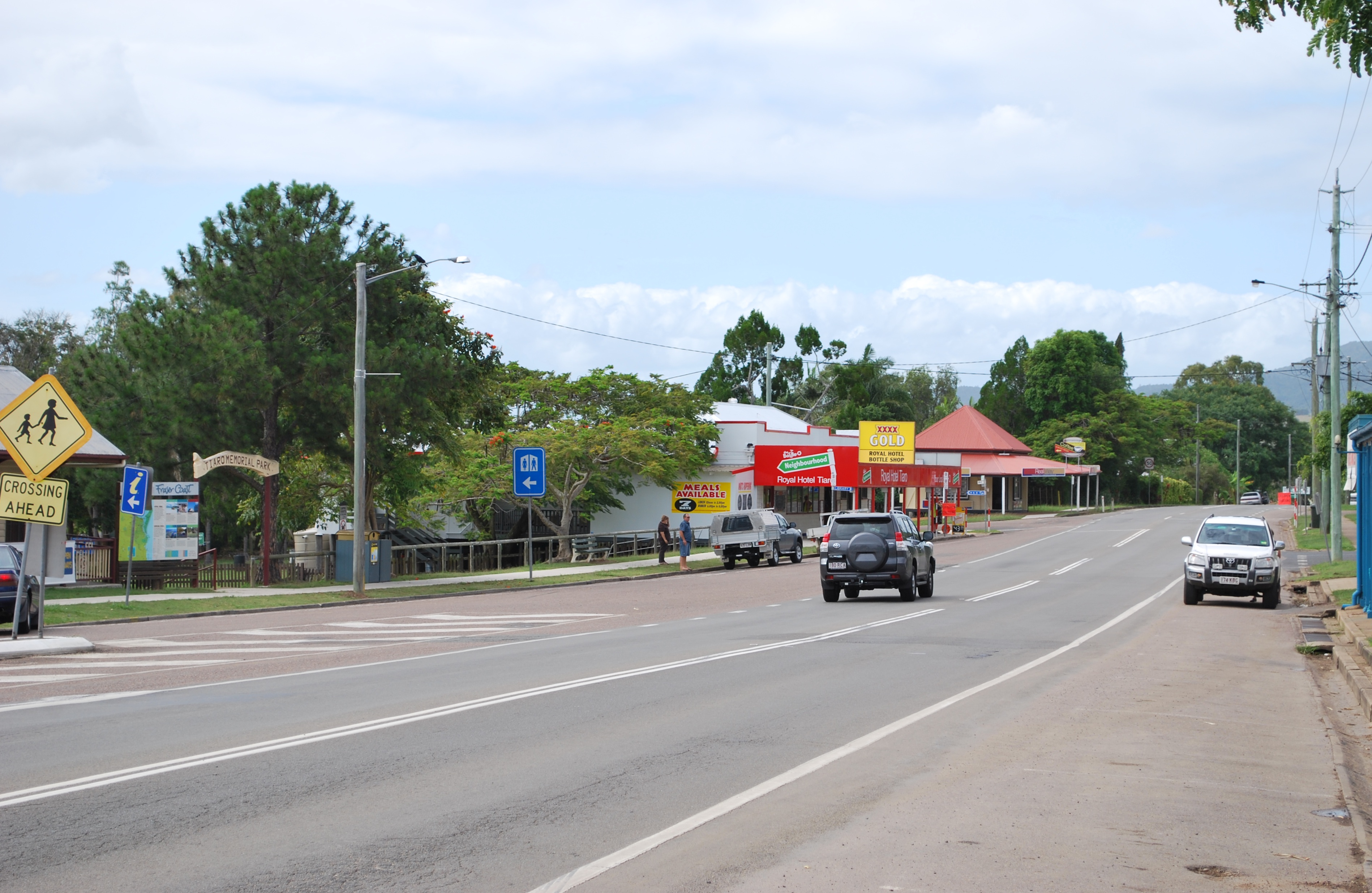
On the night of Thursday 4 October 2001, three people were staying in a caravan and annex on a rural property near Gundiah, just south of Tiaro in Queensland, Australia. This case file covers what witnesses reported, the official narrative, and a two-pass assessment with its evidence tier.
What did witnesses see at Gundiah?
On the night of Thursday 4 October 2001, three people were staying in a caravan and annex on a rural property near Gundiah, just south of Tiaro in Queensland, Australia. The block was being developed into a small vineyard the owners called Whispering Winds. The three were Keith Rylance, aged 40, his wife Amy Rylance, aged 22, and their business partner Petra Heller, aged 39. According to the account they gave investigators, Keith went to bed in the caravan and Petra went to the annex bedroom, while Amy fell asleep on the lounge couch.
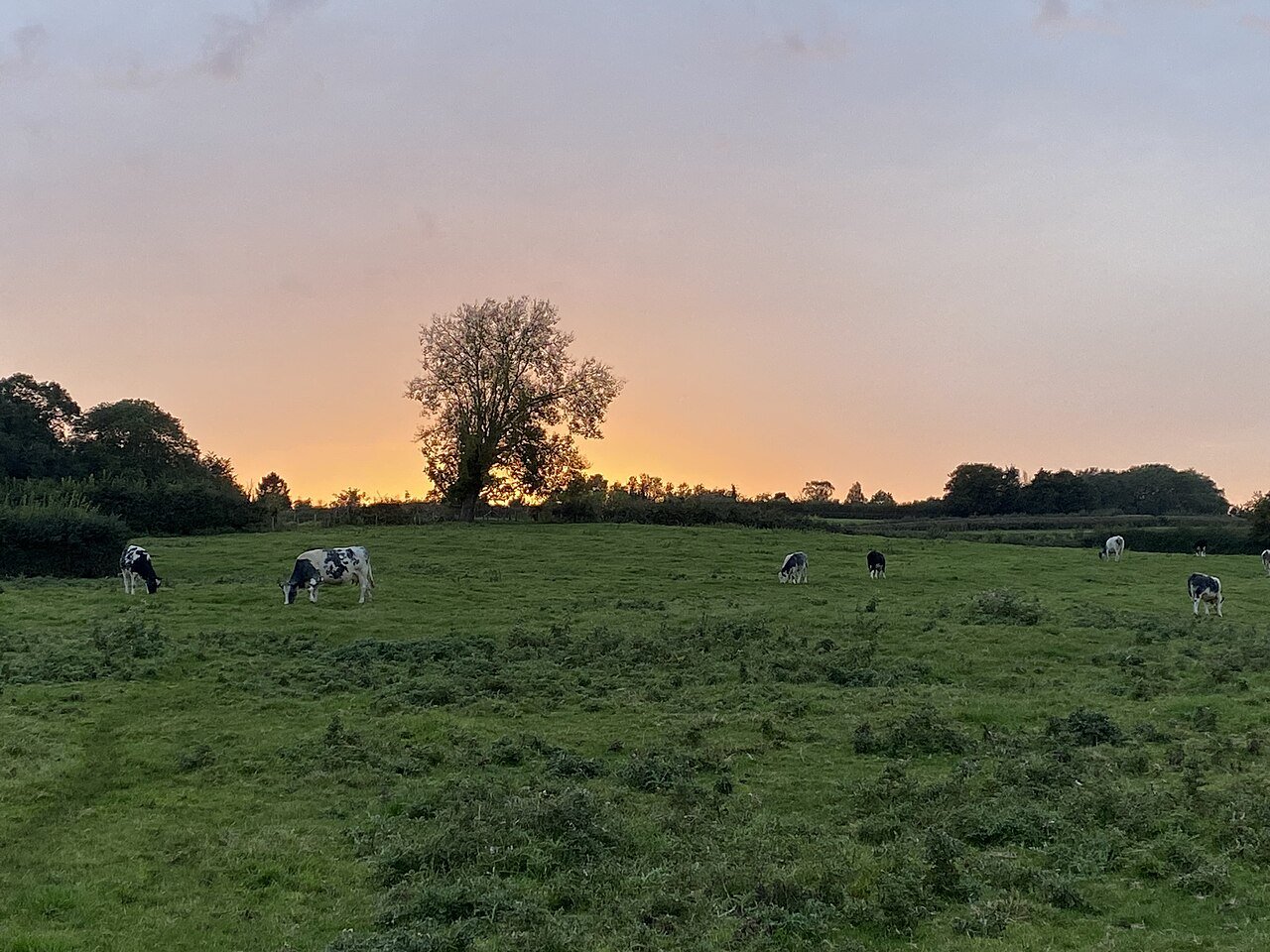
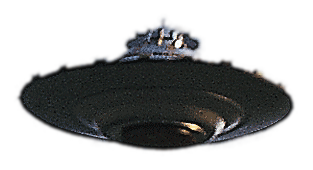
Petra Heller said she woke at about 11:15 pm and walked into the lounge, where she was confronted by a sharp-edged rectangular beam of solid light pouring in through the window. Inside that beam, she said, Amy was suspended in a sleeping posture and being drawn head first toward and out through the window, along with some items from the coffee table. Petra described a large craft, a disc-shaped object hovering just above the ground near a tree at the rear of the property. She said she then lost consciousness, and when she came to she screamed.
Keith Rylance said the screaming woke him. He found the window flyscreen torn, described as ripped both vertically and along the bottom, the contents of the coffee table scattered on the floor, and Amy gone. He searched the property, could not find his wife, and rang the Tiaro police at around 11:40 pm to report that she had been taken. Officers reached the remote property after 1 am.
Roughly three hours after she vanished, Amy Rylance turned up about 790 kilometres to the north. A woman telephoned the Gundiah property to say she had picked up a confused, distressed and dehydrated young woman from a BP service station on the northern outskirts of Mackay and that the young woman was Amy. Amy had no identification, no shoes, no belongings and no clear memory of how she had crossed the state. She said she could smell the ocean and had woken on the ground among trees.
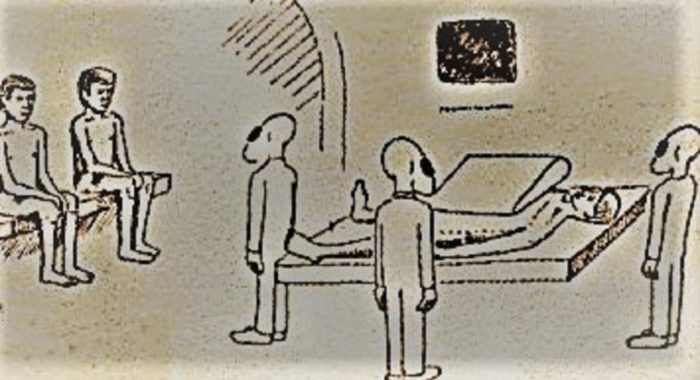
In a statement Amy described waking on a bench in a strange, brightly lit rectangular room, hearing a male voice that reassured her, then seeing a figure about six feet tall, slender but in perfect proportion, covered head to foot in a full body suit with a black mask that left openings only for the eyes, nose and mouth. She said the being told her they were returning her to a place not far from where they had taken her from, because the lights were wrong at the property and it was not safe. She remembered lying back down, falling asleep, and then waking on the ground near Mackay. Marks were later noted on her body, including a triangular arrangement on her inner right thigh and marks on each heel, and her recently dyed hair appeared to have grown out more than the elapsed time should allow.
What is the official explanation?
There was no national-government or military UFO investigation of the Gundiah case. Australia had no standing official UFO body in 2001, so the only official apparatus involved was the Queensland Police Service, and the only sustained inquiry was civilian.
The police response was real and is documented. Senior Constable Robert Maragna of Tiaro attended the property in the early hours, joined by an officer from Maryborough, and the officer in charge at Tiaro was Sergeant John Bosnjak. Police took the missing-person report seriously, collected plant samples from a heat-marked flowering bush on the property, and Amy gave a notarised statement to police in Mackay. A BP service-station surveillance tape from Mackay was referenced as part of the record.
The substantive investigation was carried out by two of Australia's best-known UFO researchers. On the afternoon of 5 October, less than a day after the events, the witnesses contacted Diane Harrison of the Australian UFO Research Network. Because the case turned on a solid-light, beam-and-abduction claim, Harrison brought in Bill Chalker, the veteran investigator and author who had spent decades on Australian cases. Chalker and Harrison completed a preliminary report dated 14 October 2001. That report was deliberately cautious. It set out the witnesses' account in detail, recorded the physical marks and the property damage, and openly noted prosaic possibilities for both the torn flyscreen and the plant damage, while stating that many critical questions remained unanswered and further direct contact with the witnesses was needed.
That further contact did not come. The investigators reported that the trio became evasive, moved between motels, restricted the flow of information, and described a frightening men-in-black style episode involving a dark four-wheel-drive pursuing their vehicle, after which they relocated to an undisclosed place. By December 2001 Keith Rylance's mobile phone and email no longer worked and the witnesses had effectively dropped out of contact. Police continued their own inquiries, and Senior Constable Maragna later stated plainly that there were too many inconsistencies in the story for it to be true.
What did the witnesses think it was?
The witnesses presented the events as a genuine abduction. Petra Heller maintained that she had seen Amy carried out of the window inside a beam of solid light with a craft hovering at the rear of the block. Amy Rylance maintained that she had been taken to a lit room, spoken to by a masked figure, and deposited near Mackay with no normal way to have travelled there, and she pointed to the marks on her body and the apparent over-growth of her dyed hair as evidence that more time had passed than the clock allowed. Keith Rylance described the torn screen and the disturbed room and acted as the family's spokesman with police, researchers and the media.
There were no independent corroborating witnesses to the actual abduction. The only eyewitness to the beam and the craft was Petra Heller, and the only witness to the interior experience was Amy herself. The woman who found Amy at the Mackay service station corroborated only the end point, that a disoriented young woman without belongings was at a BP station on the northern edge of Mackay in the early hours, which is consistent with several explanations.
What complicates any wholesale dismissal of the witnesses is the genuine distress reported at the time and the real police involvement. Amy was examined at Mackay hospital and described as dehydrated and shaken. Set against that, the investigators noted from early on that the witnesses had purchased UFO literature, including the Australian Ufologist magazine, before approaching researchers, and that key questions were never answered. The behaviour after the event, the evasiveness, the repeated moves, the men-in-black story and the eventual disappearance, was read by the investigators not as fear of cover-up but as avoidance of scrutiny.
The dispute
The dispute is a fully worked hoax reconstruction, and unusually for this archive it is not a bare official assertion but a method-shown counter-explanation backed by recovered physical evidence. The Queensland Police Service investigation, led by Senior Constable Maragna, concluded there were too many inconsistencies in the story for it to be true. The method behind that conclusion is concrete: during a search of the property police recovered, in an incinerator about 20 metres from the annex, the burnt remains of two floodlights and electrical wiring, paper towels, and black hair dye. Those items map directly onto the reported phenomena. Two floodlights and wiring could throw a sharp rectangular beam of light through a window, which is exactly the solid rectangular beam Petra Heller described, and black hair dye accounts for the anomalous hair growth later reported on Amy Rylance. This is an identified mechanism for the signature features of the case, not a generic balloon or aircraft claim.
The displacement claim, the single most extraordinary element, is undercut by records rather than assertion. Phone records showed calls from a motel in Rockhampton, which sits on the road between Gundiah and Mackay, to the Gundiah home the day before the alleged abduction, which is consistent with Amy already travelling north and being staged at the Mackay end rather than being instantaneously transported 790 km in roughly three hours. The torn flyscreen, presented by the family as a sign of forced removal, was assessed as consistent with the family dog jumping at the window. Taken together the police account supplies an ordinary route, an ordinary timeline, and ordinary props for every headline detail.
The prosaic case does not rest on police alone, which is what pushes this past a one-sided apparatus debunk. Bill Chalker, the veteran civilian investigator brought in on the case, reached an independent conclusion that none of the many critical questions were ever answered, that information gathered afterward only increased his certainty, and that a wider family connection indicated Keith Rylance had told relatives it had been a hoax. So the hoax reading is corroborated by the most credible civilian researcher attached to the case and includes a reported family-level admission. On top of that, Keith Rylance refused to allow biological sampling of Amy's marks, the one objective test that could have supported the abduction claim, which removes the only avenue that might have salvaged the genuine reading.
Why it does not formally close as Discredited is procedural, not evidential. The witnesses never publicly recanted and maintained their account, the family admission is reported through Chalker's wider-family source rather than as a direct public confession, and this archive requires separate human approval before any case is tiered Discredited. For those reasons the page files it Disputed, noting that a coherent prosaic account exists and is supported by physical finds, the burnt props, the phone records, and the refusal of objective testing, while leaving the final downgrade to a human. The honest reading is that the debunk here is strong and close to dispositive: identified props, an ordinary travel route in the records, and an independent investigator's hoax finding leave very little of the extraordinary claim standing.
Is the Gundiah-Mackay Abduction real? The two-pass assessment
Pass one, how this could be entirely ordinary. The case has a concrete, method-shown mundane reconstruction, and it does not come from a hostile outsider, it comes from the very investigators who began as sympathetic. During a search of the property, police found in an incinerator about 20 metres from the annex the burnt remains of two floodlights and electrical wiring, paper towels, and black hair dye. Floodlights and wiring are exactly what is needed to throw a sharp rectangular beam of light through a window, and burning them afterward destroys the props. Phone records showed calls from a motel in Rockhampton, which sits on the road between Gundiah and Mackay, to the Gundiah home the day before the alleged abduction. The police scenario was that Amy was already travelling north and was staged at the Mackay end, with the black dye used so the dark-haired Petra could later be presented as the blonde Amy or to age Amy's appearance. The torn flyscreen was consistent with the family dog jumping at the window, and the heat-marked bush had ordinary explanations. Senior Constable Maragna concluded there were too many inconsistencies for the story to be true. Bill Chalker's final position, stated in his own later writing, is that none of the many critical questions were ever answered, that information gathered afterward increased his certainty, and that a wider family connection indicated Keith Rylance had told relatives it had been a hoax. Keith also refused to allow biological sampling of Amy's marks, which would have been the one objective test available.
Pass two, if real, what it would be. Taken at face value the report is a classic solid-light abduction with near-instant displacement of a person across roughly 790 kilometres in about three hours, a masked humanoid, a lit examination room, body marks and anomalous hair growth. If genuine it would rank among the most extreme transportation-abduction cases on record, and the alleged 790-kilometre relocation has been compared to teleportation. Nothing in the physical record actually demonstrates that, and the official-style police inquiry here cuts the opposite way to most early Cold War cases, because the police were not trying to suppress a real event, they were untangling a staged one.
Tier and why. The independent, civilian, method-shown evidence is strong: a route reconstructed from phone records, recovered props in the incinerator, the lead investigator's own conclusion of hoax, a reported family admission, and refusal of the one objective test. That is discredit-grade material. Under UAP Globe rules a human approves discredits separately, so this case is filed as Disputed rather than Discredited, with the counter-explanation written openly here and flagged for review. It is not parked in Unknown, because a coherent prosaic account exists and is supported by physical finds, and it is not Verified Unexplained, because nothing about the object or the displacement was ever authenticated and the surviving evidence points the other way.
Sources
- theozfiles.blogspot.com/2024/07/the-2001-gundiah-queensland-ufo.html
- rense.com/general15/strange.htm
- www.thinkaboutitdocs.com/the-gundah-mackay-abduction-milieu/
- www.ufoinsight.com/aliens/abductions/gundiah-mackay-incident-amy-rylance
More cases from this region: UFO sightings in Australia