The A70 Abduction
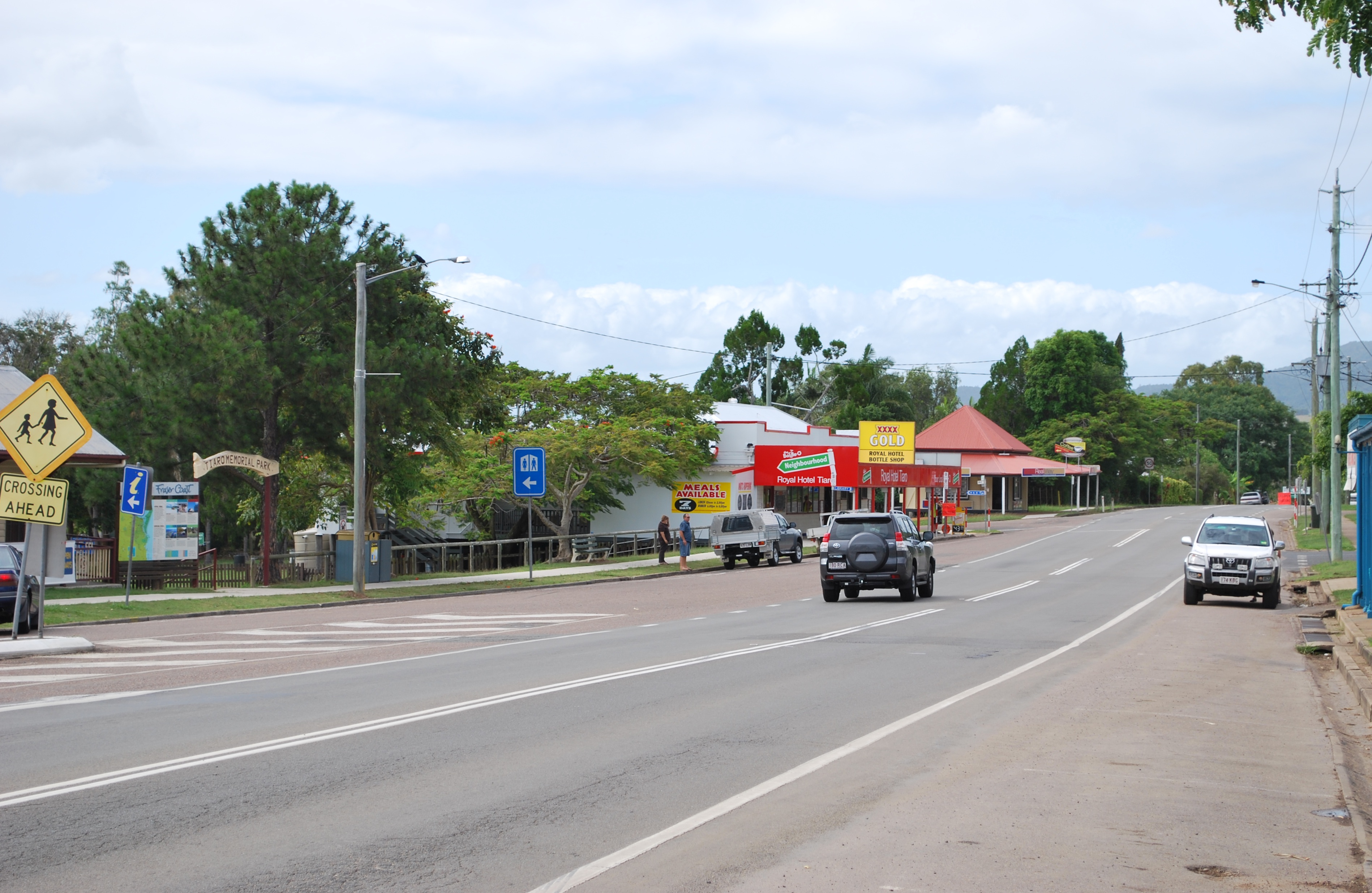
On a clear summer night in August 1992, two men set out from the south side of Edinburgh to drive roughly 15 miles down the A70 to the village of Tarbrax, then in West Lothian, to deliver and fit a domestic appliance, a satellite television system, at a friend's house. This case file covers what witnesses reported, the official narrative, and a two-pass assessment with its evidence tier.
What did witnesses see at A70 road near Harperrig Reservoir?
On a clear summer night in August 1992, two men set out from the south side of Edinburgh to drive roughly 15 miles down the A70 to the village of Tarbrax, then in West Lothian, to deliver and fit a domestic appliance, a satellite television system, at a friend's house. Garry Wood, a 33-year-old ambulance technician who worked as a motor mechanic by trade, was at the wheel. His passenger was 25-year-old Colin Wright. The run normally took about thirty minutes and both men had done it before.
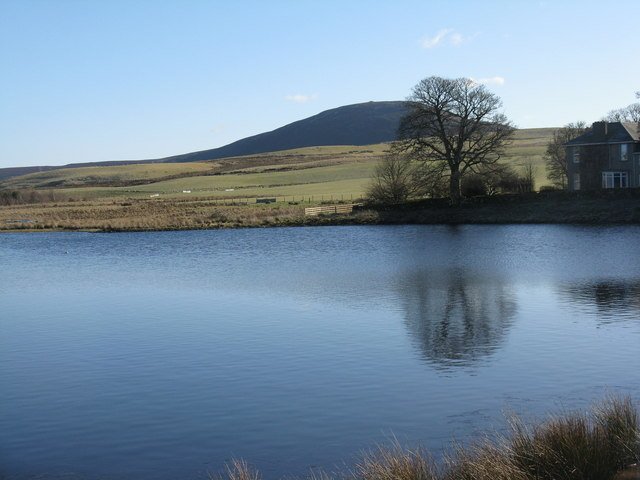
At around 10pm, driving at roughly 40 mph and chatting, they rounded a blind bend near the Harperrig Reservoir. Wright suddenly leaned forward and shouted, "What the hell's that?" Ahead of the car, hovering about 20 feet above the road, was a large object. Wood described it in plain mechanical terms: a two-tiered, disc-shaped craft, roughly 30 feet wide, wider than the road itself, smooth, black and shiny, with no windows, no lights and no visible illumination. As a man used to metal finishes, Wood found the surface and the shape unlike anything he could place.
Wanting to get away, Wood floored the accelerator and pushed the car up to almost 70 mph to pass underneath it. In Wright's words, Wood was "driving like a bloody madman." As they went under the object, a shimmering curtain of light came down across the full width of the road and onto the car. Wood likened it to looking at a detuned television set, just flickering lights, and then they were swallowed by total darkness. Wood's next clear memory was of the car veering across the road with Wright shouting at him to watch out, before he managed to bring it to a stop. They sat there shaken, then drove on.
When they reached the friend's house in Tarbrax, Wood went to release his seat belt and found it already unfastened. Believing it was about 10:40pm, they knocked, waited, and eventually a bedroom window opened upstairs. Their friend told them it was a quarter to one in the morning. They had lost roughly two hours they could not account for. Visibly agitated, they described the object and sketched it for the householders that same night. The MoD's own two-page record of the report, headlined "Unexplained Aerial Sighting," logged the craft in Wood's words as black, with no lights, round at the bottom, with "three parts to it," about 30 feet wide, and noted that it "dropped a curtain of white light in front of the car."
What is the official explanation?
This is, by the investigators' framing, "Scotland's first officially reported UFO abduction," and the official paper trail is unusually concrete for an abduction claim. The two men did not go to the police or the press at the time, fearing ridicule, but did report it to the British UFO Research Association (BUFORA). Four years later, in 1996, a two-page sighting report on the case reached the Ministry of Defence's UFO desk in London. The Ministry's secretariat, the small unit that fielded UFO reports as a matter of air-defence routine, recorded it under the heading "Unexplained Aerial Sighting," attributing the account to Mr Wood, then a 33-year-old ambulance technician from Edinburgh.
That record sat in the MoD's files until the National Archives released it as part of the ninth tranche of declassified UFO desk material in 2012, in the file DEFE 24/1954/1, as a sighting report form. The A70 case was one of seven Scottish reports in that release. Contemporary reporting on the release noted that the MoD took it seriously enough to log and retain, and that the only conventional explanation floated on the official side was that the object might have been American military aircraft, which the file did not establish and which does not fit Wood's description of a silent, lightless, 30-foot two-tiered disc hovering 20 feet over a country road.
The wider 2012 release frames how the desk thought. The National Archives' own highlights note that, under the heading "possibilities," an MoD author listed mass hallucinations, hoaxes, US black-project aircraft, Russian or Chinese aircraft, and extra-terrestrial visitors, and wrote that there was "no hard evidence for alien craft" but that "if the sightings are not of this earth then their purpose needs to be established as a matter of priority." Nick Pope, who ran the UFO desk from 1991 to 1994, called the released files "probably the most fascinating and bizarre government files ever made publicly available." None of this is an official endorsement of abduction. It is the apparatus logging a case it could not close and declining to call it anything in particular, which under the standing rule counts as evidence the report was taken as real enough to file and keep, not as a mark against it.
The case also drew a more theatrical official-style test. For a BBC television programme on perception, Wood agreed to sit a polygraph examination supervised by the American abduction researcher Budd Hopkins and Professor Susan Greenwood, a psychologist associated with the BBC's "Brain Story" series. With Wood wired to the machine, Greenwood put a series of questions to him about the incident, and by the programme's account he passed. The investigators themselves are careful to say this proves only that Wood believes what he is saying, not that an abduction occurred.
What did the witnesses think it was?
Both men were treated by those who knew them as steady and unlikely to invent the story. Malcolm Robinson, founder of Strange Phenomena Investigations (SPI), interviewed the Tarbrax householders a few days after the event and reported that both confirmed Wood and Wright had arrived clearly agitated, and that neither man was prone to lying or dramatics. Wood, badly shaken, suffered for days afterwards: drained energy, disturbed sleep, vivid nightmares, and severe headaches that led his doctor to order an MRI scan and later a spinal tap, both of which came back clear.
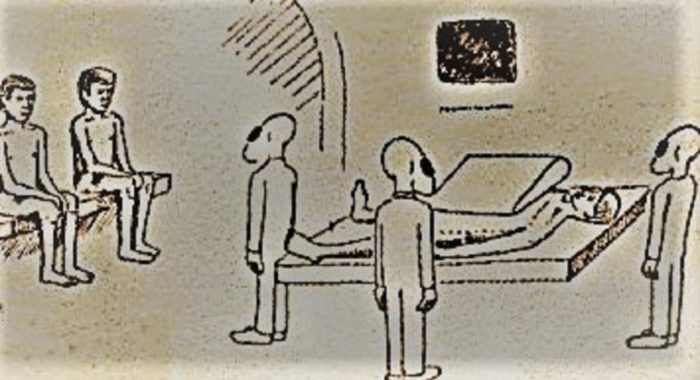
Hoping to recover the missing two hours, Wood eventually approached SPI. After two preliminary meetings, Robinson suggested hypnotic regression, and the sessions were conducted by the Scottish hypnotherapist and self-described psychic Helen Walters. Under regression both men described being stopped in the middle of the road with the car doors opened by small humanoid figures, three to a side. Wright recalled Wood being carried off on a free-floating stretcher. Wright himself recalled walking up a ramp into a brilliantly lit craft, being led along a curved corridor into a featureless room with an oddly organic curved chair, being stripped and examined, and later being held naked in a transparent Perspex-like container, ankles strapped, with other naked men and women visible in identical containers and a dry-ice-like mist drifting outside. In the surviving transcript of one of Wright's sessions, he described something clamped onto his right eye, "like a red hot poker in the centre of my eye," and creatures he was determined to outstare: "I'll not give in."
Wood's recall, once it opened up, was stranger still. He described lying immobile on a table, a black lens-shaped device folding in on itself near him, thin translucent arms, and emaciated grey beings that seemed to struggle with gravity and kept falling. He recalled a small, entirely human-looking man in a neat black suit, collar and tie, standing among the creatures who deferred to him. Asking the beings mentally why they were doing this, Wood said one word formed in his mind in answer: "Sanctuary." In further telepathic exchange he understood the being to say humanity had in some ways been "capped," its development deliberately held back, and, as logged even in the MoD record, that "we are here already and we are coming here."
The two men diverged afterward. Wood threw himself into the study of UFOs and the paranormal, set up his own research group, and at times worked with the Scottish researcher Ron Halliday and appeared on STV's "The Mysterious North." Wright went the other way, effectively rejecting the experience and refusing to discuss it, a reaction the investigators read as consistent with genuine trauma rather than against it. Helen Walters, who ran the regressions, came away convinced the men were sincere and believed they had been abducted. By every account in the primary record, neither man ever changed his story or sought money or fame from it.
The dispute
The dispute does not attack the core sighting at all. It attacks only the part of the story that came out under hypnosis. In the six months between the August 1992 encounter on the A70 and the regression sessions, Garry Wood and Colin Wright, previously ignorant of the subject, read widely about UFOs, and the regressions were then run by Helen Walters. The skeptical case, flagged by Brian Allan of SPI/FSR and conceded outright in the archive's own two-pass assessment, is that hypnosis does not reliably recover memory but readily manufactures vivid, confident false memory, and that hypnotic subjects tend to give the questioner what they expect. On that reasoning the humanoid figures, the examinations, and the "Sanctuary" message are contamination, not testimony. This is a real and well-supported methodological objection, and it does dismantle the inside-the-craft narrative.
But it dismantles the regression material, not the event. The counter-explanation never names an identified object. No balloon, drone, aircraft, satellite, or flare was ever proposed to account for the silent disc hovering twenty feet above the road, and no demonstrated hoax method, confession, or recantation exists. What survives the critique is the part that never depended on hypnosis: two witnesses described by investigators as steady and unlikely to invent the story, holding to a consistent account for decades without seeking money or fame; roughly two hours of missing time corroborated independently; and documented physical after-effects in Wood (drained energy, disturbed sleep, severe headaches that prompted an MRI and a spinal tap, both normal). Helen Walters, who ran the very sessions the skeptics distrust, came away convinced the men were sincere.
The only official input is not a debunk at all. The MoD logged the case in 1996 as an "Unexplained Aerial Sighting" and listed possibilities ranging from mass hallucination and hoax to black-project or foreign aircraft to extra-terrestrial visitors, noting there was no hard evidence for an alien craft while also stating that the object's purpose needed to be established as a priority if genuine. That is an open file that the Ministry retained rather than explained away. Per this archive's method, an apparatus that files and keeps a case without resolving it has not produced a verdict; it has produced a shrug. With the false-memory critique landing only on the regression layer and no civilian or official explanation touching the core event, the dispute trims the abduction story but leaves the central incident standing, which is why the page rests at Disputed rather than debunked.
Is the A70 Abduction real? The two-pass assessment
Pass one, the ordinary readings. The load-bearing physical evidence here is thin: there is no photograph, no film, no radar trace, no soil or vehicle analysis, only two men's testimony, a set of sketches made that night, and a sighting form filed with the MoD four years later. The dramatic content, the greys, the examinations, the transparent tanks, the "Sanctuary" message, comes almost entirely from hypnotic regression conducted by Helen Walters roughly six months after the event. That matters, and the case's own investigators say so. In the SPI/FSR write-up, Brian Allan flags the fatal weakness from inside the team: in the six months between the encounter and the regressions, both men, previously ignorant of the subject, read widely about UFOs and abductions, so the regression material is wide open to contamination from what they had absorbed, compounded by the well-known tendency of hypnotic subjects to give the questioner what they expect. Hypnosis does not reliably recover memory; it readily manufactures vivid, confident false memory. The polygraph adds little: it is not admissible as evidence anywhere precisely because it measures stress, not truth, and at best shows that Wood believes his account. The MoD's own floated explanation, American military aircraft, would be a mundane misidentification if it fit, though a silent, lightless, 30-foot two-tiered disc hovering 20 feet over a road does not match any aircraft. No independent investigator has ever shown a method by which this was hoaxed, and there is no confession, no recantation, and no demonstrated financial or attention motive; the fabrication option is the one Allan rates least likely.
Pass two, if something real happened. Stripped of the regression embroidery, what remains is a coherent core: two sober witnesses, consistent for decades, describing a large silent disc over the A70, a descending sheet of light, and a hard block of missing time confirmed independently by the friend who told them it was quarter to one when they thought it was twenty to eleven, plus the already-unfastened seat belt and Wood's genuine, medically investigated after-effects. If that core is taken at face value, it is a close-encounter and missing-time event of the classic Scottish type, and the abduction narrative is the men's own attempt, sincerely held, to make sense of the gap. Allan's published list of non-fabrication possibilities runs from extraterrestrial contact through a military abduction (MILAB) program, an electromagnetic anomaly, to a "time or dimension slip," none of which the evidence can confirm and none of which it can rule out.
The verdict is Disputed. There is a real counter-case, and it is method-shown in part: the regression-derived detail is contaminated and unreliable, and the investigators themselves say so. But that critique dismantles the inside-the-craft story, not the event. The daylight-plain core, two consistent witnesses, a described object, independently corroborated missing time, documented physical and psychological after-effects, and a case the MoD logged and kept rather than explained, is not closed by it. No independent, civilian, method-shown analysis has demonstrated a hoax or a misidentification that accounts for the whole event, so the case does not fall to a discredit. It sits in the contested middle: serious enough to file, too thin in hard evidence to verify, and unresolved.
Sources
- web.archive.org/web/20250102035805/http://www.fsr.org.uk/spi/a70nth.htm
- www.scotsman.com/news/mod-took-alien-abduction-of-scots-duo-seriously-according-to-secret-file-1618160
- www.npr.org/sections/thetwo-way/2012/07/12/156695886/britains-national-archives-releases-documents-detailing-work-of-ufo-desk
- www.deadlinenews.co.uk/2012/07/12/mod-documents-reveal-filmworthy-alien-abduction/
- morbidology.com/the-a70-alien-abduction/
- www.whatdotheyknow.com/request/a70_incident_files_on_a_ufo_enco
- cdn.nationalarchives.gov.uk/documents/briefing-guide-12-07-12.pdf
More cases from this region: UFO sightings in United Kingdom