The Alitalia Near-Miss Over Kent
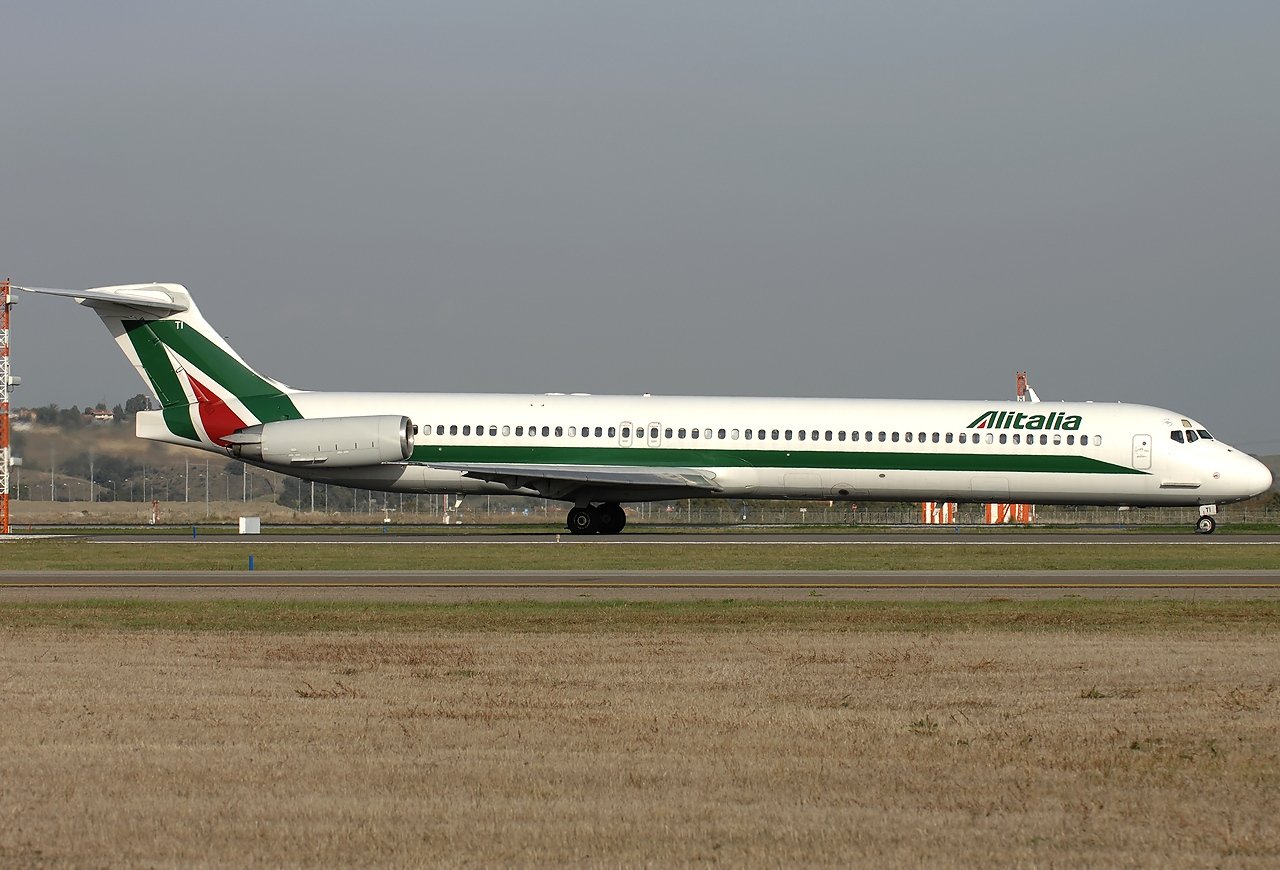
On the evening of 21 April 1991, Alitalia flight AZ284, a McDonnell Douglas MD-82 registered I-DAWC, was inbound from Milan-Linate to London Heathrow with 57 people on board. This case file covers what witnesses reported, the official narrative, and a two-pass assessment with its evidence tier.
What did witnesses see at Over Lydd and Romney Marsh?
On the evening of 21 April 1991, Alitalia flight AZ284, a McDonnell Douglas MD-82 registered I-DAWC, was inbound from Milan-Linate to London Heathrow with 57 people on board. The aircraft was descending toward Heathrow over the Kent coast near Lydd and Romney Marsh, passing through flight level 222, roughly 22,000 feet, on a heading of about 320 degrees and descending at around 2,000 feet per minute.
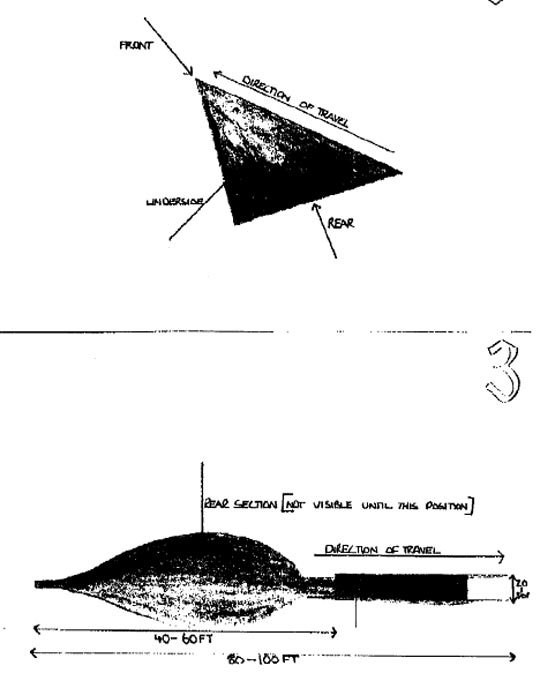
The commander was Captain Achille Zaghetti, an experienced Alitalia pilot. In his own handwritten report, filed at the time and preserved in the Ministry of Defence file, he wrote that during the descent at FL222 he saw, for about three to four seconds, "a flying object, very similar to a missile, light brown coloured, with a track opposite then mine which was 320 - it was higher than us about 1,000 feet." He described the thing as resembling a missile but with no exhaust flame, light brown or "desert" in colour, roughly three metres across and round in shape, crossing in the opposite direction to his own track and passing perhaps 1,000 feet above the airliner. Estimates of the closest approach put the object within about 300 metres, or roughly 980 feet, of the jet.
Zaghetti's reaction was immediate. In his account he wrote: "At once I said, 'look out, look out', to my co-pilot, who looked out and saw what I had seen. As soon as the object crossed us I asked the ACC operator if he saw something on his screen and he answered: 'I see an unknown target 10 nm behind you'." The co-pilot, who is not named in the released documents, corroborated the sighting in the cockpit. So the report rests on two trained aircrew seeing the same object at the same moment, with an air traffic controller confirming a radar return in the same airspace seconds later.
This was not a fleeting light in the distance. It was a solid, structured object that two pilots took for a missile on a collision-type geometry, close enough and alarming enough that the captain shouted a warning, and the encounter was logged through the formal air occurrence reporting system rather than dismissed in the cockpit.
What is the official explanation?
Because the object passed within 1,000 feet of a passenger jet, the event met the threshold of a near-collision and was handled as an aviation safety matter, not just a curiosity. It was filed as Air Occurrence Report M40/91 and routed into the Civil Aviation Authority's safety machinery and on to the Ministry of Defence departments responsible for UK air defence. The complete paper trail survives in National Archives file DEFE 24/1953, released in October 2008 as part of the MoD's programme of declassifying its UFO records.
The radar evidence is the part that makes this case unusual. London Air Traffic Control had no other known traffic in the immediate vicinity, yet an unknown primary radar return was detected about 10 nautical miles behind the Alitalia aircraft, consistent in timing with the crew's sighting. In the file, one of the radar plot annotations reads "Possible slow-moving target - Cruise Missile??", showing that the controllers and analysts themselves seriously entertained a cruise missile as the explanation in the moment. A CAA handwritten note in the file observed that, although the event was ringed as an airmiss, the airline agreed it was "not strictly speaking an airmiss but also it was more than just a routine incident." One complication for the investigation: the recording camera at the RAF Neatishead radar station was unserviceable on the date of the incident, a fact recorded in an RAF telex dated 14 May 1991, so the cleanest military radar tape that might have settled the matter was never captured.
The military then worked methodically through the obvious mundane candidates. Military Air Traffic Operations at RAF Uxbridge sent its findings to the CAA's Safety Data and Analysis Unit on 16 July 1991. The investigation ruled out a missile firing from the Army ranges at Lydd, ruled out Royal Navy Sea Dart missile activity, ruled out any space-related activity that night, and ruled out meteorological balloons. The contemporaneous radar speed for the return was logged as slow, on the order of around 120 miles per hour, which is part of why the "cruise missile" hypothesis was eventually set aside rather than confirmed.
Having eliminated each ordinary explanation, the MoD closed the file without identifying the object. The official conclusion, quoted from the documents, was blunt: the departments responsible for air defence "have not been able to confirm the identity of the object sighted," and "in the absence of any clear evidence which could be used to identify the object," the MoD would "treat this sighting like any other Unidentified Flying Object and therefore will not be able to undertake any further investigation into the sighting." The CAA's own summary statement on the record reads: "Extensive inquiries have failed to provide any indication of what the sighting may have been."
What did the witnesses think it was?
Captain Zaghetti did not embellish. His report is striking for its restraint: he wrote what he saw, called it "very similar to a missile," and stopped there, attaching no exotic interpretation. He flagged it through official channels precisely because, as an airline captain, a solid object crossing 1,000 feet above his aircraft on an opposing track was a flight-safety event that demanded reporting regardless of what it turned out to be. The co-pilot's confirmation in the cockpit, and the controller's near-simultaneous radar return, meant the captain was never relying on his own eyes alone.
The most authoritative independent voice on this case is Dr David Clarke, the academic and journalist who served as a consultant to The National Archives during the release of the MoD UFO files and who wrote the official archive history, "The UFO Files: The Inside Story of Real-Life Sightings" (The National Archives, 2009), which covers this incident in its Chapter 6. Clarke ranks the Alitalia encounter among his top ten unexplained UFO cases, summarising it as: "Crew of airliner carrying 57 passengers from Milan to London sighted a dark, missile-shaped object which passed within 300m (980ft) of the aircraft at 6,700m (22,000 feet) above Kent. An unknown track was seen on radar at the relevant time. MoD and CAA investigation lists sighting as 'an unidentified flying object'." Clarke has described it as one of the most impressive UFO incidents ever reported to and investigated by the MoD, precisely because it combines two professional aircrew eyewitnesses, a confirming radar return, and a documented official investigation that exhausted the conventional explanations and still came up empty.
The corroboration here is the case's backbone. This is not anecdote: it is a captain plus a first officer plus an air traffic controller plus a primary radar plot, all converging on the same object in the same patch of sky over Romney Marsh within seconds of each other, and all preserved in a government file that was never meant to flatter the witnesses.
Is the Alitalia Near-Miss Over Kent real? The two-pass assessment
Pass one, how could this be entirely ordinary. The leading prosaic candidate is exactly the one the controllers themselves wrote on the radar plot: a cruise missile or other military projectile. Kent's Romney Marsh sits beside the Army's Lydd ranges, the airspace is busy with military activity, and a low-observable munition flashing past at altitude would explain both a missile-shaped object and an unexpected radar return. The MoD investigation tested precisely this. It checked the Lydd Army ranges, Royal Navy Sea Dart missile activity, and space-related launches for that night, and ruled each out. The logged radar speed of roughly 120 miles per hour is far too slow for a cruise missile, which is why that hypothesis was raised and then dropped rather than confirmed. Other ordinary possibilities, a weather balloon or a meteorological target, were also specifically excluded, and a balloon does not cross a jet's track on an opposing heading in three to four seconds. A bird or debris at 22,000 feet does not produce a structured three-metre missile shape seen by two pilots and a coincident primary radar plot 10 nautical miles away. There is no hoax vector here at all: this is a contemporaneous airline safety report and a government radar record, not a photograph or a piece of footage that could be staged. The one genuine evidential gap is the unserviceable RAF Neatishead recording camera, which means the best confirming radar tape was never made, but that is a missing record, not an innocent explanation.
Pass two, if real, what is it. Stripped of the mundane candidates the investigation eliminated, what remains is a solid, structured object roughly three metres across, light brown and missile-like but with no exhaust flame, travelling slowly enough to register as a slow-moving radar target yet crossing a descending jet on an opposing track close enough to trigger a near-collision report. It was seen by two professional aircrew, confirmed on primary radar by an air traffic controller, investigated through the formal occurrence system, and left unidentified by the very departments charged with knowing what flies in British airspace. The MoD's closing language, that it would "treat this sighting like any other Unidentified Flying Object," is the apparatus admitting it could not name the thing, which is itself a marker that the event was real enough to need a serious answer.
The material here is officially documented and authenticated: a captain's own filed report, a coincident primary radar return, an air occurrence report number, military telexes, and a closed MoD inquiry, all preserved in National Archives file DEFE 24/1953. Every ordinary explanation the authorities could think of was tested and discarded, and the object remains unidentified in the official record. That is the definition of the tier. Verified Unexplained.
Sources
- www.uapmedia.uk/articles/the-alitalia-az284-incident
- www.rte.ie/news/2008/1020/109457-ufos/
- www.kentonline.co.uk/kent/news/x-files-how-airline-pilot-had-n-a45341/
- www.irishexaminer.com/world/arid-30382660.html
- www.thinkaboutitdocs.com/2001-captain-achille-zaghettis-close-encounter/
- discovery.nationalarchives.gov.uk/details/r/C10130109
More cases from this region: UFO sightings in United Kingdom