The Swissair Flight 127 Near-Miss
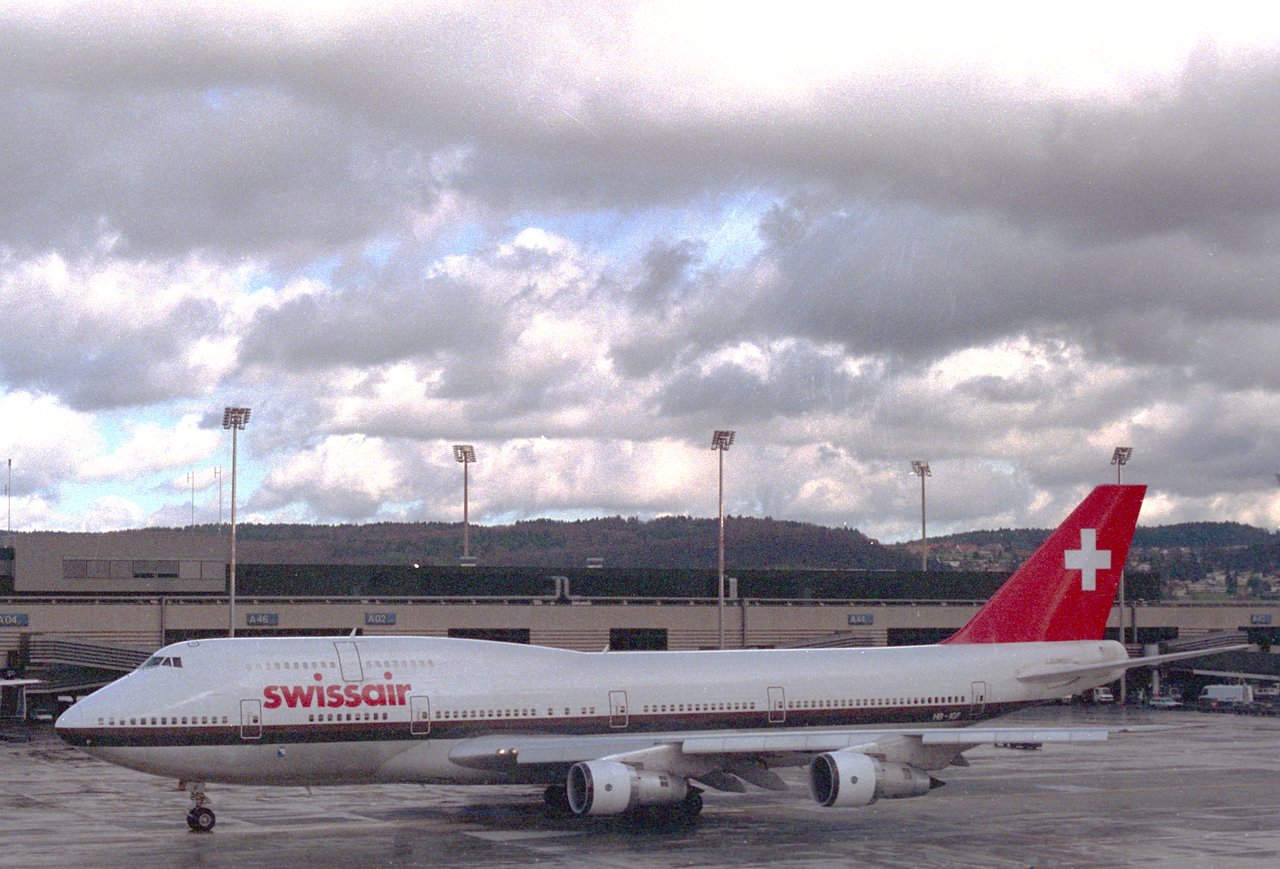
At 2107 UTC (5:07 p.m. local) on 9 August 1997, Swissair Flight 127, a Boeing 747-300 with Swiss registration HB-IGF carrying 64 passengers and 17 crew, was in cruise at Flight Level 230 (23,000 feet), heading 060 degrees at 340 knots indicated airspeed, abeam John F. Kennedy Airport and proceeding direct to the RAALF intersection. This case file covers what witnesses reported, the official narrative, and a two-pass assessment with its evidence tier.
What did witnesses see at Over Long Island?
At 2107 UTC (5:07 p.m. local) on 9 August 1997, Swissair Flight 127, a Boeing 747-300 with Swiss registration HB-IGF carrying 64 passengers and 17 crew, was in cruise at Flight Level 230 (23,000 feet), heading 060 degrees at 340 knots indicated airspeed, abeam John F. Kennedy Airport and proceeding direct to the RAALF intersection. The captain, Phil Bobet, a pilot with about 15,000 flying hours, was in the middle of a public address to the cabin when he looked ahead and saw a white object. The official NTSB record preserves his account: "He saw it for less than a second, and the only movement he could discern was opposite his flight track. He did not observe any wings, and was not sure it was an aircraft. He thought it was cylindrical in shape. He had never been so close to other traffic before." The captain added that "It passed over the cockpit, slightly right of centerline. If it had been any lower, it would have hit the aircraft."
The first officer, with roughly 7,500 hours, saw it too. By the record, he "ducked his head because he thought it would hit them. He said it was white and had a round shape. There was no smoke or fire visible from the object. He thought it passed about 100 to 200 feet above the airplane and between the right side of the fuselage and the number three engine." To both men the thing was about the size of a thumbnail held at arm's length, with no discernible markings.
The radio call to Boston Air Route Traffic Control Center is on the FAA tape, later obtained under a Freedom of Information Act request. The crew transmitted: "sir, I don't know what it was, but it just over flew like a couple of hundred feet above us. I don't know if it was a rocket or whatever, but incredibly fast, opposite direction." The controller asked, "In the opposite direction?" Swissair 127 replied, "yes sir, and the time was 2107, it was too fast to be an airplane." Pressed for more, the crew said, "it was right over us, right above, opposite direction, and, and I don't know, 2,3,4 hundred feet above. All that I can tell, 127, is that the three of us saw a light object, it was white, and very fast." There was no noise, no wake turbulence, no exhaust, no fire, and no disturbance to the flight or engine instruments. There was no TCAS warning, because the object carried no transponder for the collision-avoidance system to interrogate. The flight engineer did not see the object.
What is the official explanation?
The report was treated as serious from the moment it was made. The Boston ARTCC controller, working the Danbury Sector at Flight Level 230, immediately polled nearby traffic. The NTSB air traffic control investigator's statement records that "The controller then asked another flight, Eastern 986 if they saw anything like a missile in the area, perhaps off your right. They replied that they would take a good look, but didn't think that if it's going that fast they probably won't get a chance. They had just seen Swiss Air go by a little bit ago." Swissair 127 was then cleared direct to Providence and told to reduce speed to 300 knots before contacting the next sector.
The incident entered the official record as NTSB Identification NYC97SA193, a Part 129 operation by Swissair Transport Co. Ltd, Boeing 747-300 HB-IGF, three persons interviewed, no injuries, aircraft not damaged. Interviews were conducted with the captain and first officer on 10 August 1997, the day after the event. Multiple US agencies took part in the follow-up, with the FAA, the FBI and the NTSB all involved, a level of attention researchers noted is unusual for a sighting report. NTSB spokesman Pat Cariseo stated that the object did not show on the radar screens, and from that he reasoned the object did not have a propulsion system, in other words that it was unpowered, stationary or drifting rather than self-flying.
The conventional explanation offered to the press was a weather balloon. The official line was that a National Weather Service balloon had been cleared to be in the area. Swissair's own spokesmen handled it carefully: Ulrich Wohn confirmed the pilot "followed standard procedure by reporting the close encounter" and that the flight landed on time, while Jean-Claude Donzel in Geneva told Radio Suisse Romande that "The crew in the cockpit saw, at a distance of about 50 meters, an unidentified object come near the plane at high speed," and that the company considered the incident serious. Investigators who pulled the meteorological data found the closest launch site was Upton, New York, about 43 nautical miles east of JFK on a bearing of 085 magnetic, with routine release times of 1100 and 2300 UTC plus or minus 15 minutes, taking 25 to 28 minutes to reach 23,000 feet. The official narrative thus rested on a balloon being where the airplane was, at the right altitude, at 2107 UTC.
What did the witnesses think it was?
Captain Phil Bobet and his first officer were the two primary witnesses, both career long-haul Swissair pilots, and they did not waver. Neither claimed to know what the object was. The captain said only that it was white, cylindrical, wingless, far too fast for an airplane, and close enough that a few feet lower would have meant a collision. The first officer, who described it as round and ducked when it came over, put it 100 to 200 feet above the fuselage. The small difference in shape, cylindrical to one man and round to the other, was addressed at the time by the Swissair spokesman Donzel, who said this kind of variance "is quite normal due to the speed of the plane," the two pilots catching the object from slightly different angles in under a second. The flight engineer never saw it and so was never interviewed, which the crew themselves volunteered.
What the witnesses believed, and what the civilian investigators who later built the case file believed, was that the weather balloon answer did not survive the numbers. The American researchers Don Berliner and Robert J. Durant published the case in the MUFON UFO Journal in September 1999, and the Canadian investigator Don Ledger and the Swiss group GREPI (ovni.ch) assembled the meteorological reconstruction. Their objections were specific. Sounding balloons from Upton are light tan or brown, and PIBAL ceiling balloons are black and red, not the bright white the crew reported. Winds aloft on 9 August were from the north or northwest at 20 to 35 knots, which would carry a balloon away from, not across, the Swissair track, and balloons never travel faster than the wind, whereas the object crossed in the opposite direction at a speed the pilots called too fast for an airplane. A radiosonde balloon grows to several meters across at altitude as the pressure drops, far larger than the small, sharply defined object the crew described, and crucially the thing left no radar return at all, which is why even the NTSB spokesman would not call it powered. To the witnesses and the investigators, a balloon could not be in the right place, the right color, the right size, and moving the wrong way all at once.
Is the Swissair Flight 127 Near-Miss real? The two-pass assessment
Pass one, the ordinary readings. The official suggestion was a weather balloon released from Upton, and that has to be taken seriously because the launch site is real and the timing is at least in the ballpark. A radiosonde lit by a low evening sun can look startlingly bright, and pilots are known to misjudge the distance and speed of a nearby object glimpsed for under a second at altitude. A second ordinary candidate is a meteor or re-entering debris, which can be brilliant, white and very fast. A third is another aircraft or a missile crossing opposite direction without a transponder, which would explain the lack of a TCAS alert. Each of these is a genuine possibility and none can be ruled out with the certainty of a recovered object.
Pass two, if the prosaic answers fail, what is left. The balloon explanation runs into the colour (white, not the tan or black-and-red of Upton's balloons), the motion (opposite direction at high speed, when balloons drift slowly with a north-northwest wind that was blowing the wrong way), the size (a small thumbnail-sized object, not a multi-metre high-altitude sphere), and the radar (no return at all, which is what led the NTSB itself to say the thing was not powered). The meteor reading fights the crew's report of a level object at their own altitude passing a few hundred feet overhead rather than streaking far above, and no fireball was reported over New York that evening. The unknown-aircraft or missile reading fights the controller's clean radar, the immediate poll of Eastern 986 that turned up nothing tracked, and the absence of any exhaust, noise or wake.
What stands is an officially documented near-miss. The FAA voice tape exists and has been released, the NTSB carried it as NYC97SA193, and the FBI, FAA and NTSB all interviewed a two-pilot crew with more than 22,000 hours between them. The only conventional cause ever advanced, the weather balloon, was an assertion to the press rather than a demonstrated identification, and the investigators who actually ran the winds-aloft and ascent-rate numbers found it could not fit. There is no confession, no recovered prop, and no positive identification of a specific real-world object, so this does not belong in a disputed tier. The material is authenticated and the object remains unexplained. Verified Unexplained.
Sources
- www.nicap.org/970809swissair_dir.htm
- www.nicap.org/reports/Swissair_over_New.doc
- www.nicap.org/reports/970809swissair_report.htm
- www.nicap.org/articles/swissantsb.htm
- www.nicap.org/reports/SwissAir_MUJ_Sep1999.pdf
- twa800.com/news/Swissair%20Missile.htm
- twa800.com/news/swissair9-19-99.htm
More cases from this region: UFO sightings in United States