The Hungary UFO Photograph (1996)
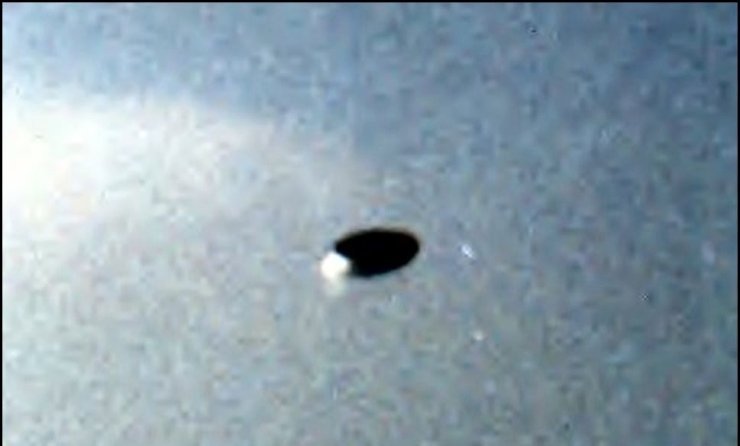
On 27 October 1996 a young Hungarian man named Lajos Kosina was visiting his girlfriend's parents in the small village of Érpatak, in Szabolcs-Szatmár-Bereg county in the far northeast of Hungary near the Ukrainian border. This case file covers what witnesses reported, the official narrative, and a two-pass assessment with its evidence tier.
What did witnesses see at Érpatak?
On 27 October 1996 a young Hungarian man named Lajos Kosina was visiting his girlfriend's parents in the small village of Érpatak, in Szabolcs-Szatmár-Bereg county in the far northeast of Hungary near the Ukrainian border. The visit was an ordinary social call. Out in the parents' garden, on a clear autumn afternoon with strong low sunshine, Kosina took a single snapshot of his girlfriend posing. Nobody present, not Kosina, not his girlfriend, not her parents, reported seeing anything unusual in the sky while the picture was being taken. It was a normal portrait, and at the moment of exposure it stayed a normal portrait.
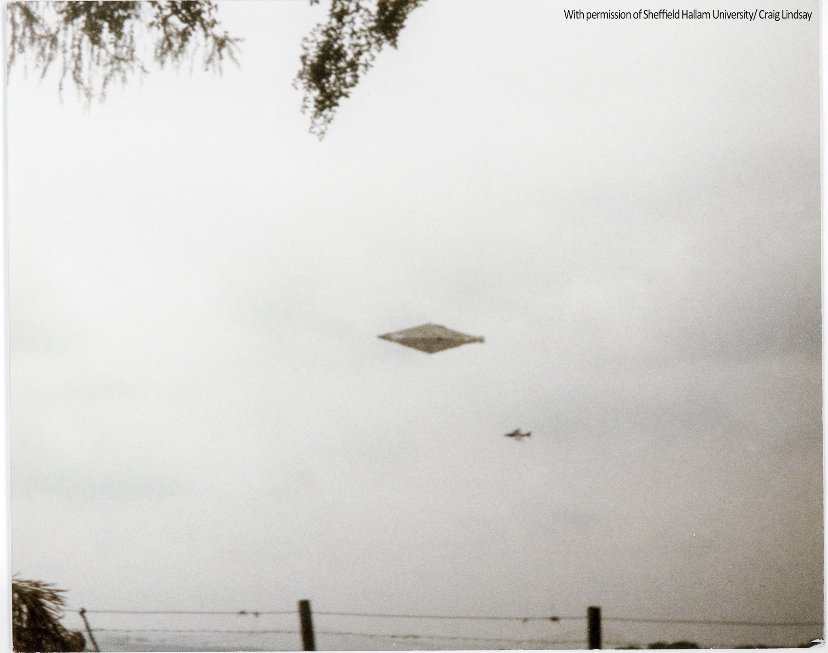
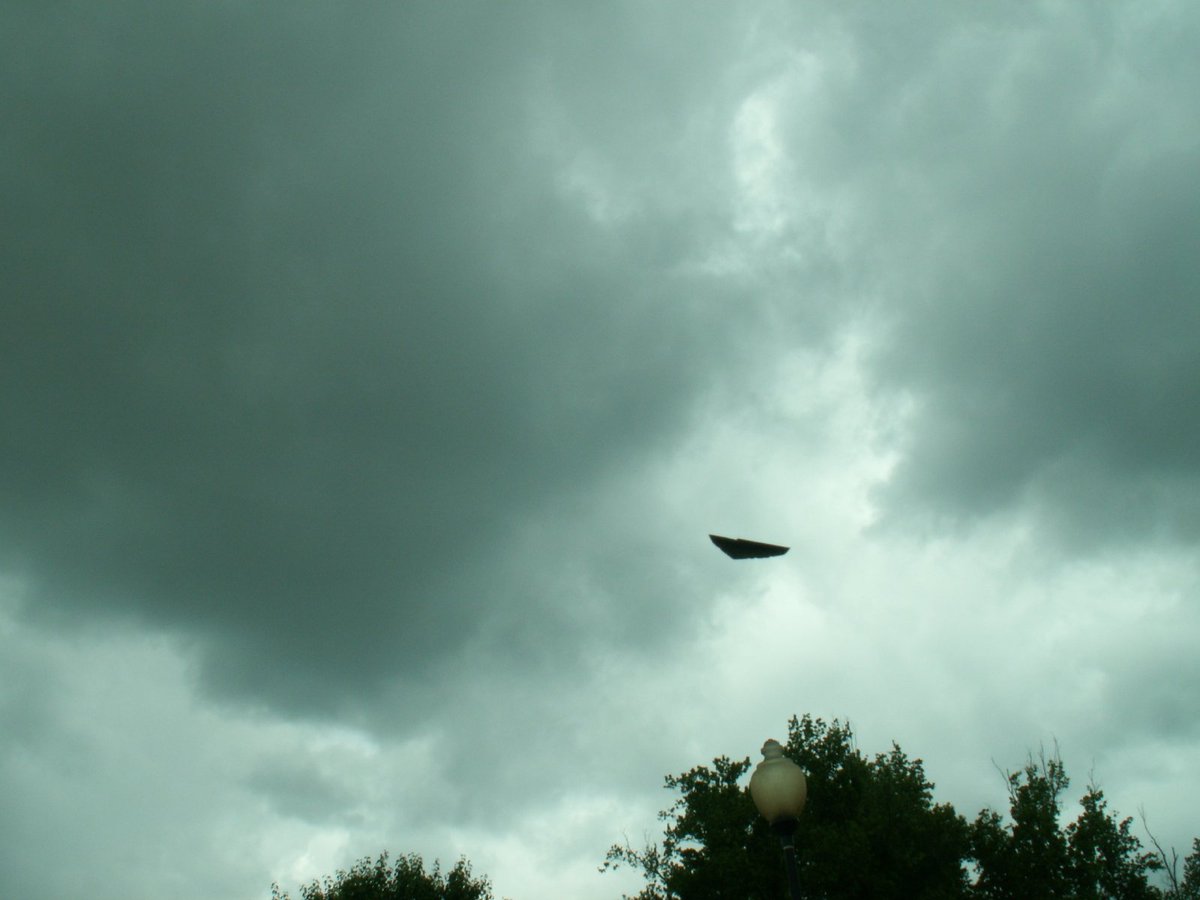
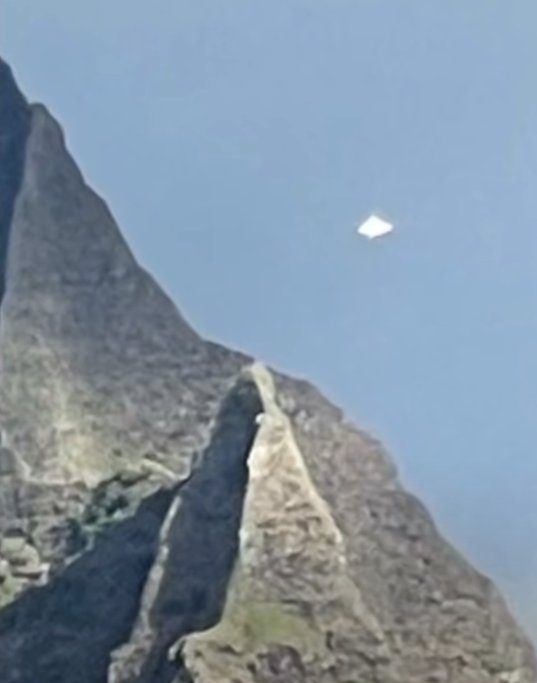
The strangeness only surfaced weeks later. Following the standard habit of amateur film photographers in the pre-digital 1990s, Kosina left the roll undeveloped for some time before having it processed. When he finally got the prints back and looked at the garden snapshot, there was a distinct dark object hanging in the sky behind his girlfriend, off to one side and well above the horizon. In the enlargement that later circulated, the object reads as a flattened dark disc seen close to edge-on, slightly tilted, with a small bright highlight at its lower left where the autumn sun appears to catch its surface. It is sharply defined, not a smear or a streak.
Because the disc had been invisible to everyone at the scene, Kosina and his girlfriend were unsure what to make of it. They did not rush it to the press or to researchers. By the accounts that survive, they sat on the photograph for several months and showed it to almost no one. Eventually, through a friend of Kosina's, the picture made its way to the Hungarian UFO Network, the country's organised civilian investigation body, abbreviated HUFON. That is the point at which the snapshot stopped being a private curiosity and became a documented case. The core reported facts are narrow and have stayed consistent through every retelling: one frame, one disc, no contemporaneous sighting, a delayed discovery on the developed film, and a rural setting with little air traffic and no industrial clutter to seed an easy misread.
What is the official explanation?
There is no government, military, or state-aviation narrative attached to this case. No Hungarian air force statement, no civil aviation finding, no official inquiry of any kind is on record. That absence matters for how the case should be read: unlike the famous American and British photographic cases, there was never an official apparatus that examined it, tried to explain it, or moved to discredit it. The only investigation of record is civilian.
That investigation was carried out by the Hungarian UFO Network. Its director, Laszlo Kiss, took the photograph in and put it through what the published account describes as study of the original negative using both optical and computer techniques. The findings, as Kiss set them out, were specific. The anomaly was not a film fault, meaning not a processing flaw, an emulsion defect, or a developing-lab artifact baked into the negative. It was not a small model suspended on a wire, a standard hoax method of the period that the investigators say they checked for and rejected. And the object was not blurred. From the lack of motion blur HUFON reasoned that whatever it was had been either stationary or moving very slowly relative to the camera at the instant of exposure, which in turn argued against the other classic cheap hoax, a disc-shaped prop thrown through the air behind the subject, since a thrown object crossing the frame would tend to smear. From the way the surface caught the light, they read it as a real, flat, disc-shaped object several metres in diameter whose surface appeared to reflect the autumn sunshine. Their conclusion was that this was a genuine UFO photograph and that they had found no evidence the picture had been hoaxed.
The case reached an international audience through a joint write-up credited to "Laszlo Kiss and Philip Mantle." Philip Mantle is a long-standing British researcher and the former Director of Investigations for the British UFO Research Association, BUFORA. His involvement is the reason the Érpatak photograph travelled beyond Hungary and ended up reproduced in English-language case archives. The same short Kiss and Mantle text is what every later page quotes, almost word for word, which is both the strength and the limit of the documentation: the load-bearing facts are consistent and traceable to a single named investigative source, but that source did not publish a long technical report with named photo analysts, density measurements, or step-by-step enhancement plates. The camera and film stock are not specified in the surviving account, and the current whereabouts of the original negative are not documented.
What did the witnesses think it was?
The principal witness is Lajos Kosina, the photographer, occasionally rendered as Kozina in retellings. He was a private citizen with no documented prior involvement in UFO circles and no apparent motive to fabricate. His own position was straightforward and modest: he had taken an ordinary picture of his girlfriend, he had seen nothing odd at the time, and the disc was simply there when the film came back. He did not claim a sighting, an encounter, or any narrative beyond the photograph. That restraint is part of why HUFON took the case seriously. A hoaxer staging a disc behind a subject normally has to see and place the prop during the exposure; Kosina's account, that the object was discovered only on development weeks later, cuts directly against a staged shot, because there was no moment of awareness in which to compose the deception.
The corroborating witnesses are the people who were in the garden: Kosina's girlfriend, who was the subject of the portrait, and her parents, who owned the property. By the investigators' account all of them confirmed the basic circumstances, the ordinary visit, the single snapshot, the clear sky, and crucially the fact that none of them noticed anything in the air at the time. Their testimony does not add a second sighting of the object, because nobody saw it; what it does is anchor the time, the place, and the innocence of the original act, and it gives HUFON multiple independent people to interview about whether the scene was as described.
The belief carried forward by the investigators, rather than by the witnesses themselves, is the stronger claim. Laszlo Kiss, speaking for HUFON, treated the photograph as authentic and as showing a real metres-wide disc, and Philip Mantle's name on the joint write-up lent it the weight of a senior British investigator. Within Hungarian UFO research the image became a touchstone, frequently called the most famous and most credible UFO photograph taken in the country. The witnesses' own contribution stays humble and consistent: they did not see a craft, they saw a photograph, and they never embellished it into more than that.
Is the Hungary UFO Photograph (1996) real? The two-pass assessment
Pass one, the ordinary explanations. Several mundane causes fit the basic shape of a small dark disc appearing unnoticed on a developed frame. A bird or insect crossing the field of view can register as a dark blob, though the crisp, symmetric, edge-on disc here does not read like wings in motion. A thrown or tossed object, a hat, a frisbee, a plate, is the classic cheap hoax behind a posed subject, and HUFON say they tested and rejected this on the grounds that the object shows no motion blur, which a flung prop crossing the frame would usually show. A small model on a thread is the other standard fake, and again the investigators say they looked for and did not find wire or suspension evidence in the negative. A lens or processing artifact, a flare, a reflection, an emulsion flaw, or a developing-lab defect, can all plant a spurious shape on film; HUFON's stated check of the original negative was aimed precisely at these and reportedly came back negative for a film fault. None of these ordinary readings can be ruled out from the outside today, because the deep technical detail, the camera, the film, the densitometry, the negative itself, is not in the public record. What can be said honestly is that the one organised examination on record actively considered the mundane options and rejected them, and that no independent analyst has since shown a specific ordinary cause for this specific frame.
Pass two, if it is what it appears to be. Then the photograph captured a genuine flat metallic disc, several metres across, hanging more or less stationary in the autumn sky behind an unsuspecting subject, catching the low sun on its surface, and gone or unremarked by the time the shutter closed and the family went back indoors. That is the reading HUFON and Mantle put their names to.
Weighing it: this case has the profile of a clean, low-drama photographic anomaly. It has named witnesses, a fixed date and place, a credible delayed-discovery story that works against hoaxing, and a named civilian investigation that says it ruled out the obvious fakes. What it lacks, on both sides, is decisive evidence. There is no government finding to lean on and no positive identification of the object, but there is also no confession, no recovered prop, and no independent, method-shown debunk by any skeptic, photo analyst, or group such as IPACO. Because no counter-explanation of this image has ever been demonstrated, and because no official narrative exists at all, this is not a disputed case in any rigorous sense; it stands or falls on its single frame and its witnesses, supported by HUFON's analysis. That is the definition of the Unknown tier, and that is where it sits.
Sources
- ufoevidence.org/cases/case237.htm
- www.thinkaboutitdocs.com/hungarian-ufo-photo/
- web.archive.org/web/20250130131149/https://www.ufocasebook.com/hungaryufophoto.html
- www.tall-white-aliens.com/hungarian-ufo-photograph/
- conspiracylied.blogspot.com/p/ufo-1990-1999.html
- www.infinityexplorers.com/little-known-ufo-photographs-that-were-recognized-as-authentic/
- latitude.to/articles-by-country/hu/hungary/142006/erpatak
More cases from this region: UFO sightings in Hungary