The Rod Dickinson UFO Footage (1998)
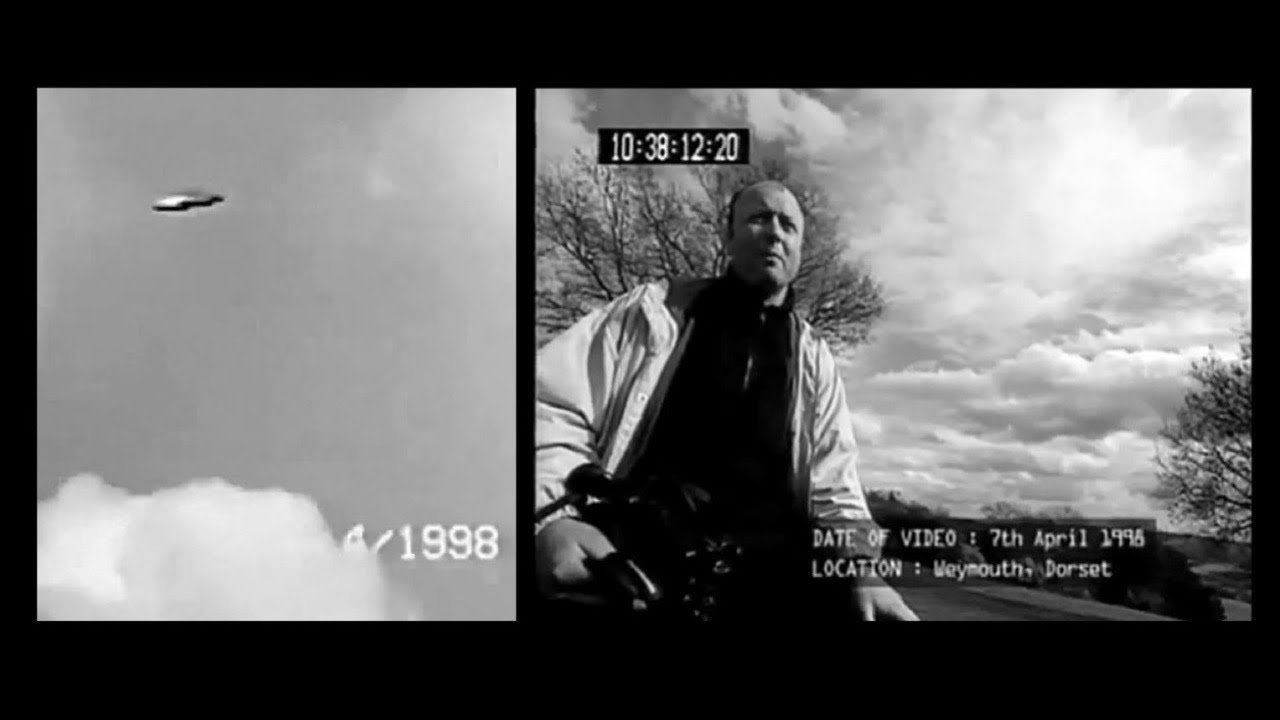
On the morning of 7 April 1998 a man named Rod Dickinson stood on or near the B-road that runs along The Ridgeway, the chalk escarpment that overlooks Weymouth in Dorset, southern England, and pointed a domestic camcorder at the sky. This case file covers what witnesses reported, the official narrative, and a two-pass assessment with its evidence tier.
What did witnesses see at The Ridgeway?
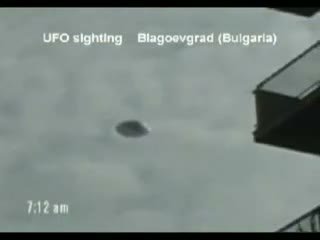
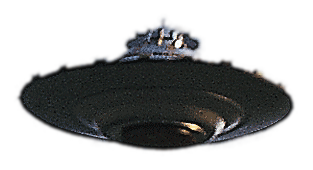
On the morning of 7 April 1998 a man named Rod Dickinson stood on or near the B-road that runs along The Ridgeway, the chalk escarpment that overlooks Weymouth in Dorset, southern England, and pointed a domestic camcorder at the sky. The footage that survives, with a camera timecode reading 10:38:12:20 burned into the frame, shows a metallic, disc-shaped object hanging in a bright, partly cloudy daytime sky near a cluster of radio communication masts on the ridge. The object is silver-grey, shaped like two saucers rim to rim with a raised dome, and it sits in the air with no visible means of support, no wings, no rotor, no trail, and no audible engine note on the tape. It does not streak across the sky like a plane or a bird. It holds position and drifts, while the camera operator struggles to keep it framed.
The single most striking quality of the footage is how violently unstable it is. The cameraman is plainly straining at the limit of an optical zoom, hand-held, with no tripod, so the disc jerks and swims around the frame from one moment to the next. That instability is the whole story of the tape. When analysts later went through it frame by frame, large fractions of the footage were unusable because the object had smeared into motion blur or split into doubled "ghost" images from the combination of camera shake and video compression.
The supporting witness account, which reached the public through the late British UFO investigator David Kingston, places the object low and slow. In the telling attached to the case, the disc was first spotted above a radio mast on The Ridgeway, hovered for roughly twelve minutes, and sat at a height on the order of a few hundred feet to perhaps five hundred feet above the ground, close enough that its disc form was clear to the naked eye. Kingston added a far more dramatic coda: that two Lynx helicopters were scrambled from the nearby Royal Naval air station at Portland to intercept the object, and that as they closed in the disc shot vertically upward to around sixty thousand feet "in the blink of an eye" and was gone. Frame analysis of the tape was also said to reveal small anomalous spheres moving close to the main object. Rod Dickinson himself stated that he was not the only person present, noting that "at least one other person I met saw the thing while I was filming it."
What is the official explanation?
There is no government record that supports this case, and the one official document that should contain it does not. The United Kingdom Ministry of Defence kept a running log of public UFO reports, and its "UFO Report 1998" lists no entry for Weymouth, The Ridgeway, Portland, or any daytime disc anywhere in Dorset on 7 April 1998. The April dates in that log skip straight from the fifth to the tenth, and the only Dorset reports for the whole year are at Wimborne in May, Highcliffe in August, and Boscombe in October, none of which matches. That silence matters most for the claim that two Lynx helicopters were scrambled from the Royal Naval air station at Portland to intercept the object, because a genuine military reaction to an unknown over the south coast would have generated official traces, and none exist.
The only formal technical examination on record was carried out for James Fox's 2003 documentary "Out of the Blue." Bill George, a visual-effects specialist at Industrial Light and Magic, reviewed the footage and concluded that the object had not been added in later, meaning it was not a digital composite dropped into the frame in post-production. He stopped well short of endorsing it, stating explicitly that he could not say it was a real craft. That is the whole of the institutional record: one government log that omits the event entirely, and one effects-house review that rules out a post-production fake without vouching for the object.
What did the witnesses think it was?
The case has three named or implied witnesses, and the weight of it rests almost entirely on the credibility of one. Rod Dickinson, the man who filmed the disc, is the central figure. He is not an anonymous member of the public but a British conceptual artist and a co-founder, with John Lundberg, of the circlemakers.org collective, a group openly engaged in the covert manufacture of crop formations. He has stated plainly that the footage is not a hoax and that he was not alone on The Ridgeway that morning, noting that at least one other person he met saw the object while he was filming it. That unnamed second witness never came forward, was never traced, and left no statement, so the corroboration is asserted rather than documented.
The dramatic narrative that surrounds the tape did not come from Dickinson at all. It reached the public through David Kingston, a late British UFO investigator with a former RAF and Ministry of Defence background, who attached the account of a twelve-minute hover, a low altitude over the radio masts, and the scramble of two Lynx helicopters from the Royal Naval air station at Portland. Kingston presented these details as established fact and clearly believed the object was a genuine unknown. He is now deceased, and the most spectacular element he supplied, the military intercept, is precisely the part that the documentary record fails to support. So the witness picture is a sincere cameraman with a professional history of fabricating paranormal evidence, an uncorroborated second observer, and a believing investigator whose most testable claim does not survive a check against the official files.
The dispute
The dispute has two prongs, and neither one rises to a demonstrated hoax. The first and strongest is the identity of the cameraman. Rod Dickinson is not an anonymous member of the public; he is a co-founder of the circlemakers.org collective with John Lundberg and, by his own account, spent the decade around 1998 covertly creating crop circles, his own biography stating that "for the last decade he has covertly created crop circles" and describing a lifelong "fascination with several areas of peripheral belief; including crop circles and UFOs." Skeptics, including posters on forums such as Above Top Secret and Unexplained Mysteries, argue that a professional fabricator of paranormal "evidence" is precisely the wrong person to take at his word about an unexplained disc he alone filmed, especially when the original raw tape no longer exists for examination. This is a powerful argument from motive and means. It is not, however, proof. Dickinson has stated plainly that the footage "is not a hoax" and pointed to at least one other person who saw the object while he filmed, and no analyst has ever shown the method by which the disc in this particular tape was manufactured.
The second prong is the collapse of the case's most dramatic claim under primary-source scrutiny. The witness narrative carried by the late David Kingston holds that two Lynx helicopters were scrambled from the Royal Naval air station at Portland to intercept the object, which then shot up to roughly sixty thousand feet as they approached. Reading the Ministry of Defence's own "UFO Report 1998" directly, there is no entry for Weymouth, The Ridgeway, Portland, or any daytime Dorset disc on 7 April 1998; the only 1998 Dorset reports are at Wimborne in May, Highcliffe in August and Boscombe in October, none matching. A genuine military scramble to intercept an unknown over the south coast would have generated official traces. The absence of any such record strongly undercuts the helicopter-intercept story specifically.
What the dispute does not contain is the kind of evidence that would push this to a strong tier. There is no confession, no recanting, no recovered model or rig, and no positive identification of a specific balloon, drone, aircraft or prop. The one independent technical examination on record, Bill George's review at Industrial Light and Magic for the 2003 documentary "Out of the Blue," concluded only that the object "was not added in later," meaning it was not a post-production composite, which if anything works against the simplest fakery theory. Because the case against the footage rests on the cameraman's history, a lost original and an uncorroborated military embellishment rather than on a demonstrated fabrication of this image, the honest tier is Barely Disputed: the footage largely stands as an unexplained daylight disc, weighed down by a serious and legitimate credibility problem.
Is the Rod Dickinson UFO Footage (1998) real? The two-pass assessment
Pass one, the ordinary readings. The footage is exactly the kind of material that resists measurement. It is a shiny, unscaled disc filmed at the far end of a hand-held camcorder's optical zoom, against a bright partly clouded sky, by an operator who cannot hold the frame steady, and the original raw tape no longer exists for anyone to examine. Those conditions fit a near-field object, a balloon, a model, or a suspended prop, filmed close to the lens so that ordinary parallax and the violent camera shake disguise its true size and distance. The single most damaging ordinary fact is the identity of the cameraman: Rod Dickinson is a career maker of crop circles and other staged anomalies, a person with the documented skills, motive, and inclination to manufacture exactly this kind of evidence. The most dramatic supporting claim, the helicopter scramble, collapses against the Ministry of Defence's own 1998 log, which records nothing of the sort.
Pass two, if it is what it appears to be. Then the tape shows a structured, metallic, domed disc holding a silent hover a few hundred feet over a Dorset ridge in full daylight, with no wings, rotor, trail, or engine note, and behaving in a way no balloon or aircraft does. The one independent technical check on record, Bill George's review at Industrial Light and Magic, found the object was genuinely in front of the lens rather than composited in afterward, which works against the simplest digital-fake explanation and is the strongest single point in the footage's favour.
Weighing the two. The doubt here is serious and entirely legitimate: the cameraman's profession, the lost original, and the documentary silence on the helicopter story all pull hard toward a hoax. But pulling toward a hoax is not the same as proving one. There is no confession, no recovered model or rig, no recantation, and no method-shown reconstruction demonstrating how this particular image was faked, while the only forensic test performed points away from a digital composite. Under the project's rules a strong suspicion built on motive and missing evidence, with no demonstrated fabrication, is not enough for the strong tier. The footage largely stands as an unexplained daylight disc carrying a heavy and well-earned credibility asterisk. That is Barely Disputed.
Sources
- www.beamsinvestigations.org/Flying%20Saucer%20Over%20Weymouth%201998%20-%20Video%20Accredited%20by%20Scientists%20as%20Genuine%20Daylight%20UFO%20Stabilized.htm
- www.youtube.com/watch?v=hErBS2_SeJo
More cases from this region: UFO sightings in United Kingdom