The Denison, Texas Daylight Object (1878)
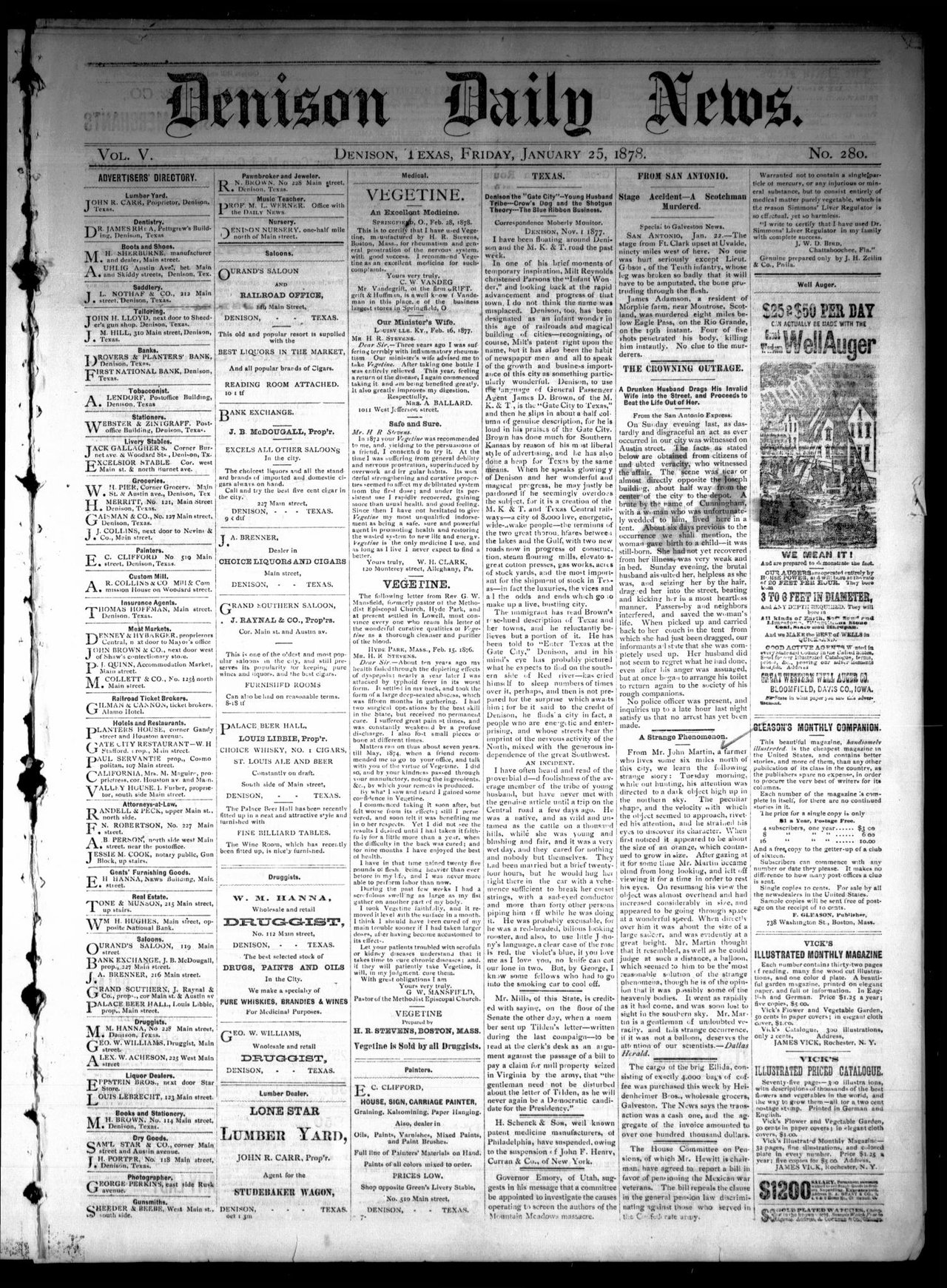
On a Tuesday morning in late January 1878, John Martin, a farmer who the Denison Daily News said lived "some six miles south of this city," was out hunting in the open country below Denison, in Grayson County, Texas, when his eye was caught by something high in the sky. This case file covers what witnesses reported, the official narrative, and a two-pass assessment with its evidence tier.
What did witnesses see at Six miles south of Denison?
On a Tuesday morning in late January 1878, John Martin, a farmer who the Denison Daily News said lived "some six miles south of this city," was out hunting in the open country below Denison, in Grayson County, Texas, when his eye was caught by something high in the sky. In the words of the original report, "his attention was directed to a dark object high up in the southern sky. The peculiar shape and velocity with which the object seemed to approach riveted his attention and he strained his eyes to discover its character."
What he described was not a light and not a glint of metal but a dark form moving fast against the daytime sky. "When first noticed, it appeared to be about the size of an orange, which continued to grow in size." Martin watched it long enough that, in the article's account, "after gazing at it for some time Mr. Martin became blind from long looking and left off viewing it for a time in order to rest his eyes." That detail matters: he was staring into bright winter sky hard enough to strain his vision, which is why he looked away.
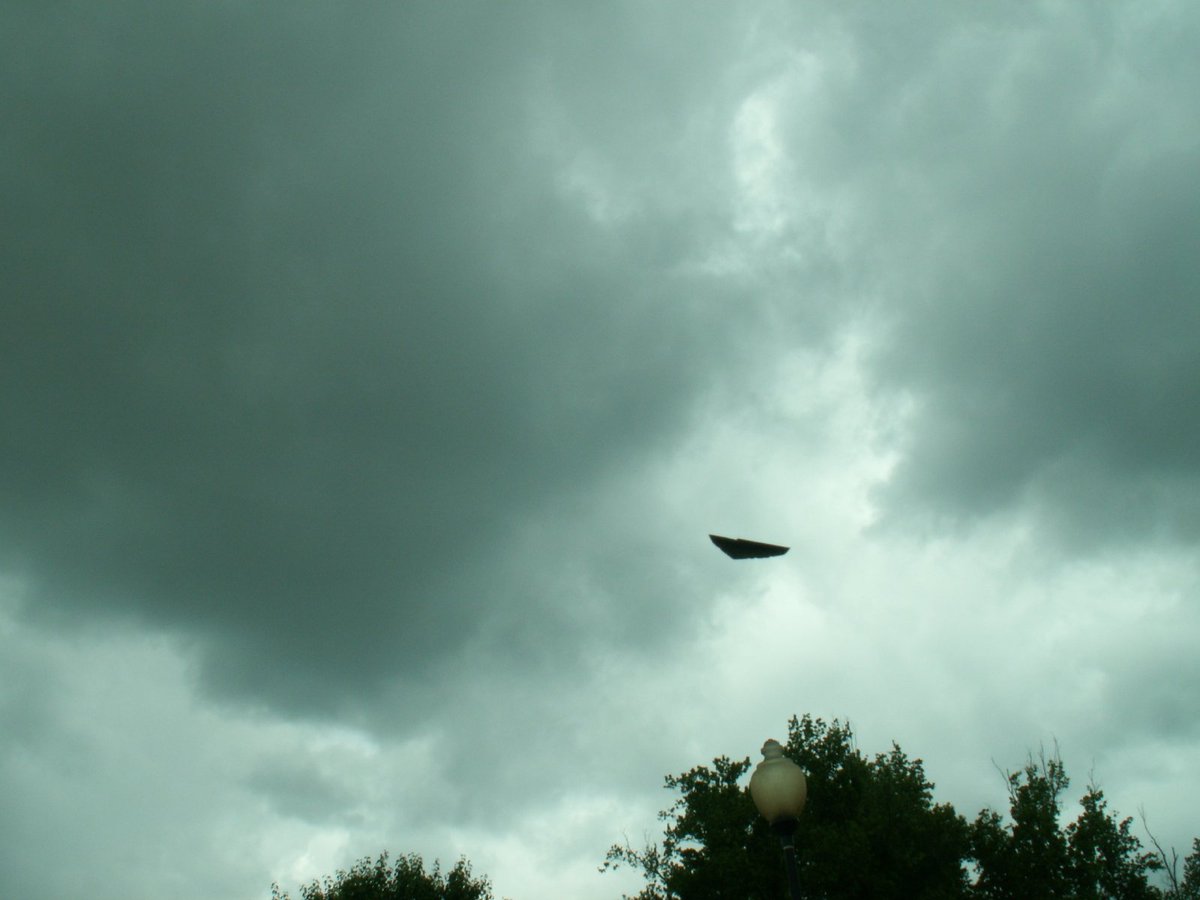
When he looked back the thing had closed the distance and was nearly overhead. "On resuming his view, the object was almost overhead and had increased considerably in size, and appeared to be going through space at wonderful speed. When directly over him it was about the size of a large saucer and was evidently at great height." This is the line the whole case turns on. The word "saucer" here is a measure of apparent angular size held at arm's length, the size a saucer would look at that distance, not a claim about a disc-shaped craft. Martin himself reached for a different shape word when asked what it looked like.
"Mr. Martin thought it resembled, as well as he could judge, a balloon. It went as rapidly as it had come and was soon lost to sight in the heavenly skies." The reporter closed by vouching for the man rather than the object: "Mr. Martin is a gentleman of undoubted veracity and this strange occurrence, if it was not a balloon, deserves the attention of our scientists." So the reported event is compact and consistent across every transcription: a single witness, a clear daytime sky, a dark fast-moving object that grew from orange-sized to saucer-sized as it passed overhead and then sped out of view, with no sound, no landing, no trace, and the witness's own best guess being a balloon.
What is the official explanation?
There was no official investigation of any kind. In January 1878 there was no agency, military or civilian, that recorded or examined sightings of objects in the sky, and there would not be one in the United States for another seventy years. The only contemporary "investigation" is the newspaper item itself, and its editorial stance is openly cautious. The Denison Daily News did not assert that Martin had seen anything extraordinary. It vouched for his character ("a gentleman of undoubted veracity"), floated the most ordinary explanation available at the time ("if it was not a balloon"), and punted the question to others ("deserves the attention of our scientists"). That is the entire official record of 1878.
The provenance of the printed account is itself part of the documentary trail. The story did not originate solely in Denison. Texas historian Mike Cox, writing his "Texas Tales" column in March 2008, found that the Denison Daily News piece was reprinted from the Dallas Herald, and he traced that detail to a 6 August 1965 article in the Dallas Morning News. The item also ran in the Dallas Weekly Herald of 26 January 1878 and was carried later by the Daily Oklahoman, which is how a short local notice survived to become one of the most cited sightings of the nineteenth century. The surviving primary artifact is the front page of the Denison Daily News, Vol. 5 No. 280, Friday 25 January 1878, preserved and digitized by the Portal to Texas History at the University of North Texas Libraries.
Because there was no official body, later researchers became the de facto investigators, and their work is documentary rather than physical. Mike Cox searched the 1880 federal census for the witness and found candidates but no certain match: three farmers named John Martin in Collin County and one John E. Martin, a tenant farmer, in Grayson County, where Denison sits, with no farmer named Martin in Dallas County. The case entered modern UFO literature through Donald Keyhoe, who cited it in "The Flying Saucers Are Real" (1950), and John Keel, who placed it in the nineteenth-century wave material of "Operation Trojan Horse" (1970). None of these are official findings. There is no Project Blue Book file, no Air Force card, no government explanation, because the event predates the entire apparatus by decades. The case stands on a single authenticated period newspaper and the absence of any contemporary debunk.
What did the witnesses think it was?
The single named witness is John Martin, identified in the report only as a farmer living about six miles south of Denison and described by the paper as a man of "undoubted veracity." We have no direct quotation of his own beliefs about what he saw, because the account is filtered through the unnamed Denison Daily News reporter. What survives of Martin's own judgment is telling in two directions. First, he did not claim a strange craft. Asked what the object resembled, his own best comparison was a balloon, the most mundane flying thing a Texan in 1878 could name. Second, he clearly did not think it was nothing: he watched it long enough to strain his eyes to the point of temporary "blindness," and the encounter was vivid enough that he told it to others and it reached the newspaper. A man inventing a tall tale rarely undercuts it by volunteering the dull explanation himself.
There are no corroborating witnesses. The report names only Martin, and no second observer ever came forward in print. That is a real limitation and is weighed as one. What stands in for corroboration here is not a second person but the documentary survival and spread of the account: the same text appeared in the Dallas Herald lineage and the Daily Oklahoman within days, meaning the report was circulated and read at the time without anyone in those columns stepping forward to call Martin a liar or to identify the object. The witness's credibility was asserted by his own community paper, which is a weak form of vouching by modern standards but was the period's normal way of signaling that the man was known and trusted locally.
The lasting significance attached to Martin is linguistic rather than evidentiary. He is repeatedly credited as the first person on record to use "saucer" for an unidentified object in the sky, seventy-nine years before Kenneth Arnold's 1947 sighting made "flying saucer" a household phrase. That framing is half right at best, and honesty requires saying so: Martin used "saucer" for size, not shape, and his shape word was "balloon." So the witness himself would likely have been surprised to learn he is remembered as the father of the flying-saucer image. What he actually reported, and apparently believed, was a dark fast object he could not identify, which he was willing to guess was a balloon, and which he was honest enough to say he could not be sure about.
Is the Denison, Texas Daylight Object (1878) real? The two-pass assessment
Pass one, the ordinary explanations. This is a single-witness, naked-eye, daytime sighting from 1878 with no photograph, no instrument, no second observer, and no physical trace, so the bar for a prosaic cause is low and several fit. The witness's own first guess, a balloon, is entirely plausible: manned and unmanned balloons existed in the 1870s, a dark balloon high up would look small then larger as it drifted nearer, and "the size of a large saucer" overhead is consistent with a balloon at altitude carried on the wind. A second strong candidate is a bird or flock seen against glare; Martin stared until his eyes "became blind from long looking," and eye strain plus bright winter sky can make a soaring hawk or a distant bird swell and accelerate deceptively. Atmospheric and optical effects, a mock sun fragment, a wind-torn shred of cloud, or simple misjudged distance and motion against a featureless blue, are all live possibilities that cannot be excluded at this remove. Crucially, none of these has ever been positively demonstrated for this specific event; they are reasonable candidates, not identified causes.
Pass two, if it was not ordinary. Taken at face value the report describes a dark, silent, structured-seeming object that grew from orange-sized to saucer-sized as it passed high overhead at "wonderful speed" and left no trace, which is the generic profile of an unexplained daylight object and nothing more specific. The honest reading is restrained. Martin did not describe windows, occupants, beams, or a metallic disc; he described a fast dark form and guessed balloon. The case is famous less for what was seen than for the word used, and that fame rests on a misreading of "saucer" as shape when the text plainly means size.
The tier follows from the documentary status, not from certainty about the object. The load-bearing fact here is verifiable and verified: an authentic, digitized period newspaper, the Denison Daily News of 25 January 1878, carries a contemporaneous first-hand account of an unidentified daylight object, and that object was never identified by any contemporary authority because no such authority existed. No one in 1878 or since has produced a confession, a recovered prop, or a positive identification of the specific real-world object Martin saw. The balloon hypothesis is the witness's own guess, never confirmed, so it does not rise to a method-shown debunk; it is a plausible candidate that leaves the object formally unexplained. Because the primary artifact is authenticated and the object remains officially and factually unexplained, this is Verified Unexplained. That tier is a statement about the documentary record, an honest, well-preserved 1878 report of an object nobody pinned down, and not a claim that the thing was exotic.
Sources
- texashistory.unt.edu/ark:/67531/metapth326826/m1/1/
- ufologie.patrickgross.org/htm/denison1878.htm
- www.theblackvault.com/casefiles/january-1878-denison-texas-daylight-ufo/
- www.texasescapes.com/MikeCoxTexasTales/Denison-UFO.htm
- texascooppower.com/the-first-flying-saucer/
More cases from this region: UFO sightings in United States