The Padeswood Poachers' Purple Ball
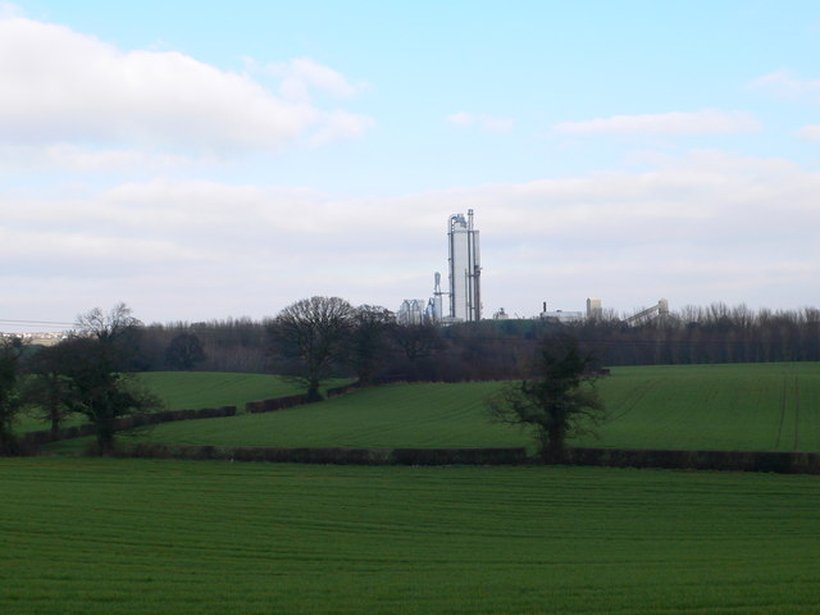
The story is set among the coal-mining communities around Mold in Flintshire, North Wales, during the hard years of the 1880s. This case file covers what witnesses reported, the official narrative, and a two-pass assessment with its evidence tier.
What did witnesses see at Padeswood?
The story is set among the coal-mining communities around Mold in Flintshire, North Wales, during the hard years of the 1880s. A group of colliers, by some tellings men who were on strike or struggling on what the retellings call "miserable wages," had taken to poaching to feed their families. One night they walked out to fields at nearby Padeswood to collect snares they had set for rabbits or hares on a landowner's ground. They were already on edge, expecting at any moment to be caught trespassing and stealing game, which in that period could mean prison.
What they reported seeing instead was nothing to do with a gamekeeper. Above the field hung a large, bright ball of light, described in the surviving versions as a purple or purplish-red luminous sphere. It hovered silently over the ground where their snares were set. The men, terrified, ran. The most repeated account, carried by the North Wales Daily Post on 14 July 2003, puts it plainly: "they were terrified when they saw a large, bright, purple sphere hovering above the field. The men ran away, but when they returned again to pick up their snares there was a circle of scorched grass where the craft had been."
A fuller, more dramatic telling adds that the object did not simply vanish. In that version the purplish-red ball descended silently into the field, and when it later rose it had become a swirling ball of smoke with small tongues of flame issuing from its base as it lifted off the ground. Both versions converge on the same hard detail that gives the story its staying power: when the poachers eventually went back for their snares, the spot where the light had been was marked by a wide, black circle of scorched or burned grass. That burn ring, a physical trace left behind in an ordinary field the men knew well, is the single concrete element every version preserves. There is no description of an occupant, no sound beyond silence, and no sense from the witnesses that this was anything they could name.
What is the official explanation?
There is no official narrative of any kind attached to this case, and that absence is itself the defining fact about it. The sighting belongs to the 1880s, decades before any government, air force, or police body kept files on aerial phenomena. There was no Air Ministry investigation, no constabulary report that has come to light, no contemporary newspaper notice that researchers have managed to recover, and certainly no later Blue Book or Ministry of Defence involvement. The poachers were, by their own situation, the last people who would have walked into a police station to report what they saw, since doing so would have meant confessing to poaching on a landowner's ground. So the event went unrecorded by any authority at the time and entered no official channel afterward.
What stands in place of an official record is folklore scholarship. The account was preserved orally within the mining families and was later collected and put into print by Richard Holland, a folklore writer and journalist who lives in Mold, the very town the miners came from, and who edited Paranormal magazine. Holland is documented as a researcher who works from original sources, "delving into old books, journals, Eisteddfod transactions, and unpublished essays" to recover forgotten Welsh ghostlore and strange tales. The story appears in his regional collection of North-East Wales folk tales, "Supernatural Clwyd: The Folk Tales of North-East Wales," published by the Welsh-language press Gwasg Carreg Gwalch (ISBN 0863811272), and it is logged in the Paranormal Database's UFO listings as an 1880s Flintshire case sourced to Holland's folklore work.
The widest circulation came from a feature in the North Wales Daily Post, "Is anybody out there?", first published on 14 July 2003, which surveyed historic Welsh sightings from the eighteenth century to the 1970s. That article attributes the Padeswood account to a "historian James Buckley" who "interviewed descendants of miners from Mold who saw a UFO in the 1880s." A separate retelling, the one carrying the smoke-and-flames detail, instead credits the name "James Bentley" and a "Clwyd Oral History Project." These conflicting attributions are a caution flag worth stating openly: there is no traceable published ghost or folklore book by either a "James Buckley" or a relevant "James Bentley," and the famous religious historian James Bentley (1937 to 2000) wrote nothing on Welsh folklore. The documented, catalogued source for this story is Richard Holland's Clwyd collection, and the Bentley and Buckley names appear to be garbled secondhand attributions in journalism and on web pages rather than independent authorities.
What did the witnesses think it was?
The witnesses were anonymous to history. None of the surviving tellings name the individual poachers; they are described collectively as colliers from the Mold area who had turned to poaching during a period of poverty and labour trouble in the Flintshire coalfield. What we have of their belief comes secondhand, through their own descendants. The story was kept alive inside the families as a thing the older men had genuinely seen and never explained away, and it was from those descendants that it was later gathered. That chain of transmission, miner to child to grandchild to folklore collector, is the entire evidential basis of the case.
From the men's own reaction, recorded in the family memory, their belief is clear enough: this was not a lantern, not a keeper, not anything they recognised. They fled. People who poached by night knew that landscape intimately, knew the look of a bull's-eye lantern, a bonfire, a will-o'-the-wisp over boggy ground, the moon behind cloud. Whatever this was frightened practical, hungry, hard-headed working men badly enough to abandon the snares they had risked jail to set, and to remember it for the rest of their lives. When they went back and found the wide ring of scorched grass, that physical mark seems to have confirmed for them that something solid and hot had been there, not a trick of the eye.
The corroboration, such as it is, is internal to the group. This was not a single startled man but several poachers together, which is why the story carried weight in the telling. There are no independent outside witnesses, no second party who saw the light from a distance, and no contemporary who wrote it down. The burn ring is reported but was never measured, sampled, or photographed, and the field cannot now be identified with certainty. So the witnesses believed they had seen something real and unearthly, and they passed that conviction down intact, but everything we can check rests on testimony alone, retold long after the men who gave it were dead.
Is the Padeswood Poachers' Purple Ball real? The two-pass assessment
Pass one, the ordinary readings, and there are several that fit a night-time field in 1880s Flintshire without needing anything exotic. Ball lightning is the obvious candidate: a luminous, sometimes reddish or purplish sphere, low to the ground, silent or nearly so, occasionally leaving scorch marks, and historically reported exactly in open country during unsettled weather. A bright meteor or a low fireball could account for a coloured ball of light, though it would not hover or land. Marsh gas igniting over wet low ground, a will-o'-the-wisp, could produce a drifting flame that frightened men unfamiliar with it, and the "swirling ball of smoke with tongues of flame" in the embellished version reads almost like a description of burning gas or a small grass fire. A mundane human explanation is also live: a keeper's lantern, a fire lit by other trespassers, or even a deliberate fright. And the whole thing must be weighed as folklore. It survives only as oral history retold across roughly a century, gathered by a folklore writer for a book of regional tales, with the burn ring as the kind of fixed, repeatable detail that anchors a good story and tends to harden in the retelling. The conflicting source names, "James Buckley" in the 2003 newspaper, "James Bentley" plus a smoke-and-flames flourish elsewhere, show the account drifting as it passed from mouth to mouth to print, which is exactly what you expect of a tale carried for generations before anyone wrote it down.
Pass two, if it is taken at face value as the men reported it, what is described is a low-hovering, self-luminous purple-red sphere that behaved with apparent purpose, descended silently into a specific field, and left a wide black ring of burned grass, a close-encounter ground-trace report a full sixty years before the term "flying saucer" existed. That last point is the genuinely interesting one. The motif of a glowing ball that lands and leaves a scorched circle is now a familiar UFO trope, but in the 1880s these poachers had no cultural template of "alien craft" to project onto a strange light, which is one reason researchers find pre-1900 trace cases worth logging rather than dismissing.
Weighing the two, this case has no contemporary documentation, no named witnesses, no measured or sampled burn ring, no photograph, and no independent outside observer. It rests entirely on testimony retold long after the fact and first reliably captured in a folklore collection. There is also no official body that ever investigated it and no positive identification of any specific real object, balloon, aircraft, or rocket, so there is nothing concrete to dispute and no confession or recovered prop to weigh against it either. That combination, a genuine but wholly unverifiable folk testimony with a known counter-explanation pool but no settled cause, places it outside the disputed tiers and outside "Verified Unexplained," which would require authenticated material or an official record. It is logged here as Unknown: a real piece of North-East Wales oral history about an aerial light, standing only on the retold word of frightened men who are long dead, neither corroborated by hard evidence nor closed by a demonstrated explanation.
Sources
- www.dailypost.co.uk/news/north-wales-news/is-anybody-out-there-2940957
- www.abebooks.com/9780863811272/Supernatural-Clwyd-folk-tales-North-East-0863811272/plp
- www.geograph.org.uk/photo/692595
- www.amazon.co.uk/Supernatural-Clwyd-Tales-North-East-Wales/dp/0863811272
More cases from this region: UFO sightings in United Kingdom