The Bonsall Video, Sharon Rowlands (2000)
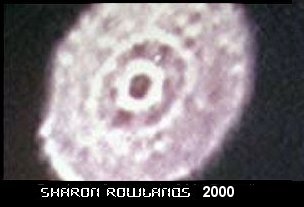
On the evening of 5 October 2000, Sharon Rowlands, 44, of Slaley in the village of Bonsall, Derbyshire, near Matlock in the Peak District, said she heard an eerie noise outside her home and went out with a camcorder she had been given only days earlier as a gift. This case file covers what witnesses reported, the official narrative, and a two-pass assessment with its evidence tier.
What did witnesses see at Bonsall?
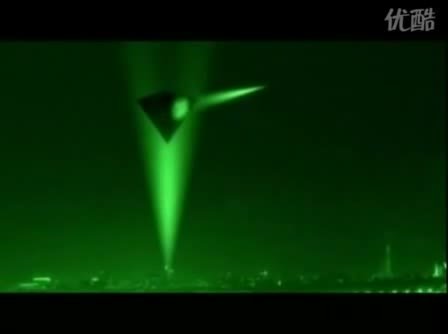
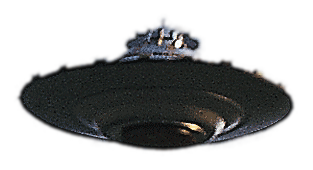
On the evening of 5 October 2000, Sharon Rowlands, 44, of Slaley in the village of Bonsall, Derbyshire, near Matlock in the Peak District, said she heard an eerie noise outside her home and went out with a camcorder she had been given only days earlier as a gift. She told reporters she filmed a large object hovering in the sky roughly two miles away, over woods and fields near the village. She described it to the BBC as resembling "a giant disc with a bite taken out of the bottom." In a later interview she called it "a segmented disc with a dark centre" that looked as large as "a detached house," carrying coloured lights around its edge.
Her account of the object's behaviour was specific. "As it hovered over the woods, it seemed to expand and then get smaller again," she said. "We could see it pulsing as if it started up and then it just went it came really close at one stage and I thought it was going to land in the field." She added, "You can hear me on the video say Wow."
The resulting tape ran about six and a half minutes. As reported by the BBC on 1 June 2001, the footage "shows what appears to be a large craft that emits red, yellow, orange and blue lights and has a dark circle in its centre. It hovers in the sky before moving to the right and emitting pulses of light from its left-hand side. It then flips over, showing two deep scarlet lights, and disappears in a red flash." The image is out of focus in the surviving clips, because Rowlands was trying to zoom in on a distant point of light. At one point the bright disc appears to break into concentric rings, the kind of pattern a defocused point source produces.
Rowlands did not present herself as a believer. "I was a complete and utter disbeliever but seeing this has made me think twice," she said. "It was huge and through the lens it looked like it was going to hit me. I couldn't believe it, it's like nothing else I've ever seen." Convinced the tape was valuable, she locked the original in a bank vault in Nottingham before any copy went out.
Her sighting did not happen in isolation. The Derby Evening Telegraph reported that Bonsall residents had logged 19 UFO sightings in the four months before October 2000. The BBC noted other local reports: one woman saw "a ball of fire" in the sky, another "two big, bright lights," and a man out walking his dog described "a pink glow, vertically shaped like a shoe box." The village's reputation as a small Derbyshire UFO hotspot was built on this cluster, with Rowlands' tape as its centrepiece.
What is the official explanation?
There was no government investigation of the Bonsall footage in any formal sense. The only official body quoted at the time was the Meteorological Office, whose spokesman told the Derby Evening Telegraph that there were "no freak weather conditions on October 5 which could have caused the circular shape in the sky," and told the BBC there were "no unusual weather conditions that might have explained Ms Rowland's sighting." The BBC report also recorded, without attribution, that "others believe military aircraft could explain some of the sightings" over the village.
The case instead moved through the television and ufology trade. Robert Kiviat, the California producer behind Fox's "Alien Autopsy" and "World's Greatest Hoaxes" specials, found Rowlands' film while, in the words of the Derby Evening Telegraph, "scouring the internet." His company, Kiviat Productions, reportedly paid more than 20,000 pounds for it and lined it up for a planned Fox programme titled "Could It Be True?" Kiviat called it "one of the top five pieces of video footage of UFOs ever taken" and said he would show the tape to NASA optical physicist Dr. Bruce Maccabee.
The NASA angle, repeated heavily in the press, rested on a claimed resemblance between Rowlands' object and footage from the Space Shuttle Columbia's STS-75 mission of February 1996, the so-called tether incident, in which apparent objects were seen drifting near a broken tethered satellite. NASA's own STS-75 mission page lists Claude Nicollier among the European Space Agency mission specialists on that flight, which the Telegraph cited, and the famous tether video has long been explained by NASA and its crew as near-field debris and sunlit ice particles drifting close to the camera and rendered out of focus, not distant structured craft. On the air, Kiviat told Coast to Coast AM host Art Bell that NASA had described its own shuttle footage as "the camera lens trying to adjust to a bright light," and that he wanted NASA's cooperation and an explanation for his special. There is no record that Dr. Maccabee ever published an analysis of the Rowlands tape. He was named as a planned reviewer, nothing more, and the case should not be cited as carrying his verdict either way.
The hardest official-adjacent finding came years later, from a named television expert. Channel 5's documentary series "Britain's Closest Encounters," narrated by Anthony Head and produced by Firefly Film and Television, first aired on 2 July 2008 and covered the Bonsall case in its first episode. Video expert Peter Marriot examined the clip and concluded, in the words of the contemporaneous Mercury Rapids review of the broadcast, "that what Sharon had recorded was simply a street lamp." Rowlands rejected the explanation on screen, "saying that what she saw was not a streetlight and was like nothing she had ever seen."
What did the witnesses think it was?
Sharon Rowlands consistently maintained that she had filmed something real and unexplained, while being careful to say she did not know what it was. Her starting point was scepticism, not belief: "I was a complete and utter disbeliever but seeing this has made me think twice," and "I've watched UFO programmes and if there is such a thing, this is as good a photograph as you're going to get." She and her husband Hayden, the Telegraph stressed, were "just a couple living in a remote area with no agenda and no previous experience in UFO videos." That framing, an ordinary household with a brand-new camcorder, was central to how the case was sold and to why it drew attention.
Her closest corroboration came from the surrounding village reports rather than a second person standing beside her. The 19 sightings logged in Bonsall over four months, the "ball of fire," the "two big, bright lights," and the man with his dog who saw a "pink glow, vertically shaped like a shoe box," all fed a sense that something was recurring over the same patch of Derbyshire. Whether those reports corroborate Rowlands' specific object or simply show a community primed to look up is the open question.
Among ufologists, the strongest advocate was Omar Fowler, founder of the Derby-based Phenomenon Research Association, who had been tracking UFO reports since the 1970s. Fowler viewed the tape and was unequivocal: "I viewed Mrs Rowlands' tape and I was amazed at what I saw. I consider it to be one of the most important sightings of recent years, comparing very well with a recent clip from Mexico, and it typifies activity in Bonsall." He ranked Bonsall alongside Mexico City and Fleetwood in Lancashire as a genuine UFO hotbed. Fowler's enthusiasm and Kiviat's "top five ever" billing are the high-water mark of the case's claims, and both came from people with a stake in the footage being extraordinary, Fowler as the local researcher whose patch it validated and Kiviat as the man who had paid for broadcast rights.
What never happened is as important as what did. The full six and a half minute tape was locked away, first in a Nottingham bank vault and later, by Rowlands' own account, at her solicitor's, and was never released for independent frame-by-frame study. The planned Fox special "Could It Be True?" left no confirmable broadcast trail, and the only footage to reach the public has been short, degraded excerpts. The witness kept her story and kept the tape, and the evidence that would settle the case stayed in the vault.
The dispute
The mundane explanation on the table is that Sharon Rowlands filmed an ordinary street lamp on 5 October 2000, and that the luminous disc with a dark centre is the familiar defocused-point-source artefact. The page documents the optical mechanism plainly: a single bright source thrown out of focus spreads into a soft disc that can break into concentric rings, the "photographic orb" look, while chromatic aberration in cheap optics produces the coloured fringing she described. As a physical account of how a glowing ringed disc can appear on consumer video, this is coherent and fits the imagery.
The named person advancing the identification is video expert Peter Marriot, who examined the clip on Channel 5's "Britain's Closest Encounters" (2008) and concluded that what Rowlands recorded "was simply a street lamp." The problem is that this is an assertion, not a demonstrated result. Per this archive's method an identification has to show its working, and Marriot's does not: no frame-by-frame analysis was published, no specific lamp was located or matched, and the verdict was delivered in a broadcast working from a short excerpt rather than the full footage. Naming the object "a street lamp" without isolating which lamp, or reproducing the disc from one, leaves the conclusion resting on authority rather than evidence.
Two further facts on the page keep the case from closing. First, the witness flagged a direct weakness in the streetlight reading, namely that there were no street lamps in the direction she filmed, which the optical hypothesis never answers. Second, the full six-and-a-half-minute tape was never released for anyone to test the claim against, so neither Marriot's identification nor any rival reading can be verified independently. The Meteorological Office, the only official body quoted, did not supply a counter-explanation at all; it merely stated there were no freak weather conditions that day, ruling something out rather than identifying anything. The 19 village sightings over four months are ambient corroboration at best, showing a community primed to look up rather than confirming Rowlands' specific object, so they neither rescue nor sink the case.
The net effect is a debunk that points at a plausible ordinary cause but never reaches it. The streetlight hypothesis is the strongest mundane candidate and the optics are real, yet the one identification offered is method-less, was made from an excerpt on television, is contradicted by the witness on the basic geometry of where lamps were, and cannot be checked because the source tape is withheld. The case therefore largely stands as unresolved rather than settled.
Is the Bonsall Video, Sharon Rowlands (2000) real? The two-pass assessment
Pass one, the ordinary readings. A defocused point source filmed at night with an unfamiliar new camcorder is the textbook recipe for exactly what the surviving clips show. When you zoom hard on a distant light and lose focus, a single bright source spreads into a soft disc and can break into concentric rings, the "photographic orb" look that observers noted in the footage. That accounts for the round shape, the dark centre, and the coloured fringing, which is chromatic aberration in cheap optics. Camera shake from a handheld zoom explains the apparent expansion, contraction and drift. On this reading the object is mundane and close to the lens in optical terms, not miles wide in the sky. A named expert reached precisely this conclusion: on Channel 5's "Britain's Closest Encounters" in 2008, video analyst Peter Marriot judged the recording to be "simply a street lamp." A second, simpler candidate is a conventional aircraft. The Mercury Rapids reviewer, watching the same broadcast clip, saw "two steady lights with flashing lights accompanying them" just before it blinked out and called it a conventional aircraft, and the BBC itself noted that "others believe military aircraft could explain some of the sightings" over Bonsall. The streetlight reading has a real weakness the witness flagged, that there were no street lamps in the direction she filmed, and the reported shape-change is harder to force onto a fixed lamp, but neither point is fatal to a mundane explanation when the object is an out-of-focus light and the camera is moving.
Pass two, if it is real. If Rowlands genuinely filmed a large, self-luminous, structured object that hovered, pulsed, advanced toward her, flipped to show two scarlet lights and vanished in a red flash, then this is a close-range craft sighting with a long video record and a cluster of independent village reports around it, which would make it one of the more significant British cases of its decade. That is the case Omar Fowler argued and the value Robert Kiviat put a five-figure price on. The NASA STS-75 comparison, though, cuts against the witnesses more than for them, because NASA's own tether objects are best explained as sunlit debris and ice near the camera, rendered disc-like by focus, the same optical trap that haunts the Bonsall clip.
The decisive problem is access. The official apparatus never engaged this case, so there is no Blue-Book-style debunk to log here, only a private television analysis. Peter Marriot's streetlight identification is independent and civilian and names a mechanism, which is the kind of evidence that can move a case toward discredited. But it was delivered on a broadcast working from a short excerpt, the exact frames and method were not published, and the full six and a half minute tape was never released for anyone to test the claim against. A counter-explanation that cannot be checked against the primary material is a strong dispute, not a closing. Set against a witness who held to her account, a competing aircraft reading, and the village cluster, the streetlight verdict weakens the case without sealing it. That is why this sits at Disputed, contested. A named, plausible mundane explanation exists and is probably correct, but the evidence needed to confirm or refute it has been locked in a vault for a quarter of a century.
Sources
- news.bbc.co.uk/2/hi/uk_news/1363848.stm
- beamsinvestigations.org/The%20Bonsall%20UFO%20Case%20October%205%202000%20Onwards%20Location%20Bonsall,%20Derbyshire,%20UK.htm
- amo.net/NT/06-09-01UFO.html
- www.mercuryrapids.co.uk/articles/britainsclosestencounters.htm
- www.nasa.gov/mission/sts-75/
- www.thetvdb.com/series/britains-closest-encounters
- web.archive.org/web/20250802051537/http://www.ufocasebook.com/sharonrowlands.html
More cases from this region: UFO sightings in United Kingdom