The Brigham City Promontory Landing
In mid-afternoon on 7 May 1968, Mrs. L. P. Cragin of Brigham City, Utah, reported to the National Investigations Committee on Aerial Phenomena (NICAP) that she and her daughter watched an unidentified object sitting on the ground for eight minutes. This case file covers what witnesses reported, the official narrative, and a two-pass assessment with its evidence tier.
What did witnesses see at Brigham City?
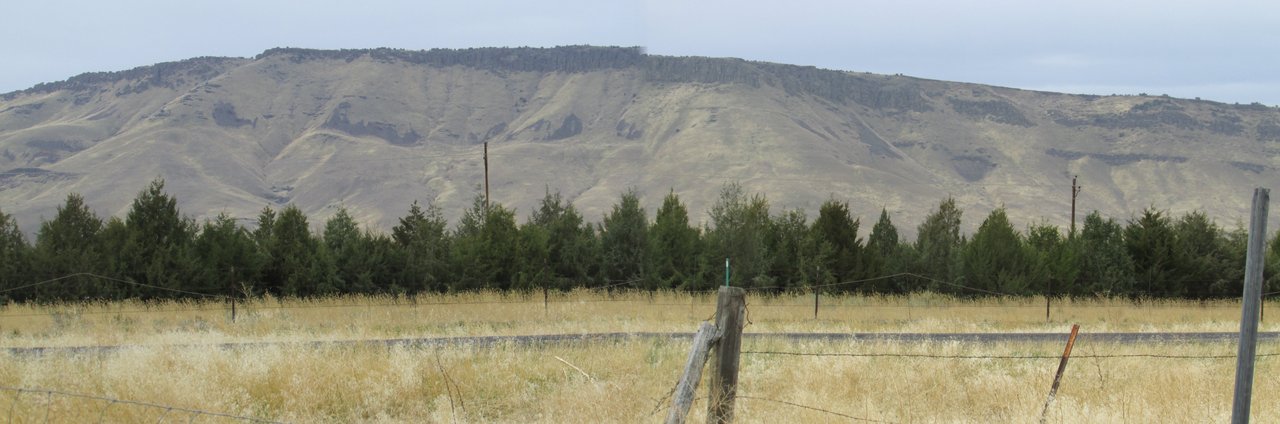
In mid-afternoon on 7 May 1968, Mrs. L. P. Cragin of Brigham City, Utah, reported to the National Investigations Committee on Aerial Phenomena (NICAP) that she and her daughter watched an unidentified object sitting on the ground for eight minutes. According to the NICAP record, Mrs. Cragin first noticed a shiny object to the west of the city, in the direction of the area known as the Promontory. The Promontory Mountains form a long peninsula reaching down into the Great Salt Lake, visible to the west and southwest of Brigham City across the Bear River Bay arm of the lake, so a shiny object resting out on that ground would have been seen at a considerable distance.
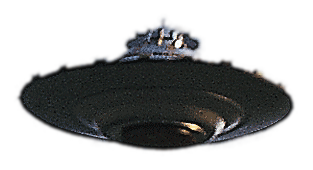
She did not leave the identification to the naked eye. She studied the object through binoculars, and through them she could make out its form. NICAP records her description plainly: the thing was "hemispherical in shape (dome-like) with four protrusions like legs on the underside." In other words, a shiny dome standing on four legs, the classic landed-craft silhouette that turns up again and again in the close-encounter literature of the 1960s. There is no figure given for its size or its color beyond "shiny," and no sound, glow, beam, or movement on the ground is described. For eight minutes it simply sat there while she looked at it.
Then she tried to close the distance. Mrs. Cragin got into her car and drove west toward the object to get a better look. By her account she did not get the chance. "When she reached the edge of town the object was gone." The eight-minute observation ended not with the object lifting off in front of her but with it being absent by the time she had driven far enough to matter. The single most striking detail in the report comes immediately after. "Immediately afterwards, she noticed many types of aircraft, presumably from nearby Hill Field, scouring the area." Hill Air Force Base sits to the south, near Ogden, and the witness took the sudden appearance of varied aircraft over the western flats as a response to whatever she had just been watching.
The named witnesses are Mrs. Cragin and her daughter. No times more precise than "mid-afternoon" are recorded, no other townspeople are named as corroborating the ground object, and the binocular view is the core of the physical description. The entire account that survives is the report she made to NICAP, which is what the catalog preserves.
What is the official explanation?
There is no official narrative for this case, and that absence is itself the most concrete fact about it. The sighting does not appear in the United States Air Force Project Blue Book record for Utah. When the Standard-Examiner reviewed the declassified Blue Book files covering Utah, the cases it surfaced were the 25 May 1949 Hill Field disc sighting by Assistant Air Inspector Oakley Gordon and Lieutenant Wilfred Gable, the 20 February 1964 Ogden Defense Depot sighting by a guard named Harrop ("There are no known experimental aircraft or missile firings in the area at the time of the sighting"), and the 20 July 1964 Thiokol sighting by three maintenance employees near Brigham City, which the Air Force closed as "descriptive of an observation of two low-flying birds observed at night." A May 1968 Brigham City landing is not among them. The case was reported to a private civilian body, NICAP, and there is no sign it was ever filed with, or investigated by, the Air Force.
What does exist is the NICAP record. The case sits in the "New Look" presentation of NICAP's files under Section VI, "Landings, Physical Traces," a catalog that NICAP introduced with the line that "in recent years, reports of UFO landings have steadily increased, in the U.S. and abroad," and which drew on The UFO Evidence and the organization's UFO Investigator newsletter. The Brigham City entry reads in full: "Mrs. L. P. Cragin of Brigham City, Utah, reported to NICAP that she and her daughter observed an unidentified object on the ground for eight minutes May 7, 1968. In mid-afternoon, Mrs. Cragin saw a shiny object to the west of the city near an area known as the Promontory. Studying it through binoculars, she saw that it was hemispherical in shape (dome-like) with four protrusions like legs on the underside. Mrs. Cragin got in her car and drove toward the object to get a closer look, but when she reached the edge of town the object was gone. Immediately afterwards, she noticed many types of aircraft, presumably from nearby Hill Field, scouring the area."
That entry carries no named field investigator, no follow-up interview, no ground search for traces, and no source footnote beyond NICAP's own files. The catalog around it is more developed for other cases, some carry sketches, Geiger-counter readings, or ground-impression photos, but the Brigham City line is a bare witness report logged and filed. So the official position, to the extent one exists, is simply that no government agency ever recorded or adjudicated this event, and the only body that documented it did so as an unconfirmed witness report rather than a worked investigation.
What did the witnesses think it was?
The witnesses were Mrs. L. P. Cragin and her daughter, residents of Brigham City. What Mrs. Cragin believed comes through clearly in the few details she chose to emphasize when she reported to NICAP. She did not log a fleeting light. She used binoculars, held the object in view for a full eight minutes, and came away convinced it was a structured craft standing on the ground, a dome on four legs, which is why the case was filed under landings rather than lights in the sky. Her decision to get in her car and drive toward it shows she took it for something physically present and reachable, not an optical effect, and her note that it was gone by the time she reached the edge of town reads as genuine frustration at having lost the chance to confirm it up close.
The detail she clearly attached significance to is the aftermath. By specifically reporting that "many types of aircraft, presumably from nearby Hill Field" began "scouring the area" immediately afterward, she framed the event as something the military also noticed and reacted to. That is her interpretation, the word "presumably" is hers through NICAP, and it tells us she connected the object to a real response by real aircraft from a real base. She was not claiming aliens in the report as preserved; she was reporting a solid object on the ground near a sensitive area and an apparent scramble of aircraft right after it vanished.
The corroboration is thin and that has to be stated honestly. Her daughter is named as a second observer of the ground object, which is one independent set of eyes on the same scene. Beyond the two of them, no other townsperson is recorded as having seen the dome, no Hill Air Force Base personnel are quoted confirming a scramble, and no NICAP investigator is named as having gone to Brigham City to walk the western flats for landing marks. The case stands almost entirely on the testimony of one named woman and her daughter, made to a credible civilian research body that thought it worth cataloging among its landing reports.
Is the Brigham City Promontory Landing real? The two-pass assessment
Pass one, the entirely ordinary readings. The strongest mundane candidate is mistaken identification of a distant man-made object on the Promontory flats. The Promontory area west of Brigham City was not empty country in 1968. It hosted the Thiokol solid-rocket plant, designated Air Force Plant 78, a sprawling complex of hundreds of buildings and test stands, and Hill Air Force Base lay nearby. A shiny piece of equipment, a tank, a test rig, a parked trailer, or a structure catching afternoon sun across miles of haze and lake-bed shimmer could read through binoculars as a dome on legs, and the "four protrusions like legs" is exactly the kind of detail a tripod-mounted or skirted object would produce at distance. The object being "gone" by the time she reached the edge of town fits an object that never moved at all but was simply lost behind terrain, lake haze, or the changing angle as she drove, rather than one that flew off. The aircraft "scouring the area" need not be a scramble at all, routine traffic from Hill Air Force Base over the western Salt Lake flats was constant, and a witness primed by a strange sighting would naturally read ordinary aircraft as a response. A balloon, a mirage of a ground installation, or sun-glint off a vehicle are all live possibilities. Nothing here is impossible to explain ordinarily.
Pass two, if it is real as described. If Mrs. Cragin and her daughter genuinely watched a shiny hemispherical craft standing on four legs on the ground for eight minutes through binoculars, then this is a daylight landed-object report of the kind that defined the 1964 to 1968 wave, sitting in the same NICAP catalog as Lonnie Zamora's Socorro encounter and the Glassboro and Cherry Creek cases. The dome-on-legs form is the recurring landed-craft shape of that era. The proximity to a major solid-rocket manufacturing site and an Air Force base would make it, if real, an object of obvious intelligence interest, which would lend weight to the witness's claim that aircraft swept the area immediately afterward.
Weighing the two. The case has real strengths: a named adult witness plus a second observer, an eight-minute duration, and binoculars rather than a naked-eye glimpse, all of which push against a trivial misperception. But it also has decisive weaknesses for any higher tier. No physical trace was ever recovered or even searched for, no NICAP investigator is recorded as having worked the case, no second party confirms the aircraft activity, no Air Force file exists, and no contemporary newspaper account has surfaced. Critically, no one ever published a counter-explanation either, so there is nothing to dispute, no named debunker, no identified ship or rig, no confession, no recantation. This is not a contested case; it is an uninvestigated one. It rests on the footage of memory and a single catalog line. That is the textbook profile of the Unknown tier: no official narrative exists, no method-shown debunk exists, and the event stands or falls on the witnesses alone. Tier: Unknown.
Sources
More cases from this region: UFO sightings in United States