South Wales Police Helicopter Encounter
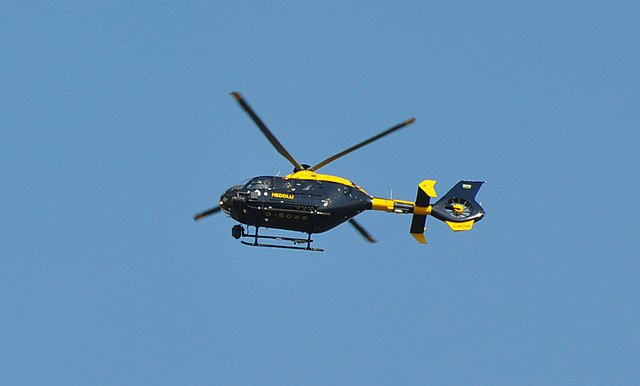
Shortly after midnight, at about 12:40am on 8 June 2008, the South Wales Police air support helicopter was working over the Vale of Glamorgan and came in toward the Ministry of Defence airfield at St Athan, near Cardiff, to land and refuel. This case file covers what witnesses reported, the official narrative, and a two-pass assessment with its evidence tier.
What did witnesses see at Over MOD St Athan?
Shortly after midnight, at about 12:40am on 8 June 2008, the South Wales Police air support helicopter was working over the Vale of Glamorgan and came in toward the Ministry of Defence airfield at St Athan, near Cardiff, to land and refuel. Aboard were three crew: the pilot and two police observers. As the aircraft descended toward roughly 500 feet, the crew reported an object that came up to meet them.
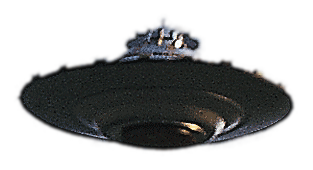
The first account to reach the public, broken by The Sun on 20 June 2008, described a brightly lit, "saucer-shaped" object circled by flashing lights that closed on the helicopter "at great speed, aiming straight for" it, forcing the pilot to bank sharply to avoid a collision. The same reporting said the crew then turned and followed the object out across the Bristol Channel toward the North Devon coast, breaking off the chase only when fuel ran low and they had to return.
The pilot's own first-person version, given years later to investigator Emlyn Williams of the Swansea UFO Network on 10 August 2018, is more specific and in some ways stranger than the tabloid version. The pilot, identified only as "Martin," said that as the helicopter came down, a single small object rose to meet it and stopped dead about three feet outside his cockpit window, level with his face. He described it as spherical and translucent, roughly the size of a basketball, holding two small lights side by side at its centre, one red and one green. It sat there motionless, apparently unbothered by the powerful downwash from the rotor that should have shoved any light object away. It then dropped down into a farmyard, vanished, reappeared over a nearby road, and moved off toward the Bristol Channel coast.
Two details from the crew matter for everything that follows. The object gave off no detectable heat: it did not show on the helicopter's thermal and night-vision equipment at all, even though the men say it was plainly visible to the naked eye. And the aircraft's onboard cameras, the same downward-looking surveillance and infrared kit the unit used nightly to film suspects, did not capture it. The crew radioed the encounter to Cardiff Airport air traffic control, and it appears someone there passed word to the press, which is how the story leaked.
What is the official explanation?
South Wales Police confirmed the sighting but pointedly drained the drama out of it. The force's statement, carried verbatim across the contemporary coverage, read: "South Wales Police can confirm its air support unit sighted an unusual aircraft. This was reported to the relevant authorities for their investigation." That single sentence is the whole of the official acknowledgement. Note the careful wording: "unusual aircraft," not "UFO," and "reported to the relevant authorities," which keeps the matter inside official channels without committing the force to any interpretation.
The force then actively walked back the tabloid framing. South Wales Police denied that there had been any "attack," denied that there had been a pursuit, and stated the helicopter crew had never been in danger. So the public record contains a genuine internal tension: the crew, through the leaked account and later the pilot directly, describe a near-collision and a chase across the Bristol Channel, while their own employer's press office says there was no pursuit and no danger. Both positions come from inside South Wales Police.
The Ministry of Defence was dismissive and clearly caught flat-footed. An MoD spokesman said the department had heard nothing about the incident, then added a line that became the most quoted official remark of the whole affair: "it is certainly not advisable for police helicopters to go chasing what they think are UFOs." By 2008 the MoD had wound down the desk that once logged UFO reports, and it offered no investigation of its own.
The phrase "reported to the relevant authorities for their investigation" is the only documented investigative thread, and no resulting report has ever surfaced. The Swansea UFO Network later filed Freedom of Information requests connected to the case. Those requests confirmed the crucial negative: no video or thermal footage of the object exists, consistent with the crew's account that the cameras simply did not see it. So despite the case circulating online for years under "footage" headlines, the documented official position is that there is no footage, and no public investigation findings.
What did the witnesses think it was?
The witnesses were serving police aircrew, not casual members of the public, and that is the spine of the case. A police air support unit pilot is a professional aviator trained to identify aircraft, lights, drones, balloons, and atmospheric effects at night, and the two observers were trained in exactly the kind of airborne surveillance the unit ran. The press reporting said simply that the crew "are convinced it was a UFO. It sounds far-fetched, but they know what they saw."
The pilot stood by his account a decade later, on the record, to the Swansea UFO Network in August 2018. He did not inflate it into the tabloid "attack" story. If anything his own version is quieter and odder: not a fast saucer roaring in to ram the helicopter, but a basketball-sized translucent sphere with two little lights that floated up, parked three feet from his face, ignored the rotor wash, and then calmly left. He emphasised the things a pilot would notice and could not explain: that the object held position against downwash that should have flung it away, that it threw no heat, and that the thermal and low-light cameras that filmed everything else that night could not register it.
The aircraft itself is on the public record. The South and East Wales Air Support Unit, a consortium serving South Wales Police and Gwent Police, flew a Eurocopter EC135 from MOD St Athan; the unit's machine of that era, registration G-WONN, is documented in independent photographs of the helicopter at St Athan and around the Vale of Glamorgan. So the platform, the base, the unit, and the crew's professional standing are all verifiable, even though the object is not.
There is no independent ground witness on record who saw the same object that night, which is the case's main evidential weakness. The corroboration is internal to the crew and to the radio call logged with Cardiff air traffic control. Against that, the crew had no obvious motive to invent the report; the story leaked rather than being announced, and the force's instinct was to play it down, not promote it.
The dispute
The dispute over the South Wales Police helicopter encounter of 8 June 2008 rests on two things: a generic skeptical reading and a pair of dismissive official statements, neither of which identifies the object or demonstrates how it could have been produced. The skeptical reading, advanced by no named investigator on the page, holds that the basketball-sized translucent sphere with its red and green lights was most likely a misjudged distant light, a sky lantern, a balloon, or a small light source whose size and range were misread during night coastal flying, where optical illusions are common. This is offered as a plausible alternative interpretation of the crew's account, not as a solved identification. No specific lantern or balloon model is named, no measurement is produced, no demonstration is shown, and no hoax is alleged or confessed.
The official side of the dispute comes from South Wales Police and the Ministry of Defence. The police issued only a minimal statement calling it an "unusual aircraft" reported to the relevant authorities, and they actively knocked down the tabloid framing, denying any "attack," "pursuit," or danger to the crew. The MoD dismissed the matter and remarked that "it is certainly not advisable for police helicopters to go chasing what they think are UFOs." A separate but important finding, confirmed through Freedom of Information requests, is that the cameras recorded nothing, which deflates years of online claims that video or thermal "footage" exists. That FOI result corrects the record but it does not explain what the crew saw; it only removes a piece of evidence that never existed.
None of this closes the case, and by this archive's method it cannot. The counter-explanation is an apparatus posture plus an unsupported mundane guess, not a verdict: no independent, method-shown analysis has ever identified the object or demonstrated a hoax, so the official dismissal stands as a claim rather than a finding. The skeptical reading also collides with the central reported detail it cannot absorb, namely that the object gave off no heat and did not register on thermal or low-light cameras while remaining plainly visible to the naked eye, and that it reportedly held position against rotor downwash that should have flung a lantern or balloon away. Set against three trained police aircrew with no obvious motive to invent the report, a real and verifiable aircraft and unit, a genuine official acknowledgement, and an account logged with air traffic control, the dispute leaves the case where the page places it: disputed, neither verified nor debunked, and largely standing.
Is the South Wales Police Helicopter Encounter real? The two-pass assessment
Pass one, the ordinary readings. The strongest mundane candidate is a lantern, balloon, or small light source seen at an ambiguous distance and badly judged for size and motion. Night flying over a coast plays tricks: a fixed light can seem to "pace" a moving aircraft, and a near object can be mistaken for a far one. The basketball-sized translucent sphere with a red and a green light is, on its face, reminiscent of a navigation-lit small drone or a toy, and the later reporting cycle indeed re-tagged the case as "UFO-like drones." But 2008 predates the consumer multirotor drone boom, and a battery drone holding rock-steady three feet off a hovering EC135's cockpit, directly in the rotor downwash, without being blown off station, is not a comfortable fit. A Chinese lantern or balloon would have been pushed hard by that same downwash and by any wind, not held station against it. The tabloid "attack and high-speed chase" framing is the easiest part to discount: the crew's own employer denied there was a pursuit or any danger, and that denial comes from inside the force, so the dramatic version is contested at source and should not be treated as established. A simpler skeptical account is a misjudged distant light that the crew, primed and excited, narrated into a close encounter. The honest problem with every ordinary reading is the same: the object reportedly gave off no heat and did not register on thermal or low-light cameras that worked fine on everything else, which is hard to square with any lit physical object close enough to be seen in cockpit detail.
Pass two, if the report is accurate as given. Then you have a small, self-luminous, heat-free object that ignored a helicopter's rotor downwash, held position at conversational distance from a trained pilot, defeated thermal and image-intensified cameras while remaining visible to the eye, and then departed under control. That is an unidentified object with no conventional aircraft, drone, or balloon signature, witnessed by professional police aircrew and logged with air traffic control.
The tier is Disputed. It is not Verified Unexplained, because the single most cited feature of the case, footage, does not exist: the cameras recorded nothing, Freedom of Information requests confirmed nothing exists, and the case has circulated under a "footage" label that the primary investigation flatly contradicts. With no imagery, no thermal trace, no independent ground witness, and the crew's own force denying the dramatic chase, the evidential base is testimony plus a radio log, not authenticated material. It is not Unknown either, because an official narrative does exist: South Wales Police acknowledged an "unusual aircraft" reported to the authorities, then minimised it, and the MoD waved it off. The official apparatus engaging at all, even to play it down, is logged here as pass-two context, not as a strike against the case. What keeps this from leaning toward discredited is that no independent, method-shown analysis has ever identified the object or demonstrated a hoax; the skeptical case is a plausible alternative reading of credible witnesses, not a solved one. Credible professional witnesses, a real verifiable aircraft and unit, a genuine official acknowledgement, and a counter-explanation that is reasonable but unproven: that is the definition of Disputed.
Sources
- www.theregister.com/2008/06/21/cardiff_copter_coppers_chase_ufo/
- www.rte.ie/news/2008/0620/104806-ufo/
- www.foxnews.com/story/british-police-reportedly-chase-ufo
- www.sufon.co.uk/st-athan-2008
- www.geograph.org.uk/photo/1433310
More cases from this region: UFO sightings in United Kingdom