The British UFO Wave of 2008
The British UFO wave of 2008 was not one object but a year-long surge of public reports to the Ministry of Defence, concentrated in a remarkable cluster across June 2008. This case file covers what witnesses reported, the official narrative, and a two-pass assessment with its evidence tier.
What did witnesses see at United Kingdom (epicentre: RAF St Athan?
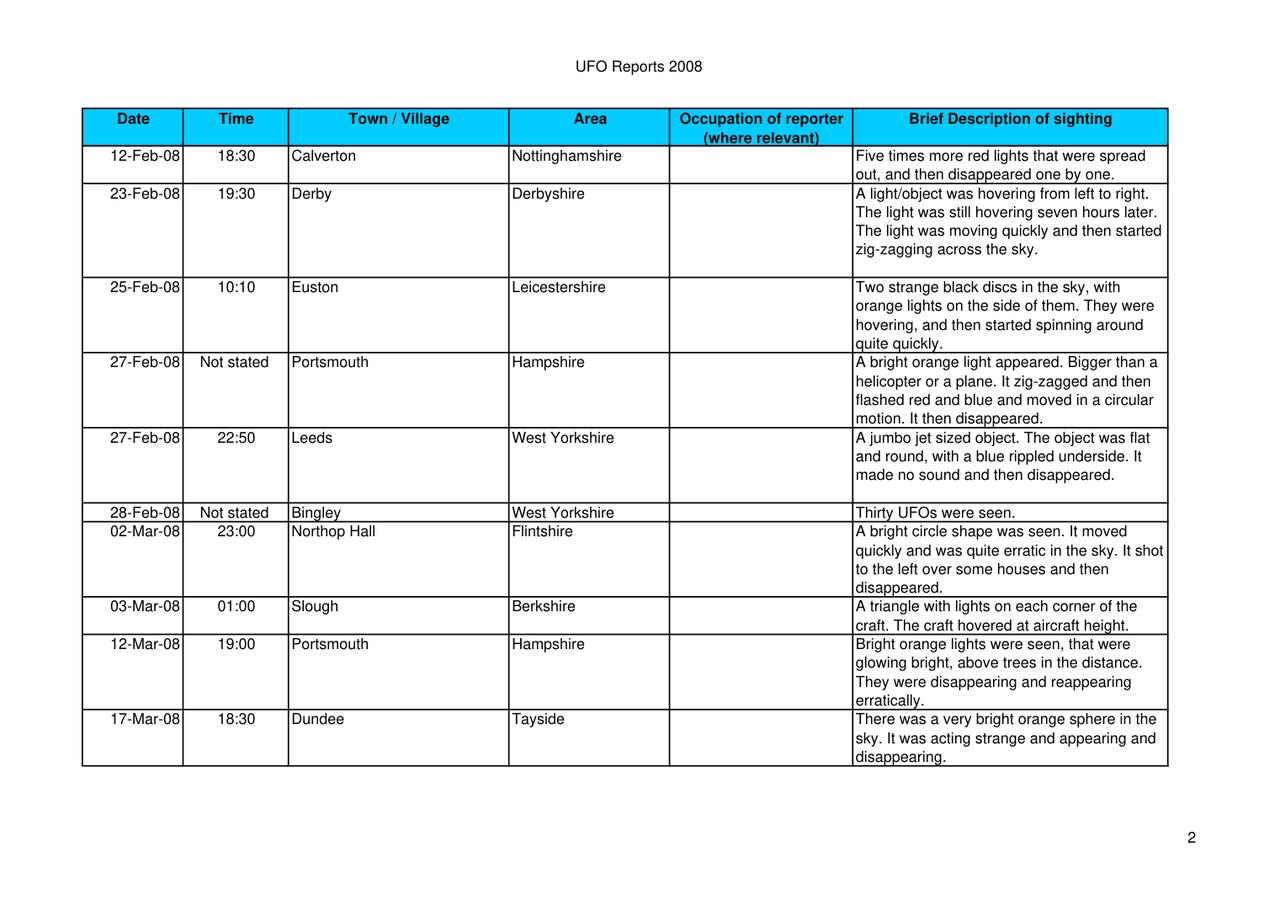
The British UFO wave of 2008 was not one object but a year-long surge of public reports to the Ministry of Defence, concentrated in a remarkable cluster across June 2008. The MoD's own log for the year, "UFO Reports 2008", records the reports town by town with date, time, occupation of the witness where relevant, and a brief description. Read in sequence it reads like a national chorus of the same thing: orange lights.
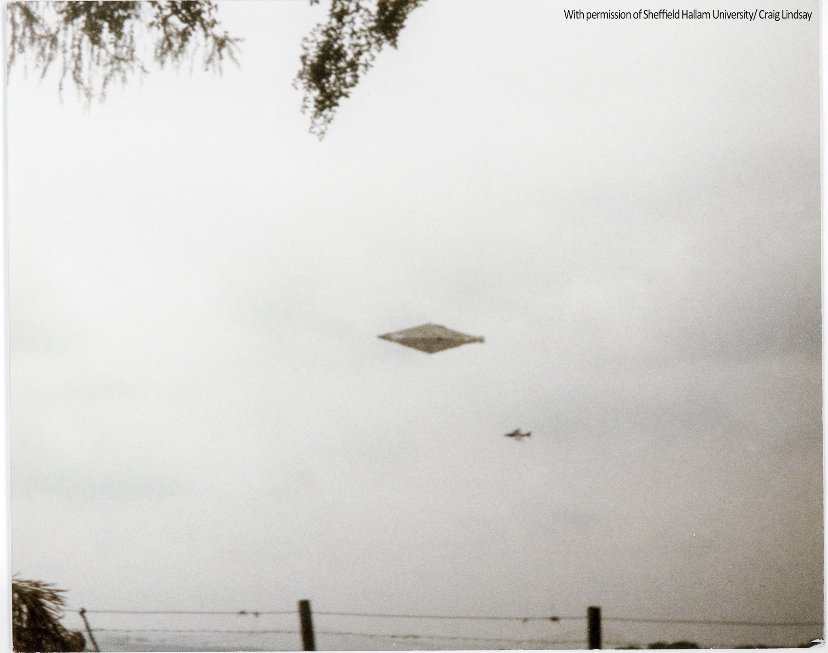
Two events anchored the wave and drove it onto the front pages. The first was the South Wales Police helicopter encounter. At around 00:30 on 7 June 2008 a police Eurocopter with three crew aboard was hovering at about 500 feet awaiting clearance to land at the Ministry of Defence base at RAF St Athan, near Cardiff. The crew reported that an object came at them at high speed from below, forcing the pilot to bank sharply. They described it as "saucer-shaped". The crew then crossed the Bristol Channel after it, getting as far as the North Devon coast before losing sight of the object and turning back due to low fuel. The Register, reporting on 21 June 2008, quoted a description of the crew as "convinced it was a UFO" and recorded a South Wales Police confirmation that "its air support unit sighted an unusual aircraft" which "was reported to the relevant authorities for further investigation". The police pointedly avoided the word UFO and later played down the idea of a dramatic chase, saying the crew were never in danger.
The second anchor was the Tern Hill incident. The MoD's 2008 log carries the entry verbatim: "07-Jun-08, 23:00, Tern Hill Barracks, Shropshire: Thirteen craft were zig-zagging in the sky." The witness was Corporal Mark Proctor, 38, of the 1st Battalion Irish Regiment, on guard duty at the barracks near Market Drayton. He filmed the objects on a mobile phone and reported a "fleet" of thirteen craft zig-zagging across the sky at about 11pm, which he described as like rotating cubes showing multiple colours. The footage and his account ran in the Shropshire Star and went national within days.
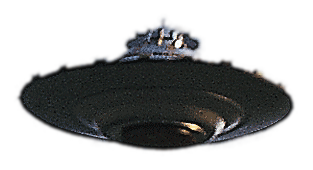
Around those two events the log fills with the same signature. On the night of 7 June alone it records sightings at Croydon, Westbury near Shrewsbury, and Tern Hill. The wider June run reads: Ashton Keynes in Wiltshire, "ten to twenty bright orange lights manoeuvring across the sky, moving quite slowly"; Walthamstow in London, "eight faint orange lights"; Waverton near Chester, "a formation of eighteen lights" that "appeared like a flock of helicopters with lights on" and gave off "no sound but a slight rattle"; Barry in the Vale of Glamorgan, "eleven objects in the sky"; Inverness, "five orange lights moved slowly overhead"; and Shortstown near Bedford, "a big orange, saucer shaped floating thing with four flashing lights, like a light show", watched for over two hours. The recurring words across the year are orange, silent, slow, and formation.
What is the official explanation?
The official handling of the wave is itself the spine of this case, because the British government kept a UFO desk through the entire episode and then used the very surge it produced as the reason to shut it down. The desk sat within the Air Staff Secretariat, later the Directorate of Air Staff, supported by scientific assessment from DI55 of the Defence Intelligence Staff. Its records were transferred in stages to The National Archives between 2008 and 2013, a programme that ran in parallel with the wave and, by the MoD's own later admission, helped feed it.
The hard numbers come from the National Archives and from Dr David Clarke, the journalism academic who acted as the Archives' external curator for the releases. Before 2008 the desk received roughly 150 reports a year. In 2008 that figure rose to 208. In 2009 it trebled again to 643, the largest annual total since 1978, the year "Close Encounters of the Third Kind" reached British cinemas. Clarke's own account states the reports "trebled, from 208 in 2008 to 643 in 2009", overwhelming the single civil servant then responsible for the desk.
The closure documents are explicit. The National Archives press release accompanying the final file tranche records that ministers were advised the UFO operation "serves no defence purpose and merely encourages the generation of correspondence". Defence Minister Bob Ainsworth was told that in more than fifty years "no UFO sighting reported to [MoD] has ever revealed anything to suggest an extra-terrestrial presence or military threat to the UK", a statement carried in file DEFE 24/2458/1. The UFO desk, hotline and dedicated email address were closed in November 2009.
The MoD's internal explanation for the surge, captured in the briefings within the files, was twofold. First, misidentification, specifically "the craze for releasing Chinese lanterns at weddings and public holidays". The press release cites the Shropshire soldiers' case of June 2008 (DEFE 24/2625/1) as the model example. Second, the effect of publicity. Clarke states plainly that "some people were encouraged to report their observations to the MoD and to the Press" as "a direct result of increased public awareness during the period that the first UFO files were being released by The National Archives", concluding "UFOs are very much a social phenomenon". On the Tern Hill footage specifically, an unnamed MoD official noted that the lights' apparent change of colour and square shape "seemed to be due to the photographer zooming in".
What did the witnesses think it was?
The witnesses of the 2008 wave were notable precisely because so many were the kind the MoD itself had historically called credible. The South Wales Police air support crew were three trained aircrew operating a helicopter with infrared imaging, and they held to their account: the contemporaneous reporting recorded them as "convinced it was a UFO" who knew what they saw. Corporal Mark Proctor was a serving soldier on guard duty who put his name and his phone footage to the record rather than reporting anonymously. The broader log is full of ordinary, sober reporters: people walking dogs, smoking outside, at barbecues, watching for two hours and bothering to phone a government hotline.
The wave also produced public advocates. Nick Pope, who had run the MoD's UFO desk in the early 1990s, called in late June 2008 for a formal investigation, telling reporters "There has got to be an official inquiry into all this and we need a senior air force officer to take personal charge", and singling out the police helicopter crew and military personnel as making the sightings "particularly significant". A grassroots disclosure campaign ran in parallel, with correspondence sent as high as Prime Minister Gordon Brown (DEFE 24/2629/1).
It is fair to the witnesses to separate what they saw from what it was. None of the headline witnesses claimed to know the objects were extraterrestrial. They reported, accurately, lights and shapes they could not identify, doing things they did not expect. The corporal who filmed thirteen zig-zagging lights genuinely filmed lights. The dispute is not about their honesty.
The dispute
The core counter-explanation is that the 2008 British wave was not a sky phenomenon at all but a combination of misidentified Chinese sky lanterns and a reporting surge driven by publicity. The UK government attributed the cluster to "the craze for releasing Chinese lanterns at weddings and public holidays," and the case file concedes the fit is exact: lanterns produce the same signature the witnesses described, slow-moving, silent, orange lights drifting in groups or formations. This is more than an assertion. For the marquee Tern Hill footage, the Tern Hall Hotel near Tern Hill Barracks released wedding lanterns that same evening of 7 June 2008, supplying a specific, located source for the lights on camera, and an MoD analyst attributed the footage's color shifts and square shape to the photographer zooming in rather than to anything in the sky.
The reporting-contagion half of the debunk is the part that is genuinely method-shown. David Clarke, the academic who served as the National Archives' external curator for the UFO file releases, documented that reports tracked the publicity rather than the phenomenon, climbing from 150 to 208 to 643 annual reports as the Archives released files and the press amplified them. His conclusion, that "UFOs are very much a social phenomenon," rests on the demonstrated correlation between release dates, press coverage, and report volume, not on an unsupported official claim. Between the same-night lantern release at the headline location and Clarke's documented contagion curve, the bulk of the 2008 wave has a named, evidenced ordinary explanation that comes close to settling it.
What keeps this from being a clean closure is that the explanation does not reach every case in the log. By the file's own wording, "even granting that the bulk of 2008 was lanterns and contagion, the wave is not cleanly closed, and two threads resist it." The hardest is the South Wales Police helicopter encounter near RAF St Athan around 00:30 on 7 June 2008, in which a police Eurocopter with three crew, including trained aircrew using infrared imaging, reported a saucer-shaped object that came at them at high speed from below and forced the pilot to bank sharply. South Wales Police confirmed its air support unit had sighted an unusual aircraft and referred it for further investigation. As the page states, lanterns cannot climb at hovering aircraft at speed from below and force evasive action, and "the St Athan helicopter encounter remains officially unexplained and behaves unlike the lanterns that explain its neighbours in the log."
The dispute therefore is strong but partial. The lantern-plus-contagion account is a demonstrated, source-located explanation that plausibly absorbs the mass of the wave, which is why the archive files the case as Disputed on the basis that "a counter-explanation exists and is strong for the whole, yet it does not finish the parts." The official line on the residual St Athan encounter is only a confirmation that something unusual was seen and "reported to the relevant authorities," which is an apparatus acknowledgment rather than an identification, so by this archive's method it does not amount to a verdict on that case. The wave's bulk is close to settled as ordinary; one trained-observer, instrumented encounter is not, and the case stands open on that thread.
Is the British UFO Wave of 2008 real? The two-pass assessment
Pass one, the ordinary reading. The conventional explanation for the 2008 wave is unusually well evidenced, and for once it comes with a method shown rather than an assertion. The signature in the MoD's own log is overwhelmingly consistent: slow-moving, silent, orange lights, often in groups or formations, seen overwhelmingly in summer. That is a near-perfect description of sky lanterns, the cheap paper hot-air balloons that became a mass-market wedding and party fixture in Britain in exactly this period. For the flagship Tern Hill case the match is not theoretical: on the same evening, 7 June 2008, guests at the Tern Hill Hall Hotel close to the barracks released a batch of Chinese wedding lanterns, and the hotel manager found the resulting UFO story "highly hilarious". The MoD analyst's note that the footage's colour shifts and square shape tracked the phone's zoom is a concrete, checkable observation about the video. The second engine of the wave is documented from inside government too: the National Archives was releasing UFO files all through 2008 and 2009, the tabloids ran with it, and reporting begat reporting. Clarke, who read the whole archive, calls it a social phenomenon, and the year-on-year curve, 150 then 208 then 643, follows publicity rather than anything in the sky.
Pass two, if something real sits inside the wave. Even granting that the bulk of 2008 was lanterns and contagion, the wave is not cleanly closed, and two threads resist it. The South Wales Police encounter does not fit the lantern profile: lanterns do not approach a hovering helicopter at speed from below, force evasive action, and then track across the Bristol Channel faster than the aircraft could follow. The crew were operating infrared equipment and were trained observers of aircraft. The official response is the familiar shape of a case being managed rather than explained: a confirmed sighting of an "unusual aircraft", reported "to the relevant authorities", with the word UFO carefully avoided and no public identification ever offered. Under this archive's rule six, that institutional reticence is logged as a sign the event was real enough to need handling, not as a debunk. The wave also coincides with the MoD deciding, in writing, that it no longer wished to look at any of this, which removed the one body positioned to resolve the hard residue.
So the verdict splits, which is why this is filed Disputed rather than pushed toward discredited. There is genuine, independent, civilian, method-shown evidence for a mundane cause of most of the 2008 wave: David Clarke's archival analysis and the Tern Hill lantern release are not official cover but outside work showing the mechanism. That is real discredit-grade evidence for the wave as a mass event, and it is set out honestly here. But it does not close every component. The St Athan helicopter encounter remains officially unexplained and behaves unlike the lanterns that explain its neighbours in the log. A counter-explanation exists and is strong for the whole, yet it does not finish the parts. That is the definition of Disputed, contested.
Sources
- cdn.nationalarchives.gov.uk/documents/final-tranche-of-UFO-files-released.pdf
- assets.publishing.service.gov.uk/media/5a789e38ed915d042206403a/ufo_report_2008.pdf
- drdavidclarke.co.uk/2013/06/20/the-end-of-the-ufo-files/
- www.theregister.com/2008/06/21/cardiff_copter_coppers_chase_ufo/
- www.rte.ie/news/2008/0620/104806-ufo/
- www.rte.ie/news/2008/0625/104973-ufo/
- www.csmonitor.com/Science/2013/0621/UFO-Britain-releases-documents-explaining-closure-of-military-UFO-desk
- drdavidclarke.co.uk/national-archives-ufo-files-7/
More cases from this region: UFO sightings in United Kingdom