The Greece Air Force and Airliner Sighting
At about 03:20 in the early morning of 11 November 2007 the captain of Olympic Airways flight 266, an Athens to London service, called the tower at Eleftherios Venizelos airport to report something he could not account for off his right side. This case file covers what witnesses reported, the official narrative, and a two-pass assessment with its evidence tier.
What did witnesses see at Airspace west of Athens?
At about 03:20 in the early morning of 11 November 2007 the captain of Olympic Airways flight 266, an Athens to London service, called the tower at Eleftherios Venizelos airport to report something he could not account for off his right side. The released control-tower transcript, made public in Greece and translated for the record, reads almost like a script. The pilot asks, "is there another aircraft flying near us?" The tower answers, "negative, why?" He replies, "I see unknown target on my right, approximately at our altitude, moving from West to the East." The controller says, "no, there's nothing there. Is it harassing you?" The pilot: "not currently, its altitude and direction though are not stable." The controller, now plainly puzzled, asks what he means, "because I see no target on the radar." The captain's answer is the heart of the case: "it speeds up and slows down, and its directions are unverifiable." The tower tells him to hold course and altitude and stay in contact.
The captain described the object as somewhat star-like but much brighter and larger, with a shape that kept shifting. He was not alone. The captains of two other Olympic Airways flights leaving Athens that same window, flight 730 bound for Kos and flight 700 bound for Rhodes, independently reported the same strange light moving erratically to the west of the city. Staff in the Athens airport control tower then say they too watched the object with their own eyes, tracking it as it moved off toward Karystos, a small town on the island of Euboea across the strait from the mainland.
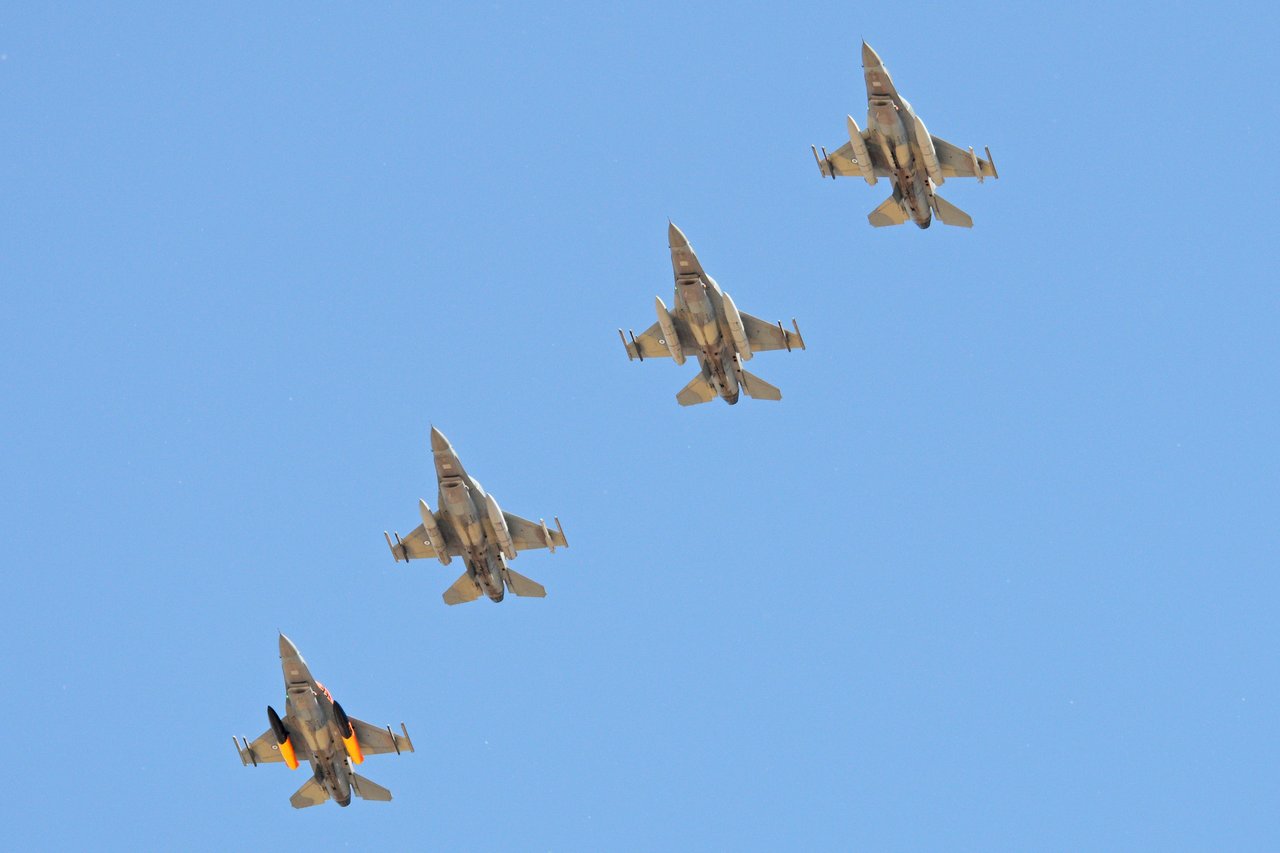
With three airline crews and the tower all reporting the same thing, the matter was passed to the Hellenic Air Force. Personnel at the air-defence radar post on top of Mount Parnitha north of Athens reported that they could see the object visually as well, and described it as large, of an unusual shape, and very bright. Two F-16 fighters, operating under the intercept order and callsign rendered in the leaked paperwork as "Lightning 2" (Keraunos 2 in Greek), were launched from the air base at Nea Anchialos to chase it down over the Attica, Marathon and Karystos sector. The Greek account has the patrol airborne and sweeping the area and then returning with nothing found. By the airline accounts the light finally shot upward at high speed and was gone. What every version agrees on, civilian and military, is the detail that turns the night strange: although pilots, tower staff and an air-force radar crew all say they clearly saw it, no radar set ever painted a return.
What is the official explanation?
The case is unusual in that the official paper trail is the source. The story broke not from a witness going public but from the release in February 2009 of a Hellenic aviation-authority and air-force file documenting the incident, along with an audio recording of the flight 266 to control-tower exchange and the written intercept order for the two F-16s. UPI summarised the disclosed report on 9 February 2009: "The report said the Greek air force dispatched two F-16 fighter planes at about 3:20 a.m. on Nov. 11, 2007, after the pilots of Olympic Airways flights 266, 730 and 700 reported seeing a mysterious object moving erratically west of Athens." The object was described in the report as resembling a star but larger, brighter and constantly changing shape, and Athens tower staff were recorded as having watched it move toward Karystos.
The Greek institutional conclusion, carried in the press from the released file and attributed to the newspaper Ta Nea, was deflationary. Greek officials said the object had not been detected on any radar and was probably a mistaken sighting of the planet Venus low in the autumn sky, with meteorological experts adding that a temperature inversion in the night air can bend and magnify a bright planet so that it appears to swell, change colour and dart about. The Daily Telegraph reported the same official line: the object "which was not detected on any radar, was probably a mistaken sighting of the planet Venus in the Autumn night sky."
The operational record from the Hellenic Air Force operations centre, as retold in the Greek coverage, is precise and, importantly, undramatic. The two F-16s under the Keraunos 2 callsign launched from Nea Anchialos, patrolled the Attica, Marathon and Karystos area, and the patrol ended "without the pilots detecting anything." Neither the ground radars nor the fighters' own radars located the object. This is the official narrative's strongest card and the place where it directly contradicts the sensational English-language retelling: the air-force account does not have radar tracking anything at "incredible speed," it has radar tracking nothing at all. The Greek captain of flight 266, for his part, did not accept the Venus explanation and remained convinced he had seen something real.
What did the witnesses think it was?
The witnesses here are three Olympic Airways captains with decades of combined flying experience, the duty staff in the Athens airport control tower, and the crew of an air-defence radar post run by the Hellenic Air Force. None of them are anonymous tipsters. The flight 266 captain reported the object in real time, on a recorded frequency, and his words survive in the transcript: a target at his altitude, moving across his track, speeding up and slowing down, with directions he called "unverifiable." That last word matters, because it is a trained airline pilot saying the thing was not behaving like traffic, like weather, or like anything he could box into a heading and speed.
The corroboration is what lifts this above a single startled crew. Two other Olympic captains in the air at the same time, flying to Kos and to Rhodes, reported the same erratic light to the west of Athens without prompting from the first. Tower employees then said they watched it themselves and tracked its drift toward Karystos. The Parnitha radar crew described it as large, oddly shaped and very bright, and were asked to photograph it; the file notes photographs were attempted, though none were ever made public. The flight 266 captain publicly rejected the official Venus finding and stuck to his account that the object was genuinely unidentified, which is the testimony the dispute ultimately turns on. The countervailing voices are institutional rather than personal: Greek aviation and meteorological officials offering the planet-and-inversion reading, which is weighed below as the dispute it is, not as a confession from any of the people who actually watched the sky that night.
The dispute
The dispute in this case is a conventional misidentification claim. Greek officials concluded that the bright, shape-shifting object the Olympic Airways crews reported on 11 November 2007 was not a craft at all but the planet Venus, low in the autumn sky. The finding was advanced by Greek aviation, air-force, and meteorological authorities and carried in the press from the released file, attributed to the newspaper Ta Nea. The official position rests on two pillars: the object was never detected on any radar, which is read as evidence there was no solid body to paint, and a temperature inversion in the cold night air can bend and magnify a bright planet so that it appears to swell, change colour, and dart about. That makes this an identified-object explanation paired with a named, demonstrable atmospheric mechanism, not a bare hand-wave; Venus low on the horizon under an inversion is a well-documented producer of exactly this kind of swelling, colour-shifting, jittering point of light.
What keeps the explanation from closing the case is that it is contested at the source by the people best placed to judge, and the archive itself stops short of endorsing it. The witnesses here are not anonymous tipsters: three Olympic Airways captains with decades of combined flying experience, the duty staff in the Athens control tower, and the crew of a Hellenic Air Force air-defence radar post at Mount Parnitha. The lead pilot of Flight 266 rejected the Venus reading outright and maintained the object was a genuine, real thing that crossed his path at roughly aircraft altitude, a claim that an inert planet fixed on the horizon does not account for. The radar silence cuts both ways here, since it is offered as proof of no object but is equally consistent with a small or unusual target the system did not register.
On this archive's method the Venus-plus-inversion finding is a strong hypothesis, not a proof, and it does not amount to a demonstrated reconstruction of what these specific pilots tracked. The officials did not reproduce the sighting, model the geometry against the reported motion, or show that Venus was where the crews were looking; they asserted the most ordinary candidate and let the radar silence carry the rest. Because experienced, named observers insisted the object moved relative to their aircraft rather than sitting still like a planet, and because the page records no closing measurement that settles the question, the case lands at Disputed rather than Verified Unexplained or Discredited. The ordinary reading has real teeth, but it leaves the central witness testimony unexplained, so the file stays open.
Is the Greece Air Force and Airliner Sighting real? The two-pass assessment
Pass one, the entirely ordinary reading, and it has real teeth here. The official Greek finding is that this was the planet Venus low in the November sky, not painted by any radar because there was no solid object to paint, with a temperature inversion doing the rest. That explanation fits a surprising amount of the evidence. Venus near maximum brightness is a famous and repeat offender in pilot UFO reports: it sits low, it looks like a brilliant star that is "too big," and through an inversion layer it scintillates, changes colour and appears to jump and dart, which is exactly the "speeds up and slows down, directions unverifiable" language in the transcript. A genuine point-source like a planet would also be seen the same way by three different aircraft spread across the Athens departure corridor and by people on the ground, because they are all looking at the same distant object. Crucially, it would produce no radar return at all, and the air-force record is explicit that neither the ground radars nor the F-16s found anything. The lurid English version in which Parnitha radar tracked a craft moving at "incredible speed" before it "shot off skyward" is not supported by the operational log; that same article then contradicts itself two sentences later by admitting the radars "picked up nothing." The motion and the disappearance, on the ordinary reading, are the visual behaviour of an unresolved bright planet, not the flight path of a machine.
Pass two, if it was not Venus, what was it. The case for that rests on the witnesses refusing the easy answer. The flight 266 captain knew where Venus was supposed to be and did not buy it, and the object as he described it crossed his track rather than sitting fixed on the horizon where a planet stays. A planet does not "move from West to the East" past an aircraft, and it does not migrate from west of Athens out to Karystos in the way the tower staff described. If those motion reports are accurate rather than an illusion of a twinkling star against a moving cockpit, then something was genuinely traversing the sky, seen by six or more trained observers, and lost by every radar that should have caught a physical craft. That radar silence cuts both ways: it is the official explanation's best evidence that nothing solid was there, and it is the believer's best evidence that whatever was there did not behave like ordinary metal in the air.
This is why the case lands at Disputed rather than Verified Unexplained or Discredited. The official explanation is a coherent, named, mechanism-shown counter-claim, Venus plus inversion, radar-negative, and it accounts for the multiple witnesses and the empty radar in one stroke, which is more than most debunks manage. But it does not close the case. It was issued by the same apparatus that scrambled two fighters over it, it leans on the witnesses having all misread a planet's position and motion, and the lead pilot who heard it rejected it to his face. No independent civilian analyst has reconstructed Venus's exact azimuth and elevation over Athens at 03:20 on 11 November 2007 and matched it to the reported bearings, which is the one test that would settle it. Until someone does that work, the planet reading is a strong hypothesis, not a proof, and the pilots' insistence that the thing crossed their path keeps the file open. Disputed.
Sources
- www.sott.net/article/175358-Greece-Amazing-UFO-incident-involving-Air-Force-and-airline
- groups.google.com/g/hellas-greece/c/eP3NqYu3E6Q
- www.upi.com/Odd_News/2009/02/09/Report-Pilots-spotted-UFO-over-Greece/79161234217535/
- web.archive.org/web/20250811214634/http://www.telegraph.co.uk/news/newstopics/howaboutthat/4577717/Fighter-jets-scrambled-after-UFO-follows-plane-over-Athens.html
More cases from this region: UFO sightings in Greece