The Cherry Creek Landing
On the evening of 19 August 1965, sixteen-year-old Harold Butcher was alone in the barn on his family's dairy farm on Aldrich Road near Cherry Creek, in Chautauqua County, New York, running the milking machine on a herd of seventeen cows. This case file covers what witnesses reported, the official narrative, and a two-pass assessment with its evidence tier.
What did witnesses see at Butcher dairy farm?
On the evening of 19 August 1965, sixteen-year-old Harold Butcher was alone in the barn on his family's dairy farm on Aldrich Road near Cherry Creek, in Chautauqua County, New York, running the milking machine on a herd of seventeen cows. At about 8:20 PM the portable radio mounted on the barn wall, tuned to a newscast, was suddenly swamped by static. A moment later the gasoline tractor engine that powered the milking machine cut out, as though it had lost all power at once. Outside, a three-year-old Holstein bull that was chained by a ring through its nose to a steel pipe began to bellow and lunge in a way Harold later said he had never heard from an animal before.
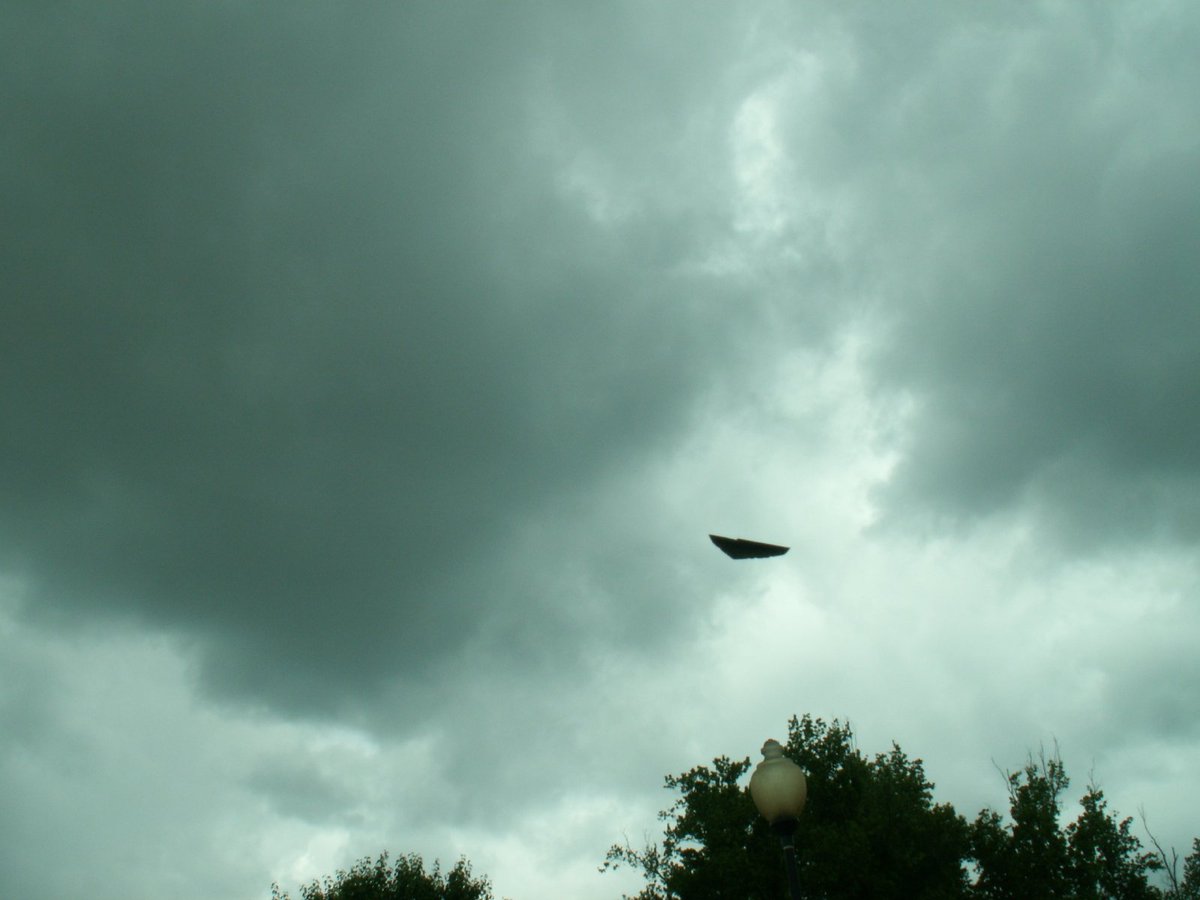
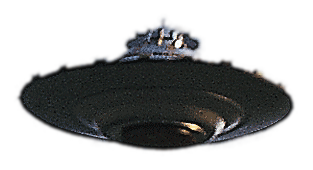
Harold looked out and saw, roughly a quarter mile away and just above the treeline, a large metallic object. He described it as football shaped or elliptical, like two turkey platters or two plates set back to back, about fifty feet long and twenty feet thick, with what witnesses recalled as vertical seams running up and down the side. A reddish vapor came from underneath or around its lower edge, and while it sat near the ground it gave off a steady beeping sound. After only a few seconds the object shot straight up and vanished into the low clouds. The whole first sighting lasted only a minute or so.
About forty minutes later, near 9:00 PM, the object, or one like it, came back and circled the area, and this time it was seen by several members of the household, not just Harold. On the return pass witnesses reported a glowing yellow or greenish vapor trail. Harold's mother, Mrs. William Butcher, telephoned the New York State Police. The barn-to-house telephone, notably, kept working normally through the whole episode even as the radios were drowned out and the tractor died.
The next morning the family and investigators found physical traces at and near the spot. There were patches of grass and foliage that were singed and bent over in long curved sweeps, an odd purplish liquid pooled at several places, a strange odor, and parallel marks in the ground described as two inches wide, two inches apart, and about two inches deep. The steel pipe to which the bull had been chained was found bent. Mrs. Butcher reported that the cows gave only one can of milk that evening instead of their usual two and a half cans, and Harold and his young sister both complained of upset stomachs afterward.
What is the official explanation?
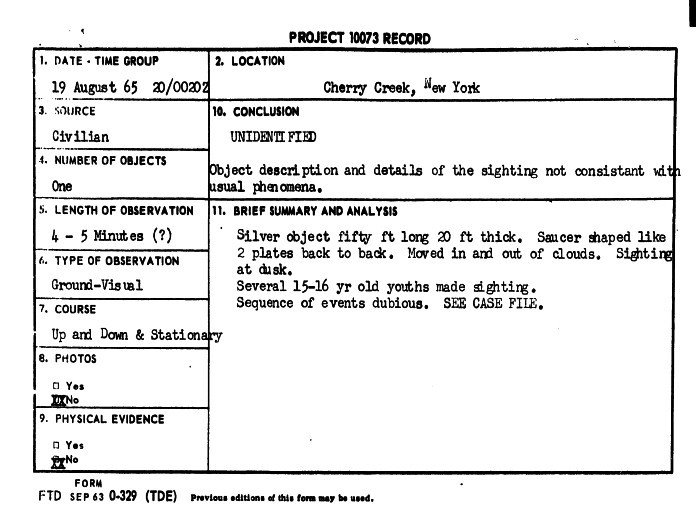
The case became Project Blue Book case number 9806, and the Air Force's own Project 10073 Record card, read directly from the scanned file, carries the date-time group "19 August 65 20/0020Z," location "Cherry Creek, New York," source "Civilian," one object, length of observation "4 to 5 Minutes (?)," type of observation "Ground-Visual," and course "Up and Down and Stationary." In box 10, Conclusion, the Air Force typed a single word: "UNIDENTIFIED." The card's conclusion note reads, "Object description and details of the sighting not consistant [sic] with usual phenomena." The brief summary reads, "Silver object fifty ft long 20 ft thick. Saucer shaped like 2 plates back to back. Moved in and out of clouds. Sighting at dusk. Several 15-16 yr old youths made sighting. Sequence of events dubious. SEE CASE FILE." The same card marks both Photos and Physical Evidence as "No," which sits awkwardly against the field traces that civilian investigators documented.
The Air Force investigation on the ground was led by Captain James Dorsey, Operations Officer of the 4621st Air Force Group, who arrived the following day with four technicians and conducted a search of the landing area, recording the purplish liquid, the singed foliage, and the small parallel ground marks. Separately, the Blue Book file ties the visual event to a radar return. According to the case documents compiled from the National Archives microfilm, between roughly 8:00 and 8:30 PM local time on 19 August an AN/FPS-6 long-range height-finder radar of the 763rd Radar Squadron at Lockport Air Force Station, New York, logged a momentary target near the upper limit of the set, with the observation attributed to Sgt. G. A. Reggie and characterized as "Ground-Visual, also momentary FPS-6 TGT (GND ELEC) sighted near upper limit." The FPS-6 was rated to about 200 nautical miles in range and 75,000 feet in height, which makes the brief, high return notable rather than routine.
The civilian investigation was run by NICAP, the National Investigations Committee on Aerial Phenomena, whose own publication, The UFO Investigator (Vol. III, No. 4, August to September 1965), carried the first detailed write-up. NICAP investigators Dr. Fred C. Fair and John Maxwell of New York Subcommittee No. 2 examined the site and questioned the witnesses and reported that, on the basis of the evidence then in hand, they believed the report was genuine, and that the two state troopers who had responded were themselves convinced. NICAP member Jeffrey Gow collected samples of the purplish liquid and the singed foliage after the Air Force team departed. Those samples were submitted to the Kawecki Chemical Company, whose spectrographic analysis found the main elements of the liquid to be aluminum, iron, and silicon, with some phosphorous present in weed samples, which the analyst suggested could account for the odor. The case was later catalogued in Richard H. Hall's The UFO Evidence, Volume II (2001) and in Donald Keyhoe and Gordon Lore's NICAP report Strange Effects from UFOs (1969), the latter under the heading describing the bull bending the pipe.
What did the witnesses think it was?
The Butcher family stood by the account for decades and never recanted. The fuller witness list, drawn from the NICAP material and Keyhoe and Lore's Strange Effects from UFOs, includes Harold Butcher as the primary observer, his mother Mrs. William Butcher, his brother Robert Butcher, William Butcher Jr., and a family friend, Kathleen Brougham, with Harold's young sister among those affected. Harold described the bull's cry as "like I have never heard come from an animal before" and said the object left "as fast as the snap of my fingers." The family farm came to be known locally as "the flying saucer farm," and the case was still being revisited in the regional press fifty years on.
Crucially, the witnesses were judged credible by the people who interviewed them in person. A NICAP investigator's contemporaneous assessment, quoted in the Jamestown Post-Journal's later account of the case, was that the witnesses "seemed convincing" and were "too rustic to be able to create a hoax." Dr. Fred C. Fair and John Maxwell, who did the field interviews, concluded the report was genuine. The responding New York State troopers were described as convinced of the witnesses' sincerity.
There is also independent corroboration apart from the family. On the night following the incident, State Trooper Richard Ward, patrolling some miles away, reported an object carrying eight circular lights in a line, moving at roughly twice the speed of a jet and giving off a faint, unfamiliar purring sound. A trained police observer reporting a comparable object in the same area within twenty-four hours is the kind of corroboration that is hard to fold into a teenager's prank, and it weighed in the investigators' judgment that something real had been in the local sky.
The dispute
The dispute is not a hoax exposure or an identification of the object; it is a sustained skeptical reading of the physical-trace evidence, advanced primarily by aerospace engineer Robert A. Galganski in his analysis "Incident at Cherry Creek," published by the J. Allen Hynek Center for UFO Studies in the International UFO Reporter (1996). Galganski, who reviewed the documentation as an engineer rather than a believer, treated the showpiece physical claim, the bent steel pipe the bull was chained to, as a mechanics problem and subjected the trace evidence to hard scrutiny, arguing the case is heavily contaminated by conflicting and embellished testimony rather than anchored in clean physical proof. Secondary summaries of his paper disagree on the precise outcome of his pipe-strength calculation, so this file does not state a specific figure for it; what is verified is that a serious, independent, civilian engineering reanalysis exists and pushes hard against the "physical proof of a craft" framing.
The chemistry cuts the same way. The purplish liquid that looked like exotic residue was, on the Kawecki Chemical Company's spectrographic analysis, composed mainly of aluminum, iron, and silicon, with phosphorous in weed samples, all common natural soil, dust, and vegetation constituents. That result removes the liquid as evidence of anything unearthly. The animal and physiological effects, the milk drop and the upset stomachs, are equally consistent with a frightened herd and frightened children and prove agitation rather than its cause, and the bull, a panicked young animal straining against a nose ring, is a candidate to have bent its own pipe.
The official record reinforces the doubt even while it classifies the case as unsolved. The Air Force's Project 10073 Record card for Blue Book case 9806 explicitly notes "Sequence of events dubious" and marks Physical Evidence as "No," meaning the Air Force did not regard the field traces as solid. So the case carries a built-in tension: the same document that lists it UNIDENTIFIED also doubts the narrative around it.
Why this stays "Barely Disputed" and not "Strongly Disputed": nobody has identified the object, recovered hoax props, obtained a confession, or shown a witness recantation. Galganski's reanalysis questions the evidential value of the traces but does not solve the case, and by the available accounts leaves the overall encounter unexplained while debunking individual claims. The skeptical case is real and honestly held, but it is a critique of weak physical evidence, not a positive explanation of the sighting, and it sits against an Air Force UNIDENTIFIED verdict, a same-window radar return, a corroborating police witness the next night, and a family that never changed its story. A contested argument about trace evidence does not meet the bar for the strong tier, which requires an identification or a confession.
Is the Cherry Creek Landing real? The two-pass assessment
Pass one, the ordinary readings. Several mundane elements can be picked off individually. The reddish vapor, the beeping, and the dusk timing have invited comparison with misperceived aircraft or even a bright celestial object distorted through cloud, though none of those fit an object that hovered a quarter mile off at treetop height and then climbed vertically. The electromagnetic effects, a static-swamped radio and a stalled gasoline tractor, are the sort of thing that can have prosaic causes, and the surviving telephone line cuts against a clean field-effect story. The milk drop and the cows' upset are exactly what stress does to a dairy herd, with or without a craft, so they prove agitation, not its cause. The spectrographic result is the clearest deflation of the "alien residue" reading: aluminum, iron, and silicon are common soil and dust constituents, and phosphorous in weeds is unremarkable, so the purplish liquid does not read as anything exotic. The bent bull-pipe is the load-bearing physical claim, and a panicked three-year-old bull straining against a nose ring can exert real force on a pipe that may not have been rigidly anchored. The Air Force itself, while logging the case UNIDENTIFIED, flagged the "sequence of events dubious" and marked physical evidence as "No," and the engineer Robert A. Galganski, who reexamined the case for CUFOS in the International UFO Reporter in 1996, treated the physical traces with hard skepticism and questioned how much evidential weight they can carry. The exact bottom line of Galganski's pipe calculation is reported inconsistently in secondary summaries, so this file does not assert a specific number for it; what is solid is that a serious, independent, civilian engineering review exists and trims the case down.
Pass two, if real. What survives the trimming is still substantial and is what keeps this from being a throwaway. The Air Force did not just shrug; its own Project 10073 card for case 9806 reads "UNIDENTIFIED" with the note that the object's description and details were "not consistant with usual phenomena," which is the Air Force conceding it could not name the thing. The visual event is tied to a same-window radar return, a momentary high target on the 763rd Radar Squadron's AN/FPS-6 at Lockport logged by Sgt. G. A. Reggie, which is a hardware witness independent of any teenager. A trained state trooper, Richard Ward, reported a comparable lit object miles away the next night. The in-person investigators, Fair and Maxwell of NICAP plus the responding troopers, judged the family credible and "too rustic" to stage a hoax, and the family never walked the story back across more than half a century. If something real was there, the reported behavior, a metallic ellipsoid that hovered silent except for a beep, emitted vapor, killed nearby electrics, terrified livestock, and then climbed vertically out of sight in seconds, fits no conventional 1965 aircraft.
Weighing both passes: there is a genuine, independent, method-shown critique here, Galganski's engineering reanalysis and the Air Force's own "dubious sequence" and "no physical evidence" notations, and the chemistry that drains the residue of mystery. That is a real dispute and the case cannot be carried as cleanly Verified Unexplained. But none of it identifies the object, recovers a hoax prop, or produces a confession or recantation, and it runs against an official UNIDENTIFIED classification, a radar correlation, a corroborating police witness, and decades of consistent testimony. A contested engineering argument about whether a bull could bend a pipe is not a positive identification of the thing in the sky. That places this squarely in Barely Disputed: a counter-case exists and is honest, but it is partial and the core encounter still stands.
Sources
- www.nicap.org/bb/MISC-PBB1-624.jpg
- www.nicap.org/650819cherrycreek2_dir.htm
- www.nicap.org/reports/tc-650819ufoi.htm
- www.nicap.org/650819cherrycreek_dir.htm
- www.nicap.org/reports/650819cherrycreek_rep.htm
- www.nicap.org/reports/tc-650819se.htm
- cufos.org/PDFs/cases/1965_08_19_US_NY_Cherry-Creek_CUFOS-IUR_Butcher_CE-II.pdf
- www.post-journal.com/life/viewpoints/2017/12/strange-lights-over-chautauqua-county/
- ufologie.patrickgross.org/htm/bluebooku65.htm
More cases from this region: UFO sightings in United States