The Emilcin Incident: Jan Wolski and the Horse Cart (10 May 1978)
On the morning of 10 May 1978 a 71 year old farmer named Jan Wolski was driving his horse cart home through pine forest near Emilcin, in Lublin Voivodeship, when two small figures in dark suits climbed onto the cart beside him. He told his family what happened next within minutes of getting home, told it the same way to a tape recorder within a week, and never changed a word of it in the twelve years he had left.
What did witnesses see at Emilcin?
At about eight o'clock on the morning of Wednesday 10 May 1978, Jan Wolski, a 71 year old farmer from the hamlet of Emilcin in what was then Lublin Voivodeship, was driving his horse cart home along a sandy track after calling on a neighbour. Emilcin sits in gmina Opole Lubelskie, roughly 50 kilometres west of Lublin, and the track Wolski was on runs through pine forest about 600 metres from his own farmyard. He was an elderly man with an elementary education, no telephone, no television and no interest whatever in science fiction. What he described that morning has been retold in Poland for nearly fifty years, and it is still the country's best documented close encounter.
Two figures were walking on the road ahead of him. Wolski put them at about 140 to 150 centimetres tall. They wore close-fitting one-piece dark suits that covered them from the forehead to the chin and left only the face and hands showing. Their faces were greenish or olive, flat, with slanted eyes and high cheekbones. Polskie Radio's account of the case takes its headline from his own words on first sight of them, "Widze jakies potworaki", I see some sort of monsters. He did not turn back. As he told his investigators afterwards, "Ja sie od mlodych lat nie boje niczego", since I was young I have not been afraid of anything. The two figures did not ask. They jumped up onto the cart and sat down, one beside him and one behind, and began exchanging short high-pitched sounds in a language he could make nothing of. He drove on with them.
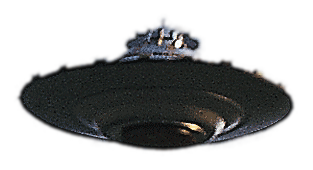
Where the track opened onto a clearing, Wolski saw the object. He described it as whitish or silvery, about the size of half a bus or a small bus, rectangular, without visible doors or windows, hanging motionless four to five metres above the meadow. Beneath it hung a flat platform. The two beings brought him to the platform, and it carried them up into the object, which he described as taking two at a time, like a lift with no cable. Inside it was dim, and there were two more figures, four in all. He described rows of benches, eight to ten of them, running along the sides, and on one side a number of birds, crows and ravens, ten or so, sitting motionless as though paralysed.
They indicated that he should take off his clothes. He did. They then went over him with an instrument he could only describe by its shape, two small plates or discs held one on either side of a part of the body, moving it across him in turn. It did not hurt him and it took only a few minutes. He noticed that they took a particular interest in the metal buckle of his leather belt. When it was over they offered him something to eat, thin brittle sticks that he compared to icicles, which crumbled the way a hard dry pastry crumbles. He refused, and watched the crew eat them instead. Then the four of them bowed to him. Wolski, an old country man, lifted his hat to them in return. He went down on the platform, walked back to the cart, and behind him the object rose and went away over the trees.
He drove straight home and told his family what had happened, in daylight, within minutes, before anyone in the village had heard a word of it. This is one of the load-bearing features of the case and it is not in dispute among any of the Polish researchers, hostile or friendly. His sons went out to the meadow and reported finding the grass flattened and the dew marked, with tracks running off in several directions. Family and neighbours went and looked at the same patch. The militia was called, officers came out, and statements were taken. Several residents also said they had heard a loud sound that morning.
One person besides Wolski reported seeing something in the air. Adam Popiolek, a small boy from the village, said he had watched an object flying over the forest. Polish accounts give his age variously as five, six or seven, which is itself a warning about how loosely some of the retellings handle detail. He is the only independent visual witness the investigation ever secured, and his testimony is examined further below, because it is also the single weakest link in the chain.
More footage and images of this sighting
Zbigniew Blania-Bolnar, Zdarzenie w Emilcinie, Pandora, Lodz, 1996, 362 pages. The primary published account of the 1978 investigation, and the book in which Blania-Bolnar set out the false details he deliberately seeded into the public record. View source
What is the official explanation?
There is no Polish state investigation of Emilcin in any meaningful sense, and no government file has ever surfaced. What exists at the official level is small and local. The Milicja Obywatelska, the People's Militia, was called out after Wolski's sons found the marked grass, and officers took statements from the witness and from villagers. Kroniki Dziejow, in its account of the case, describes militia officers documenting statements and interviewing the witness. That is the whole of the state's recorded involvement. No prosecution followed, no charge of causing a false alarm was brought, and nothing has ever been published from a militia file. In a country where the security apparatus took a close interest in anything that gathered crowds, the absence of any file is itself worth noting, and it is one of the reasons some Polish researchers have wondered aloud whether the apparatus had a hand in the affair rather than merely ignoring it.
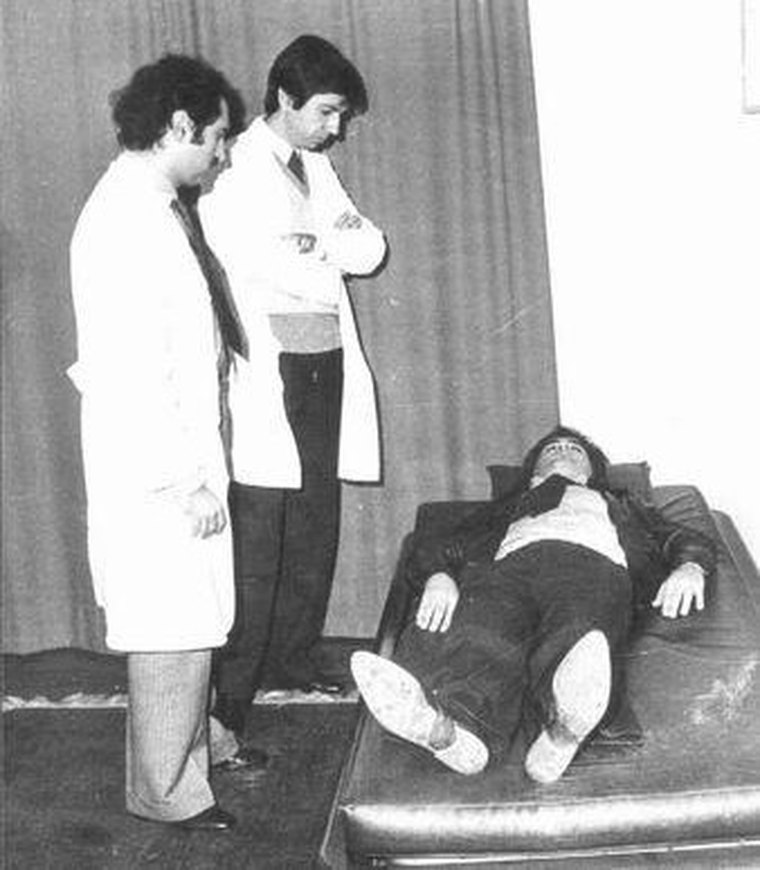
The real investigation was civilian and it was ufological. The first man on the ground was Witold Wawrzonek, an electrician from Lublin with an interest in the subject, who heard about the case roughly a week after it happened and made the first recording of Wolski's account on a tape recorder. Wawrzonek then contacted Zbigniew Blania-Bolnar, a sociologist from Lodz who was at that point the best known ufologist in Poland. Blania-Bolnar came to Emilcin with psychologists and psychiatrists, interviewed Wolski and the other villagers, and examined the traces on the meadow. The psychological assessment is the most substantial document the case produced. Its finding was that Wolski showed no symptoms of mental illness, low suggestibility, and no motive for deliberate deception. In the words the OKO.press reporter Milena Kuchnia recovered from the record when she went back to Emilcin in December 2023, the evaluator concluded that the farmer had probably seen something out of the ordinary, "widzial chyba cos niecodziennego", without being able to say what it was. Polish accounts of the case name the clinician inconsistently, as Ryszard Kietlinski in some retellings and Ryszard Krasilewicz in others, so this archive does not treat either spelling as settled.
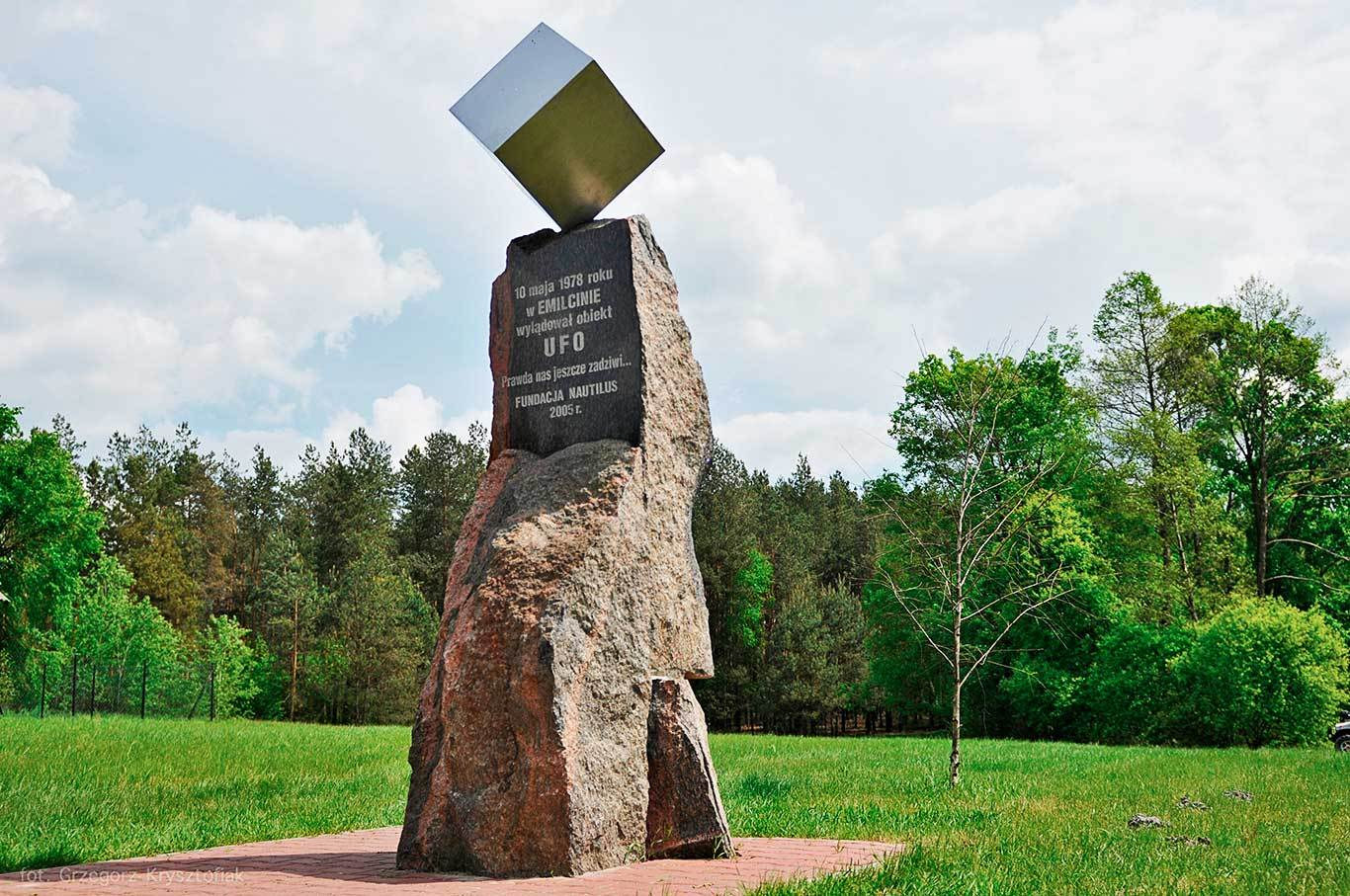
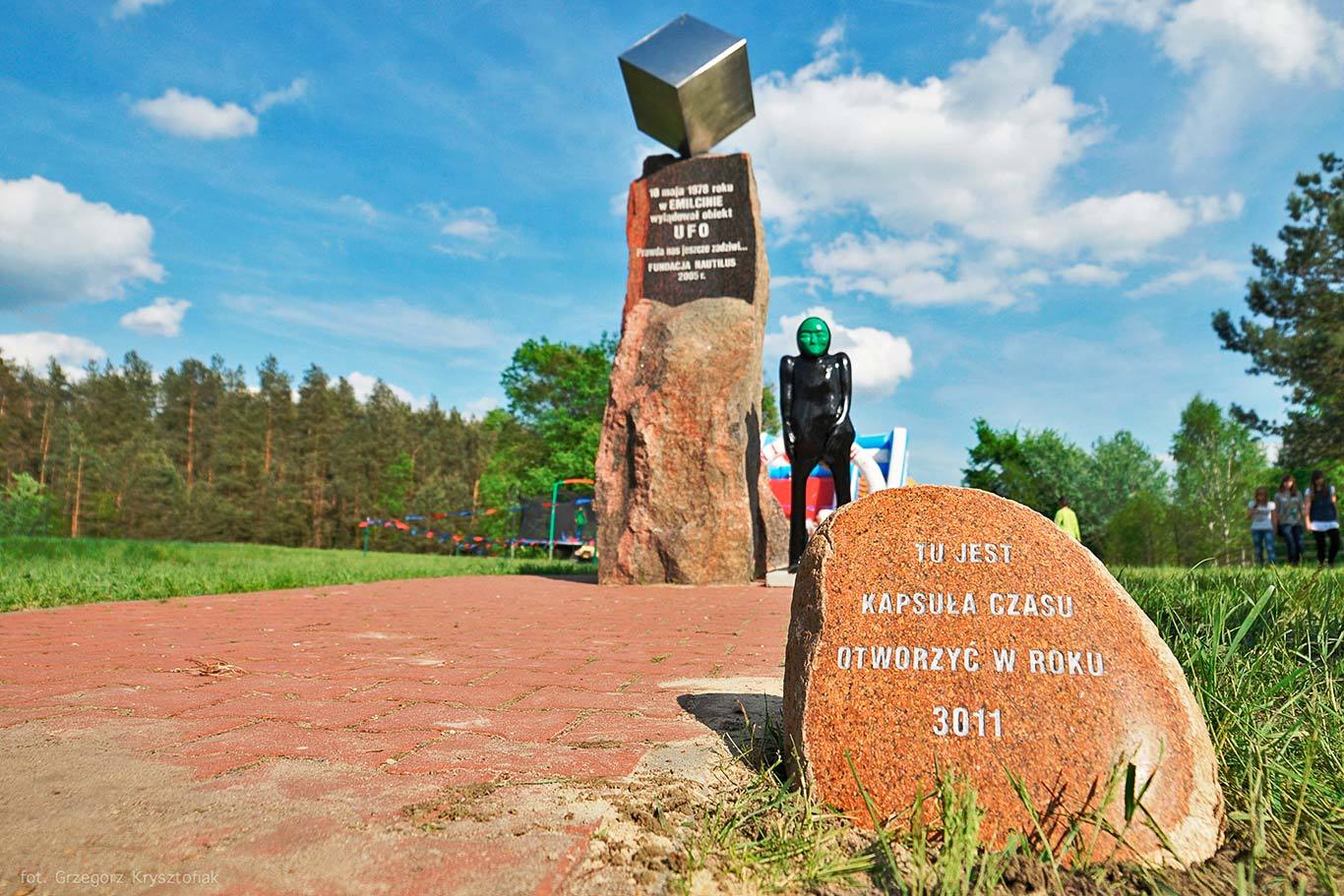
In July 1978 the journalists and ufology enthusiasts Henryk Pomorski and Krystyna Adamczyk went to Emilcin and recorded a long interview with Wolski on audio tape. Between Wawrzonek's first recording and this session, the case has a contemporaneous audio record made within weeks of the event, which is more than most abduction reports of the period anywhere in the world can show. A documentary film, Odwiedziny, czyli u progu tajemnicy, directed by Elzbieta Wieclawska-Sauk, was made in 1978 and is held in the Fundacja Nautilus film archive. In 1981 a second film, UFO i kamien, dealt with the so-called devil's stone at the edge of the meadow, a local landmark with hollows in it that village legend already treated as marked by a footprint long before 1978.
Blania-Bolnar published his full account, Zdarzenie w Emilcinie, with the Lodz publisher Pandora in 1996, a book of over 350 pages with a plate section of photographs and facsimiles. It is the primary published record of the investigation and it is where Blania-Bolnar set out his methods, including one that has coloured every retelling since. He admitted that he had deliberately seeded false details into the public version of the story so that he could catch out copycats and fantasists. Two of the seeded details were webbing between the beings' fingers and a large red circle on the chest. When later claimants came to him describing beings with webbed fingers, he knew immediately that he was dealing with a fabricator. The consequence is uncomfortable and every serious writer on the case has to reckon with it: two of the most widely repeated physical details about the Emilcin beings, reproduced in article after article in Polish and in English to this day, were put into circulation by the investigator himself and are not attributable to Jan Wolski.
The two principals are both long dead. Blania-Bolnar died in 2003. Wawrzonek died in the early 2000s, and Fundacja Nautilus records that he was the only one of the investigators who attended Jan Wolski's funeral. Fundacja Nautilus, founded in September 2001 by Joanna Karwat, Malgorzata Corvalan, Jaroslaw Zamojda and Robert Bernatowicz, with Bernatowicz as president, is the body that has carried the case since. Its published position is unambiguously supportive: in its May 2016 article on Emilcin and the devil's stone it calls the encounter Poland's most famous close encounter of the third kind and argues that specialist examination ruled out both hallucination and fabrication.
What did the witnesses think it was?
Jan Wolski himself is the reason this case has lasted. He was born in 1907, was 71 at the time, farmed, had an elementary education, and by every account left by people who knew him he was a serious, hard-working and truthful man. The verdict of the village has been remarkably stable across five decades of journalists coming and going. An elderly resident told OKO.press in 2023, of Wolski's standing before and after 1978, "Nikt go zle nie traktowal ani przed tym, ani po tym. Dobry chlop byl, nie pil", nobody treated him badly either before or after, he was a good man, he did not drink. Krzysztof Drozd, the retired militia investigator who has spent four decades trying to take the case apart, reports the same phrasing from the neighbours he interviewed, that Wolski did not drink and did not raise his hand to anyone, and describes him as level-headed and balanced. The alcohol explanation, which is the first thing anyone reaches for with a rural single-witness case, has no local support at all and never has had.
He did not profit and he did not perform. There is no book by Jan Wolski, no lecture tour, no fee, no contactee career. He told his family within minutes, he repeated the same account to Wawrzonek, to Blania-Bolnar, to two psychologists, to the militia, to Pomorski and Adamczyk in July 1978 and to a film crew, and he told it the same way each time. He also took the consequences. Drozd is explicit that Wolski suffered when he was accused of making it up, which is the opposite of the profile of a man enjoying a story he invented. He died in 1990, twelve years after the event, having never varied it and having never withdrawn any part of it. It is worth being precise about what that does and does not prove. Consistency establishes sincerity, not accuracy. A man can be entirely honest and still be wrong about what he saw. But it does rule out the casual hoax, which is the cheapest explanation available for a case like this one, and it is why even the case's most determined critic finds himself saying that it is improbable that a joker visits a farmer and the two of them agree he will lie forever.
The corroboration is where an honest reading has to slow down. Two distinct things are often blurred together in the retellings. The first is the physical trace, which was seen by several people: Wolski's sons went to the meadow immediately after he came home and reported flattened grass and disturbed dew with tracks leading away, and family and neighbours went and looked at the same ground, and the militia came out to it. That is multiple-witness observation of a mark on the ground, made within an hour or two, before the story had spread. It is not observation of a craft. Several villagers also reported hearing a loud sound that morning, which is corroboration of a noise and nothing more.
The second is Adam Popiolek, the village boy who said he saw an object flying over the forest, and he is the only person besides Wolski who claimed to see anything in the air. His testimony is genuinely weak and this archive will not pretend otherwise. He was five, six or seven depending on which Polish account you read. His mother said afterwards that he only told her about it once the story was already going round the village, which is exactly the sequence that manufactures a child witness rather than confirming one. Bartosz Rdultowski, working from the archived recordings, argues that Blania-Bolnar questioned the boy in a way designed to produce the answers he was looking for, and that criticism is fair on the tapes as described. As an adult, Adam Popiolek withdrew from the whole business, avoided the press and made it plain he wanted to be left out of it. That is not a recantation, and it should not be reported as one, but it is a long way from a witness standing behind his account.
So the honest statement of the corroboration is this. Jan Wolski alone reported the beings, the platform, the interior, the benches, the paralysed crows and the examination. Everything inside the object rests on one man. What other people reported is a marked patch of meadow, a sound, and a child's later claim of an object in the sky, gathered by an investigator who was leading him. The Fundacja Nautilus position, that multiple independent witnesses corroborated the details and that the Popiolek family confirmed the account, overstates what the record supports.
The dispute
Two named Polish investigators have advanced specific earthly explanations, and neither has produced the evidence that would close the case. The first is Bartosz Rdultowski, a Krakow publicist and publisher, who argued in his 2013 book Tajne operacje. PRL i UFO that Emilcin was a hoax staged by one ufologist against another. On his account Witold Wawrzonek, the Lublin electrician who made the first recording of Wolski, hypnotised the farmer beforehand, implanted a false memory of a meeting with an alien crew, and then let the story run in order to humiliate Zbigniew Blania-Bolnar, with whom he had fallen out. Rdultowski's supporting points are real and checkable: Wawrzonek and Blania knew each other before May 1978, Wawrzonek was reportedly acquainted with the Wolski family, the Polish cases Blania worked in that period cluster geographically, and a March 1978 television programme called Kto widzial UFO?, presented by Wanda Konarzewska, is said to have involved hypnosis demonstrations in which Wawrzonek was put under without his agreement. The audio archive, Rdultowski says, also shows Blania leading the child witness Adam Popiolek toward the answers he wanted.
The hypothesis does not survive its own author's caveats. Asked directly for proof, Rdultowski told Dziennik Wschodni that "Nie ma mozliwosci udowodnienia tego w sposob absolutny", there is no way to prove it absolutely, and he has conceded elsewhere that while his surrounding claims rest on correspondence and witness accounts, "sam fakt zahipnotyzowania Wolskiego nie da sie potwierdzic bezposrednio", the hypnotising of Wolski itself cannot be confirmed directly. Fundacja Nautilus put the claim to Wawrzonek's widow and son, who categorically denied he had any interest in hypnosis or any ability to perform it. The sceptical Polish writer Piotr Mankowski, publishing as Micz on tunguska.pl in August 2017, took the hypothesis apart from the other side, writing that "Najwieksza jednak dziura w rozumowaniu Rdultowskiego jest sugestia, ze Witold Wawrzonek zahipnotyzowal Jana Wolskiego", the largest hole in Rdultowski's reasoning is the suggestion that Wawrzonek hypnotised Wolski. Mankowski's objections are practical: more than one person would have had to be hypnotised, a hypnotically implanted narrative is not known to survive intact for twelve years of retelling, and neither Wolski nor Popiolek nor Wawrzonek nor Blania ever varied their versions.
The second explanation belongs to Krzysztof Drozd, a retired criminal investigator from the Lublin militia command who has worked the case since the early 1980s, co-founded the Lublin UFO club, knew both Wolski and Wawrzonek personally, and published Emilcin 1978. W poszukiwaniu prawdy in 2019. Drozd's candidates are a security service operation or a prank by aircrew, and his most concrete lead is an Mi-2 helicopter pilot nicknamed Ufo, based at the Radawiec airfield near Lublin, who trained air rescue crews and was said to make unauthorised landings for amusement. Drozd's strongest procedural point is that Blania-Bolnar never checked helicopter movements out of Radawiec or Deblin at all. That is a genuine gap in the 1978 investigation. It is not, however, an identification: no flight log, no crew, no aircraft and no date have ever been produced, and a Mi-2 does not hover four metres up without flattening a clearing far more comprehensively than a patch of dew-marked grass.
What keeps this at the weaker end of disputed is that both critics undercut their own verdicts on the witness. Drozd, who now calls the affair a hoax, still says of Wolski that he believed what he was saying, that he suffered when accused of lying, and that it is improbable that a joker calls on a farmer and they agree he will lie for the rest of his life. Neither man has produced a confession, a recantation, a prop, a flight record or a demonstration. What exists is two competing reconstructions, one psychological and denied by the accused man's family, one aeronautical and unsupported by any document, sitting alongside an investigation whose own lead researcher admitted to seeding false details into the public record. That is a case under real pressure, not a case closed.
Is the Emilcin Incident: Jan Wolski and the Horse Cart (10 May 1978) real? The two-pass assessment
Pass one. Take every ordinary explanation seriously and in order. Alcohol goes first and goes fast: the village and the case's own chief sceptic agree the man did not drink, and he was driving a cart home at eight in the morning, not staggering back at midnight. Sleep-related phenomena come next, and they are the standard modern reading of abduction reports, but they fit this one badly. Hypnagogic and hypnopompic imagery, and sleep paralysis with its intruder figures and its sense of being handled, occur at the boundaries of sleep. Wolski was awake, upright, outdoors, in daylight, driving a horse. A horse is an inconvenient witness for a dream: the animal covered the ground, the cart arrived home, and the timing of his arrival was noticed by his family. Confabulation and ordinary memory drift are more serious, and the case does show accretion over the decades, most visibly in the way the devil's stone at the meadow's edge, an old local landmark, migrated into the story as an alien marker, a development that both Drozd and Rdultowski mock and that Blania-Bolnar himself declined to pursue. But accretion in the retelling is not the same thing as invention at the source, and the source here was recorded within about a week.
Misperception of an ordinary event has to be given its best run, and that best run is Drozd's. A helicopter, most plausibly an Mi-2 out of Radawiec, coming down on a forest clearing in front of an elderly man who had never flown and had no television is not a silly proposition, and the flattened grass would follow naturally from rotor downwash. Blania-Bolnar's failure to make a single enquiry about military or air rescue flights that morning is a real and permanent hole in the 1978 investigation. Against it: no flight record has ever been produced, no crew has ever been named beyond a nickname, an Mi-2 is deafening and unmistakable at four metres, and a helicopter does not account for a levitating platform, an interior with benches, or several minutes of physical examination with a handheld instrument. Misperception can plausibly generate a strange object over a meadow. It does not generate the inside of one.
The cultural availability argument deserves the most care, because it is usually asserted rather than checked, and when you check it in the Polish case it does not run the way the English-language literature assumes. Poland in 1978 was not the United States. The Hill case, the Pascagoula report and the Walton claim were not saturating Polish media, American abduction paperbacks were not on sale in Opole Lubelskie, and Wolski had no television. But it is not true that ufology was absent from Polish public life: state television had broadcast a programme titled Kto widzial UFO?, presented by Wanda Konarzewska, in March 1978, weeks before the event, and Blania-Bolnar was already a nationally known figure with a film to his name. So the correct statement is a narrow one. The general idea of visitors was available in Poland in 1978, including on television. The specific American abduction script, with its medical examination and its grey humanoids, was not culturally available to an elderly farmer without a television in rural Lublin Voivodeship, and Wolski's account contains details that do not come from that script at all: the beings hitching a lift on a peasant's cart, the paralysed crows and ravens, the brittle food he was offered and refused, the interest in his belt buckle, and the mutual bow at parting. This cuts in the case's favour and it should be said plainly.
Embellishment by the investigators and the press is the pass one argument with the most actual evidence behind it, and the evidence comes from the investigator's own book. Blania-Bolnar admitted seeding false details, specifically the webbed fingers and the red chest circle, into the public account as a trap for copycats. That is a confession of deliberate contamination of the record by the man responsible for it, and it means the most repeated physical description of the Emilcin beings is partly his invention. It also gives Rdultowski's broader charge, that Blania-Bolnar's investigation was aimed at confirmation rather than testing, a foothold it would not otherwise have. Add the leading questioning of a small child, the failure to check air traffic, and the criticism reported by National Geographic Polska that earlier anomalous claims within the Wolski family were left out, and the 1978 investigation looks partisan even to a sympathetic reader.
Pass two. Set the ordinary explanations aside and take the testimony at face value, and what is left is unusually solid at the base and unusually thin at the top. At the base: a man of 71 with no incentive, no media exposure and no history of attention-seeking came home in daylight and told his family a story within minutes of the alleged event, physical marks were found on the ground by other people before the story had circulated, the militia attended, the account was on tape within a week, it was on tape again at length in July, and the witness held it without variation for the twelve years remaining to him and died holding it. That combination is rare anywhere in the world and it is why the case has outlived every attempt to bury it. At the top: everything that makes the story extraordinary, the platform, the interior, the crew of four, the crows, the examination, comes from one man alone. There is no photograph, no film, no soil analysis published to a standard anyone can check, no medical finding, and the one corroborating aerial witness is a small child who was led and who later walked away from it.
The tier follows from that. This is not Verified Unexplained, because nothing was authenticated and no official body ever investigated it. It is not Unknown either, because two named Polish researchers, Bartosz Rdultowski and Krzysztof Drozd, have advanced specific, evidenced counter-explanations that are on the public record and have to be answered. But neither counter-explanation is method-shown. Rdultowski's hypnosis hypothesis is denied by the family of the man he accuses, is rejected on practical grounds by other sceptics, and is disclaimed by its own author as unprovable. Drozd's helicopter prank has no flight record, no crew and no date, and does not reach inside the object. There is no confession, no recantation, no recovered prop and no positive identification of any real-world aircraft. Under this archive's rules that is Barely Disputed, and the honest summary is that the Emilcin incident stands as an unresolved single-witness close encounter, weakened by an investigator who admitted contaminating his own record, and not closed by anyone.
Sources
- oko.press/nikt-nie-mowi-ze-wierzy-w-ufo-wracamy-do-emilcina
- polskieradio24.pl/artykul/2542811,widze-jakies-potworaki-jak-rolnik-z-emilcina-furmanka-wiozl-kosmitow
- www.dziennikwschodni.pl/artykul/388881,ufo-w-emilcinie-to-wielkie-klamstwo-wolski-zostal-zahipnotyzowany
- wiadomosci.wp.pl/ufo-w-emilcinie-byly-milicjant-z-wydzialu-kryminalnego-od-41-lat-prowadzi-sledztwo-6429042111297153a
- ciekawostkihistoryczne.pl/2021/05/13/emilcin-hipnoza-i-falszywi-kosmici-czy-w-polskim-roswell-doszlo-do-oszustwa/
- paradoks.net.pl/read/46662-z-polskimi-ufologami-w-kwestii-emilcina-wiele-mnie-dzieli-wywiad-z-bartoszem-rdultowskim
- paradoks.net.pl/read/38064-emilcin-1978-w-poszukiwaniu-prawdy-recenzja
- www.tunguska.pl/emilcinskie-watpliwosci/
- bartoszrdultowski.blogspot.com/2014/06/mistyfikacja-w-emilcinie-pytania-i.html
- www.nautilus.org.pl/artykuly,3153,ufo-emilcin-i-tajemniczy-diabelski-kamien.html
- sztukapubliczna.pl/pl/pomnik-ufo-andrzej-fogtt/czytaj/28
- kronikidziejow.pl/aktualnosci/ciekawostki/spotkanie-z-ufo-w-emilcinie/
- roswell47.pl/incydent-emilcin-10-maja-1978-jan-wolski-ufo/
- www.national-geographic.pl/kosmos/ile-prawdy-w-nowym-serialu-netflixa-o-ufo-fakty-o-emilcinie/
- lubimyczytac.pl/ksiazka/175050/zdarzenie-w-emilcinie
- mynaszlaku.pl/emilcin-pomnik-ufo/
More cases from this region: UFO sightings in Poland