The Hochries Mountain Encounter
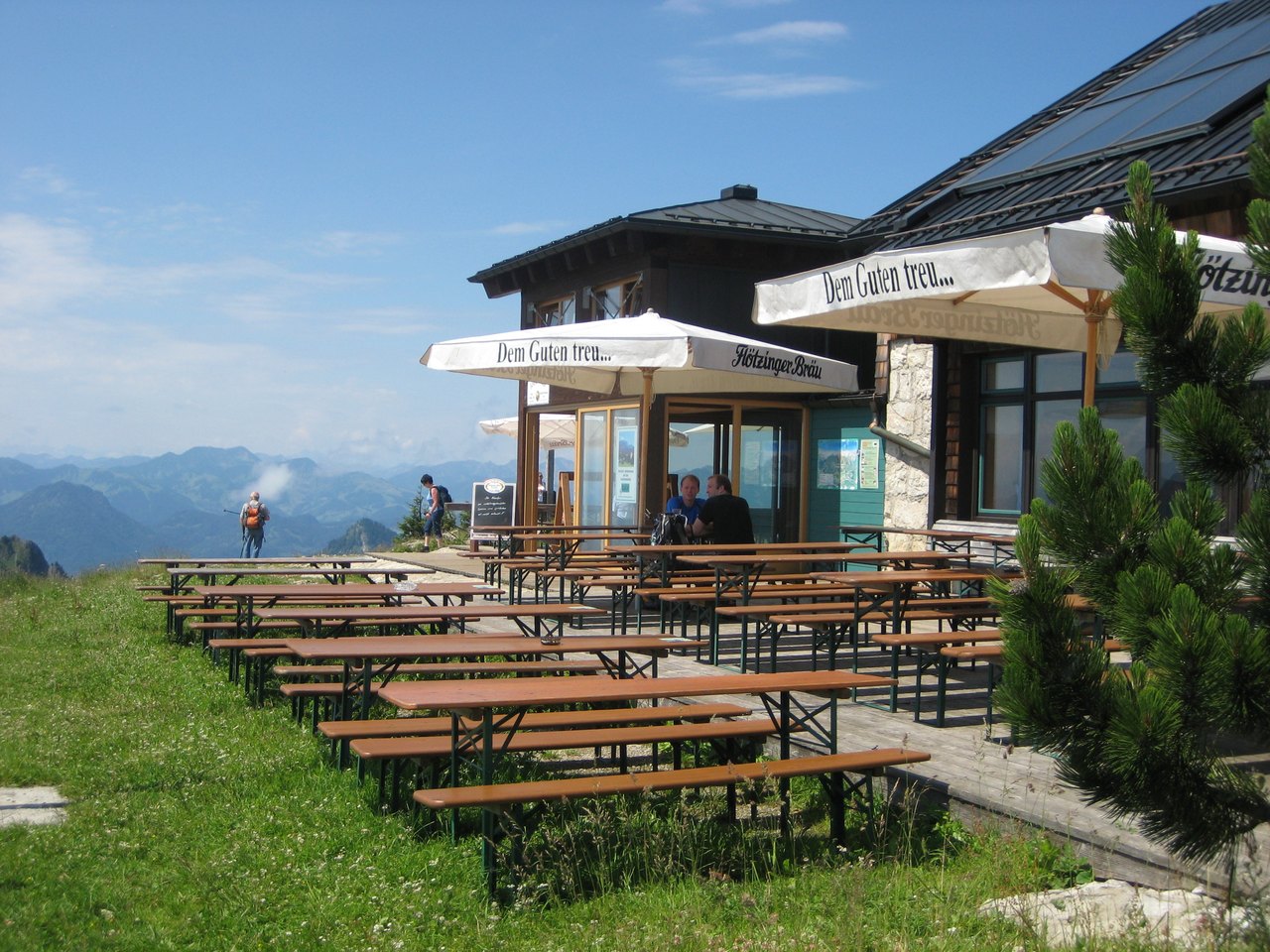
On the evening of 10 December 1973, two men were inside the Hochrieshütte, the alpine club lodge that sits on the summit of the Hochries, a 1,569 meter peak in the Chiemgau Alps of Upper Bavaria, a short distance from the Austrian border south of Rosenheim. This case file covers what witnesses reported, the official narrative, and a two-pass assessment with its evidence tier.
What did witnesses see at Hochries summit?
On the evening of 10 December 1973, two men were inside the Hochrieshütte, the alpine club lodge that sits on the summit of the Hochries, a 1,569 meter peak in the Chiemgau Alps of Upper Bavaria, a short distance from the Austrian border south of Rosenheim. The lodge keeper, named in NICAP's files as Friedrich Lennartz and rendered as "Mr. L" in von Ludwiger's report, was at the building with the caretaker Peter Zettel. Around 8:30 pm they were looking out across the snow-covered landscape through the lodge's large panoramic window when they noticed a strange red light sitting on or hovering just above a nearby mountaintop, identified in the files as the Weitlahner Kopf, roughly 1,600 meters off. Their first thought was prosaic. They assumed it was a helicopter, possibly one in trouble, and reached for binoculars to confirm it.
They watched the red light for about twenty minutes without it behaving like any aircraft they knew. Because both men were connected to the mountain rescue service, Lennartz decided to signal it. At roughly 8:50 pm he fired a red flare signal rocket in the direction of the light, the standard way to tell a pilot in distress that rescue personnel had seen him. The reaction was immediate and was nothing a helicopter would do. The object began to glow a far deeper, brighter red, then rose slowly into the air, climbing and stopping to hover at an altitude estimated at about 200 meters above the mountain after four or five minutes. It then started moving toward the lodge.
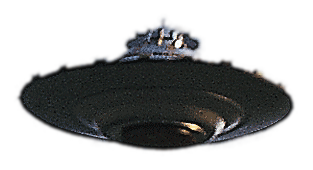
As it drew closer the men could finally make out its form, and it was not an aircraft at all. It was egg-shaped, with what looked like a transparent or yellowish dome at the top, which they described as a yellow dome. Around the lower portion of the body were four rows of colored lights, red, green, blue and white, rotating counterclockwise. Lennartz said the lights had the look of fluorescent tubes and flashed without any apparent system. The object was estimated at roughly 9 meters across and on the order of 12 to 14 meters tall, hanging in the air with the pointed end upward. What struck both witnesses most was that this large, brightly lit thing was completely silent, with none of the rotor noise a helicopter at that range would have produced.
The object then drifted across toward the Austrian side, heading in the direction of the Klausenberg and coming to hover over another mountain hut, the Klausner lodge. Lennartz used his radio to call the people at that lodge and warn them about the object overhead, and they confirmed they could see it too. During the encounter the witnesses' short wave radio was swamped with loud static interference, and the dogs at the Klausner lodge were reported to be whimpering and pawing at the cabin door, trying to get inside and out of sight of the thing in the sky. Lennartz fired a second red flare. The object changed to a dazzling red, made a sharp roughly ninety degree turn and accelerated straight toward the witnesses at extraordinary speed, covering a distance reported as several kilometers in only about ten seconds. After lingering around the mountains for what the files describe as a long period, on the order of a couple of hours in total, it finally rose slowly and then shot upward at a steep angle, vanishing into the distance at breakneck speed.
What is the official explanation?
There was no official government investigation of the Hochries encounter, and that absence is itself part of the story. In 1973 West Germany had no state body charged with collecting or analyzing reports of unidentified aerial objects, the way the United States had run Project Blue Book until its closure in 1969. No Luftwaffe inquiry, no police forensic file, and no government statement on this sighting is on record. What exists instead is civilian investigative documentation, and it is unusually solid for a 1973 European case.
The primary record comes from Illobrand von Ludwiger, a physicist and systems analyst who worked in the aerospace industry at what became Daimler-Benz Aerospace, and who founded the Central European Section of the Mutual UFO Network in 1974, the year after this event. Von Ludwiger placed the Hochries case in his book "Best UFO Cases: Europe," published in 1998, as one of the better documented continental sightings of the decade. His writeup is the source for the detailed sequence: the misidentification as a helicopter, the flare signal, the object's climb to about 200 meters, the egg shape with the dome and the four counterclockwise rows of fluorescent-like lights, the radio static, the distressed dogs at the Klausner lodge, and the high-speed departure.
The case also entered the files of the National Investigations Committee on Aerial Phenomena in the United States, and Richard Hall carried it into "The UFO Evidence: A Thirty-Year Report, Volume II," issued by Scarecrow Press in January 2001. Hall's volume organized three decades of reports by witness category and descriptive features, and the Hochries entry preserves the same core facts, naming Friedrich Lennartz and Peter Zettel as the witnesses and citing the firing of the signal rocket and the object's reaction. Investigators classified the event as a Close Encounter of the First Kind on the Hynek scale, meaning the object was seen at close range but left no recovered physical trace. Crucially, no official apparatus ever issued a debunking finding here, because no official apparatus ever opened a file. There is no balloon identification, no traced aircraft, no named drone, and no natural-cause reconstruction in any document on record.
What did the witnesses think it was?
Friedrich Lennartz and Peter Zettel did not approach the light as believers looking for a flying saucer. They started from the most ordinary assumption available, that the red glow on the next peak was a helicopter, and they only abandoned it when the object responded to a rescue flare by brightening, climbing and changing shape into something with a domed top and rotating colored lights, in total silence. Their being part of the mountain rescue service matters to how the testimony reads. These were men used to judging aircraft, distance and conditions in alpine terrain at night, and the flare they fired was a working tool of their trade rather than a stunt. Lennartz's own descriptions, that the lights looked like fluorescent tubes, that they moved counterclockwise and flashed without any apparent system, and that the craft was absolutely silent, are the careful observations of someone trying to fit what he saw to known categories and failing.
The single most important feature of the Hochries case is that it is not a lone-witness story. There were at least two people inside the Hochrieshütte who saw the object directly, and Lennartz then radioed the separate Klausner lodge across toward the Austrian border, where the occupants independently confirmed they could see the same thing hovering over their building. That second location adds human witnesses at a different vantage point and a behavioral corroboration that is hard to stage, the dogs at the Klausner lodge whimpering and clawing at the door to get inside. Animals reacting with distress, recorded by people who were not the primary observers, is the kind of detail that points away from a simple misperception by two excited men.
The encounter also sat inside a documented wave. Von Ludwiger and others noted that the same general period saw heavy activity across the Alps and western Europe, including a cone-shaped object reported near Ouzouer-sur-Loire in France earlier the same evening before witnesses that included gendarmes, and a string of late-November and early-December sightings around Turin in Italy, one of which involved the pilot Riccardo Marano and was said to have been confirmed on military radar by a Colonel Rustichelli at the Caselle facility. The Hochries witnesses believed they had seen a structured, controlled craft that reacted to their signal, and nothing in their account or in the investigators' files reduces that belief to a known object.
Is the Hochries Mountain Encounter real? The two-pass assessment
Pass one, the fully ordinary readings. The men's own first guess was a helicopter, and at the start a distant red light on a peak could have been an aircraft, a navigation light, or even a planet or bright star near the horizon misjudged for distance in the dark. Mountain air, snow glare and the difficulty of estimating range at night all encourage misperception. A red flare being fired creates its own complications, since its light and smoke can briefly confuse what the eye is tracking, and an honest observer can knit a single light, an aircraft and an afterimage into one apparent object. The radio static could have an unrelated atmospheric or equipment cause, and a dog whimpering at a door on a cold night is not by itself evidence of anything overhead. A deliberate hoax is conceivable too, although nobody has ever produced a method, a prop, a confession or a motive for two rescue-service men to stage this. The weak point in every one of these explanations is the same: none of them accounts for a silent, domed, egg-shaped form with four counterclockwise rows of colored lights that climbed on cue, hovered at 200 meters, was seen from a second lodge as well, and then crossed several kilometers in about ten seconds. No conventional helicopter or aircraft of 1973 matches that combination, and no investigator has ever named a specific real object that does.
Pass two, if it was a real structured craft. Then what the witnesses described is a domed, ovoid object roughly 9 by 12 to 14 meters, under apparent control, that registered and answered a ground signal by changing brightness and maneuvering, generated radio interference, distressed animals, and demonstrated accelerations far beyond a helicopter, all without sound. That profile, a luminous reactive craft producing electromagnetic effects and extreme performance, is the recurring signature of the better unexplained reports of the era.
The case is well attested, with two named primary witnesses inside the lodge, independent confirmation from people at the Klausner lodge, animal-distress corroboration, and documentation in two serious civilian sources, von Ludwiger's MUFON-CES investigation and Hall's NICAP volume. Against that there is no official narrative at all, because no government ever investigated it, and there is no independent, method-shown debunk identifying a real-world object or demonstrating a hoax. Because the case rests on its multiple credible witnesses and the investigators' files rather than on any official ruling for or against, and because nothing has been shown that closes it, the correct tier is Unknown.
Sources
- ufoevidence.org/cases/case652.htm
- www.ufoinsight.com/ufos/close-encounters/hochries-mountain-incident
- www.thinkaboutitdocs.com/1973-hochries-mountain-ufo-encounter/
More cases from this region: UFO sightings in Germany