The Indian Point Nuclear Plant Encounter
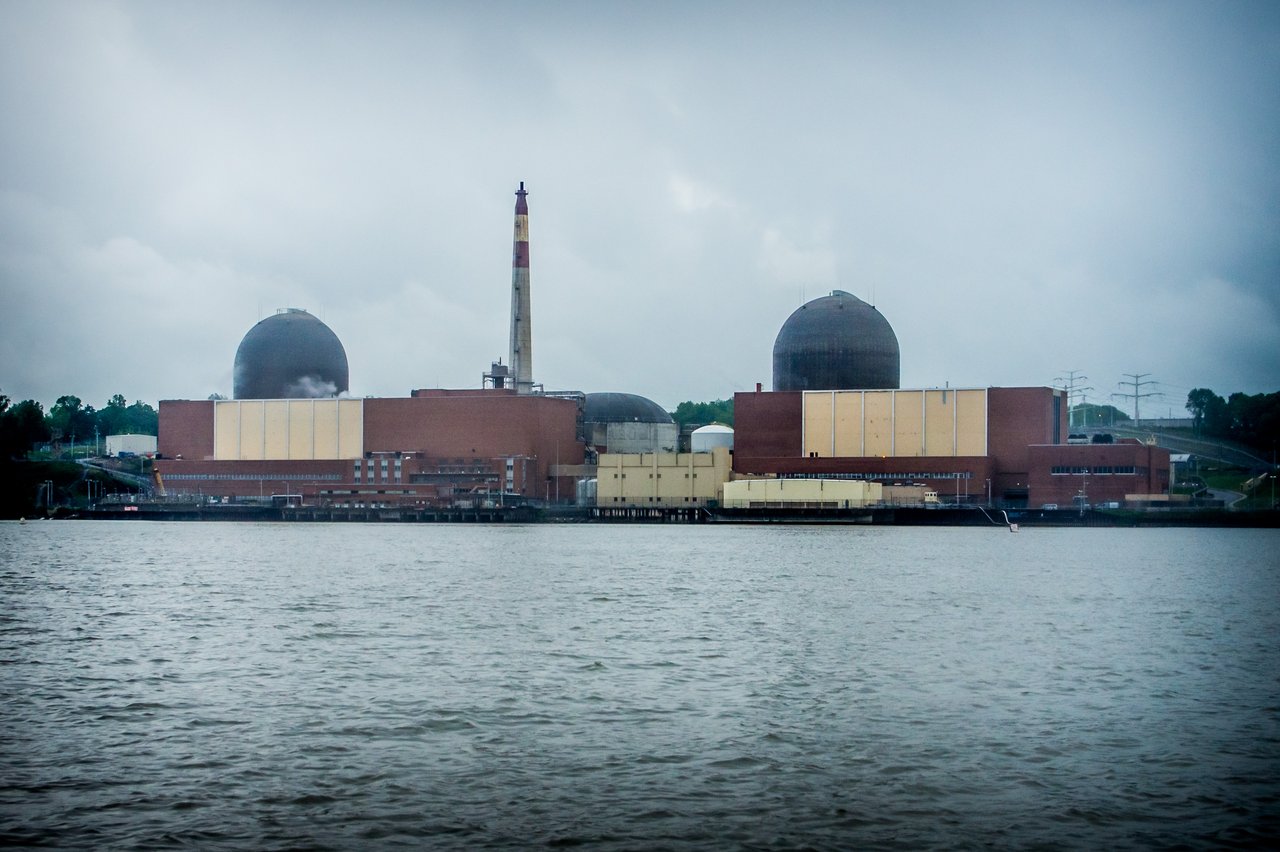
On two nights in the summer of 1984, security police employed by the Power Authority of the State of New York reported a large, low, silent object over the Indian Point nuclear reactor complex on the east bank of the Hudson River at Buchanan, just south of Peekskill. This case file covers what witnesses reported, the official narrative, and a two-pass assessment with its evidence tier.
What did witnesses see at Indian Point Energy Center?
On two nights in the summer of 1984, security police employed by the Power Authority of the State of New York reported a large, low, silent object over the Indian Point nuclear reactor complex on the east bank of the Hudson River at Buchanan, just south of Peekskill. The principal witness in the published account is a man called only "Carl," described as a thirty-five-year-old Power Authority police officer with prior New York State Police service who had worked plant security for three years. The anonymity is deliberate: investigator Philip Imbrogno said as many as seventy plant personnel, from security officers to secretarial and janitorial staff, spoke to him only on condition that their names never appear.
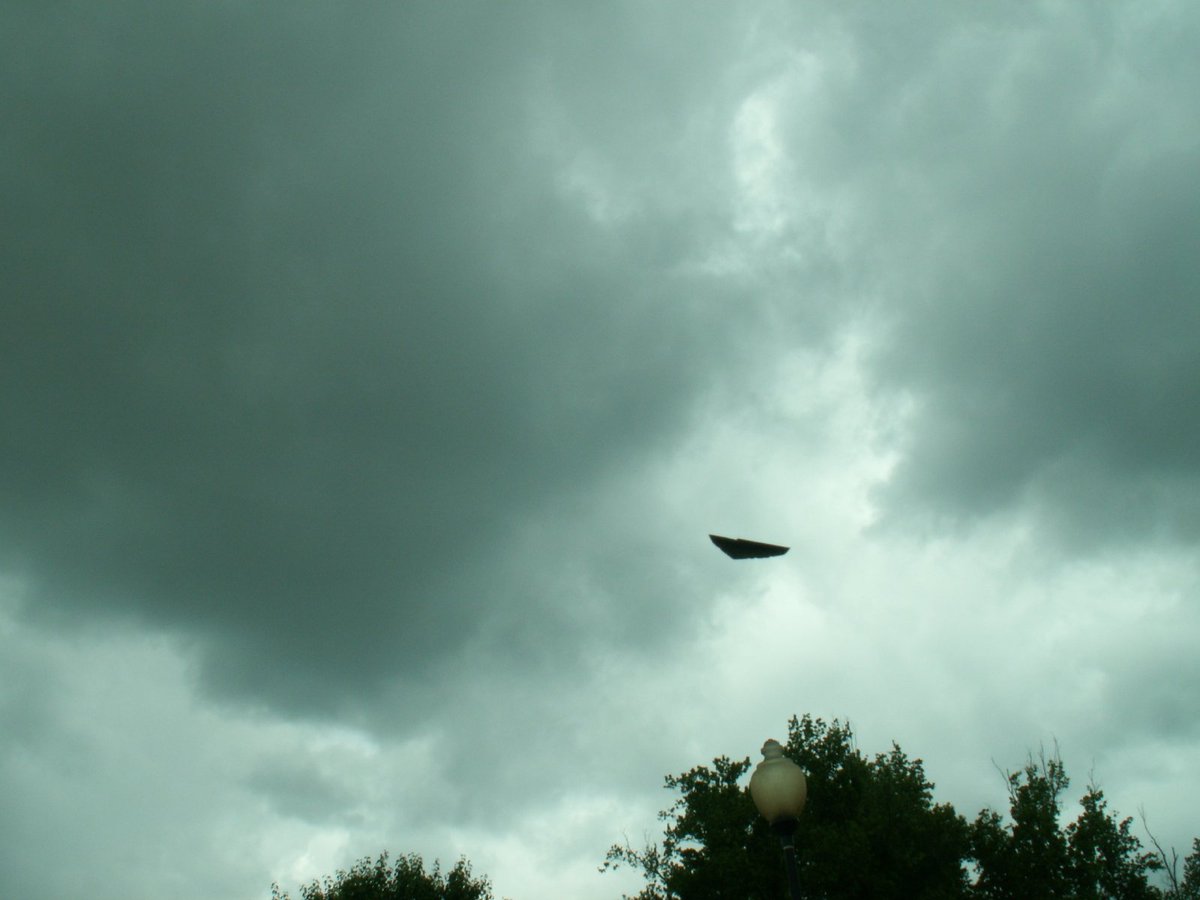
The first event was on the night of 14 June 1984, at roughly 10:15 p.m. Carl described a boomerang of ten or more intensely bright, steady lights, the whole formation at least three hundred feet from end to end, hanging about a quarter mile off and drifting at no more than ten miles an hour. He stressed that the lights were not separate aircraft. "Behind the lights was a dark mass," he said, and when a real airplane crossed the sky in the distance and passed close to the object, "the object blocked out the lights of the plane." In other words the witnesses reported a single solid body wide enough to occult a passing aircraft. Two other guards came on the radio call and watched it, and roughly ten Consolidated Edison personnel on site reported seeing it as well. It hovered, motionless, for about fifteen minutes before moving off.
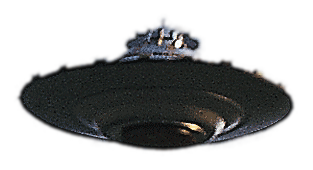
The second and more serious event was the night of 24 July 1984. According to the published account, a guard called out over the plant's internal communication net, "Here comes that UFO again," and officers converged. The object this time was described as changing color, the lights cycling yellow, then white, then all blue, with a red blinking light at the rear, and at one point it was likened to "an ice cream cone" or a solid body "about the size of three football fields." It crossed the site slowly enough that Carl said he could walk and keep pace with it, and it drifted in over the active unit, Reactor Number Three, the only one running that night, settling roughly three hundred feet above the containment dome for close to ten minutes. Carl's most quoted line is blunt: "This thing got within thirty feet of the reactor." As it neared the east gate of Reactor Three, the witnesses said, the plant's security systems went down. Motion sensors that guard the perimeter, the alarm system, and the security and communications console all reportedly failed at once. Officers were issued shotguns and were waiting on the word to fire. The shift commander is said to have telephoned Camp Smith, the New York National Guard post less than ten miles away, and to have asked for an armed helicopter to shoot the object down. Before any launch order came, the object moved away over the Hudson. A local Peekskill police sergeant named Karl Hoffman separately reported a craft carrying about a dozen white lights in a V moving toward the plant, and area residents jammed the Peekskill police lines with calls the same night.
What is the official explanation?
There was never a formal published government UFO investigation of Indian Point. By 1969 the United States Air Force had closed Project Blue Book and the military no longer ran a public channel for civilian sightings, so in 1984 there was no Blue Book file to open. What exists instead is the plant operator's public posture and a contemporary newspaper explanation.
The Power Authority of the State of New York, which built and ran Indian Point 3 from its commercial start on 30 August 1976 (a Westinghouse four-loop pressurized-water reactor), handled the press through its information office. Its spokesman, identified in the accounts as Carl Patrick, told a WVIP radio reporter named Gerry Culliton that the Hudson Valley lights were ordinary light aircraft and went further, claiming that the New York State Police had investigated and "arrested four Cessna pilots." When Imbrogno checked, state police records showed no such arrests. Patrick is also quoted, on the question of whether the guards opened fire, saying he could "neither confirm nor deny that the guards fired upon it, but they did what was necessary to protect the plant." The Authority declined to release any internal incident report, citing the confidentiality of security procedures and measures.
The broader official-flavored explanation appeared in the press. The New York Times of 25 August 1984 reported that officials attributed the Hudson Valley wave to a hoax flown by five or six pilots in tight formation, small single-engine aircraft, with one officer said to have trailed the V of lights to Stormville Airport and found planes with blacked-out undersides rigged with colored lights. That formation-of-planes account became the standard skeptical reading of the entire flap and, by extension, of the Indian Point nights.
The investigators themselves were not an official body but carried weight. Philip Imbrogno took the witness statements for the J. Allen Hynek Center for UFO Studies. Hynek, the Northwestern University astronomer who had served as the Air Force's own scientific consultant on Blue Book before turning skeptic-of-the-skeptics, lent his name as lead author of the 1987 book Night Siege. Imbrogno said he had unofficial confirmation that documents on the Indian Point sighting existed at the Nuclear Regulatory Commission, but that when he asked, he was told the material was held at the reactor complex and was protected under national security regulations. No such document has surfaced in any public archive, and that claim rests entirely on Imbrogno's word.
What did the witnesses think it was?
The witnesses, as relayed by Imbrogno, were certain they had watched a single structured craft, not a string of airplanes. Carl's whole point in describing the dark mass occulting a passing plane's lights was to rule out the formation theory from the inside: separate aircraft do not blot out the lights of a fourth aircraft behind them. He insisted the object moved at a walking pace and held position over a live reactor, behavior he did not think small planes could manage. The detail that mattered most to the men on the ground was operational rather than exotic: they believed something had switched off the plant's perimeter sensors, alarms, and communications as it approached, and that they had been close enough to ready weapons and to ask the National Guard for a gunship. To the officers this read as an intrusion over critical infrastructure, not a light show.
Corroboration came from outside the fence. Peekskill police sergeant Karl Hoffman reported a V of about a dozen white lights heading toward the plant, and Con Edison workers on site and residents phoning the Peekskill police that night put additional, independent eyes on the object. The Hudson Valley wave that frames these nights was itself enormous, thousands of reports across Westchester, Putnam, Dutchess, and Fairfield counties between 1982 and 1986, so the Indian Point officers were describing the same recurring boomerang that tens of thousands of people in the region reported.
The heaviest caveat sits on the chief investigator, not the witnesses. In July 2011 the skeptic Lance Moody, with corroboration from broadcaster Don Ecker, established that Philip Imbrogno had fabricated his stated academic credentials, undergraduate and graduate degrees in physics, astronomy and chemistry from the University of Texas and MIT and a 2010 PhD in theoretical chemistry from MIT, when MIT confirmed in writing and by phone that no student named Imbrogno had ever attended, and that he had also invented Army Special Forces service in the Vietnam era, never producing a DD-214 when asked. Imbrogno changed his phone and email and left the field. None of that touches what the plant officers saw with their own eyes, but it does mean the most dramatic, single-sourced flourishes that pass only through Imbrogno, the exact thirty-foot figure, the NRC document said to be classified, the precise sequence of the system shutdown, have to be held at arm's length.
The dispute
The standing counter-explanation is the Stormville pilots theory. As the New York Times reported on 25 August 1984, officials held that the Hudson Valley lights were a hoax flown by five or six private pilots in tight formation, small single-engine planes, some accounts naming Cessna 152s, with blacked-out undersides and synchronized colored lights, so that from below they read as one large slow craft. An officer was said to have followed a V of lights to Stormville Airport and found such planes, and a separate pilot reportedly traced lights to Sky Acres Airport and heard ultralight engines and pilots shouting to keep formation. The Power Authority's own spokesman pushed the same line for Indian Point specifically, calling the objects light aircraft. This is the explanation that, if it held across the board, would make Indian Point ordinary.
It does not fully hold, which is why this is a barely disputed case rather than a strongly disputed one. The plane-formation theory accounts well for the many distant V-of-lights reports in the wider flap, and a group of pilots really did buzz the valley in formation in April 1983, but it strains badly against the specific Indian Point testimony. Witnesses described a single dark solid mass that occulted the lights of a genuine airplane passing behind it, an object moving at a walking pace and holding station a few hundred feet over a reactor dome, none of which a loose gaggle of light planes does. Veteran formation pilots quoted in later coverage called the ultralight version "pure garbage," arguing no one could hold that formation at the near-hovering speeds witnesses described. And the plane theory says nothing at all about the reported simultaneous failure of the plant's motion sensors, alarms, and communications, the single most consequential claim of the night. The official side never produced the arrested Cessna pilots its spokesman cited, and no flight logs, names, or airport records tying specific aircraft to 14 June or 24 July 1984 over Indian Point have ever been published.
The second prong of the dispute is the credibility of the source rather than the explanation. The entire detailed Indian Point narrative reaches the public through Philip Imbrogno and the 1987 book Night Siege. In July 2011 Lance Moody and Don Ecker showed that Imbrogno had fabricated MIT and University of Texas degrees, a 2010 MIT doctorate, and Army Special Forces service, after which he quit ufology. That is a serious blow to the uncorroborated specifics he alone reported, the exact thirty-foot approach, the alleged classified NRC file, the precise shutdown sequence, and it is the main reason the case cannot climb to verified. But fabricating a resume is not the same as showing a method by which this multi-witness event was staged or misidentified. No one has produced the hoax planes, a confession, recovered props, or a witness recantation for these two nights. The official counter-explanation is real and on the record, yet it is partial, unproven for this site, and contested by the witnesses it is meant to cover, so the case largely stands.
Is the Indian Point Nuclear Plant Encounter real? The two-pass assessment
Pass one, the ordinary readings. The strongest mundane candidate is the one the authorities themselves advanced: a formation of small aircraft. The Hudson Valley genuinely hosted formation-flying pilots, the New York Times reported officials blaming five or six planes in tight formation, and pilots really did buzz the valley in a V in 1983. At distance, blacked-out planes with synchronized colored lights can read as one slow craft, and that almost certainly explains a slice of the thousands of regional reports. A second ordinary reading is misperception and contagion during a famous flap: once tens of thousands of people are primed to see a boomerang, a line of aircraft lights, a blimp, or even bright planets and aircraft on approach paths can be folded into the legend. A third is that the most extraordinary specifics were embellished or invented in the telling, a live possibility here because the chief narrator, Philip Imbrogno, was later caught fabricating his MIT degrees and his Special Forces record, which means the unverifiable flourishes, the thirty-foot approach, the classified NRC file, the exact system shutdown, may not have happened as stated. A fourth, narrowest reading is a genuine but prosaic security-system fault on 24 July that got retrofitted into the UFO story. None of these is shown with hard evidence for these two nights; there are no named hoax pilots, no flight logs, no recovered props, no plant maintenance record of a sensor failure, and no recantation.
Pass two, if the core testimony is sound. Then what the Power Authority officers reported is a large, structured, low, near-silent object that held station over an operating nuclear reactor for several minutes on two separate nights, moved at a walking pace, and on the second night was associated with the loss of the plant's perimeter sensors, alarms, and communications. The single most telling detail is internal to the witness account and resists the plane theory on its own terms: a dark solid mass that blocked the lights of a real airplane passing behind it. If accurate, that is one object wide enough and opaque enough to occult an aircraft, not a row of separate planes. Put alongside the corroborating Peekskill police and civilian calls, the consistent regional boomerang, and the operational response of armed guards and a National Guard helicopter request, the event reads as a real, structured craft over critical infrastructure that was never identified.
Weighing the two passes: a real, multi-witness, official-actor counter-explanation exists, the Stormville pilots, and it is the reason this is not filed as unexplained. But that explanation is partial, never substantiated for Indian Point with a single named aircraft or log, contradicted by the occultation and near-hover details, and called impossible at those speeds by experienced formation pilots. The compromising fact is the source: Imbrogno's exposed fabrications justifiably discount his solo, unverifiable claims and keep this case off the verified tier. Yet a discredited biographer does not equal a shown hoax of the underlying multi-officer event, and no method-shown debunk of these two nights has ever been produced. A weak, unproven, and witness-contested official explanation, against a credibility cloud over the narrator but no demonstrated hoax, lands this squarely at Barely Disputed.
Sources
- www.nicap.org/ncp/ncp-peekskill.htm
- www.nicap.org/840624peekskill_dir.htm
- web.archive.org/web/20190129200626/http://www.thinkaboutitdocs.com/1984-close-encounter-at-indian-point-nuclear-reactor-ny/
- archive.org/details/nightsiegehudson0000hyne
- kevinrandle.blogspot.com/2011/07/crash-of-philip-j-imbrogno.html
- www.theufochronicles.com/2011/07/crash-of-philip-j-imbrogno.html
More cases from this region: UFO sightings in United States