The Hundred Minute UAP Observation Over the Middle East, 5 May 2022 (PURSUE PR140 and PR141)
Two clips, one sortie, and a mission report that runs to a hundred minutes of observation. It also records a dust storm in exactly the same window, and the archive puts that on the page rather than around it.
What did witnesses see at Middle East?
Two video files were released from this encounter and they are two parts of a single sortie. One runs 1 minute 47 seconds and the other 2 minutes 36 seconds.
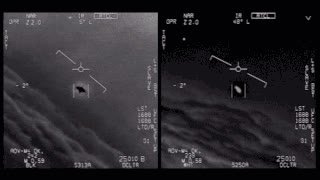
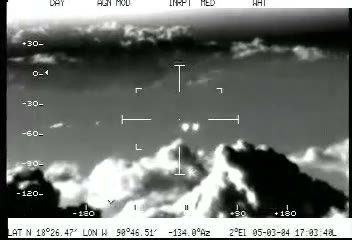
Both show an electro optical and infrared sensor working over terrain, and both switch repeatedly between the two modes, which is itself informative: an operator flipping between thermal and visible light is usually trying to work out what something is. In the longer clip the sensor at several points displays both feeds side by side, infrared on the left and electro optical on the right. The Department's frame by frame text for that clip notes a second area of contrast briefly entering the field at about fifty two seconds, and records the sensor "intermittently losing contact" with the object through the final minute.
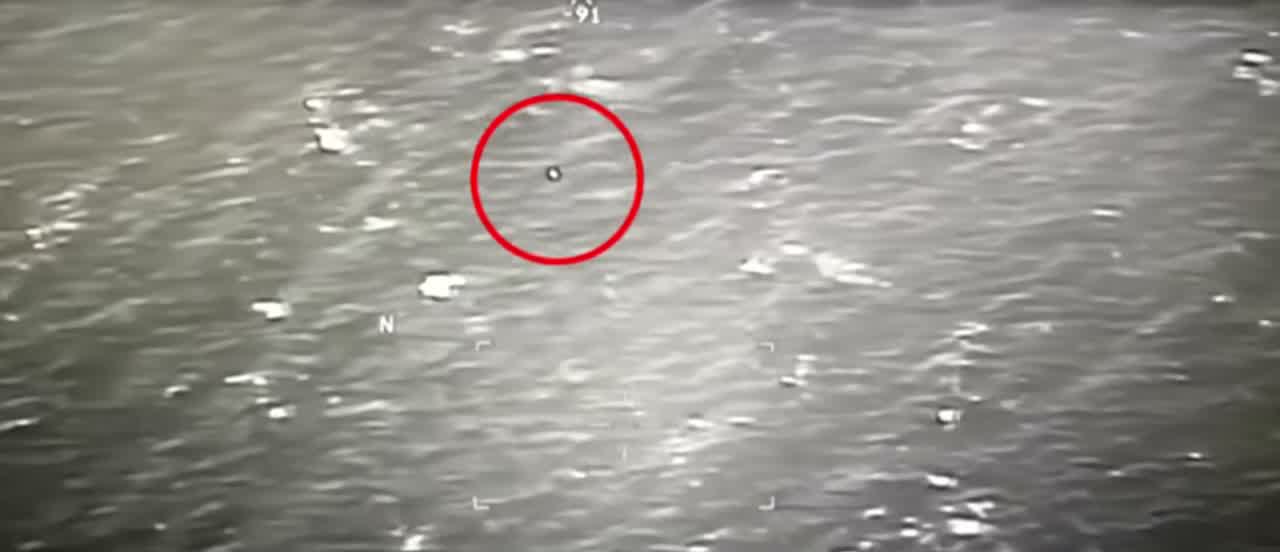
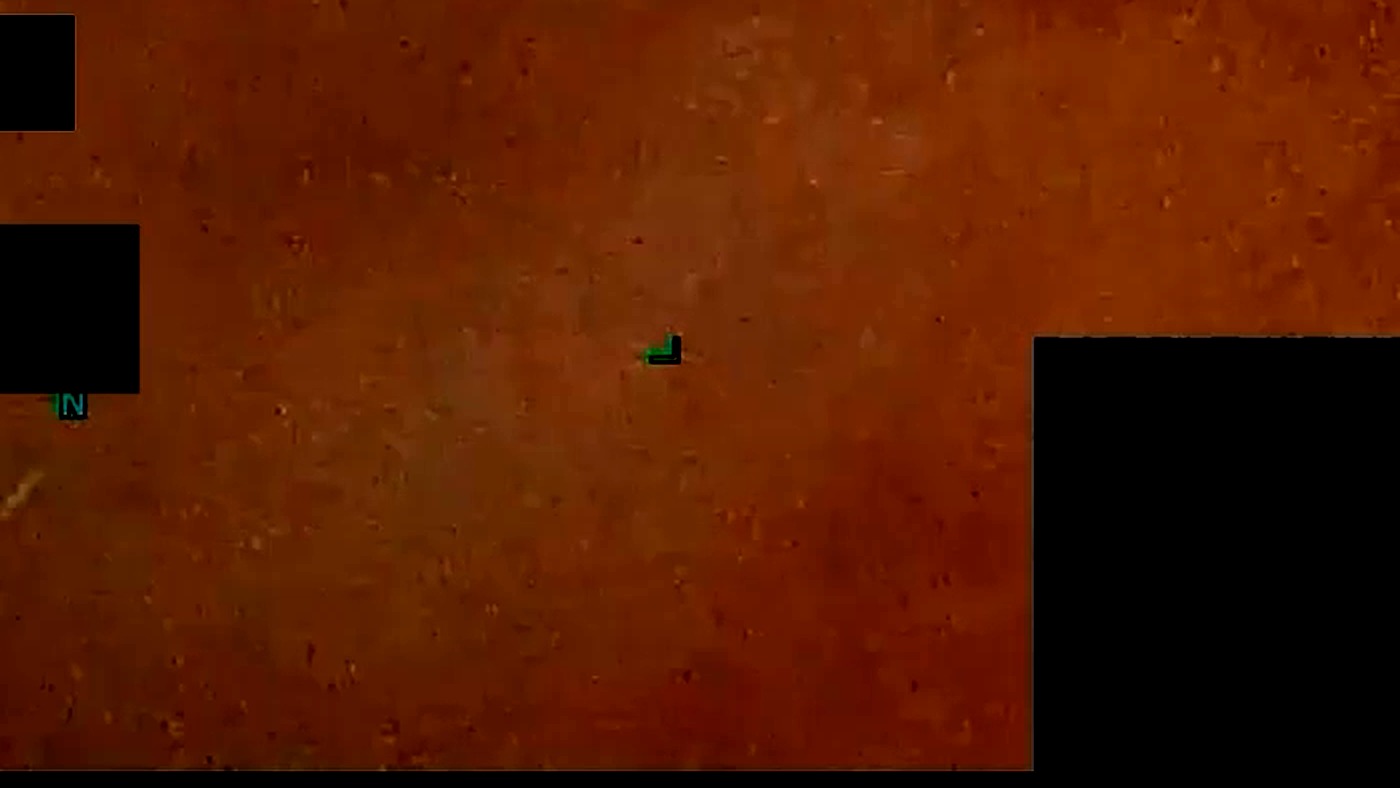
The objects themselves are small and low in contrast against the ground, which is the hardest background there is for this kind of footage. This archive was not able to produce a frame in which an object is unambiguously legible at publication quality, and rather than present an enhanced crop of something that might be terrain, the page carries a plain tracking frame and says what it is.
One detail in that frame is worth pointing out. The masks applied before release sit close to the tracking reticle, and one of them sits directly beneath it. Those masks cover the sensor's own data readouts, which is where range and altitude would appear.
More footage and images of this sighting
DOW-UAP-D109, Mission Report, Middle East, 2022, the paired MISREP giving the 0524Z to 0704Z observation window, the one to two metre size estimate and the dust storm note View source
What is the official explanation?
The paired document, DOW-UAP-D109, is the richest of the three Middle East mission reports in this release, and it contains the detail that the video cannot supply.
It records Operation Inherent Resolve, the 609th Air Operations Center, Air Forces Central as the major command, and the 20th Attack Squadron as the originating unit. Takeoff is logged at 042149:00ZMAY22, on station from 050057:00ZMAY22 to 051552:00ZMAY22, landing at 051924:00ZMAY22 and last engine shutdown at 051934:00ZMAY22. The original declassification date on the file is 4 May 2047, twenty five years from the sortie.
The mission was target development: pattern of life work against a compound, looking for weapons and ammunition storage and to identify personnel. The narrative records that the crew "CONDUCTED EEI RELATED ACTIVITY AND OBSERVED NO SIGNIFICANT/NEFARIOUS ACTIVITY UNTIL RTB". The UAP observation was incidental to all of that.
The observation section is where the substance is. Observation time is given as 050524:00ZMAY22, and the free text reads: "FROM 0524Z-0704Z, [the crew] WAS SCANNING VARIOUS POIs IVO [redacted] AND PERIODICALLY OBSERVED [redacted] UAPS FLYING SPORATICALLY WITHIN THE TARGET AREA AND IN THE NE PORTION OF [redacted]. ACCORDING TO THE [redacted], THE UAPs WERE TRAVELLING AT VARIOUS SPEEDS BETWEEN 80-180 MPH. WE WERE UNABLE TO DETERMINE ALTITUDE. THE SIZE OF THE UAPs WERE APPROXIMATELY 1-2 METERS. DURING THE OBSERVATION PERIOD, [the crew] WOULD REACQUIRE THE UAPs AFTER RETURNING THE SENSOR BACK TO THE ORIGIONAL POI LOCATIONS. THE UAPs DID NOT HINDER THE MISSION."
Four things in that paragraph are unusual for this archive. The observation window is 0524Z to 0704Z, one hour and forty minutes, far longer than the released video. The crew give a size estimate, approximately one to two metres, which almost no report in this collection does. They state outright that they could not determine altitude, which is a refusal to guess rather than a gap. And they record that the objects were still there each time the sensor came back to the same points of interest, so the objects persisted in place over a long period rather than transiting once.
The weather field carries the other half of the case, and the Department put it in the document itself: "DUE TO DUST STORMS SOME COLLECTION ON UAPS WAS AFFECTED BETWEEN 0524Z AND 0704Z." The dust storm window is the observation window, exactly.
What did the witnesses think it was?
The crew called them "PROB UAPS" in the mission narrative, meaning probable, which is a more guarded formulation than most of these reports use and is worth preserving rather than smoothing away.
Their account is internally consistent and notably unexcited. The objects flew sporadically within a target area they were already watching for other reasons, at speeds they put between 80 and 180 miles per hour, at a size they put at one to two metres, at an altitude they declined to estimate. They did not interfere with the mission and the crew did not treat them as a threat. The method of observation is recorded simply as full motion video.
The restraint is the notable feature. A crew that wanted to file something dramatic had a hundred minutes of material and the vocabulary available to them; what they filed instead was a size range, a speed range, an explicit refusal to state altitude, and a note that the weather was degrading their collection.
Is the Hundred Minute UAP Observation Over the Middle East, 5 May 2022 (PURSUE PR140 and PR141) real? The two-pass assessment
Pass one, how this could be mundane.
The dust storm is the strongest prosaic lead in the file and it comes from the Department's own weather field rather than from a sceptic. Dust storms loft a great deal of material, and objects of roughly one to two metres drifting sporadically within a confined area, over a hundred minutes, reacquired in the same places each time the sensor returned, is a fair description of debris in disturbed air. Plastic sheeting, agricultural film and general wind carried material are commonplace over inhabited ground in that theatre. The reported speeds of 80 to 180 miles per hour are high for debris, but they are unranged visual estimates with no altitude, and the crew say plainly they could not determine altitude, which means the speeds cannot be converted into anything either.
Birds are the other obvious candidate and fit the sporadic flight and the persistence in one area. So do small uncrewed aircraft, which in 2022 in that theatre were neither rare nor benign, and which would explain a size of one to two metres well.
Against all of those, none of them is what the crew concluded, and the crew had the live feed at full resolution in two sensor modes for a hundred minutes. That is a real argument and it should not be waved away. It is also not decisive, because trained observers misidentify things, and the report never records that the objects were identified or that the question was resolved.
Pass two, if the objects were what the crew could not identify.
Then several solid bodies of about one to two metres loitered over a surveilled compound for over an hour and a half, moving sporadically at speeds a Reaper crew put between 80 and 180 miles per hour, remaining in place across repeated sensor revisits, while an American strike platform watched them in both thermal and visible light and never worked out what they were.
The archive tiers this Unknown. The dust storm is a serious prosaic candidate and it is on the page because the Department's own document put it there; it is not a resolution, because a degraded collection window is not an identification, and nothing in the file says the objects were dust.
One correction to the public record. The Department's release manifest summarises DOW-UAP-D109 as describing "six small spherical objects grouped together" at 480 miles per hour. The document says nothing of the kind. Its narrative reads "PROB UAPS TRAVELING SW AT ROUGHLY 80-180 MPH", and its observation text gives 80 to 180 miles per hour and a size of one to two metres. The manifest's summary for this document is a copy of the summary for DOW-UAP-D108, a different encounter three years later, reproduced down to a shared typo. The two video records that point at D109 quote it correctly. Read the document, not the blurb.
Sources
- www.dvidshub.net/video/1023398/dow-uap-pr140-unresolved-uap-report-middle-east-2022
- www.dvidshub.net/video/1023400/dow-uap-pr141-unresolved-uap-report-middle-east-2022
- www.war.gov/medialink/ufo/sept-18/release-06/assets/DOW-UAP-D109_Mission-Report-Middle-East-2022.pdf
- www.war.gov/Portals/1/Interactive/2026/UFO/uap-data.csv?release=6
- www.war.gov/UFO/
- www.cbsnews.com/news/ufo-files-uap-pentagon-6th-release/
More cases from this region: UFO sightings in Undisclosed