The Thirteen Second Central Command Infrared Record from the Middle East, 2023 (PURSUE PR169)
Thirteen seconds of infrared video from a U.S. Central Command platform, published on 20 November 2026 as unresolved. It is the shortest record in the eighth PURSUE tranche and, unlike the other two videos in the same release, it carries a compact source that can actually be measured: a small bright object holding together across the clip at about twenty eight standard deviations over the background, drifting steadily down and to the right through the frame.
What did witnesses see at Middle East?
Thirteen seconds of electro-optical and infrared video, filed by U.S. Central Command and published as unresolved. It is the shortest record in the eighth PURSUE tranche, released on 20 November 2026 as DOW-UAP-PR169, "Unresolved UAP Report, Middle East, 2023".
The Department's entire description of the footage is one line: "00:00-00:13: The sensor pans to track an area of contrast, keeping it generally within the center of the frame." There is no month, no day, no coordinates, no platform, no unit and no witness statement.
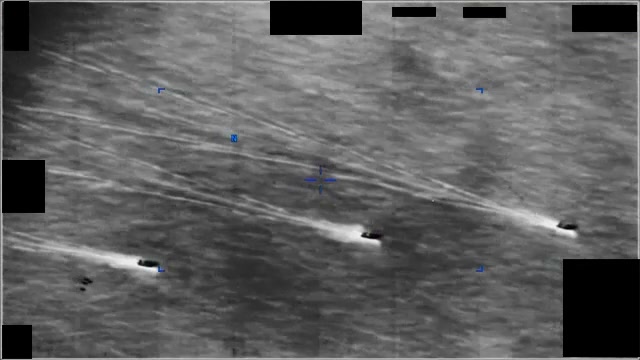
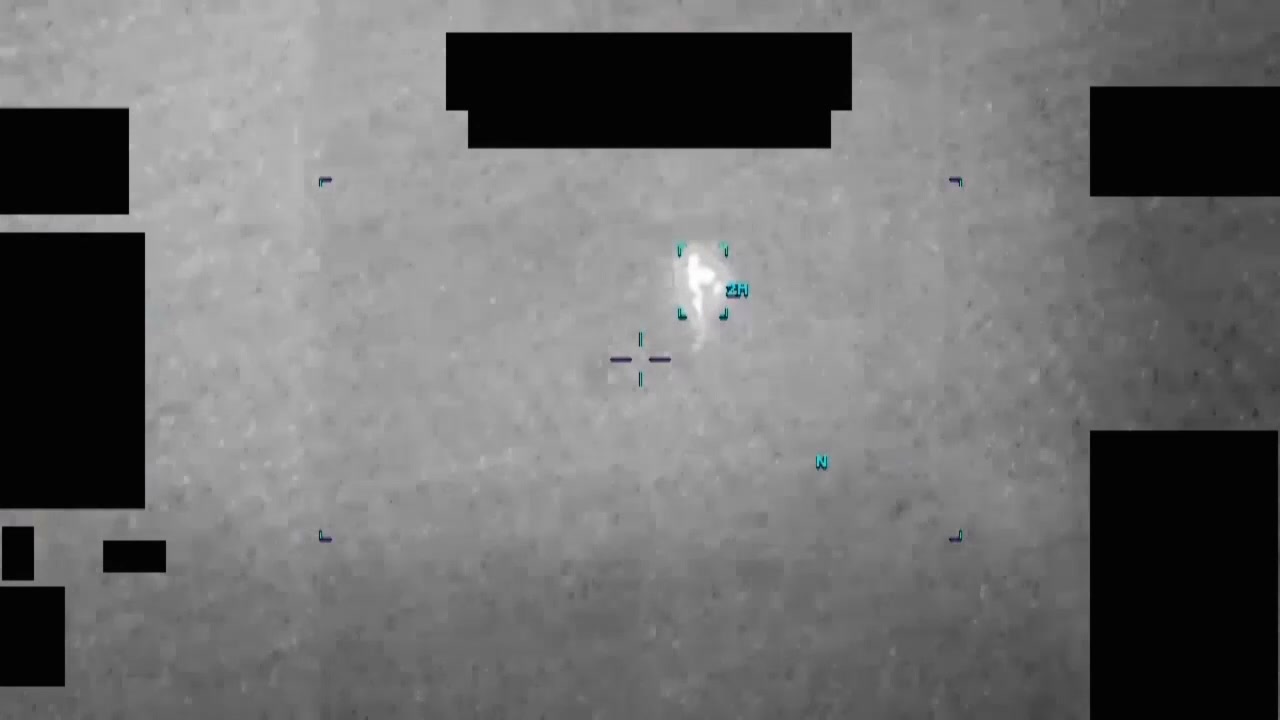
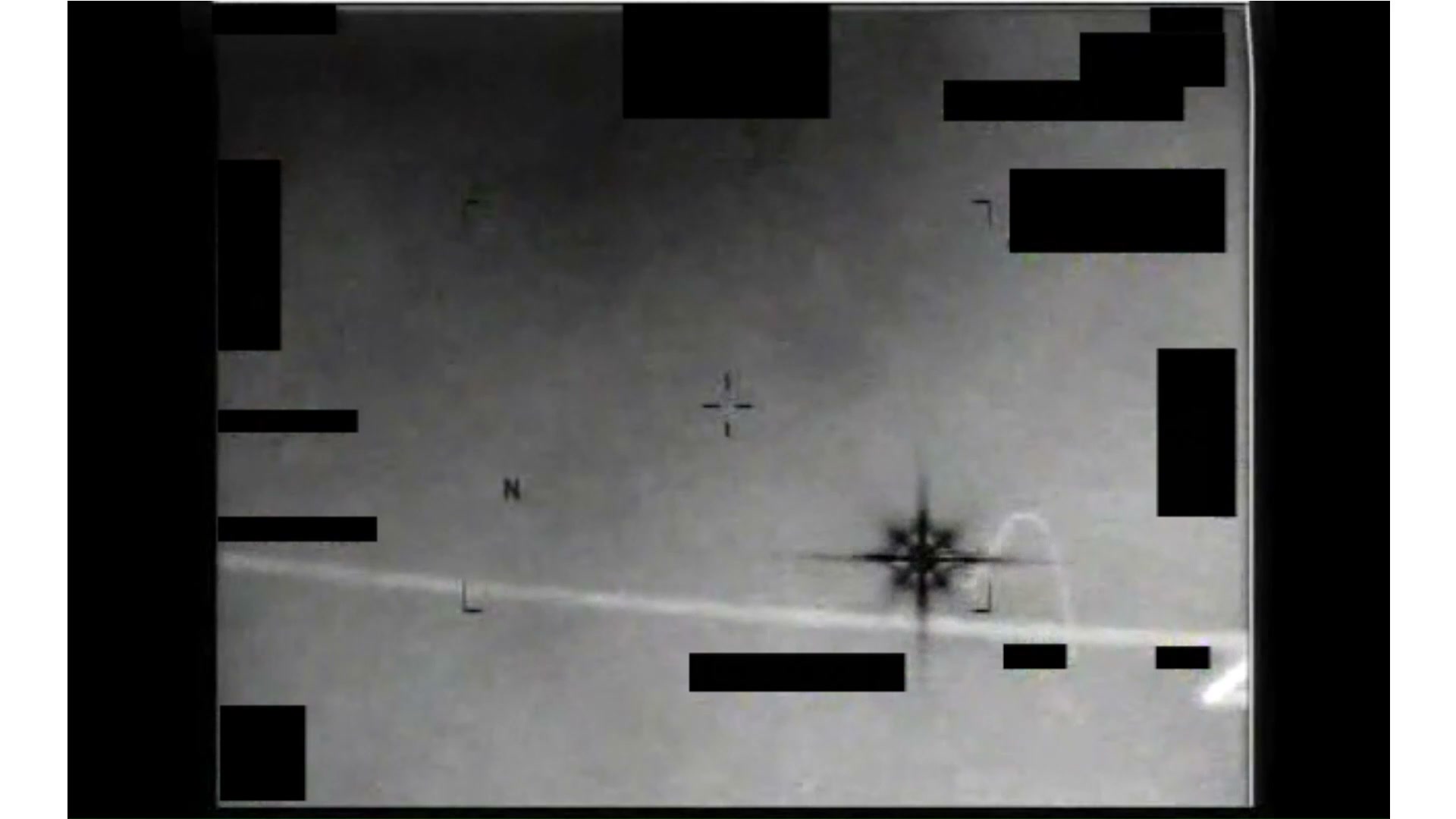
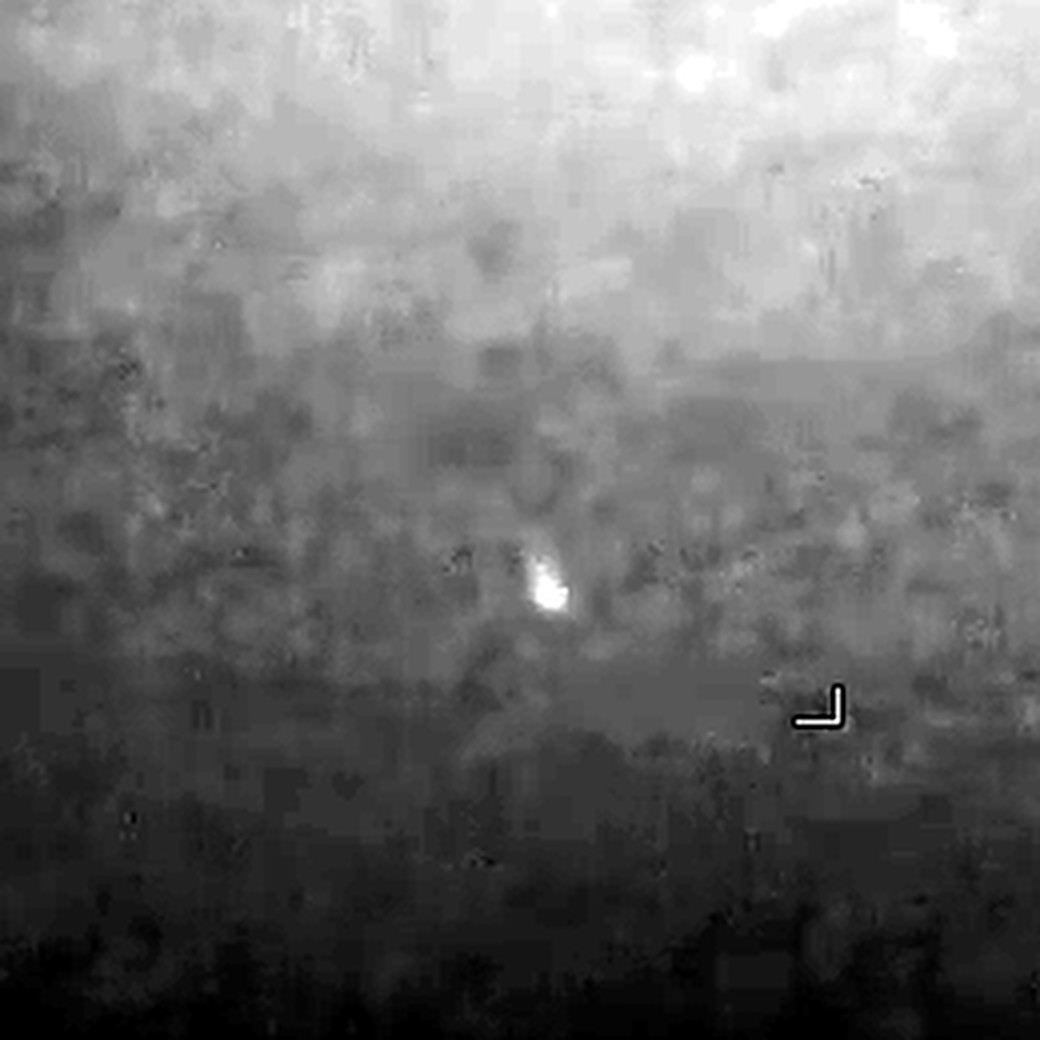
The released copy runs 13.61 seconds at 1280 by 720 pixels and just under thirty frames per second. Redaction blocks cover the corners, a strip across the top and a block on the left side, hiding the sensor's own on screen data. The sensor's symbology survives in cyan: a crosshair reticle at frame centre, four corner brackets marking a large fixed box, and a single letter marker to the left of centre. A small black square sits immediately below and right of the central reticle.
The field itself changes considerably across thirteen seconds. The opening frames show a smooth, near uniform gradient. By the middle of the clip the sensor has zoomed or the scene has changed, and the frame carries heavy fine texture of the kind a thermal sensor returns from broken cloud or ground clutter.
Against that textured field there is a compact bright source, and it is the one thing in the three Release 08 videos that this archive was able to measure cleanly.
More footage and images of this sighting
What is the official explanation?
The record was published by the Department of War on 20 November 2026 in the eighth PURSUE tranche. The manifest at war.gov lists it as a video record submitted by U.S. Central Command to the All-domain Anomaly Resolution Office, agency Department of War, incident location "Middle East", title year 2023, with the DVIDS video identifier 1030277.
The Video Pairing and PDF Pairing columns are both empty. In this corpus those columns are the Department's own answer to the question of whether several records describe one incident, so an empty pair is an assertion that no mission report and no other record has been published alongside this clip. There is no MISREP to read.
The manifest Incident Date column reads 7/15/05, which is one of six Release 08 rows whose date column contradicts its own title. Five of those six share the same spurious 05, so it is a single data entry artifact rather than six errors. The title year, 2023, is the usable field.
The release carries the Department's standard disclaimer that the video description is informational only and should not be read as an analytical judgment, investigative conclusion or factual determination about the event.
This archive already holds two separate pages covering CENTCOM records labelled "Middle East, 2023", built on PR024, PR136 and PR149. This is a fourth record under the same bare label and a different submission, so it gets its own page, which is the convention this archive has used for every PURSUE video record. Whether any of these four describe the same underlying incident is unanswerable from what the Department has published, and the empty pairing columns say that the Department is not claiming they do.
What did the witnesses think it was?
There is no witness. No aircrew statement, no platform, no unit, no month, no coordinates. Without a date to the day and a position, none of the external checks this archive normally runs against a sighting are available: no solar geometry, no satellite shadow calculation, no reentry catalogue query, no weather, no air traffic. Without a sensor type there is no field of view, so no measurement in this case is converted into an angle or a speed, and none should be.
Is the Thirteen Second Central Command Infrared Record from the Middle East, 2023 (PURSUE PR169) real? The two-pass assessment
Pass one asks how this could be ordinary, and the first task on a sensor clip is to establish that there is anything to discuss.
A detection pass was run over the clip, subtracting a Gaussian blurred background and keeping compact components above five standard deviations of the local residual. The first pass returned a trap worth recording. Its highest ranked detection, at 31.5 standard deviations, sat at exactly the same pixel coordinates in frame after frame with an identical footprint of sixty eight pixels. That is the sensor's own cyan letter marker. The archive's standing rule applies: an automatic brightest peak search finds the instrument before it finds the object, and a detection that never moves is not a detection.
With the symbology excluded by colour and the redaction blocks masked, a genuine source appears. Its strongest detection reaches 27.6 standard deviations above the local residual noise at 5.47 seconds, and it is still at 27.3 at 13.08 seconds, with footprints running between twenty seven and forty five pixels in boxes from five by six up to ten by seven. More usefully, it moves. Across frames 357 to 402, that is 11.91 to 13.41 seconds, successive detections run (878,442), (880,465), (880,471), (882,481), (884,491), (891,508), (894,518), (897,526): a steady drift down and to the right of about eighty six pixels in a second and a half, monotonic in both axes. Rendering the crop confirms it by eye as a compact bright blob with a soft halo, sitting in the textured field rather than on any mask or marker.
That is as far as the measurement goes, and the limits need stating rather than implying. Frame motion is not sky motion. The Department says in its own description that the sensor was panning to keep the object near the centre of frame, so the drift measured here is the residual between the object and a moving sensor, not the object's track. Without a published field of view no pixel can be converted into an angle, and without a date or a position there is nothing to check the object against. Every claim about speed, altitude, size or behaviour that could be attached to this clip is unsupported, in both directions.
What the measurement does establish is narrow and real. The object is not noise and not an artifact of the redaction or the symbology. At nearly twenty eight standard deviations above the local background it is unambiguously a source in the scene, it is compact, and it persists. On a thirteen second clip that is the whole of what can honestly be claimed.
Pass two asks what is left if the record is taken at face value. A combatant command submitted thirteen seconds of sensor video to the office created to resolve such reports, that office did not resolve it, and the Department published it as unresolved. The footage contains a real compact thermal source that the sensor was deliberately tracking. Nothing in the release identifies it and nothing in the footage constrains what it was.
Tier Unknown. There is no official narrative to weigh, because the government's own position is that the report is unresolved.
The one piece of metadata that would change this case is the sensor type and field of view. With it, the measured drift becomes an angular rate and the footprint becomes an angular size. Without it, this page can say the object is real and cannot say anything else.
Sources
- www.war.gov/UFO/
- www.dvidshub.net/video/1030277/
- www.war.gov/Portals/1/Interactive/2026/UFO/uap-data.csv
More cases from this region: UFO sightings in Undisclosed