The Central Command Electro-Optical Record from the Middle East, 2026 (PURSUE PR168)
Fifty four seconds of electro-optical and infrared video, filed by U.S. Central Command and published on 20 November 2026 as unresolved. The Department dates it to 2026, which makes it the most recent event in the whole PURSUE corpus, and publishes no month, no coordinates, no platform and no witness. What the footage actually resolves is a near featureless sky, a scatter of small bright points, and one large bright disc nobody has identified.
What did witnesses see at Middle East?
The Department of War released fifty four seconds of electro-optical and infrared video on 20 November 2026. It is the newest event in the eighth PURSUE tranche and, by the year on its own label, the newest event anywhere in the PURSUE corpus.
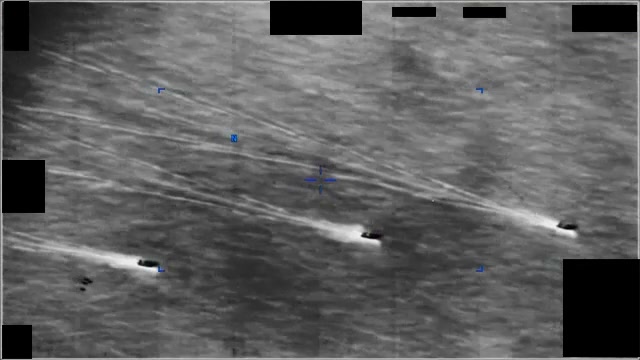
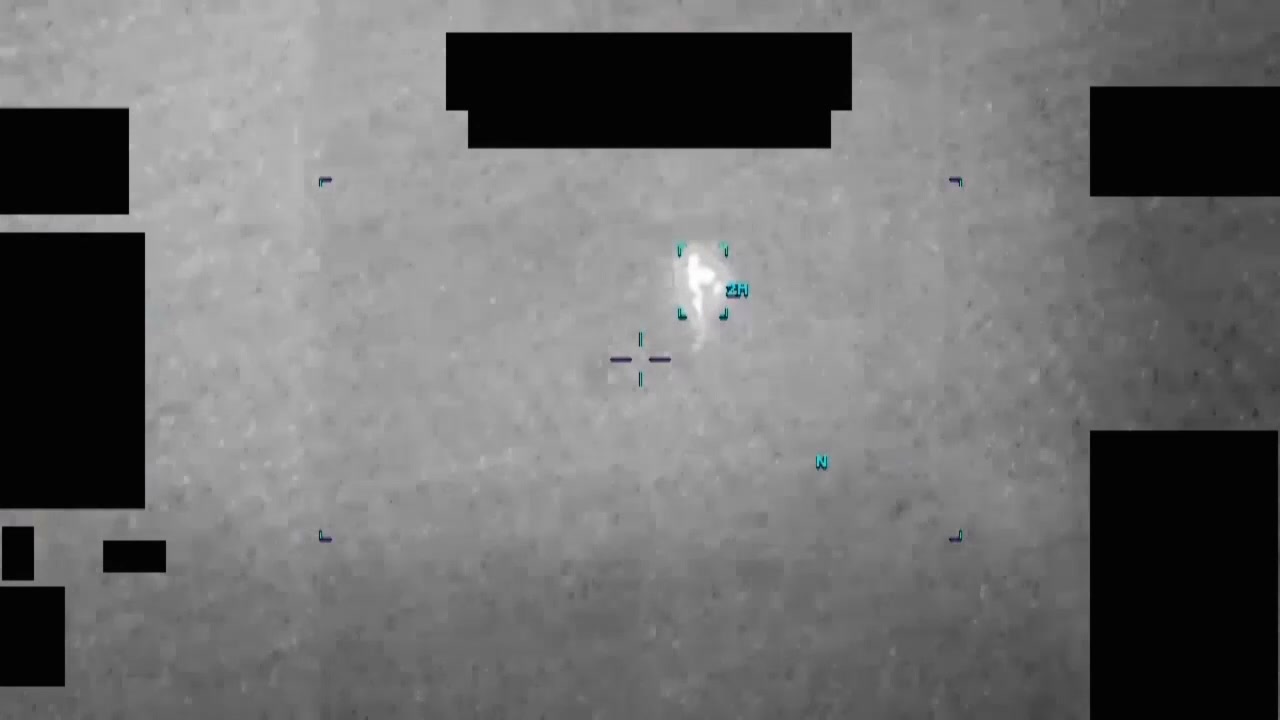
The record is DOW-UAP-PR168, "Unresolved UAP Report, Middle East, 2026". The Department's own description of the footage runs to three lines and is worth quoting in full, because it is the only official account of what happens in it. From zero to fifteen seconds, "the sensor pans to track multiple areas of contrast, moving generally from right to left across the frame". From sixteen to twenty eight seconds, "the sensor pans and adjusts its level of magnification several times". From twenty nine to fifty four seconds, "the sensor zooms in to track two areas of contrast, panning up and to the left of the frame. The sensor intermittently loses contact with the areas of contrast."
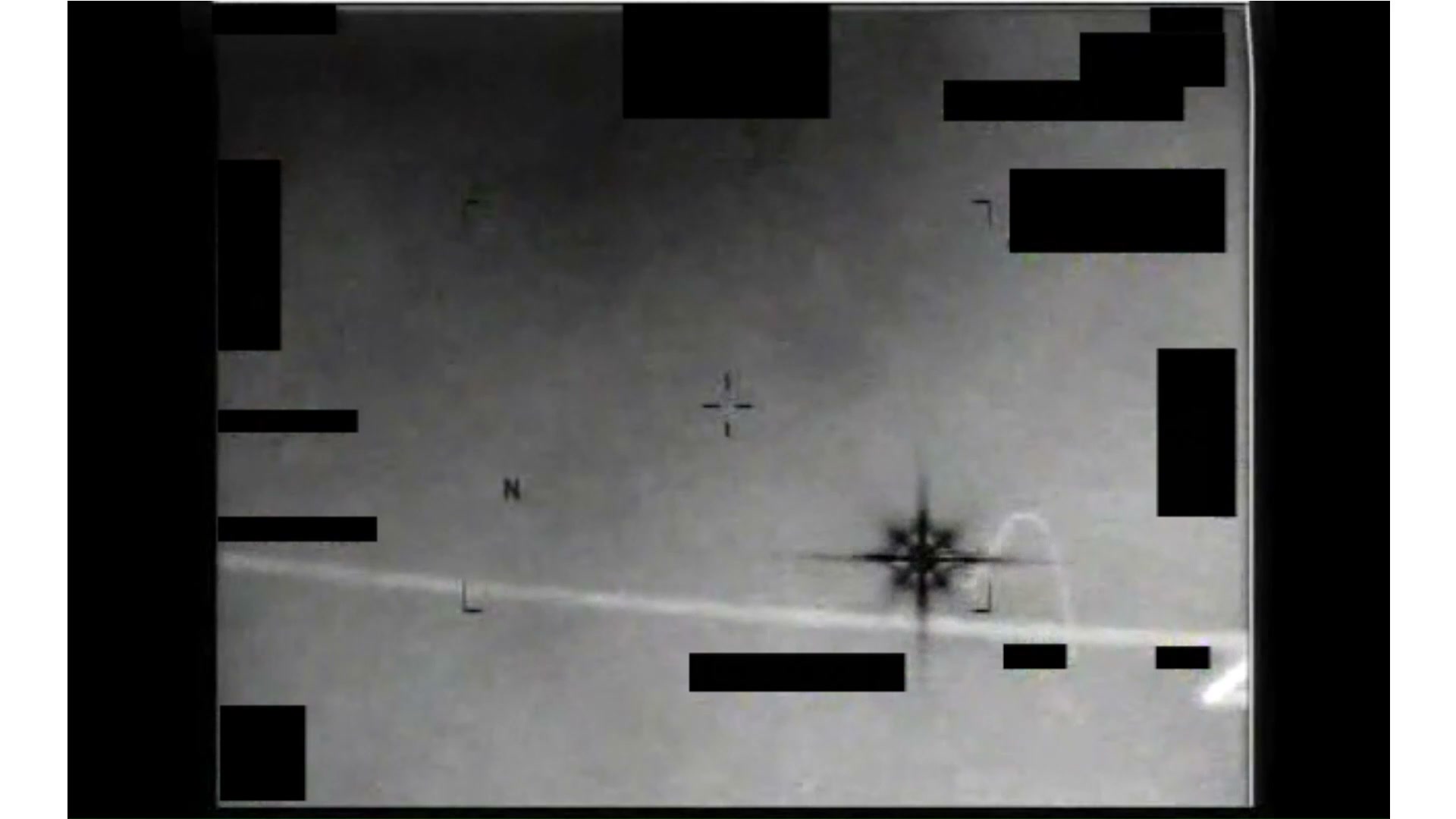
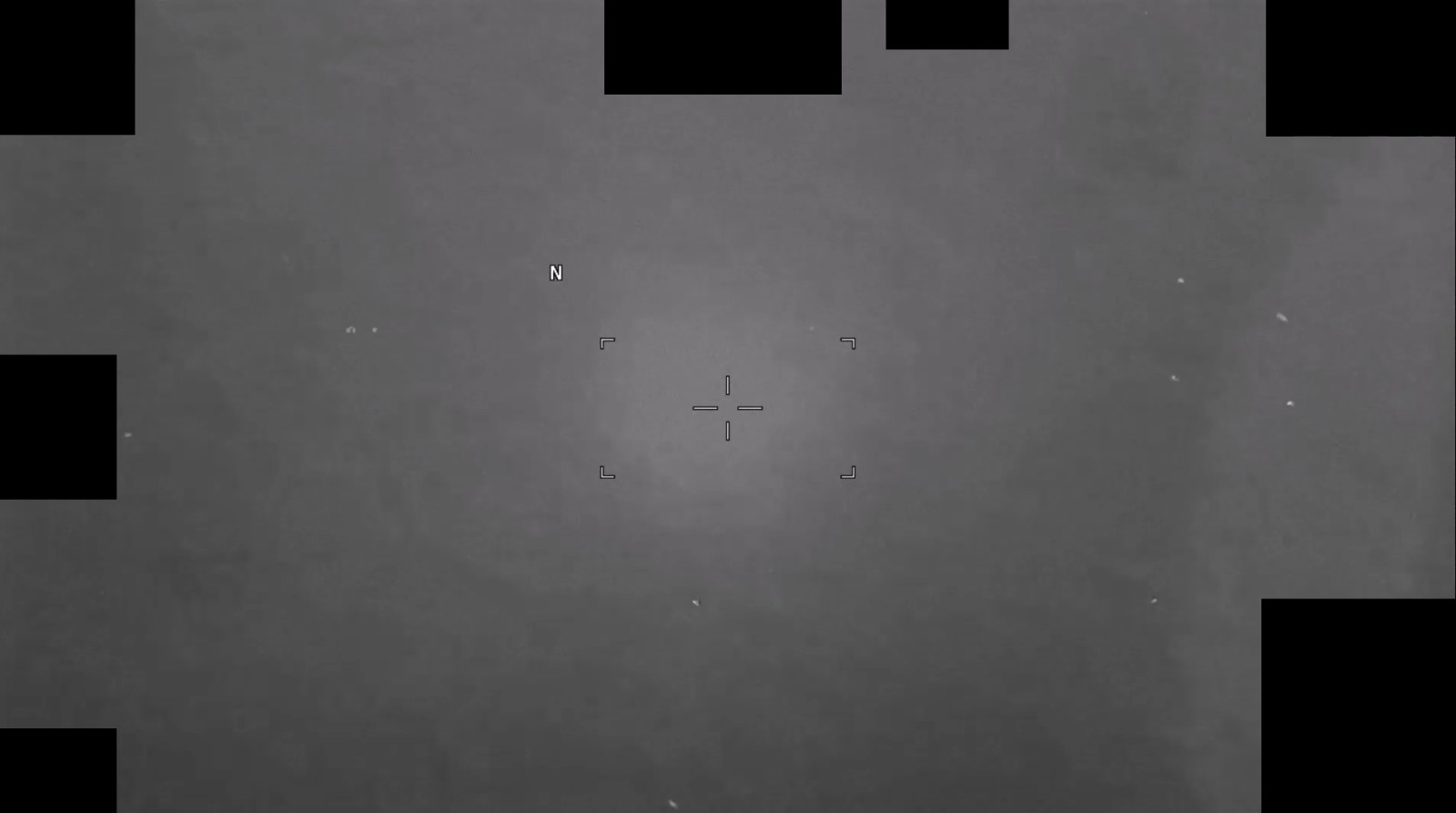
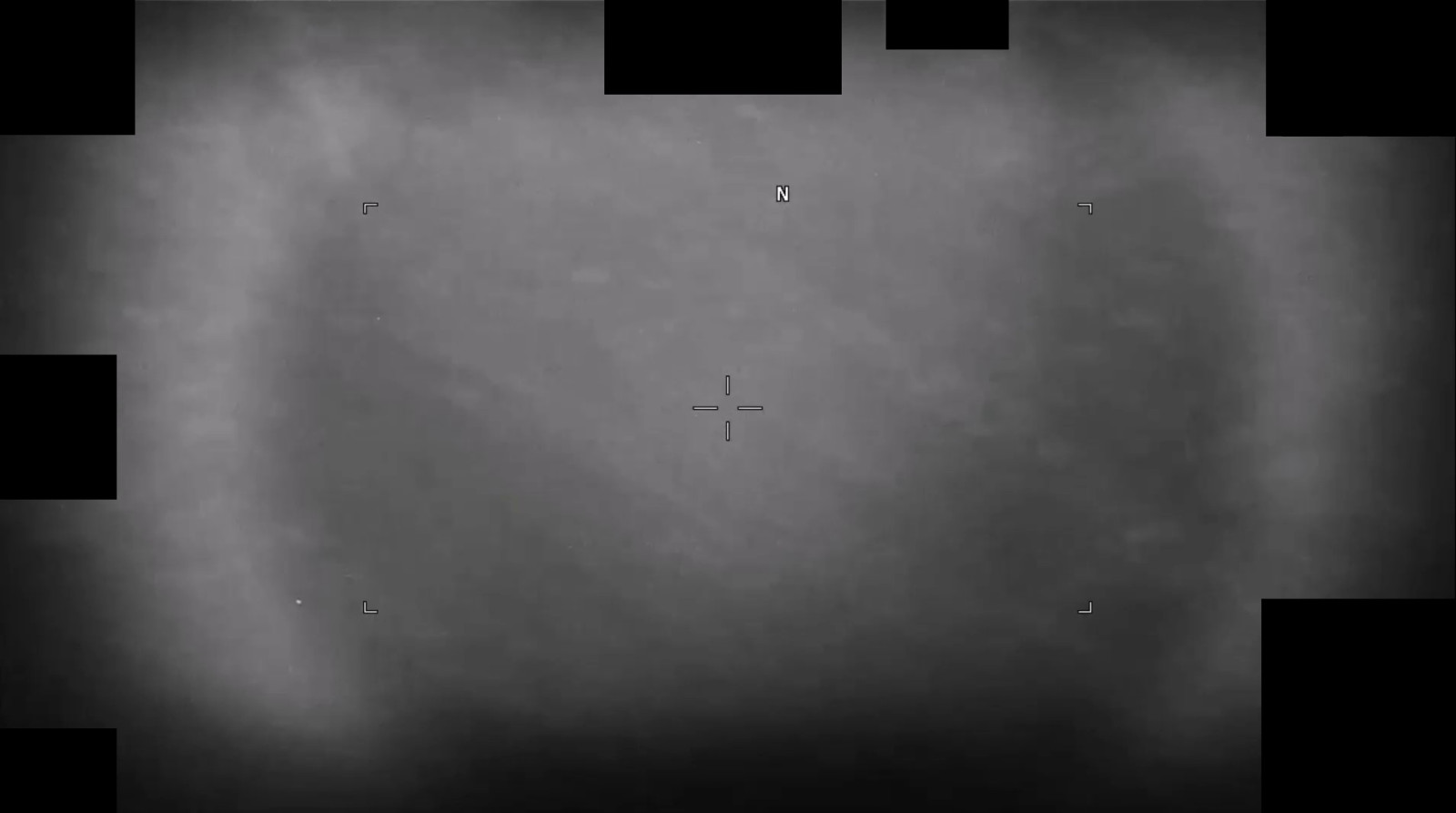
Everything else on this page comes from the file itself. The released copy runs 54.87 seconds at 1908 by 1066 pixels and sixty frames per second, which is a markedly better copy than most of the PURSUE video records. Black rectangles have been applied over the sensor's on screen data before release, covering the corners, a strip across the top and blocks down the left and lower right. A crosshair reticle sits at frame centre, four corner brackets mark a large fixed box, and a single character marker sits to the left of centre.
For most of its length the frame is close to featureless, a smooth brightness gradient with a scatter of very small bright points. Those points are what the Department means by areas of contrast, and they are the thing the sensor is following.
Two things in the clip are larger than that and neither is mentioned in the official description. At about twenty six seconds a large, sharply bounded bright disc enters from the right edge of the frame. It is clipped by the frame, so its full extent is not visible, but the part that is in view spans about one hundred and sixty pixels across, roughly eight per cent of the frame width, and sits about thirty five grey levels above the surrounding field. From roughly forty seconds to the end, the view fills with a very large bright structure with a bright rim and a darker centre, consistent with a sensor blooming or defocusing on a strong source.
More footage and images of this sighting
What is the official explanation?
The Department of War published the record on 20 November 2026 in the eighth PURSUE tranche, through the Presidential Unsealing and Reporting System for UAP Encounters. The manifest at war.gov lists it as a video record submitted by U.S. Central Command to the All-domain Anomaly Resolution Office, with the agency given as the Department of War, the incident location as "Middle East" and the title year as 2026.
The release carries the disclaimer the Department attaches to every video record of this kind: "This video description is provided for informational purposes only. Readers should not interpret any part of this description as reflecting an analytical judgment, investigative conclusion, or factual determination regarding the described event's validity, nature, or significance."
The manifest's Video Pairing and PDF Pairing columns are both empty for this record. In this corpus those columns are how the Department links the records it treats as parts of one incident, so an empty pair is an assertion that no mission report, no still imagery and no other video has been published alongside this clip. There is no paired MISREP to read, which is the difference between this case and the better documented CENTCOM records already in this archive.
The manifest Incident Date column reads 7/18/05. That date is not usable. Six of the forty three Release 08 rows carry a year in that column which their own titles contradict, five of them sharing the same bogus 05, so this is a single data entry artifact in the Department's own spreadsheet rather than six separate mistakes. The record's title year, 2026, is the field to use, and it is the field this page uses.
One claim circulating in the coverage of this release needs correcting here because it attaches to this record. A widely syndicated headline described the Department as releasing "new UFO video showing mystery object passing naval ship". No naval vessel appears in any of the three Release 08 video blurbs, all of which say the footage came from "a U.S. Military platform". The only naval ship radar record in the entire PURSUE corpus is CIA-UAP-D022, the AN/SPS-49 track from the guided missile destroyer USS Gyatt off Puerto Rico on 19 November 1964, which was released in the fifth tranche in August 2026 and is a different document about a different event thirty two years earlier.
What did the witnesses think it was?
There is no witness. The Department publishes no aircrew statement, no unit, no platform type, no month and no coordinates, and the empty pairing columns confirm that no mission report accompanies the clip. Everything a reader would want in order to judge the event, including whether anyone was looking out of a window at the time, is absent from the release.
That absence is itself the most consequential fact about the record, and it is worth being plain about what it costs. Without a date to the day there is no ephemeris check, no satellite shadow geometry, no reentry check against the catalogue, no weather. Without coordinates there is no terrain, no airspace, no air traffic. Without a platform type there is no sensor specification and therefore no field of view, which is why nothing on this page converts a pixel into an angle.
Is the Central Command Electro-Optical Record from the Middle East, 2026 (PURSUE PR168) real? The two-pass assessment
Pass one asks how this could be ordinary, and for a clip like this the first job is to find out what the frame actually contains rather than what a summary says it contains.
A detection pass was run over the whole clip, subtracting a Gaussian blurred background and keeping only compact components several standard deviations above the local residual noise. The first result was a trap and is reported here because it is instructive. The strongest detections in the clip, at between fifty nine and seventy six standard deviations, sat at a handful of fixed positions that repeated frame after frame with identical areas and with a surrounding annulus whose brightness varied by zero. Those are bright characters of the sensor's own on screen symbology, left visible where the redaction blocks did not quite cover them. They are not objects. Any pass that ranks by significance and does not check whether the detection moves will return the instrument every time.
With the symbology and the redaction blocks excluded, no compact high significance source survives in this clip. That is a real result and it needs to be stated carefully, because it does not mean nothing is there. The Department describes areas of contrast, and areas of contrast is the right phrase: what the footage carries are faint, small, low contrast points against a smooth field, the kind of signal a blurred background residual at this noise level cannot isolate from the sensor's own structure. The honest finding is that this archive cannot measure them, not that they are absent.
The two large features can be measured, and neither is explained by the release. The disc that enters at twenty six seconds is sharply bounded and clearly circular where it is not cut by the frame edge, about one hundred and sixty pixels across in its visible portion and about thirty five grey levels above the local field. A sharply edged circular source entering the field of view of a panning electro-optical sensor is what the Sun, the Moon or a bright lamp looks like, and a bright rimmed structure filling the frame at the end of the clip is what such a source looks like once the optic blooms or defocuses on it. This archive is not going to name it. With no date, no time, no location and no sensor orientation published, there is no way to run the one check that would settle it, and asserting a celestial identification without that check would be exactly the kind of confident guess this archive exists to avoid.
Pass two asks what is left if the record is taken at face value, and what is left is the provenance. A combatant command submitted this to the office Congress created to resolve such reports, that office did not resolve it, and the Department published it as unresolved. That is a meaningful fact about the reporting system. It is not evidence about the object, and the two should not be run together.
Tier Unknown, and in this instance Unknown is not a hedge. The United States government filed the report, declined to identify what is in it, and published it under a heading that says so.
The practical note for anyone working this record later: the clip is better than most in the corpus at 1908 by 1066 and sixty frames per second, so a sharper analysis than this one is possible if the Department ever publishes the sensor type and field of view, which is the single piece of metadata that would turn these pixels into angles.
Sources
- www.war.gov/UFO/
- www.dvidshub.net/video/1030274/
- www.war.gov/Portals/1/Interactive/2026/UFO/uap-data.csv
More cases from this region: UFO sightings in Undisclosed