The Mongo Photo Case
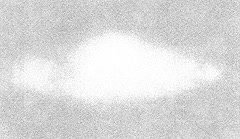
Six men, retirees aged 45 and up, were sitting around a campfire at the Trading Post Campgrounds at Mongo, in LaGrange County, Indiana, about 40 miles north-northwest of Fort Wayne and 5 miles from the Michigan border. This case file covers what witnesses reported, the official narrative, and a two-pass assessment with its evidence tier.
What did witnesses see at Trading Post Campgrounds?
Six men, retirees aged 45 and up, were sitting around a campfire at the Trading Post Campgrounds at Mongo, in LaGrange County, Indiana, about 40 miles north-northwest of Fort Wayne and 5 miles from the Michigan border. It was Wednesday 31 August 1994, roughly 8:30 pm Indiana time, which is 9:30 pm Eastern Daylight Time. The prime witness, recorded in the file as JK, was an area fire supervisor for the Forest Management Division of the Michigan Department of Natural Resources, living in Jackson, Michigan. A second witness, DB, was a firefighter from Howell, Michigan who had recently been out West with a fire crew shooting photographs of large wildfires, and he was the one who took the pictures. FB was a retired Michigan DNR man from Cass City. The group also included a retired Michigan State Trooper from Carroll, Michigan and a retired U.S. Postal Service worker, the latter being the one member who did not think the object was a UFO. The whole sighting was brief, estimated at one to three minutes.
In Ridge's taped interview of 22 October 1994, JK described it in his own words: "Off to the southwest it looked like the moon, glowing through the treetops, and it was low. I said, that can't be the moon, cause we are in the last phase. Then it started moving. Then it moved right out from behind the trees into an open area near a road and hovered toward us. And it was clear as can be. It was a flying saucer, just that vivid. The object glided into our area at a shallow angle, turned toward us and began to hover. Standing still, the white glow turned transparent. It looked like a white strobe light on the top of the dome. A bright red flash of light under the bottom flashed 3 or 4 times like a strobe and it disappeared to the south and east very quickly, within 2 seconds."
The object first looked like a bright meteor or the moon, then resolved into a self-luminous domed disc. When it had come closest the witnesses said it looked like a fried egg, with a clear central line right around the middle and visible panels on its body when it was due south of them. JK put it no further than a quarter mile away and somewhere between 500 feet and as low as 100 feet up at one point. There was absolutely no noise, and three dogs at the campsite did not react in any way. DB was told to grab his camera and shoot, and he got at least four good frames before it left.
The same object, or one like it, appears to have been seen elsewhere that night. JK met two hunters the next morning who told him that around 2130 EDT, while a half mile south of Mongo, they had watched a white object move past at low level at high speed. Separately, about 20 miles southeast at Hamilton, Indiana at roughly 8:45 pm, a man, his wife and two daughters watched a similar large pear-shaped object pass less than 100 feet overhead with no sound and shot video of it. Part of that video was later erased, but in one surviving scene the object is large and clearly not a conventional craft.
What is the official explanation?
There was no government investigation. The official record here is the civilian investigation, which is unusually thorough and is the reason the case carries weight. The Indiana Group of MUFON ran it: Francis Ridge as State Director, with Linda Dahlkemper, Bruce Engstrom, Robert Taylor and Roger Sugden, plus John Timmerman of the J. Allen Hynek Center for UFO Studies (CUFOS), who conducted an on-site investigation that turned up no natural source. The UFO Filter Center at Mt. Vernon, Indiana logged the first phone report on 7 October 1994 and received photographic enlargements of negatives 8 and 9, along with witness drawings and news clippings, on 21 October. Ridge taped his telephone interview with the prime witness on 22 October. The investigation took over a year.
The negatives were sent to Dr. Richard F. Haines, a former NASA Ames research scientist, who prepared the photogrammetric analysis published as "The Mongo Photo Case Analysis" in the MUFON UFO Journal, Number 334, February 1996. Haines scanned frames 4 through 7 with a LaCie Silver Scanner II and analyzed them in Adobe Photoshop on a Power Macintosh 7100/66. Working from the witnesses' estimated maximum distance and the object's measured angular size, he calculated that the object was about 19 feet long and 8.5 feet thick at an assumed range of 2,300 feet, and that it had covered roughly 3,900 feet over a 30-second span for a ground speed of about 192 mph. He measured the object's width-to-length ratio in frames 4 and 5 at 0.444 and 0.452.
Haines's published conclusion is the official finding of record: "The self-luminous aerial object seen and photographed at Mongo, Indiana on August 31, 1994 has remained unidentified after the various evaluations cited above. On the one hand, its overall shape and flight characteristics are not unlike many scores of other UFOs reported for more than fifty years from around the world, many of which were captured in photographs. On the other hand, a blimp definitely was seen during the night of August 31, 1994 in the Mongo area. The aerial object photographed cannot be positively identified at this time. It remains a UFO." Ridge's own scoring placed it at Berliner Credibility 7 (still photographs by a professional) and Speiser P5 (highly credible, leaving almost no doubt). In his closing comment Ridge added that investigators "have been unable to obtain any official flight records for any blimp flights explaining the Mongo event."
One inconsistency between the two primary documents is worth flagging plainly. Ridge's field notes record the camera as a Vivitar fully automatic 35mm loaded with 400 ASA color film and a standard lens, while Haines's published analysis names a Kodak K-40 camera with 35mm color film. Both agree it was a 35mm color exposure taken by DB and that there was no telephoto involved.
What did the witnesses think it was?
The witnesses were adamant the object was not a balloon, a plane or a blimp. The prime witness JK went hunting the next day, actually saw the Family Channel advertising blimp that some authorities were pointing to as the explanation, and told Ridge flatly, "There is no way in hell that we saw a blimp that night." He had even initially mistaken the object for a bright meteor before it began maneuvering, which is the opposite of someone reaching for an exotic explanation. DB, the man who shot the photographs, was a working firefighter who had recently been photographing wildfires out West, so he was used to handling a camera under pressure. The retired postal worker in the group did not think it was a UFO, and the investigators recorded that dissent rather than hiding it, which speaks to the care taken with the file.
The corroboration runs wider than the campfire. Two hunters independently reported a fast-moving white object near Mongo at the same time, around 2130 EDT. Newspaper accounts named two further witnesses, the Martins, who testified this was no blimp. And about 20 miles to the southeast at Hamilton, Indiana, a family of four watched a similar low, silent, pear-shaped object and captured it on video at 8:45 pm. Ridge tallied twelve reliable witnesses across the linked sightings and concluded an unidentified craft had been in the area that evening, alongside a separate, genuinely present blimp. The witnesses believed they had seen a structured, intelligently controlled craft that hovered, turned toward them, flashed red beneath, and then shot off to the southeast in about two seconds.
The dispute
The single counter-explanation on the table is an advertising blimp, and it is not a frivolous one, which is why the case sits in the disputed band rather than fully clear. A blimp was demonstrably in the region that night. Local newspaper accounts attributed northern Indiana reports to the Family Channel blimp, and Kelley (1995) documented that a Virgin Lightship Company airship out of Orlando, Florida flew from Minneapolis to Lakehurst, New Jersey in a 31-hour transit that included that evening. The suggestion that the photographed object was an internally illuminated advertising blimp was raised on the basis of that confirmed presence plus the general similarity of the photographs to known blimp footage. That is a real, named, locally documented alternative, and the witness JK only saw the actual Family Channel blimp the day after, so his certainty that the two were different is a personal judgment rather than a controlled comparison.
What keeps the dispute weak is that the only method-shown analysis on record went looking specifically for the blimp and rejected it. Dr. Richard Haines measured the object's width-to-length ratio at 0.444 and 0.452, roughly double the 0.24 to 0.30 of the Lightship and most advertising blimps. He noted a prominent dome on top in every frame that real blimps do not have, the absence of the gondola and the dark opaque structural end-caps that blimps show, and the lack of the FAA-mandated anti-collision strobe that, on a certified blimp, must be visible from every angle, yet only one of the six campsite witnesses saw any flashing light. He calculated that a 128-foot American Blimp Corporation airship would have had to sit about four miles away to produce so small an image on the negative, which contradicts the witnesses and the two hunters who placed the object much closer and to the north. His velocity figures, 192 mph in one model and 131 to 262 mph in another, all exceed the roughly 55 mph top speed of the Lightship, and the object's reported stopping, direction changes and high-acceleration departure are not blimp behavior. No sound was heard, where a blimp's reciprocating engines should carry within 2,000 to 3,000 feet on a calm night.
For the blimp explanation to actually win, someone would need to do the work Haines did and show the opposite: produce the flight log of a specific airship over Mongo at 9:30 pm, or a photogrammetric match of the negatives to a blimp at a plausible range. That has not happened. Investigators could obtain no flight records placing any blimp at the campground at the sighting time, and MUFON's chief photo analyst Jeff Sainio, who supplied comparison blimp footage, did not produce a published identification of the object as a blimp. So the dispute is a confirmed nearby object of the proposed type with no demonstrated link to the actual photographs, set against a named expert's measurement-based rejection of that link. That is enough to keep the case disputed but not enough to settle it, which is exactly what the barely-disputed tier is for.
Is the Mongo Photo Case real? The two-pass assessment
Pass one, the entirely ordinary readings. The obvious candidate is the advertising blimp, and unlike most UFO cases there really was a blimp in the area that night, the Family Channel blimp by newspaper account and a Virgin Lightship airship by documented transit. A domed, panelled, glowing oval at night, photographed small and far on 35mm film, is consistent in raw shape with an internally lit blimp, and eyewitness distance and speed estimates at night are notoriously unreliable, which could inflate an honest blimp into something faster and stranger. A second ordinary reading is a bright astronomical object low in the southwest, since Jupiter and Venus were both in that quarter, although that fails immediately because planets do not move out from behind a treeline, hover, flash red and leave in two seconds. Hoax is a third possibility in the abstract, but the file shows multiple separated witness groups, including two hunters and a family 20 miles away with video, plus a built-in skeptic in the campfire group, and no method, prop or motive has ever surfaced, so hoax has nothing behind it.
Pass two, if it is real. Then what the eight adults at the campground, the two hunters, the Martins and the Hamilton family saw was a structured, self-luminous domed disc that approached, hovered, flashed red beneath, and departed to the southeast under apparent control and in silence. That is the witnesses' own conclusion and the conclusion the investigation reached after eliminating natural and man-made sources.
Weighing it: the photographs are authenticated and were subjected to real photogrammetry by a named former NASA scientist, Dr. Richard F. Haines, whose published method is reproducible and whose finding is that the object remains unidentified. The one counter-explanation, the blimp, is genuinely present in the area, which is why this cannot be filed as cleanly verified-unexplained, but it has never been linked to the actual negatives by anyone showing their work, and the only person who did show his work measured the object out of blimp territory on shape, size, speed, sound and strobe behavior. A confirmed nearby blimp with no demonstrated tie to the imagery, against a method-shown expert rejection of that tie, is a weak dispute over an otherwise strong, well-witnessed, officially-logged photo case. That lands it at Barely Disputed.
Sources
- nicap.org/reports/mongoM.htm
- www.nicap.org/1994.htm
- web.archive.org/web/20250130141422/https://www.ufocasebook.com/mongo1994.html
- www.indianapolismonthly.com/arts-and-culture/circle-city/the-10-weirdest-ufo-cases-in-indiana-history/
- nicap.org/bios/detailed/Ridge_F_detailed%20_bio.htm
More cases from this region: UFO sightings in United States