The Munroe Falls, Ohio Occupant Encounter (1967)

David Morris, 19 years old, a factory worker employed in Kent, Ohio, was driving home to Munroe Falls in the early morning of 28 March 1967. This case file covers what witnesses reported, the official narrative, and a two-pass assessment with its evidence tier.
What did witnesses see at Little River Road?
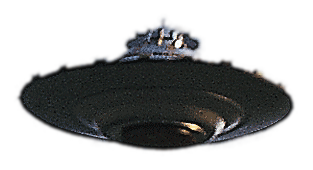
David Morris, 19 years old, a factory worker employed in Kent, Ohio, was driving home to Munroe Falls in the early morning of 28 March 1967. At about 2:30 a.m., heading west along Little River Road, he topped a small hill and suddenly saw an orange-glowing object ahead of him. In the NICAP report's words he saw it in a field on the south side of the road, apparently hovering several feet above the ground. He described it as a cone-shaped object about 25 feet tall and 12 feet wide at the base, with a small sphere on top, the whole thing giving off a soft orange glow.
As Morris slowed his car for a better look, he saw four or five small figures scurrying quickly back and forth across the road about 50 feet ahead of him. They were small, between three and a half and four feet tall, and they gave off the same soft orange glow as the object. According to NICAP's account, "Morris quickly slammed on his brakes but, unable to stop in time, struck one of the beings as it crossed the road to his right. He heard a thump at the moment of impact, and saw the being's raised hand as it was struck. He saw no fingers on this hand."
After the impact Morris stopped. He then "observed a group of little figures standing as if clustered about something lying on the road and, suddenly frightened, he sped off." It is one of the very few cases on record in which a witness claims to have physically struck a UFO occupant. The Lorenzen account in "UFOs Over the Americas" adds that the driver was distracted by the glowing cone before suddenly seeing the five creatures in front of his car.
The single piece of physical residue Morris could point to was on his own vehicle. The next day he found dents in his right front bumper that, he said, had not been there before. There is no report of blood, debris, scorched ground, a recovered body, or any trace left on the roadway itself. The encounter happened in the dark, in the early hours, with Morris alone in the car, and no second motorist or roadside witness came forward to place anything on Little River Road that night.
What is the official explanation?
There was no military or Project Blue Book investigation of this case on the public record. It was worked entirely by civilian investigators, which is itself notable, because the apparatus that usually moved to explain away 1967 sightings simply never engaged with this one. The principal documentation is NICAP's own field report, published in the 1969 NICAP special report "UFOs: A New Look" (authors Richard Hall, Ted Bloecher and Isabel Davis; editors Donald Keyhoe and Gordon Lore, Jr.), in Section VII, "Are There UFO Occupants?"
NICAP states plainly who did the legwork: "The incident was carefully investigated by Charles E. Toner and Roy Wiley of the Pittsburgh NICAP Subcommittee" on several subsequent occasions. NICAP adds that "Carol Clapp, the reporter for the Ravenna Record-Courier, did extensive checking on the case and provided NICAP with additional details." The Record-Courier is the local Portage County newspaper, so the case had contemporary local press coverage as well as the organized civilian field inquiry. The investigators inspected the car and confirmed the fresh dents in the right front bumper that Morris described.
What NICAP did not do is reach a verdict. Section VII presents Munroe Falls as one in a catalogue of close-range occupant reports and does not declare it solved, hoaxed, or explained. The report's framing is that occupant cases like this one were piling up faster than they could be dismissed, and it offered Munroe Falls as data rather than as a closed file. The competing national organization, APRO, documented the same event independently. Jim and Coral Lorenzen carried it in "UFOs Over the Americas" (Signet Books, 1968, pages 36 to 38), where it was characterized as possibly the first case on record of physical injury inflicted on the occupant of a disc. So both of the major American civilian UFO bodies of the era logged the case, from separate files, and neither resolved it.
No identified aircraft, balloon launch, ground vehicle, or animal was ever tied to the sighting by any investigating party. No official agency produced a counter-narrative. The case sits where the civilian investigators left it: documented, witness inspected, the car examined, and unexplained.
What did the witnesses think it was?
David Morris maintained that he had seen a glowing cone-shaped craft and a group of small glowing humanoids, and that he had struck one of them with his car. The detail he kept returning to was tactile rather than visual: the thump of the impact and the raised, fingerless hand he saw in the instant the being was struck. That is not the description of a distant light or a misjudged star. It is a claim of contact, and Morris reported it to civilian investigators who came back to him repeatedly, which gave him many chances to soften or drop the story and, on the record, he did not.
He was a 19 year old factory worker, not a researcher or a public figure, and there is no indication in the NICAP or Lorenzen accounts that he sought money or attention. He drove away frightened, and the case only became known because he reported it and a local reporter, Carol Clapp, then dug into it. Decades later Morris spoke about the night again in recorded interviews circulated online, still describing the encounter as something that happened to him rather than walking it back. No recantation, confession, or admission of a hoax by Morris exists in any source consulted.
The hard limit on corroboration is that Morris was alone. No passenger rode with him, and no independent motorist reported seeing the cone, the orange figures, or anything lying in the road on Little River Road that night. The corroboration that does exist is indirect: the fresh bumper damage that the NICAP subcommittee inspected, and the fact that two separate civilian investigative bodies, NICAP and APRO, plus a working newspaper reporter, found the witness and his account consistent enough to publish without dismissing him. That is real but limited support, and the case ultimately rests on the credibility of one man's testimony.
The dispute
The dispute here is not a confession, a recovered prop, or a named object positively identified as the cause. It is the structural weakness of the evidence. The entire case rests on the testimony of one man, David Morris, who was alone in his car on a dark rural road at roughly 2:30 a.m., the hour when driver fatigue and headlight illusions are most likely. No passenger, no second motorist, and no roadside resident corroborated the glowing cone, the orange humanoids, or anything lying in the road. Skeptical readers of the case have long noted that a glowing cone over a field and small figures "scurrying" across the road are consistent with an ordinary light source plus an animal, most obviously a deer, caught in headlights, and that a real animal strike would account for both the felt thump and the dents found the next day.
The only physical evidence is the damage to Morris's own right front bumper, which the NICAP subcommittee inspected. Bumper dents are the least diagnostic trace imaginable. They carry no signature that distinguishes a struck animal, a pothole, or prior wear from contact with an extraterrestrial occupant, and no blood, tissue, hair, scorching, body, or roadway residue was ever recovered to link the dents to the claimed being. The dramatic "first injury to a disc occupant" framing comes from the Lorenzens' 1968 commentary, not from anything established at the scene, so the case's most striking claim is partly researcher interpretation layered onto a single witness's memory.
What keeps this at Barely Disputed rather than anything stronger is that the counter-explanation, persuasive as it is, was never actually demonstrated. No investigator identified the specific animal, vehicle, or light involved, no one reconstructed the encounter and showed the mechanism, and Morris never recanted across decades of being asked about it. NICAP's Charles Toner and Roy Wiley investigated him repeatedly and inspected his car rather than dismissing him, APRO documented the case independently, and a local reporter checked it out, yet none of these parties produced a positive identification of an ordinary cause. The dispute is therefore real but unproven, a strong natural-explanation hypothesis with no shown method behind it, which is exactly the threshold for "barely" and not "strongly."
Is the Munroe Falls, Ohio Occupant Encounter (1967) real? The two-pass assessment
Pass one, the ordinary readings. The whole event is anchored to a single witness driving alone at 2:30 a.m., the part of the night when fatigue, headlight glare, and the hypnagogic edge of drowsiness can manufacture vivid imagery. An orange glow low over a field could begin as a mundane light source, and small figures "scurrying" across a country road at night fit the silhouette of deer or other animals caught in headlights, which would also explain a real thump and genuine bumper dents the next morning. The "fingerless raised hand" is exactly the kind of detail a startled mind assembles from a half-second glimpse. The only physical evidence is dents on an old car, the most easily acquired and least diagnostic damage imaginable, with no blood, hair, debris, body, or road trace to tie it to anything unusual. And the framing that elevated the case, the Lorenzens' line about the first injury to a disc occupant, is interpretive coloring added by researchers, not something established at the scene. A tired teenager who clipped an animal and built a frightening narrative around an odd light would produce this exact report. Nothing in pass one requires a hoax; it requires only ordinary roadside conditions and one frightened driver.
Pass two, if it happened as described. Then a 19 year old independently encountered a 25-foot glowing cone with a sphere on top and several small self-luminous humanoids, struck one hard enough to hear and feel the blow and see its hand, stopped to find the others gathered around something in the road, and fled. This is a close encounter of the second kind shading into the rare category of physical contact with an occupant, and it lines up with the wider 1966 to 1967 wave of low, glowing objects and small-humanoid reports across the American Midwest. Two competing national civilian organizations logged it from separate case files, and an organized NICAP subcommittee returned to the witness repeatedly and inspected his car rather than taking the story at face value.
Weighing the two passes, the counter-explanations are plausible but unproven. No one identified a specific animal, vehicle, light, or any real-world object as the cause, no analyst reconstructed the night and showed the mechanism, and there is no confession or recantation. What there is on the other side is also thin: one uncorroborated witness and a set of ordinary dents. That balance, a real and seriously investigated report with no shown debunk and no smoking-gun evidence, is the textbook profile of a Barely Disputed case. The dispute is the inherent fragility of single-witness nighttime testimony and the trivially ordinary nature of the only physical trace, not any demonstrated identification of what Morris hit. Tier: Barely Disputed.
Sources
- www.nicap.org/newlook/section_VII.htm
- www.biblio.com/book/ufos-new-look-special-report-national/d/136788213
- roundtownufosociety.com/ufosovertheamericas.htm
- www.thinkaboutitdocs.com/1967-alien-encounter-munroe-falls-ohio/
- www.abebooks.com/first-edition/UFOs-New-Look-Special-Report-National/945429732/bd
More cases from this region: UFO sightings in United States