The Ririe, Idaho Occupant Encounter
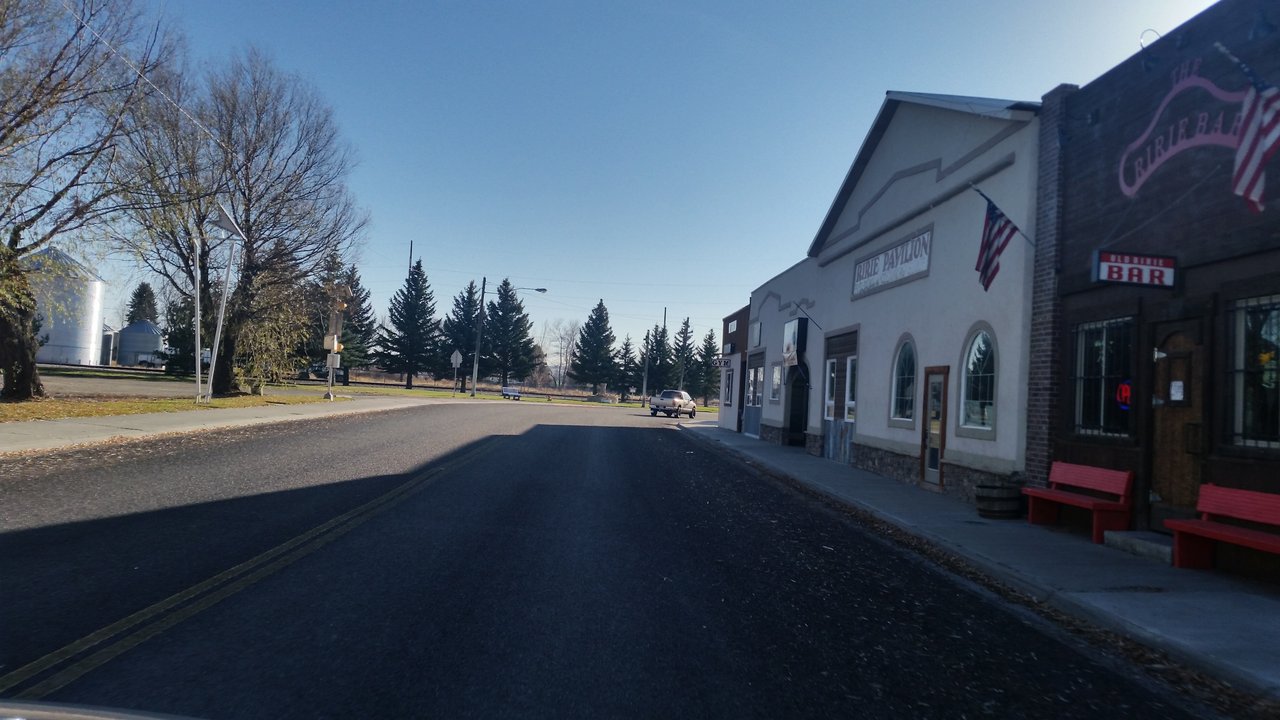
On the night of 2 November 1967, two young Navajo men, Guy Tossie and Will Begay, were driving south on Highway 26 just outside Ririe, Idaho, at about 9:30 pm. According to the account recorded in the NICAP case database and repeated across every later compilation, a sudden blinding flash of light burst in front of the car, and then a small domed object appeared in the road ahead. This case file covers what witnesses reported, the official narrative, and a two-pass assessment with its evidence tier.
What did witnesses see at Highway 26 near Ririe?
On the night of 2 November 1967, two young Navajo men, Guy Tossie and Will Begay, were driving south on Highway 26 just outside Ririe, Idaho, at about 9:30 pm. According to the account recorded in the NICAP case database and repeated across every later compilation, a sudden blinding flash of light burst in front of the car, and then a small domed object appeared in the road ahead. Begay was at the wheel, and the car came to a stop without him touching the brakes. The object hovered roughly five feet above the highway. It was about eight feet wide, with a transparent dome, and it flashed green and orange lights around its rim while bathing the surrounding area in a vivid green glow. Inside the dome the two men said they could see two small occupants.
The dome opened as if hinged, and one of the occupants floated down to the ground. The witnesses put its height at about three and a half feet. It carried a kind of pack on its back that protruded above and behind its head. Its face was oval and described as heavily pitted and creased, almost scarred, with two small round eyes and a straight slit of a mouth. Large ears stood high on a hairless head. The being moved to the driver's side, and without the men seeing the door physically worked, it was suddenly inside behind the wheel. Horrified, Tossie and Begay shoved themselves over to the passenger side. The car began to move. Whether the small figure was driving it or whether the object overhead was somehow towing it, the witnesses could not tell. The car was taken off the road and out into a field of stubble wheat, the domed craft holding a fixed position just ahead of it the whole way.
When the car stopped in the field, Tossie threw open the door and bolted, running roughly a quarter mile to the nearest farmhouse, which belonged to a farmer named Willard Hammon. Tossie later said a bright light followed him as he ran, which he took to be the second occupant. Begay stayed frozen in the car, where the first being jabbered at him in sounds he described as high and rapid, like a bird. After a short time, reported as somewhere around fifteen minutes, both small figures rose up into the craft, the dome closed, and the object climbed away in a zigzag path before shooting off. At Hammon's house Tossie was so shaken he could barely make himself understood. After the farmer and his family calmed him, they went back out to the field with him and found the car, with Begay still in it in a state of near shock.
What is the official explanation?
There was no federal Air Force investigation of record for this case, which falls outside the better known Project Blue Book files. The official handling was local and civilian. The report reached law enforcement almost by accident: a local constable and a Bonneville County deputy sheriff who happened to stop in were told the story, and the Idaho State Police were summoned. Officers who responded examined the witnesses' car. The investigation record carried by NICAP notes that the vehicle showed no scratches, no burns, and no radiation readings above normal background level, and that the men themselves bore no marks. In other words, the responding authorities found nothing physical that either confirmed or contradicted the account, which is consistent with the small number of close-occupant cases that leave no measurable trace.
The substantive investigation was conducted for the National Investigations Committee on Aerial Phenomena (NICAP) by its local representative C.R. Ricks of Idaho Falls, a short drive from Ririe. Ricks looked into the incident shortly after it was reported and interviewed the witnesses. His inquiry turned up two corroborating threads that are preserved in the NICAP case write-up. First, a number of local farmers reported that their cattle had bolted that evening for reasons they could not explain. Second, Ricks learned of another man who claimed that on the same night he had a strikingly similar encounter on a nearby road, but that witness was emphatic about not having his name made public and would not go on the record, so his account could not be independently documented. A separate area resident is also reported to have seen a zigzagging light in the sky that night, matching the departure the two men described.
The investigative apparatus here is modest by the standards of a famous case. There was no polygraph examination on record, no Air Force file, and no formal government report that survives in the public archives. What exists is a contemporary civilian investigation by a recognized research body, a same-night police response that found no contradicting physical evidence, and at least one independent corroborating observation of an object in the sky. The official posture was not to debunk the case but simply that there was nothing to act on, since no crime, no damage beyond a car briefly off the road, and no physical residue were involved.
What did the witnesses think it was?
Guy Tossie and Will Begay never wavered in maintaining that what they described had happened to them. Both were young Navajo men, and the encounter left them genuinely frightened. The detail that Tossie ran a quarter mile in the dark to a stranger's farmhouse, arriving so distressed that he could barely communicate, and that Begay was found still sitting rigid in the car, fits the behavior of two people reacting to something they experienced as real rather than two people calmly constructing a story. Willard Hammon and his family did not witness the craft, but they did witness the immediate aftermath: a terrified young man at their door at night and a second young man in shock out in the field. Their role corroborates the men's emotional state and the location of the car in the wheat stubble, even though it cannot corroborate the object itself.
The corroboration that matters most is the second anonymous witness developed by NICAP's C.R. Ricks, who reported a similar same-night encounter on a nearby road but refused to be identified. Under Graham's standing rule, a witness who will not go on the record is not thereby discredited, but his account also cannot be independently verified, so it sits as a suggestive but unconfirmed parallel rather than as proof. The farmers whose cattle bolted and the resident who reported a zigzagging light add further independent, if circumstantial, threads that something unusual occurred in the area that evening. The witnesses themselves clearly believed they had met non-human occupants of a craft. They did not seek publicity, did not sell the story, and the case surfaced through a research investigator rather than through the men promoting it, which weighs against a deliberate hoax for attention or money.
The dispute
The case is disputed, but only at the level of a counter-argument from incredulity rather than a demonstrated debunk. The principal skeptical treatment is an article titled "The Drunkards of Ririe" on The Iron Skeptic website. Its argument is that the two men had been drinking that night, that no one other than the two occupants of the car is named or identified, and, in the author's own words, that "there is absolutely zero physical or non-anecdotal evidence to back the two men's version of events up." The skeptic frames the whole story as resting on a willingness to "blindly believe the words of credible witnesses." The popular retelling of this angle, repeated on case-summary wikis, extends the idea into a specific motive: that Tossie and Begay had been drinking, crashed or ran the car off the road, and invented the UFO to explain the car ending up in a field and to avoid a drunk-driving charge.
That is a plausible-sounding alternative, and the drinking is taken as established background in several accounts, so the case cannot be called cleanly unexplained. But it does not rise to a method-shown debunk for several reasons. There is no confession from either man, no recantation, and no recovered evidence of fabrication. No specific mundane object was ever positively identified as the thing the men saw. The DUI-avoidance motive is an inference, not a documented fact: there is no surviving citation, arrest record, or sobriety finding tied to the men in the public accounts, only the general statement that they had been drinking. The skeptical case is essentially that extraordinary claims with only witness testimony should be rejected, which is a reasonable default stance but is an argument about the burden of proof, not a positive demonstration that this particular event was a drunken crash dressed up as a UFO.
Set against the alcohol explanation are the elements it does not account for: the same-night corroborating witness on a nearby road, the cattle that bolted, the independent report of a zigzagging light, and the responding officers finding the car undamaged with no burns and no abnormal radiation, which is awkward for a story that supposedly began with a drunken crash. None of those threads is decisive, and intoxication can certainly distort perception, so the dispute is real and is honestly recorded here. The weight of it, though, is that of a strong skeptical prior plus a documented detail of drinking, not a shown mechanism. That places the case in the barely disputed band: the counter-explanation exists and is taken seriously, but it has not been demonstrated, and the case largely still stands on the testimony and its scattered corroboration.
Is the Ririe, Idaho Occupant Encounter real? The two-pass assessment
Pass one, the entirely ordinary readings. The most economical explanation, and the one advanced by The Iron Skeptic, is alcohol. Two young men driving a rural Idaho highway at night after drinking could have run the car off the road into a wheat field, and a frightening, embarrassing, and potentially prosecutable situation could have been reframed, consciously or not, as an encounter with a craft and its occupants. Alcohol degrades perception and memory and can seed genuinely believed false recollections, and the bird-like jabbering and the floating, door-less entry are the kind of dreamlike details that intoxication or panic can manufacture. A second strictly ordinary reading is misperception of a real but mundane stimulus, headlights, a low aircraft, or farm lights, amplified by fear into a structured narrative, with the car simply having drifted off the road. A third is ordinary hoax, two men inventing a story, although the absence of any profit motive, their refusal to seek publicity, and the genuine distress witnessed by the Hammon family cut against a deliberate fabrication. What none of these ordinary explanations supplies is a shown mechanism. No crash report, no sobriety test, no recovered prop, and no identified real-world object has ever been produced. The drinking is documented in the retellings, but the chain from drinking to invented-UFO is inferred, not demonstrated.
Pass two, if the testimony is taken at face value. Then this is a classic 1967-wave close encounter of the third kind: a small domed craft with a transparent canopy, two short occupants with pitted oval faces, slit mouths, high-set ears, and dorsal packs, briefly taking control of a civilian vehicle and moving it into a field before departing in a zigzag climb. It fits the broader humanoid-occupant pattern catalogued by researchers across that extraordinary 1967 flap, and it carries faint physical and witness corroboration: cattle bolting, a separate report of a zigzagging light, a same-night second witness on a nearby road, and a car that responding officers found unmarked and not abnormally radioactive.
Weighing the two passes against the tiering rules, the official and civilian apparatus treated this as real enough to investigate, with the Idaho State Police responding and NICAP's C.R. Ricks conducting a contemporary inquiry, and neither found evidence contradicting the men. The only counter-explanation is an incredulity argument anchored on the witnesses having been drinking and on the absence of physical proof. That is a serious and legitimate objection, which is why the case is not listed as verified unexplained. But it is not a confession, not a recantation, not a recovered hoax, and not a positive identification of a specific mundane cause, so it does not meet the bar for strongly disputed. The honest tier is Barely Disputed: a weak but real counter-explanation exists, it has not been demonstrated, and the case otherwise stands on consistent testimony with scattered independent corroboration.
Sources
- www.nicap.org/newlook/section_VII.htm
- www.ufoevidence.org/cases/case561.htm
- www.theironskeptic.com/articles/ririe/ririe.htm
More cases from this region: UFO sightings in United States