The Petrozavodsk Jellyfish
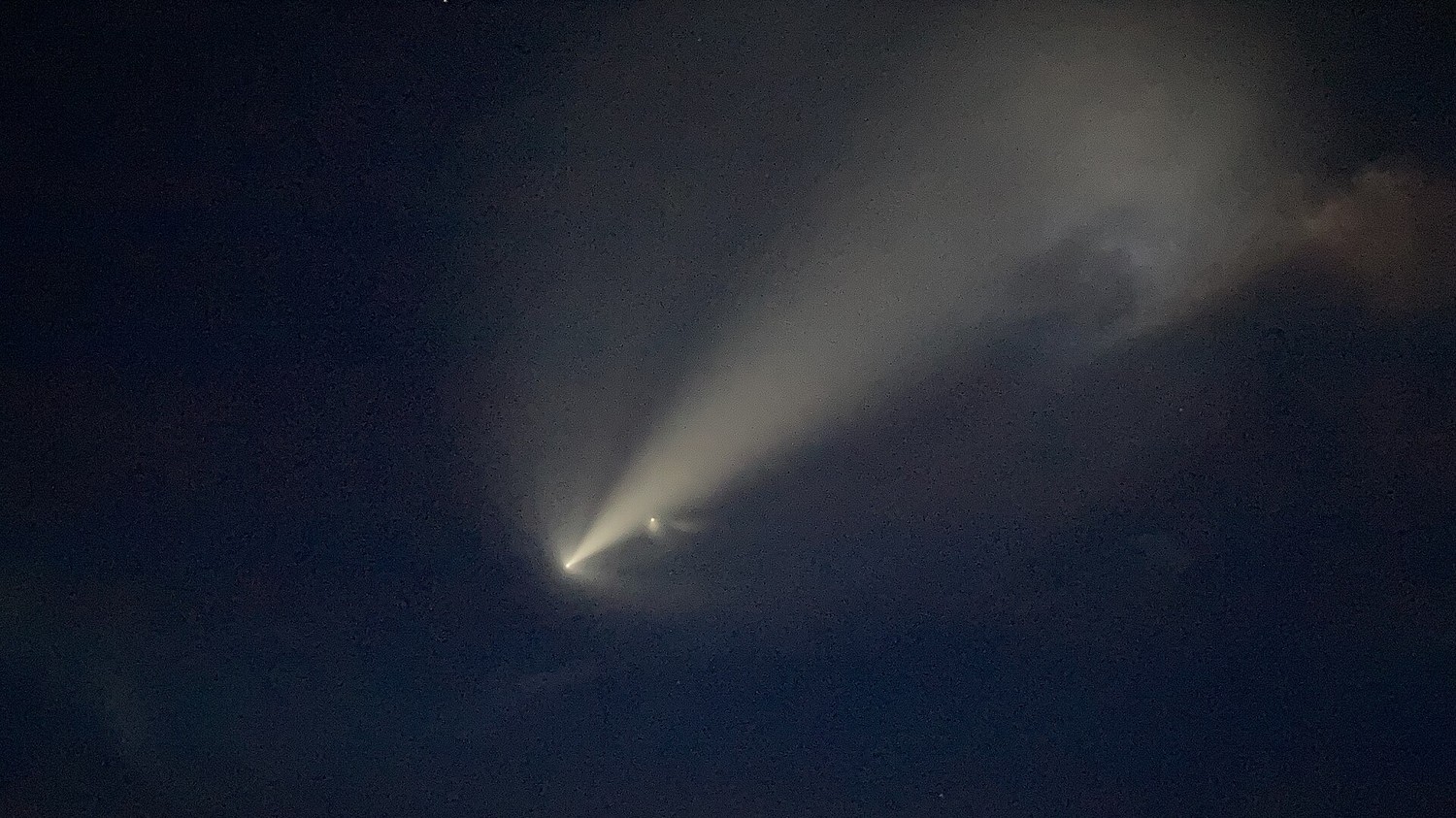
At roughly four o'clock in the morning on 20 September 1977, a huge luminous object appeared in the pre-dawn sky over Petrozavodsk, the capital of Soviet Karelia. This case file covers what witnesses reported, the official narrative, and a two-pass assessment with its evidence tier.
What did witnesses see at Petrozavodsk?
At roughly four o'clock in the morning on 20 September 1977, a huge luminous object appeared in the pre-dawn sky over Petrozavodsk, the capital of Soviet Karelia. Early observers described a bright star like point that seemed to descend and swell into a glowing body, then drift toward the city and hang above it in the shape of what witnesses again and again called a jellyfish. From this form a dense shower of extremely thin light beams poured downward. The Soviet news agency TASS said the object hovered over the city like a jellyfish and sent down a multitude of fine beams that looked, in the most repeated phrasing, like a torrential downpour of rain.
Witnesses reached for the same handful of images. Some saw a lens shaped body shining violet and ringed by a bright halo, with pulsating rays coming out of it in the manner of the tentacles of a Medusa. Others described a reddish orange hemisphere surrounded by a zone of twinkling points, with the beams curving slightly as they fell. Several accounts compared the whole apparition in size to the Moon. After the display faded, observers said the jellyfish contracted into a bright half disk and moved off toward Lake Onega, leaving in the overcast a round red centered patch, white to either side, where the clouds appeared to have been marked.
The whole event over Petrozavodsk itself was brief, ten to twelve minutes by most accounts. What made it extraordinary was not any single sighting but the scale of the audience. Reports of an unusual luminous object that same early morning came from an enormous span of territory, described in later summaries as reaching from Copenhagen and Helsinki in the west to points far to the east. This was not a single town's strange night. It was a phenomenon seen at first light across a large part of northern Europe and northwestern Russia at once.
What is the official explanation?
The first published account appeared quickly and in the official press. A TASS correspondent, named in several researcher write ups as Nikolai Milov, filed a report that ran on 23 September 1977 in Izvestiya under a headline calling it an unidentified natural phenomenon witnessed by the inhabitants of Petrozavodsk. Versions of the bulletin were carried by the main Soviet papers of the period. For a state press that did not casually print stories about mysterious lights, an on the record TASS item describing a glowing jellyfish over a Soviet city was itself remarkable, and it is part of why the case became so widely known in the West.
Soviet officialdom was cautious and, at first, unhelpful. Yuri Gromov, director of the Petrozavodsk hydrometeorological observatory, told TASS that his station had observed no such anomaly. Local authorities asked the Academy of Sciences for an explanation. The event, arriving alongside a run of similar sightings, became a direct trigger for the Soviet Union's long running state program into anomalous atmospheric and space phenomena, the effort informally called the Grid, or Setka, and later described in the press as the Network. Under the Academy of Sciences and the Defense Ministry it was directed on the academic side by Vladimir Migulin of the Institute of Terrestrial Magnetism, the Ionosphere and Radio Wave Propagation, IZMIRAN, with the astrophysicist Yuli Platov heading the working group. Over roughly thirteen years the program gathered on the order of three thousand reports and concluded that the great majority had ordinary causes, a large share of them tied to rocket and missile launches.
The leading explanation for Petrozavodsk itself is a launch. On the morning of 20 September 1977 a Vostok 2M carrier rocket lifted the ELINT satellite Kosmos 955 from the Plesetsk Cosmodrome, several hundred kilometers to the east of Petrozavodsk. The American space historian James Oberg, a NASA orbital engineer and specialist on the Soviet space program, is the analyst most closely associated with pinning the sighting to this launch. He noted a launch in the small hours of that morning, minutes before the Petrozavodsk object was reported, and argued that observers to the southwest of Plesetsk were seeing the rocket's exhaust plume. IZMIRAN's own work moved the same way. The physicist Yuli Platov endorsed the launch correlation, and the program's general finding was that a launch plume, its combustion cloud scattering sunlight high above a still dark ground, is the standard mechanism behind this whole class of wide area sighting.
What did the witnesses think it was?
The witness roster was large and unusually varied, which is a major reason the case has kept its reputation. TASS itself listed workers of a first aid unit, on duty militia, seamen and the longshoremen at Petrozavodsk's port, military personnel, staff at the local airport, and an amateur astronomer. The dockworkers at the port, beginning an early shift, were among the first to describe a blinding light rising from the direction of Lake Onega before it took on the jellyfish shape and began raining down its thin beams. A correspondent of a national news agency was among the observers, which is not typical for a fringe event.
Individual observers left more specific pictures. Researcher accounts name an engineer, A. Novozhilov, who described an elongated airship like body with bright spots front and back and facets that looked like lit windows, and the Soviet writer Yuri Linnik, who counted sixteen glowing spots he likened to nozzles emitting pulsating red rays. Serious Soviet scientists took the testimony seriously enough to sift it, among them Lev Gindilis of the Sternberg Astronomical Institute and Vladimir Krat of the Pulkovo Observatory, alongside Migulin, Platov and the well known ufologist Felix Ziegel.
The sightings did not stop at the Soviet border. In Helsinki, in the roughly 3:00 to 3:10 window, police officers, taxi drivers and airport personnel reported a bright ball of fire that hovered near the airport for some minutes before moving east, and the Finnish papers Ilta Sanomat and Kansan Uutiset carried the observations within a day. Photographs were reportedly taken in Finland. Observations were logged across Karelia and toward Leningrad as well, at places such as the Pulkovo Observatory. The most sensational witness claim, and the one that has done the most to keep the case alive in UFO literature, is that some of the beams punched holes in glass and asphalt. Later write ups repeated that thin rays supposedly drilled holes on the order of a couple of inches across in window panes and pavement, with edges that looked melted, and that microscope work on affected glass showed an odd surface structure. This is a claim carried through the research literature rather than a confirmed physical finding, and it is the least well grounded part of the story.
Is the Petrozavodsk Jellyfish real? The two-pass assessment
Pass one, the prosaic explanation, is strong and it is the leading account for good reasons. Kosmos 955, an electronic intelligence satellite, was launched on a Vostok 2M from Plesetsk on the morning of 20 September 1977, and the catalog record for the object, international designator 1977-091A, NORAD 10362, ties it to Plesetsk and that date. James Oberg's correlation lines up the timing, a launch in the small hours only minutes before the Petrozavodsk reports, with the geometry, a rocket climbing to the northeast seen from the southwest at Petrozavodsk. The physics is the familiar rocket plume optical effect. Before dawn the ground sits in shadow while a rocket's expanding exhaust cloud, released high in the thin upper atmosphere, rises into direct sunlight and scatters it. At those altitudes the plume spreads without the atmosphere damping it, so the cloud can balloon into a soft luminous jellyfish while the fine structured beams read as sunlit filaments of exhaust. That single mechanism also explains the runaway geographic spread, because a plume tens or hundreds of kilometers up is visible across an enormous footprint at once. That is exactly the pattern seen from Helsinki to deep inside Russia. IZMIRAN's own investigators, with Platov endorsing the launch reading, reached the same conclusion, which is why this is the mainstream explanation and not a lone skeptic's guess.
Pass two is the residue that keeps some observers unsatisfied. The apparent maneuvers, the hovering, the drift toward Lake Onega, the contraction into a half disk, sit awkwardly with a simple ballistic plume, though a spreading cloud drifting on high altitude winds and changing shape as it cools and disperses can look like deliberate motion to a startled ground observer. The reported ten to twelve minute duration is long for a plume but not impossible for a large illuminated cloud lingering at altitude. The genuinely anomalous claim is the beams boring holes in window glass and asphalt, which has no clear mechanism in the plume model and would, if real, be a physical trace no rocket exhaust could leave. That claim, though, is exactly the sort that never firmed up into verified evidence, and even the officials involved conceded the case was left under investigated. Migulin later admitted the insufficient investigation of the case was their fault, noting scientists shied from the subject.
Weighing both passes, this is not an unknown and it is certainly not a fabrication. It has a specific, well documented, physically sound cause in the Kosmos 955 launch, argued by a named analyst and backed by the Soviet Union's own investigators, which is why it cannot honestly be called unexplained. Yet a thin band of contested residue survives, chiefly the window glass beam damage story and the sense of purposeful movement, kept alive by an admittedly incomplete original inquiry. A leading mundane explanation that most researchers accept, with a small disputed remainder that some still press, is precisely a Barely Disputed case, and that is how it is tiered here.
Sources
- skepticalinquirer.org/newsletter/history-of-state-ufo-research-in-the-ussr/
- www.themoscowtimes.com/2016/03/31/little-green-men-a-look-at-the-official-soviet-x-files-investigation-a52335
- www.iflscience.com/the-petrozavodsk-phenomenon-a-celestial-mystery-seen-over-1977-soviet-russia-80128
- www.thinkaboutitdocs.com/1977-mass-sighting-jellyfish-like-ufo-petrozavodsk/
- www.paranormalcatalog.net/ufos/the-petrozavodsk-phenomenon-jellyfish-ufo
- www.amusingplanet.com/2020/09/petrozavodsk-phenomenon.html
- www.n2yo.com/satellite/?s=10362
- in-the-sky.org/spacecraft.php?id=10362
More cases from this region: UFO sightings in Soviet Union (Russia)