The Piedmont Flap and Project Identification
In the late winter and spring of 1973 the small Ozarks town of Piedmont, in Wayne County, Missouri, became the center of one of the most sustained UFO flaps in American history, and the only one that a working physicist answered by building a multi-year instrumented field study around it. This case file covers what witnesses reported, the official narrative, and a two-pass assessment with its evidence tier.
What did witnesses see at Piedmont?
In the late winter and spring of 1973 the small Ozarks town of Piedmont, in Wayne County, Missouri, became the center of one of the most sustained UFO flaps in American history, and the only one that a working physicist answered by building a multi-year instrumented field study around it.
The first sighting that set it off came on the night of 21 February 1973. Reggie Bone, a local high school basketball coach, was travelling back from a game with players when the group saw a set of low, coloured lights hovering over a field. In accounts drawn from the period, Bone described lights that were red, green, amber and white, close enough to make out but not close enough to give any sense of size or shape. Some retellings place the team as Piedmont's, others as nearby Clearwater's, and the number of players on the bus varies from one source to another, so the exact roster should be treated as uncertain. The coach and the date are consistent across the sources.
What followed was not a single sighting but a wave. Over the following weeks and months the Piedmont police department logged, by the town's own account, more than five hundred calls about unexplained lights in the sky. The lights were seen over ridgelines, along Highway 49, and near Clearwater Lake a few miles from town. The story reached the St. Louis Post-Dispatch and was written up in national magazines of the era, and Piedmont found itself briefly overrun with reporters and curiosity seekers.
The objects people reported were mostly nocturnal lights rather than structured craft: points and balls of light, sometimes single and sometimes in groups, that hovered, paced cars, blinked out and reappeared elsewhere, changed colour, and occasionally moved at speeds and angles that witnesses felt no aircraft could match. It was this ordinary looking but persistent phenomenon, easy to dismiss from a distance and hard to dismiss up close, that drew in the man whose name is now inseparable from Piedmont.
What is the official explanation?
There was never an official government investigation that resolved the Piedmont sightings. By 1973 the United States Air Force had already closed Project Blue Book, and no federal body took the flap up. Local authorities logged the flood of reports but offered no identification beyond the general suggestion, echoed by skeptics then and since, that people were seeing aircraft, satellites, helicopters and bright stars and planets.
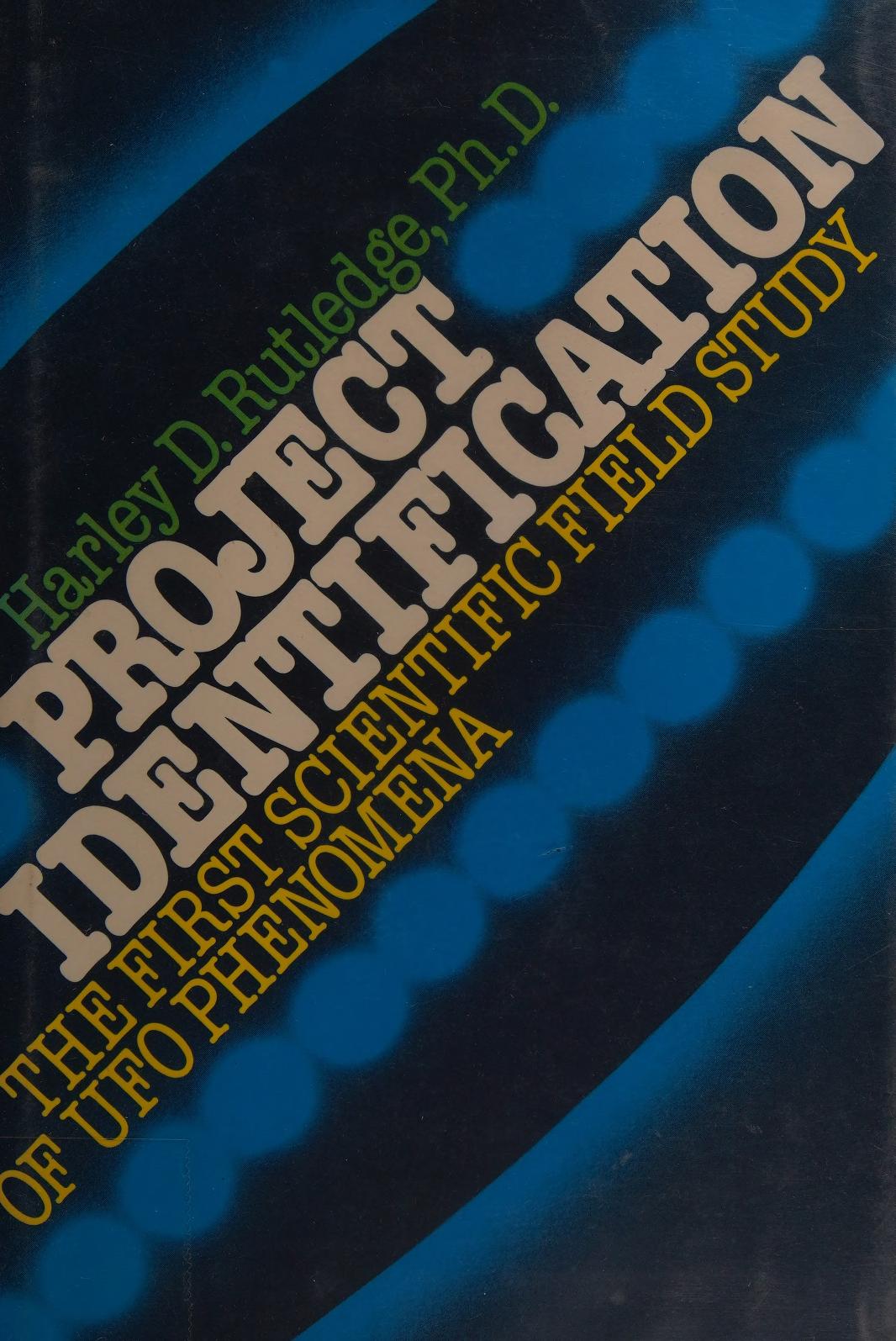
The nearest thing to an authoritative study of Piedmont was not governmental at all. It was the work of Dr. Harley D. Rutledge, a professor of physics at Southeast Missouri State University. According to his obituary in the Southeast Missourian, Rutledge taught physics at the university from 1963 to 1992 and chaired the department from 1964 to 1982, which places him at the head of a university physics department at the exact moment the flap began. Mainstream science, however, largely ignored his results rather than engaging them. Rutledge published his findings once, in 1981, and the book was never reprinted. He is reported to have made almost no effort to promote the work afterward, and when he retired an incoming dean is said to have removed references to the UFO study from the university's own materials. He died in 2006 without seeing the sustained academic follow up he had hoped for.
What did the witnesses think it was?
Rutledge began as a skeptic. Trained in optics, electronics, cameras and film, with a working knowledge of astronomy, he expected to find a prosaic answer quickly. What changed his mind was his own observation on 11 April 1973, when he watched roughly ten amber and white objects move, blink and pace one another over the hills. In one sequence he described a light going out at the same instant an identical light came on far to his right, several ridges away, before shooting upward. Within days he had organized what he called Project Identification.
The study is what makes Piedmont unusual. Rather than collect anecdotes, Rutledge treated the sky over Piedmont as a field site and instrumented it. He set up multiple observation stations on named high points such as Pyle's Mountain, Brushy Creek, Williamsville and Clark Mountain, linked by radios so that separated teams could watch the same object at once and triangulate its real position, distance, course and speed. Observers were expected to have college level training in the physical sciences. The equipment inventory grew to include Questar telescopes at several magnifications, cameras fitted with long lenses, rented infrared cameras, time lapse photography, radio frequency spectrum analyzers, an electromagnetic frequency analyzer, low intensity sound detectors, and voice recorders for minute by minute logs.
By the totals Rutledge reported in the book's summary, the project ran 158 station watches over roughly 427 hours of sky time, drew on some 620 observers of whom 378 were formal project members, and logged 157 sightings comprising 178 individual objects or lights, backed by more than 700 photographs. Of those objects he rated 34 as Class A, meaning their behaviour resisted ordinary explanation, and about 40 as Class B, unusual but plausibly aircraft. These figures come from a reading of the book's own summary chapter and are best cited as what Rutledge reported rather than as independently audited counts.
Some of the recorded kinematics were dramatic. On 13 April 1973 at Brushy Creek the teams clocked lights at roughly 340 and 130 miles per hour, and in one instance computed an acceleration that, taken at face value, implied thousands of miles per hour and hundreds of times the force of gravity. Rutledge was careful to record the prosaic explanations he could rule out and why. Car headlights, he argued, would resolve into two separate points in the telescope at the distances involved, not a single ball of light. Many Class A objects showed no navigation lights, no position lights and no strobes, and made no sound. Satellites did not fit the geometry, and meteors did not linger for minutes near the horizon.
The study's most striking and most contested claim is what Rutledge called the cognitive or interactive quality of the lights. He came to believe the phenomenon reacted to the people watching it, dimming, moving or changing in apparent response to observers' actions. In the book's own language, the project dealt with an intelligence equal to or greater than that of man, and interacted with the phenomenon under study. Rutledge framed the choice honestly: either the lights were responding to the observers, or the project had accumulated a large number of coincidences.
Is the Piedmont Flap and Project Identification real? The two-pass assessment
Pass one, the mundane candidates, and for a flap of nocturnal lights they are substantial. Piedmont sits in a region crossed by general aviation, and the reported colours, red, green and white, are exactly the colours of aircraft navigation lights. A slow aircraft seen at distance, a plane on approach, a helicopter holding a position, a satellite pass, and bright planets and stars low in a hazy Ozark sky account for a great many nocturnal light reports, and skeptics have long argued that most of the Piedmont sightings were just that. Judging the distance, size and speed of a point of light at night is notoriously unreliable, which cuts against the more extreme computed velocities. The cognitive claim is the most vulnerable of all: human beings are strongly disposed to read intention into coincidence, and a self selected team of trained volunteers who had gathered specifically to watch for anomalies is exactly the setting in which a run of chance timings can feel like a dialogue. Rutledge himself named this fork, and a skeptic would say he came down on the wrong side of it.
Pass two, if it is more than that. What separates Piedmont from an ordinary flap is not the raw sightings but the method. Rutledge did the thing critics of UFO reports always ask for: he put instruments in the field, used separated stations to triangulate rather than eyeball, wrote down his exclusions with their reasons, and graded his own data conservatively enough to throw most of it into the lesser classes. The residue he could not dismiss, the Class A objects with no lights, no sound and geometries that did not match aircraft or satellites, is a genuine data set gathered by a physicist under his own controls, not a collection of stories. It is also worth recording, in the two pass spirit of this archive, that mainstream science did not refute Project Identification so much as decline to look at it. No single famous debunking of the study exists; the skeptical case is the general one of misidentification plus perceived agency, and the counterweight is a published, instrumented field record that has never been seriously re-examined. The honest verdict is Unknown. The Piedmont lights were never identified, and the most rigorous attempt anyone made to identify them concluded, with data, that something there was not ordinary.
Sources
- archive.org/details/rutledge-project-identification
- www.semissourian.com/story/1155702.html
- anomalyarchives.org/collections/file/project-identification/
- www.professorwham.com/post/project-identification-and-harley-d-rutledge-part-1-challenges-opportunities-synchronicities
- www.waynecojournalbanner.com/2023/09/27/espn-reporter-visits-piedmont-to-research-ufo-sightings/
- www.semissourian.com/news/1973-ufo-sightings-abound-throughout-southeast-missouri-2742467
More cases from this region: UFO sightings in United States