The Hessdalen Lights
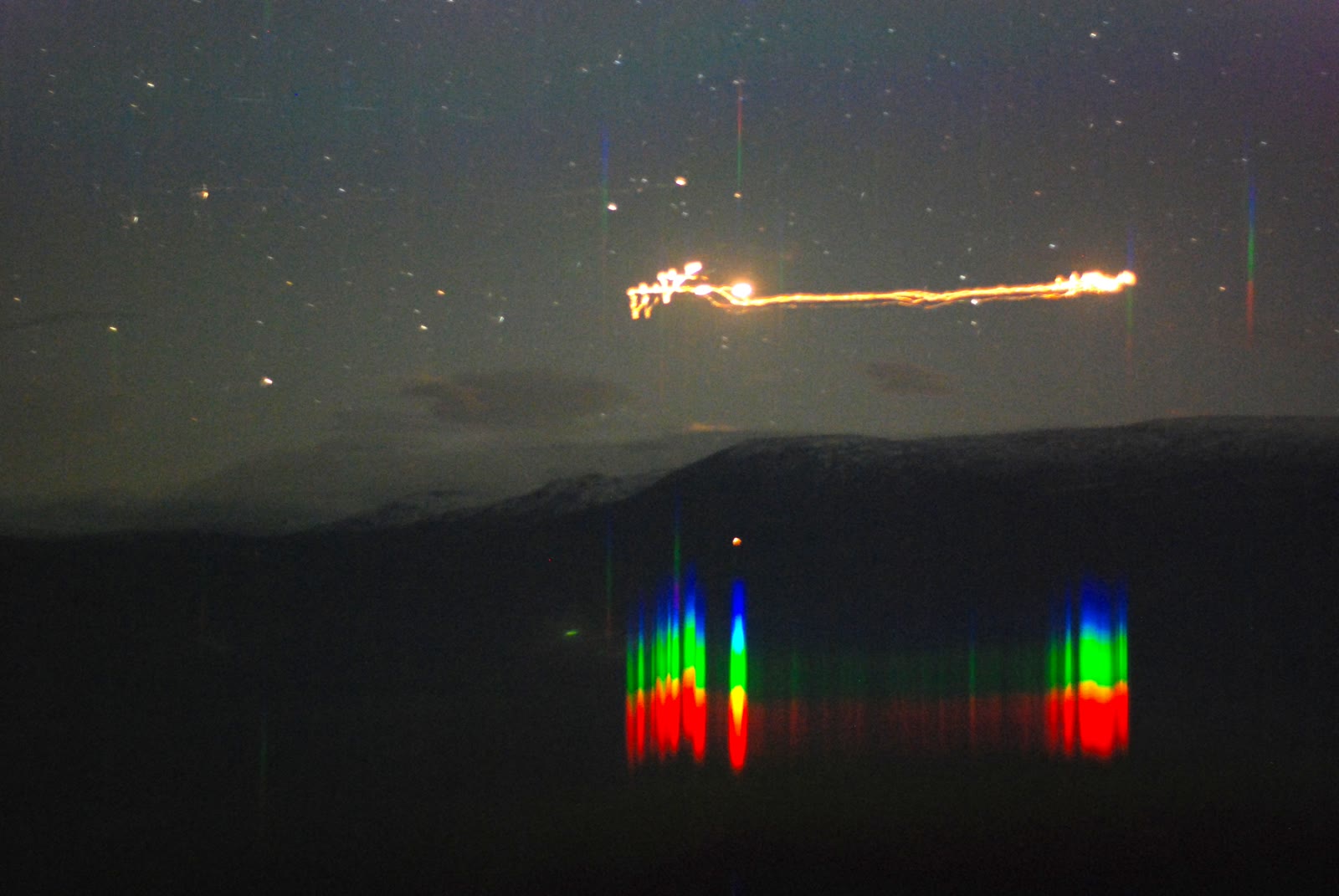
Hessdalen is a narrow, sparsely populated valley roughly 12 kilometres long in central Norway. This case file covers what witnesses reported, the official narrative, and a two-pass assessment with its evidence tier.
What did witnesses see at Hessdalen valley?
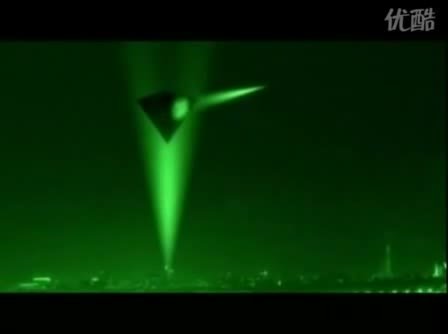
Hessdalen is a narrow, sparsely populated valley roughly 12 kilometres long in central Norway. Beginning in late 1981 and continuing intensely through 1984, residents reported unexplained luminous objects appearing in and over the valley, often low to the ground or hugging the ridgelines. The lights took several recurring forms: brilliant white or yellow white spheres, a softer red glow, and elongated structures that observers compared to a bullet stood on end or to a row of lights resembling a Christmas tree. Some hung nearly motionless above rooftops and hilltops. Others crossed the valley at speed, stopped abruptly, dropped, or changed direction.
Durations varied enormously, from brief flashes lasting a second or two to steady displays that persisted for more than an hour, occasionally well over two hours. Witnesses described some objects as flashing, others as a continuous glow, and several reported lights that appeared to pulse or split from a single point into a double flashing pattern. The size estimates ran from small point sources to objects apparently several metres across, though distance in a dark valley is notoriously hard to judge, a caveat the investigators themselves stressed.
The defining feature of Hessdalen is not any single dramatic sighting but the sheer recurrence. At the 1981 to 1984 peak, residents were seeing the lights frequently, by some accounts up to roughly 20 times a week. That density of repeat observation, in a fixed and accessible location, is what set Hessdalen apart from one off UFO reports and made a sustained instrumented study possible. The activity has since fallen sharply. The phenomenon still appears, but now at an order of around 20 reports a year rather than 20 a week.
What is the official explanation?
The response to Hessdalen was unusual for an anomalous lights case. It produced a genuine, instrumented scientific field campaign rather than a file of anecdotes. Project Hessdalen was organised by Norwegian and Scandinavian UFO research bodies and began field work in 1983, with the main observation campaign running from 21 January to 26 February 1984 under a working committee that included Leif Havik, Odd-Gunnar Roed, Hakon Ekstrand, Jan Fjellander and Erling P. Strand, who authored the final technical report dated early 1985.
The 1984 station was equipped with a serious instrument suite for the era: spectrum cameras fitted with diffraction gratings, a fluxgate magnetometer, a portable seismograph, a Hewlett-Packard radio spectrum analyser covering roughly 150 kHz to 1250 MHz, an Atlas 2000 radar operating at about 3 cm wavelength, a low power helium neon laser, Geiger counters and infrared viewers. The team logged on the order of 188 reports during the campaign, grading each for quality and for strangeness, with 53 observations rated high enough to be treated as candidate genuine phenomena. The instruments produced measurable returns: roughly 36 radar recordings, several coinciding with visual sightings (one event implying an extremely high apparent speed), magnetometer pulsations that in several cases lined up in time with visual events, and a striking laser experiment in which the lights appeared to respond, shifting from a single to a doubled flashing rhythm on multiple occasions when the beam was directed at them. The seismograph found little local seismic activity. Strand's report concluded plainly that the team had not determined what the phenomenon was, while insisting that it could be measured and deserved further study.
From 1998 the project installed a permanent Automatic Measurement Station in the valley, later expanded into a multi sensor automated monitoring system. From around 2000 an Italian scientific group joined through the EMBLA campaigns, led by astrophysicist Massimo Teodorani with engineer Stelio Montebugnoli of the CNR Institute of Radio Astronomy at Medicina, working alongside Bjorn Gitle Hauge and Erling Strand of Ostfold University College. EMBLA combined optical photometry and spectroscopy, radio monitoring and radar. Teodorani's peer reviewed synthesis in the Journal of Scientific Exploration (2004) and the team's later spectroscopy and radar work reported that the optical output of the lights could reach very high values, with photometric estimates of luminous power up to the order of tens of kilowatts and, in some analyses, approaching 100 kW, and that camera gratings recorded a continuous optical spectrum consistent with hot, ionised gas or plasma rather than a single line emission. Across all of this instrumented effort, a core residue of events remained unexplained.
What did the witnesses think it was?
The witness base for Hessdalen is broad and, unusually, includes the scientists themselves as direct observers. The first and most numerous witnesses were the valley's own residents, ordinary Norwegians in farms and homes scattered along Hessdalen, whose repeated sightings through 1981 to 1984 prompted local concern and drew in researchers. Their observations were not fleeting one time encounters but a sustained, community wide pattern logged over years.
The scientific observers are named and on record. Erling P. Strand and the Project Hessdalen committee personally witnessed and instrumented dozens of events during the 1984 campaign. In the later EMBLA period the principal scientists, Massimo Teodorani, Bjorn Gitle Hauge, Erling Strand and the radio astronomy engineers under Stelio Montebugnoli, observed and recorded the lights in the field and analysed the resulting data in peer reviewed and conference publications. This is one of the rare cases where the people making the claim are working scientists who measured the thing with their own instruments.
The observation record is correspondingly rich: photographs dating back to the early 1980s (including a well known 1982 image by project member Leif Havik), gratings showing spectra of the lights, magnetometer and radar traces from 1984, and a continuous stream of automated station captures since 1998. The breadth of the record, decades long, multi witness and instrument backed, is precisely why Hessdalen is treated as a scientific field problem rather than a folklore item.
Is the Hessdalen Lights real? The two-pass assessment
Pass one, the prosaic candidates that study has partly supported. Not every Hessdalen report is mysterious, and the investigators were candid about this. A fraction of sightings are consistent with mundane causes: distant car headlights on roads that, from certain vantage points in a dark valley, can appear to hover and move, aircraft, planets and stars near the horizon, and ordinary atmospheric optics. Several proposed natural mechanisms have real scientific backing for at least part of the phenomenon. Geology based hypotheses point to the valley's mineralogy and old mining activity, suggesting piezoelectric stress in quartz bearing rock or the combustion and ionisation of gases. More recent peer reviewed work has modelled the lights as luminous plasma, including a proposal that an electrically active atmospheric inversion layer, possibly seeded with ionised dust, could generate and sustain glowing balls of ionised air. These are serious, testable ideas, and they likely account for a meaningful share of what people see.
Pass two, what survives instrumented scrutiny. After more than three decades of measurement, a core of the phenomenon is not closed out by the prosaic explanations. The car headlight hypothesis, in particular, has been argued in print to be inconsistent with key data: lights observed independent of road geometry, objects that hover, accelerate, stop and change shape, and photometric output far beyond what scattered headlights could produce. The instrument record is the heart of the case. Radar returns correlated with visual sightings, magnetometer pulsations timed to events, an apparent reaction of the lights to a directed laser, and above all the photometric estimates of very high optical power (tens of kilowatts, by some analyses approaching 100 kW) together with grating spectra showing a continuous, plasma like emission. None of these are eyewitness impressions. They are measurements, and they describe an energetic, structured, sometimes interactive optical phenomenon whose full physical mechanism has not been pinned down.
On balance the honest verdict is Unknown. There is no official government adjudication. What exists instead is a partial scientific understanding. A real plasma or ionised gas process is plausible and supported for much of the activity, yet the precise energy source, the high measured power, the apparent responsiveness, and the behaviour of the strongest cases remain unexplained after dedicated instrumented study. The fact that scientists judged a permanent field station worthwhile, and that the lights still recur today, underlines that Hessdalen sits in the genuinely open category rather than the solved or the debunked one. Claims that it has been fully explained as headlights, or fully proven as anything exotic, both overstate the evidence.
Sources
- www.hessdalen.org/
- old.hessdalen.org/reports/hpreport84.shtml
- ui.adsabs.harvard.edu/abs/2004JSE....18..217T/abstract
- ui.adsabs.harvard.edu/abs/2010AcAau..67.1443H/abstract
- meetingorganizer.copernicus.org/EGU2011/EGU2011-13262.pdf
- www.societyforuapstudies.org/project-hessdalen
- imaggeo.egu.eu/view/827/
More cases from this region: UFO sightings in Norway