The Ronald Reagan UFO Sighting
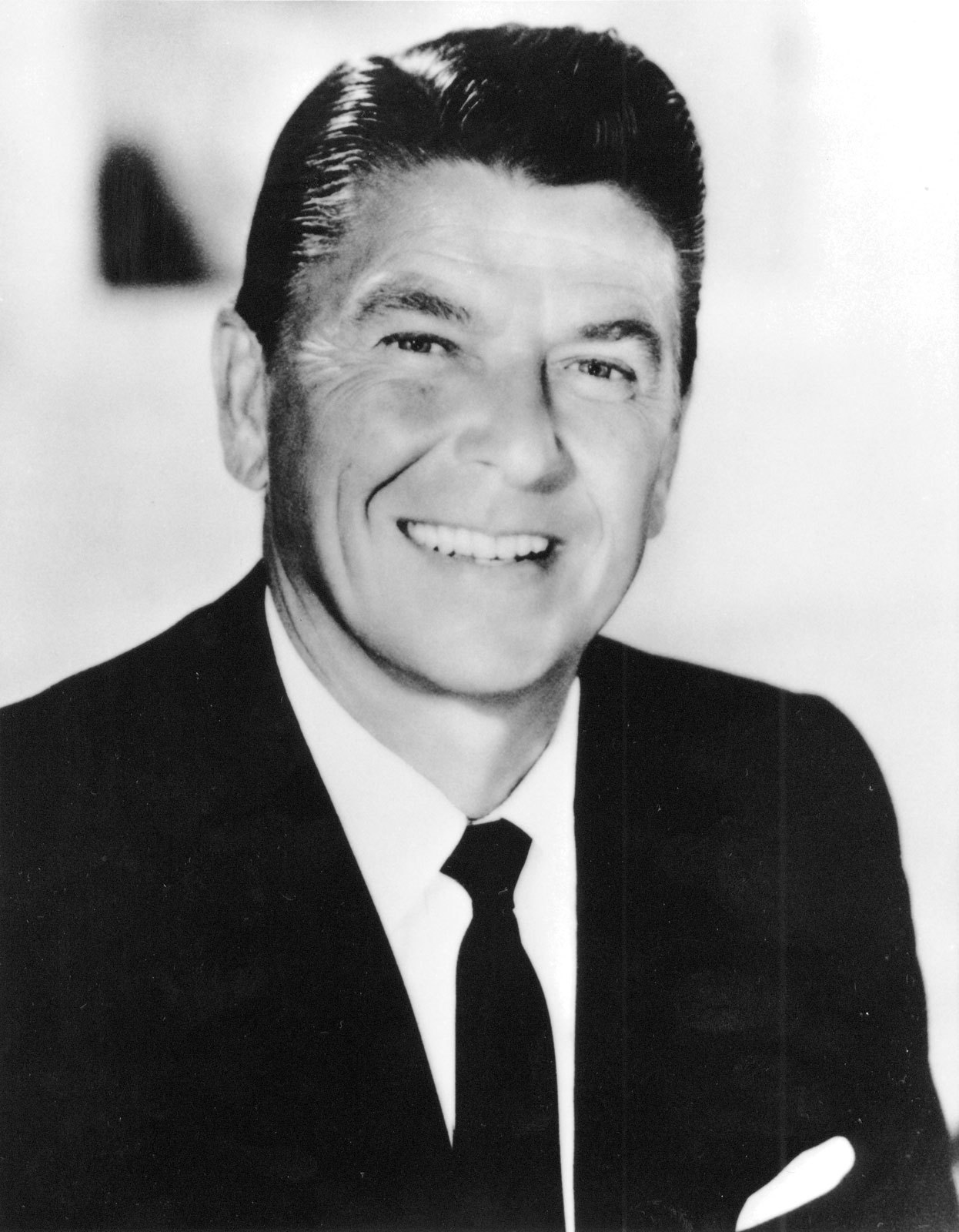
On a night in 1974, the twin-jet carrying California Governor Ronald Reagan was flying through the San Joaquin Valley toward Bakersfield with four men aboard: Reagan, the pilot Bill Paynter, and two members of the governor's security detail. This case file covers what witnesses reported, the official narrative, and a two-pass assessment with its evidence tier.
What did witnesses see at Near Bakersfield?
On a night in 1974, the twin-jet carrying California Governor Ronald Reagan was flying through the San Joaquin Valley toward Bakersfield with four men aboard: Reagan, the pilot Bill Paynter, and two members of the governor's security detail. The aircraft is described in every account as a Cessna Citation business jet used for state travel. According to the pilot, the passengers in the cabin called his attention to a strange light off to the rear of the airplane. What followed is the part of the story that has stayed remarkably stable across every retelling, because it rests on Paynter's own words.
"It appeared to be several hundred yards away," Paynter said of the object. "It was a fairly steady light until it began to accelerate. Then it appeared to elongate. Then the light took off. It went up at a 45-degree angle, at a high rate of speed. Everyone on the plane was surprised." He returned to the suddenness of the departure to make the point unmistakable: "The UFO went from a normal cruise speed to a fantastic speed instantly. If you give an airplane power, it will accelerate, but not like a hot rod, and that's what this was like."
In Paynter's telling the light had been pacing them off the wing, holding station at roughly half a mile to a mile, before the maneuver. As he described the geometry in one version of the account, the object "followed us just off, from the wing-tip probably a half a mile or a mile, and when we started turning towards it, it paralleled our flight, and just took off." The crucial detail for an aviator is the acceleration: a steady light that suddenly elongates, then climbs away at a sharp angle at a speed Paynter, an experienced pilot, said had nothing in common with how a powered aircraft builds speed.
Reagan's own version, which he gave to a reporter about a week later, matches the shape of Paynter's but adds the chase. "We followed it for several minutes," Reagan said. "It was a bright white light. We followed it to Bakersfield, and all of a sudden, to our utter amazement, it went straight up into the heavens." In the fuller version Reagan reportedly described first noticing a white light out the window, telling the pilot in effect "let's follow it," and the airplane giving chase before the object shot vertically upward and vanished. There is no claim of radar, no photograph, no instrument trace. The entire case is four men in a small jet at night and what two of them said they saw.
What is the official explanation?
There is no official narrative for this case, and that absence is itself one of its defining features. No Air Force report, no Federal Aviation Administration filing, no military intercept record, and no Project Blue Book entry has ever been tied to the flight. Project Blue Book had closed in December 1969, five years before the sighting, so by 1974 there was no longer any standing government channel that would have catalogued a civilian or gubernatorial UFO report in the first place. Neither Paynter nor Reagan is recorded as having radioed air traffic control about the object or filed any formal report afterward. The case exists entirely outside the official apparatus that produced the paper trails behind most famous mid-century sightings.
What stands in place of an official record is the testimony of two credible men and the journalist who preserved Reagan's account. The journalist is the load-bearing link. Reagan told the story roughly a week after the flight to Norman C. Miller, then the Wall Street Journal's Washington bureau chief. Miller was not a fringe figure or a UFO writer. He had won the Pulitzer Prize for National Reporting in 1964 for his coverage of the Tino De Angelis vegetable-oil fraud, work he later expanded into the 1965 book "The Great Salad Oil Swindle," and he went on to become national editor of the Los Angeles Times. By Miller's account, Reagan related the chase with enthusiasm until Miller pressed him with some skepticism, at which point, in Miller's words, "a look of horror came over" the governor as "it suddenly dawned on him that he was talking to a reporter." Reagan, Miller said, immediately "clammed up" and did not discuss the incident publicly again.
The pilot's account reached print separately. In the UFO literature the earliest published source for Bill Paynter's first-person interview is consistently identified as a mid-1970s tabloid article, generally placed in the National Enquirer around 1976, in which Paynter, named as Reagan's pilot, narrated the sighting himself. No mainstream newspaper or aviation-industry report from the period has ever been located, and the precise issue date and byline of the Paynter interview cannot be confirmed from a primary copy, a genuine gap that should be stated plainly rather than papered over. Likewise, several frequently repeated specifics, the figure of 35,000 feet, a named origin city, an exact calendar date, do not trace back to any quoted witness statement and are best treated as later embroidery on a story whose documented core is narrower: a night flight near Bakersfield in 1974, a pacing light, and a vertical departure, attested by the pilot in his own words and by Reagan through a Pulitzer-winning journalist.
What did the witnesses think it was?
The two named witnesses are Ronald Reagan, then in his eighth and final year as Governor of California, and his pilot, identified in every account as Bill Paynter (sometimes William Paynter), described as a professional aviator entrusted with flying the governor and, in much of the secondary literature, as a former military pilot. Two unnamed members of the governor's security detail are said to have been aboard as well, making four men on the airplane, though only Reagan and Paynter ever went on record. Both of the named witnesses plainly believed they had seen something genuinely anomalous. Paynter framed it specifically in the terms an experienced pilot would reach for, contrasting the object's instantaneous acceleration with the way a powered aircraft actually builds speed, and saying flatly that everyone on the plane was surprised.
Reagan's belief is harder to read because of how the account surfaced. He volunteered the story to Miller with evident excitement, then recoiled the moment he remembered he was speaking to a reporter. That reaction, the "look of horror" and the abrupt shutdown, is itself telling. It is the behavior of a sitting politician with national ambitions who has just realized he has narrated a UFO chase on the record, not the behavior of someone planting a publicity story. Reagan never repeated the account in public and never built it into a campaign or a memoir, which is part of why the episode is treated as a credible private recollection rather than a stunt. Those close to the Reagan UFO question have long noted his broader fascination with the unexplained, including his later remarks as president about how an alien threat would unite the nations of the world, but the 1974 flight stands on its own as a thing he said happened, told once, then dropped.
The corroboration here is internal and mutual rather than external. Paynter and Reagan described the same event independently, through different outlets and years apart, and the two accounts agree on the essentials: a night flight toward Bakersfield, a bright light that paced the jet, and a sudden steep climb in which the object shot away and vanished. They do not agree on every detail, and neither is precise about altitude, exact location, or date, which is what one would expect from two men recalling a brief nighttime event rather than reading from a shared script. What they cannot supply is any physical or instrumental backing. The case lives entirely on their word and on the standing of the men giving it.
Is the Ronald Reagan UFO Sighting real? The two-pass assessment
Pass one, the ordinary explanations. A bright, steady light pacing an aircraft at night and then appearing to climb away at speed is one of the most classic of all misperception setups. The leading mundane candidates are an astronomical object, a bright planet such as Venus or Jupiter, or a star, which can seem to "follow" an aircraft because it is effectively at infinity and does not shift against the foreground, and which can appear to dart away the instant the plane banks and the geometry changes. Paynter's own description that the object "paralleled our flight" when they turned toward it is exactly the behavior a fixed celestial light produces relative to a maneuvering airplane. The reported elongation could be an autokinetic or optical effect, and the sudden 45-degree climb could be the moment the aircraft's attitude changed and the light slid out of the window frame. Other ordinary possibilities include another aircraft's lights at a different altitude, a high-altitude balloon catching light, or a reflection on the cockpit and cabin glass. Because there is no radar, no photograph, no second instrument, and no air traffic control record, none of these can be ruled out, and one of them may well be the answer. It is also worth being candid that the most colorful specifics in circulation, a precise altitude and a named route, are not anchored to any witness quote.
Pass two, if it was not ordinary. What the witnesses actually described, taken at face value, is harder to fold into the celestial explanation: not just a pacing light but one that held a measurable standoff distance of roughly half a mile to a mile off the wing, then accelerated from cruise to, in the pilot's words, a "fantastic speed instantly" and climbed away at a sharp angle. A planet does not change apparent size or hold a finite range, and Paynter, who flew for a living, drew the distinction himself between this acceleration and how any aircraft he knew behaved. If the observation is accurate, it describes a structured object under control performing a maneuver outside the 1974 performance envelope, which is the recurring signature of the better unexplained pacing-and-departure cases. The strength here is the quality of the witnesses: a professional pilot and a future president, the latter's account preserved by a Pulitzer-winning journalist who watched him clam up in real time, which argues strongly against fabrication.
This case has no official debunk and no independent, method-shown analysis that identifies a specific real-world cause. No one has produced the planet, the aircraft, or the balloon and matched it to this flight. Equally, there is no physical evidence, no instrument data, and no surviving official record to authenticate it. It is a credible, multiply-attested witness case with nothing material under it and no government narrative to dispute, which is precisely the profile of the Unknown tier: it stands or falls on its witnesses and their words, and on that basis it stands as genuinely unresolved rather than either confirmed or explained away.
Sources
- theufodatabase.com/incidents/ronald-reagan-ufo-sighting
- theufodatabase.com/people/bill-paynter
- science.howstuffworks.com/space/aliens-ufos/ronald-reagan-ufo.htm
- openminds.tv/ronald-reagans-ufo-sightings-and-alien-fantasy/
- www.thinkaboutitdocs.com/ronald-reagan-sees-a-ufo/
- governors.library.ca.gov/33-Reagan.html
More cases from this region: UFO sightings in United States