The Red Bluff UFO Incident
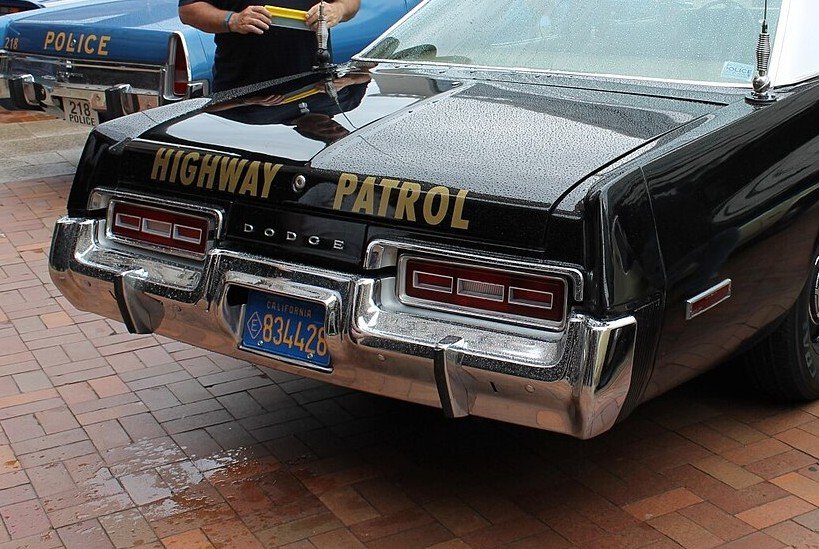
Late on Saturday 13 August 1960, at about 11:50 pm, two California Highway Patrol officers, Charles A. Carson and Stanley Scott, were driving east on Hoag Road outside Corning, in Tehama County, when they saw what looked like a large illuminated object falling out of the sky directly ahead of them. This case file covers what witnesses reported, the official narrative, and a two-pass assessment with its evidence tier.
What did witnesses see at Hoag Road near Corning and Red Bluff?
Late on Saturday 13 August 1960, at about 11:50 pm, two California Highway Patrol officers, Charles A. Carson and Stanley Scott, were driving east on Hoag Road outside Corning, in Tehama County, when they saw what looked like a large illuminated object falling out of the sky directly ahead of them. Carson, who wrote up the report, said they first took it for a low airliner about to crash. They stopped the patrol car and got out, expecting a wreck.
Instead the object checked its descent. In Carson's own teletype account, filed that night to the Area Commander and later reproduced in NICAP's The UFO Evidence (1964), it dropped silently to roughly 100 to 200 feet, then "suddenly reversed completely, at high speed" and climbed back to about 500 feet, where it stopped and hung. Carson wrote: "It was surrounded by a glow making the round or oblong object visible. At each end, or each side of the object, there were definite red lights. At times about five white lights were visible between the red lights." He added that "as we watched the object moved again and performed aerial feats that were actually unbelievable."
The thing was not small. The officers put its longest dimension at well over 100 feet and described it as football or cigar shaped, an oblong with a red light at each tip and a row of white lights between. There was no engine noise. Twice the object came directly at the patrol vehicle, and each time it turned away it swept the area with a single huge red beam. Carson recorded that they watched it use the red beam roughly six or seven times, sweeping both the sky and the ground. Every time it drew close, the patrol car's radio filled with interference.
The men radioed the Tehama County Sheriff's office and asked them to check with the local radar station. The reply that came back was that the radar operators had an unidentified object on their screens. The officers kept watching. Near the Vina Plains fire station a second similar object rose from the south and joined the first. The two hovered together for a while, occasionally throwing out the red beams, before both finally moved off and dropped below the eastern horizon. The whole encounter lasted a little over two hours and fifteen minutes. When Carson and Scott got back to the sheriff's office they learned the object had also been watched by Deputy Clarence Fry, Deputy Montgomery, and the night jailer, all of whom described the same thing. NICAP's own files note this was not an isolated night: during a six day cluster of sightings across northern California from 13 to 18 August 1960, at least fourteen police officers were among the witnesses.
What is the official explanation?
The United States Air Force handled the case through Project Blue Book, where it carries case number 6909. The official evaluation, set out in an Air Force letter to NICAP, was that the patrolmen had not seen a craft at all. The finding, as quoted in the NICAP and UFO Evidence files, was "that the individuals concerned witnessed a refraction of the planet Mars and the bright stars Aldebaran and Betelgeux," with a temperature inversion said to have lifted low celestial bodies into apparent view and a thin stratiform layer of forest-fire smoke contributing to the effect.
That explanation came apart almost immediately. NICAP put the question to its own astronomical adviser, who reported that none of the three named bodies, Mars, Aldebaran or Betelgeux, were even in the California sky at that hour on that date. The Air Force then revised its answer to refraction of Mars and the star Capella. Astronomers checking that version found Capella was not where the object had been seen either, and that Mars was too low to account for a structured object maneuvering for two hours overhead.
The radar element was quietly dropped. On the night, the operators at the Red Bluff Air Force radar station had told Deputy Fry they were tracking an unidentified return. The next day the Air Force denied that any object had been seen on radar at all, contradicting what its own operators had said hours earlier. The official record never reconciled the contradiction. It simply left the radar confirmation out.
The most important independent assessment came from Dr. James E. McDonald, senior atmospheric physicist at the University of Arizona and one of the few credentialed scientists to examine Blue Book files in detail. McDonald presented the Red Bluff case in his paper "UFOs: Greatest Scientific Problem of Our Time?", delivered to the American Society of Newspaper Editors in Washington on 22 April 1967 (the paper is archived in the McDonald collection held at Princeton). As a meteorologist, McDonald went after the central physical claim. He examined the available radiosonde data for that night and reported that it did not show the kind of strong temperature inversion the Air Force needed for its refraction story, and he challenged the assertion of "fantastic multiple inversions" by asking which radiosonde data it was supposed to rest on. His conclusion was that Blue Book's explanation was not just weak but physically unsupported, and that a structured, maneuvering, radar-correlated object had been written off with an astronomical guess that the astronomy itself refuted.
What did the witnesses think it was?
Both officers were trained observers with no history of UFO claims, on duty and sober, and they reported the event through formal police channels the same night rather than to the press. Carson never softened his account. In a letter dated 14 November 1960 to NICAP adviser Walter N. Webb, he set out more detail and made his position plain. He described the object as "shaped like a football," wrote that "the edges, or I should say outside of the object were clear to us," and stressed that the glow "was emitted by the object, was not a reflection of other lights." On the apparent intelligence behind its movements he wrote: "We made several attempts to follow it, or I should say get closer to it, but the object seemed aware of us and we were more successful remaining motionless and allow it to approach us, which it did on several occasions." He confirmed that "each time the object neared us, we experienced radio interference."
On the official explanation he was blunt. "I agree we find it difficult to believe what we were watching," he wrote, "but no one will ever convince us that we were witnessing a refraction of light." McDonald, who corresponded about the case, recorded Carson still deeply impressed years later, quoting him that the object at one point was "within easy pistol range," that he had "never seen anything like it before or since," and that as a working officer he would "sure hate to take one of my cases into court with such weak arguments," meaning the Air Force's.
The witness base was wide and consistent. Beyond Carson and Scott, the Tehama County deputies Fry and Montgomery and the night jailer all reported the same object and the same maneuvers, and the wider northern California flap that week put at least fourteen police officers on the record. Richard Hall, who compiled the case for NICAP, and later J. Allen Hynek, the Air Force's own former scientific consultant, both treated it as a serious unexplained report rather than a misidentification. Hynek included it in The Hynek UFO Report (1977). The case was strong enough that in a 1965 survey by Jacques Vallee, NICAP nominated Red Bluff among its five best documented sightings.
Is the Red Bluff UFO Incident real? The two-pass assessment
Pass one, the ordinary readings. The Air Force's own answer, astronomical refraction, is the natural place to start, and it is the place this case collapses fastest. Two named versions were offered, Mars with Aldebaran and Betelgeux, then Mars with Capella, and astronomers established that the cited bodies were either below the horizon or not in the right part of the sky at the time. Refraction of a star or planet does not present a hundred-foot oblong with a red light at each end and five white lights between, does not reverse direction at speed, does not approach a parked car twice and rake the ground with a beam, and does not return as a second object from a different bearing. A bright planet seen through an inversion stays roughly where the planet is. It does not maneuver for two hours and fifteen minutes. The smoke-layer and inversion add-ons were the mechanism for the refraction, and McDonald, a professional atmospheric physicist, found the radiosonde data did not support the inversion the story required. A simple aircraft is ruled out by the silence, the hovering, the reversals and the duration. A balloon is ruled out by the controlled high-speed maneuvering and the apparent response to the officers. A hoax is hard to credit: the report went through police teletype the same night, involved two patrolmen plus three other county officers independently, and was corroborated by a contemporaneous radar return.
Pass two, if it was a real object. What the officers describe is a large, silent, self-luminous craft under apparent intelligent control, capable of rapid vertical reversal, station-keeping, directed-beam sweeps, and producing radio interference on close approach, joined by a second identical object before both departed. The radio interference and the live radar track are physical correlates, not just impressions, which is why NICAP filed it as an electromagnetic-effects case. This is the classic profile of a structured unknown rather than any natural phenomenon, and it is exactly the kind of report that the period's most rigorous scientific critic of Blue Book, McDonald, singled out as evidence the Air Force was closing credible cases with explanations that did not survive checking.
Weighing the two passes: every ordinary explanation the official apparatus advanced was tested against the astronomy and the meteorology and failed, the radar confirmation was retracted without accounting for it, and multiple trained witnesses gave a consistent, detailed, contemporaneous account through formal channels. The debunk here is an official assertion that was shown to be wrong on its own terms, which under the rules counts as evidence the case was real enough to need closing, not as a mark against it. There is no confession, no recovered prop, no identified aircraft, drone, ship or traced launch, and no method-shown civilian discreditation. The material is officially documented in the Project Blue Book file and in NICAP's records, and the object remains unexplained. That places this case at Verified Unexplained.
Sources
- www.nicap.org/ufoe/section_7.htm
- www.nicap.org/600813.htm
- www.nicap.org/600813dir.htm
- www.nicap.org/600813mc.htm
- kirkmcd.princeton.edu/JEMcDonald/mcdonald_asne_67.pdf
- ufologie.patrickgross.org/htm/clarb60mcdonald.htm
- isaackoi.com/ufo-history/ufo/19600813-red-bluff-sighting/
- www.calif-tech.com/corning/history/81360.html
- www.nicap.org/ufoe/UFO%20Evidence%201964.pdf
More cases from this region: UFO sightings in United States