Skinwalker Ranch: The Sherman Family Reports, the NIDS Years and the Pentagon Contract (Uintah County, Utah, from 1994)
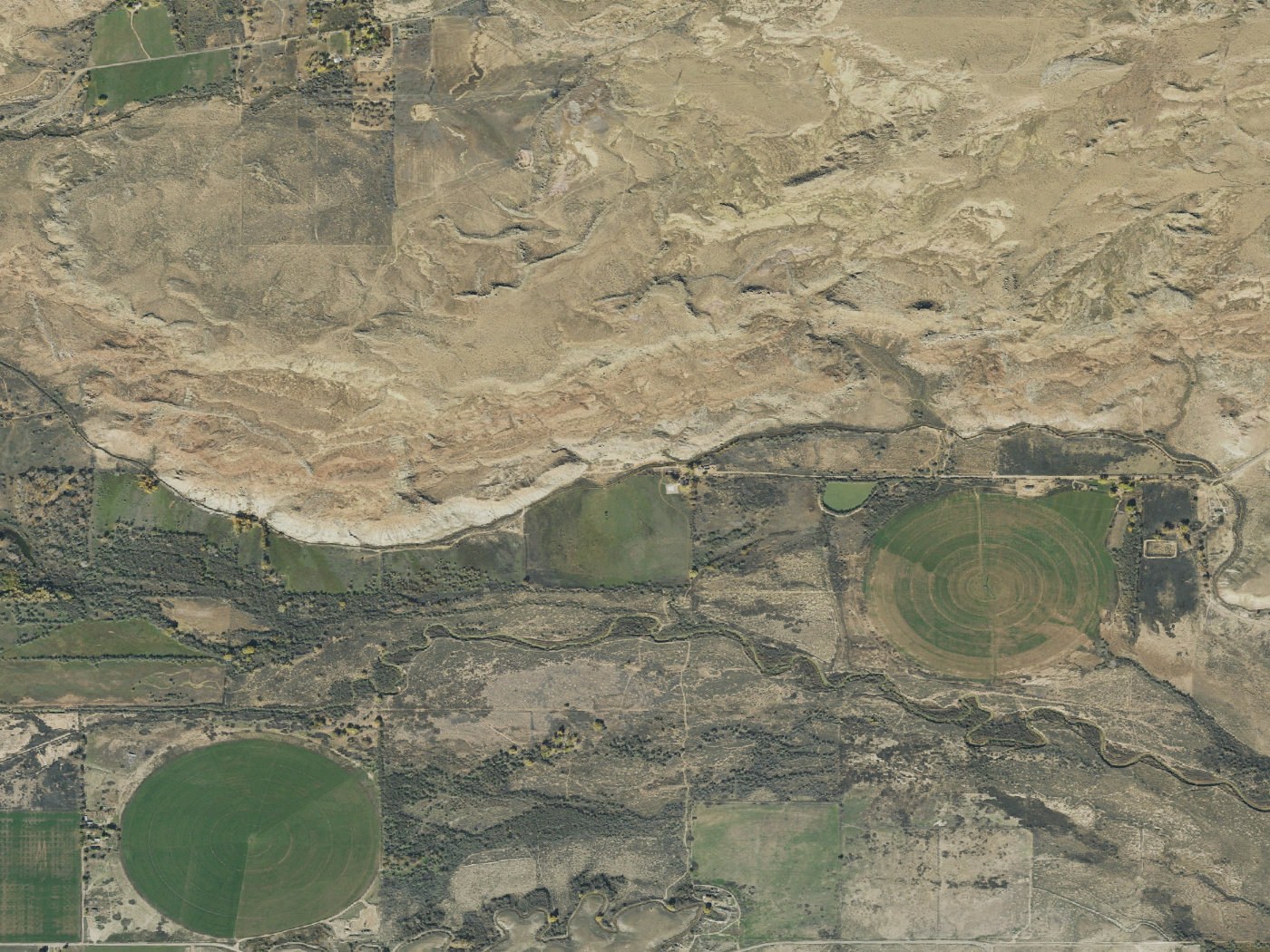
A 480 acre cattle ranch in the Uinta Basin became the most famous piece of land in American ufology after its owners told a newspaper what they said had been happening on it. Within three months a Las Vegas billionaire had bought the property and put a research institute on it, and twelve years later the Defense Intelligence Agency was funding work connected to it. What almost nobody has ever seen is the evidence.
What did witnesses see at Near Randlett?
The reports attached to this property fall into three distinct periods, and they are documented to very different standards. Keeping them separate is the only honest way to handle the case, because the fame of the later periods is routinely used to lend weight to the claims of the first.
The first period is the Sherman family's tenancy. Terry and Gwen Sherman bought the ranch, 480 acres south of Fort Duchesne in Uintah County, in 1994. On 30 June 1996 the Deseret News published a staff report by Zack Van Eyck setting out what they said had happened over the preceding fifteen months. The account is specific. The Shermans described three distinct kinds of craft: a small boxlike object carrying a white light, an object around 40 feet across, and a very large one the article renders as the size of several football fields. The first sighting they placed in April 1995, over a field where a cow was calving. They reported finding three flattened circles in the grass, each about eight feet across, arranged in a triangle. They reported seven cattle dead or missing, three of them found with precise cuts, describing holes cut in the rectum and the removal of a left eyeball, and a chemical smell around the carcasses. One animal, they said, vanished from snow, leaving hoof prints that simply stopped. In January they found a cow with an eighteen inch deep cavity cut into the rectum and no blood present. The article also quotes the family describing three dogs that disappeared while chasing a ball of light.
The paper set this alongside local context. Joseph "Junior" Hicks, a retired teacher from Roosevelt, had catalogued more than 400 sightings in the Uinta Basin since the 1950s. A Neola resident, Leland Mecham, described sightings of his own. The article also carried sceptical voices, including Barry Karr of the Committee for Scientific Investigation of Claims of the Paranormal, and Bill Lyons of the Mutual UFO Network.
The second period begins in September 1996, when Robert Bigelow, a Las Vegas property developer whose fortune came from budget hotels, bought the ranch and installed investigators from his National Institute for Discovery Science. The third period begins in 2008, when Bigelow's aerospace company won a Defense Intelligence Agency contract, and the ranch became connected, through that contract, to the United States government.
What is the official explanation?
There is no official explanation of anything reported on this ranch, because no official body has ever published findings about it. What exists instead is a documented funding trail, and it is more substantial than sceptics usually allow and much less substantial than believers usually claim.
The Defense Intelligence Agency solicited the Advanced Aerospace Weapon System Applications Program under solicitation number HHM402-08-R-0211, dated 22 August 2008. The contract went to Bigelow Aerospace Advanced Space Studies, the company owned by the man who by then had owned the ranch for twelve years. The program's director at DIA was Dr James Lacatski, who later co-wrote a book whose title places the ranch at the centre of the story.
The program's principal surviving deliverables are 38 technical papers, turned into Defense Intelligence Reference Documents. Thirty seven of those 38 were released under the Freedom of Information Act on 25 March 2022, under FOIA case FOIA-0159-2018. The one still withheld is the classified version of a paper on high energy laser weapons. A separate request, FOIA-00349-2018, was completed on 13 October 2022 with thirteen pages withheld in full.
Two cautions belong here, and both come from the document archive itself rather than from any critic. First, the released DIRDs are papers on subjects such as warp drive, metamaterials and cloaking. They are not reports of investigations at the ranch, and they are not evidence about the ranch. Second, the relationship between this program and the better known Pentagon UFO effort is not settled: the archive that holds these documents states plainly that AAWSAP is connected to the rumoured Pentagon UFO study but that the exact connection and relationship is still unknown. That hedge is the source's own and it should not be stripped.
The only contemporaneous official comment of any kind on the ranch's phenomena came from a county sheriff's office. In April 1997, Uintah County Sheriff's Sergeant Steve Hatzidakis told the Deseret News that no reports of UFOs or unusual animal deaths had come in since Bigelow's purchase the previous September.
What the institute actually put on the ground in that first winter is on the record, in a second Deseret News piece by correspondent Lezlee E. Whiting on 12 December 1996. It reported that Bigelow had established the National Institute for Discovery Science, had erected an observation building on the property, and had deployed a pair of scientists and a veterinarian, with someone stationed on site twenty four hours a day to document anything that happened. The same article named Dr Dan Dennis, a veterinarian from Roosevelt, as assisting with necropsies on livestock, and located the property more precisely than the June piece had, in west Uintah County between Fort Duchesne and Randlett. It also recorded how fast the story had travelled: a Los Angeles syndicated television news magazine, Strange Universe, ran a segment on the ranch the following day.
What did the witnesses think it was?
The most important witness statement in this entire case is not from the Shermans and not from a whistleblower. It is from the man Bigelow put in charge, and it is a negative.
On 27 April 1997, seven months after the purchase, Zack Van Eyck went back to the story for the Deseret News. He reached John Alexander, the director of the National Institute for Discovery Science, and Alexander's account of what the institute had found on the ranch was flatly deflationary. He said there had been some minor observations but nothing you would stand behind. Asked more directly, he said definitely no craft, that they had had no dog-zappers, and that nobody had landed.
That is the founding investigation, run by the owner's own institute, with the site secured and instrumented, reporting within a year that it had nothing. It is the single most load bearing fact in the case file and it is very rarely quoted in popular accounts.
The same article records that other researchers were already unhappy. Ryan Layton, a Davis County researcher, doubted the phenomena had really stopped and questioned whether the institute was filming evidence it was not describing. Chris O'Brien, a Colorado researcher and author, and Gary Hart, an investigator from Illinois, criticised the institute for not releasing details of its research publicly. That complaint, made in 1997, has never since been resolved: no owner of this property has ever published a data set that an outside party could examine.
The Shermans themselves should be weighed carefully rather than dismissed. They were working ranchers who went to a newspaper, gave their names, described losses to their own herd, and then sold up and left. Nothing in the record shows them profiting from the story in the way later owners have, and the archive's standing rule is that motivated witnesses are weighed as motivated, not discarded. But their claims are also entirely untested. No veterinary report on the mutilated cattle has been published, no photographs of the grass circles have been produced for independent examination, and the fifteen months of events they described were reported to a journalist after the fact rather than documented as they happened.
The later period has produced its own contrary testimony, from people who worked on the Bigelow contract rather than from outside sceptics. Former BAASS staff have given accounts of the ranch work that differ sharply from the promotional version, including the characterisation that what was wanted was confirmation rather than assessment. That testimony is second hand as it reaches this archive, it is disputed, and it is recorded here as claim rather than as finding.
The property changed hands again in 2016, and its current owner has built a television series around it. That is not itself an argument against anything reported on the land, but it is a material fact about the incentives now attached to every claim made from it, and it is the reason this file leans on the 1996 and 1997 newspaper record and the FOIA document trail rather than on anything broadcast since.
Is the Skinwalker Ranch: The Sherman Family Reports, the NIDS Years and the Pentagon Contract (Uintah County, Utah, from 1994) real? The two-pass assessment
Pass one, how this could be ordinary.
Almost all of it could be, and for most of it there is simply nothing to test.
The Uinta Basin was a recognised sighting hotspot for four decades before the Shermans arrived, with more than 400 cases catalogued locally by Junior Hicks going back to the 1950s. A remote basin with dark skies, a long established local sighting tradition, and heavy military aviation activity across the interior West is a place where unusual lights are expected to be reported, and where an incoming ranch family would arrive already primed by the local narrative.
Cattle mutilation claims are the part of the account with the strongest prosaic literature behind them. The specific features the Shermans described, clean apparent excisions around the rectum and eye and an absence of blood, are the classic presentation, and they are also what ordinary scavenger and blowfly activity on a carcass produces, because soft tissue at natural openings goes first and postmortem blood settles and clots rather than pooling visibly. That is the standard explanation, and it fits, but it should be stated as unresolved rather than proven here, because no necropsy findings have ever been published. That last point deserves precision, because the usual sceptical framing of this case understates it. A veterinarian was engaged. The December 1996 report names Dr Dan Dennis of Roosevelt as assisting with livestock necropsies for the institute. So the work of examining animals was commissioned, by a funded organisation, with a professional to do it, and the results of that work have never appeared. That is a stronger and stranger fact than an absence of investigation would be.
The flattened grass circles were reported, not preserved. The disappearing hoof prints were reported by the people who found them. The three dogs were reported by their owners. None of these can now be examined by anyone.
Then there is the fact that dominates pass one, which is the 1997 result. When a wealthy owner bought the site, fenced it, staffed it and pointed instruments at it, the director of his own institute said within seven months that there was nothing to stand behind and definitely no craft. That is the outcome the prosaic reading predicts, and it happened, and it happened at the hands of people who were paid to hope otherwise.
Pass two, if something real is happening here.
The strongest surviving argument is not any single reported event. It is the funding behaviour of serious institutions over three decades, and it deserves to be stated at its full strength before it is qualified.
Bigelow did not merely buy a curiosity. He bought the property within roughly three months of the newspaper article, established a research institute around it, kept it for twenty years, and later, through his aerospace company, held a Defense Intelligence Agency contract under which the program's DIA director would go on to publish a book naming the ranch. Whatever one concludes about lights over a field in Utah, the sequence by which a working cattle ranch became attached to a federal intelligence contract is a matter of record, not of folklore, and the documents behind it are public.
The qualification, which is decisive for the tier, is that this record establishes interest and expenditure, not phenomena. A contract proves that money was spent. The 38 DIRDs are theoretical papers about propulsion and materials, not field reports from Utah. No released government document has been shown to contain instrumented data from this ranch. The strongest honest statement is that people with resources and access have repeatedly decided this site was worth spending on, and have never once produced the data that would explain why.
The sharpest form of the gap is this. From the winter of 1996 the site had an observation building, instrumentation, a resident watch around the clock, scientists, and a veterinarian, paid for by an owner who wanted to find something. Thirty years later the public record of what all of that recorded consists of one director saying there was nothing to stand behind. Either the monitoring found nothing, in which case the case is largely closed and the fame is unearned, or it found something that has been withheld from every outside party for three decades. Both readings are uncomfortable, and the archive cannot choose between them on the available evidence.
That gap is why this file is tiered Disputed rather than Unknown. Unknown is the archive's tier for cases where a real event is documented and no official narrative explains it. Here the difficulty runs deeper: apart from the 1996 newspaper account of what a family said, and the paper trail of who paid whom, there is very little documented event to explain. Thirty years of claimed activity on this land has produced no publicly examinable evidence at all, and the one investigation that reported publicly reported that it had found nothing.
Sources
- www.deseret.com/1996/6/30/19251541/frequent-fliers/
- www.deseret.com/1997/4/27/19308958/no-ufos-or-ets-have-dropped-in-at-spooky-ranch/
- www.deseret.com/1996/12/12/19282354/universe-reports-on-strange-utah-occurrences/
- www.theblackvault.com/documentarchive/the-advanced-aerospace-weapon-system-applications-program-aawsap-documentation/
- basemap.nationalmap.gov/arcgis/rest/services/USGSImageryOnly/MapServer
- web.archive.org/web/20001110015700/http://www.nidsci.org/
- web.archive.org/cdx/search/cdx?url=nidsci.org&output=text&limit=6
More cases from this region: UFO sightings in United States